 Anacortes Exterior
 Storm Damage Roofing in West Anacortes: What Makes This Neighborhood Different
West Anacortes sits close enough to the water that homes here take a different kind of weathering than roofs further inland. Salt-laden air off Rosario Strait and the Guemes Channel corridor accelerates corrosion on exposed fasteners, flashing, and metal roofing components. Add in Skagit County's long stretch of wet months, driving rain that comes in sideways during winter windstorms, and a moss season that can run from fall through spring, and you've got a roofing environment that punishes shortcuts. A roof repair done right in West Anacortes has to account for all three of these stressors at once, not just patch the visible damage and move on.
When we get called out after a windstorm or a heavy rain event, the damage we find often isn't limited to what triggered the call. A few missing shingles from last week's wind might be sitting on top of flashing that's already been quietly corroding from years of salt exposure, or decking that's been softened by moisture intrusion nobody noticed. Treating storm damage as an isolated event, instead of looking at the roof as a whole system under long-term coastal stress, is how homeowners end up calling a roofer back out every year or two.
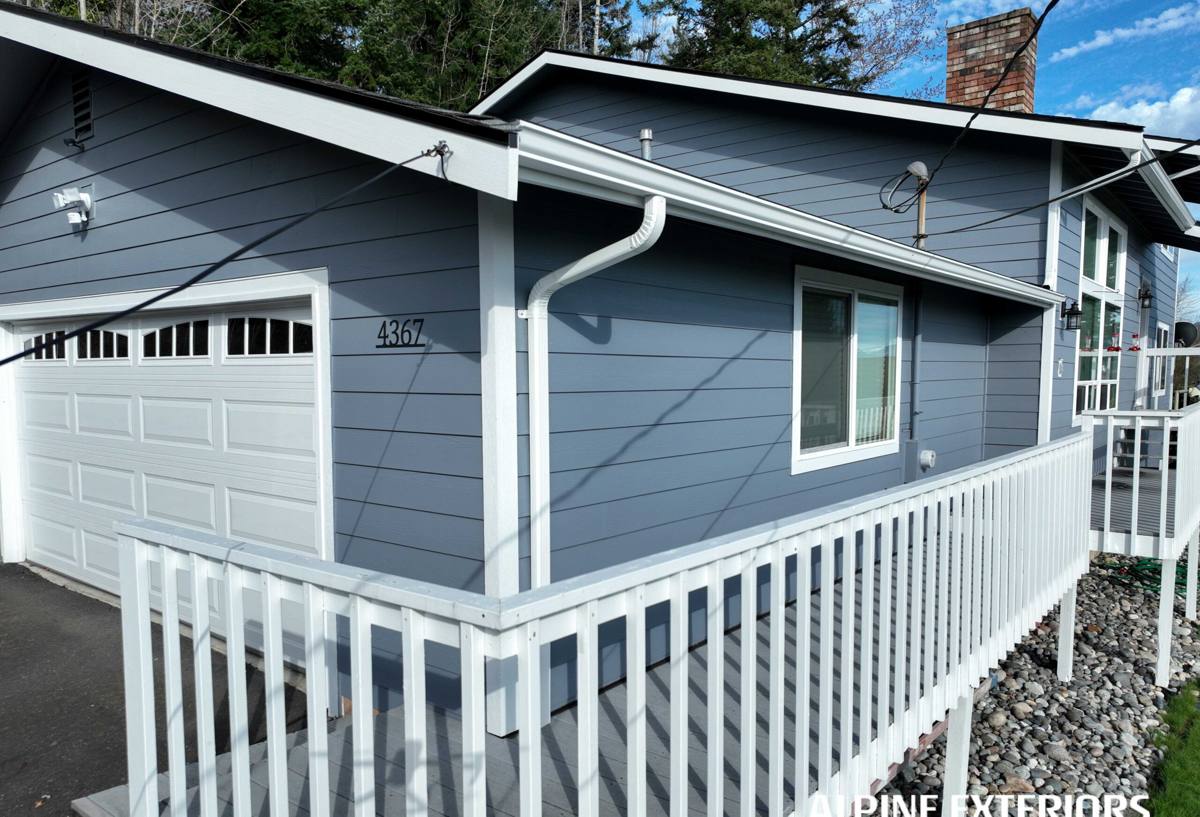
Common Storm Damage We See on West Anacortes Roofs
Wind Damage
Anacortes gets its share of strong winter and spring windstorms, and roofs here take wind from multiple directions depending on the weather pattern. We commonly find lifted or torn shingles along ridge lines and roof edges, where wind uplift is strongest, along with loosened or displaced ridge caps. On older roofs, wind damage often reveals pre-existing weaknesses — shingles that were already brittle from age and UV exposure tear more easily than shingles in good condition.
Wind-Driven Rain Intrusion
Heavy rain on its own rarely damages a sound roof, but rain driven sideways by wind finds every gap a calm rain would never reach. This is where flashing failures show up — around chimneys, skylights, dormers, and roof-to-wall transitions — and where valleys with worn or undersized flashing start leaking. Wind-driven rain also pushes water up and under shingle edges that have lost their seal, which is a common issue on roofs approaching the back half of their service life.
Moss and Moisture Damage
Moss doesn't cause storm damage directly, but it sets the stage for it. A roof with moss growth holds moisture against the shingle surface far longer than a clean roof, which softens shingles, degrades granule adhesion, and can work its way under tabs and flashing over time. When a storm hits a roof that's already compromised by months of moss retention, the damage tends to be worse and the leaks show up faster.
Debris Impact
West Anacortes has plenty of mature trees, and wind events regularly bring down branches and debris onto roofs. Impact damage can crack or puncture shingles, dent metal flashing or gutters, and in more serious cases damage the decking underneath. Even when the shingle surface looks intact, an impact strong enough to bend flashing or crack a shingle mat is worth a closer look.
What a Correct Storm Damage Repair Actually Involves
A proper repair starts with a full inspection, not just a look at the spot the homeowner points out. We check the roof surface, all flashing points, the attic or roof deck from underneath where accessible, and gutters and downspouts for debris or damage that affects drainage. Storm damage often has a secondary effect — a leak at the ridge can travel along the decking before it shows up as a stain on a ceiling many feet away, so tracing the actual path of water intrusion matters as much as fixing the entry point.
Our General Process
- Inspection and documentation. We assess the full roof, not just the damaged section, and document findings — useful if you're filing an insurance claim.
- Temporary protection if needed. If there's active leaking or exposed decking, we get the roof weathertight first, even if full repair has to wait on materials or insurance approval.
- Removal of damaged materials. Compromised shingles, underlayment, and flashing are removed down to sound material — patching over damaged decking or saturated underlayment just hides a problem that will resurface.
- Deck inspection and repair. Any soft, delaminated, or water-damaged decking is replaced before new roofing goes down.
- Flashing and underlayment replacement. This is where a lot of long-term durability is won or lost, especially in a marine climate — we use flashing and fasteners rated for coastal exposure, not just what's cheapest.
- Shingle or material replacement, matched as closely as possible. We match existing materials for color and profile where the manufacturer's product line allows it.
- Final inspection and cleanup. We check the completed repair, clear debris and old materials, and make sure gutters and drainage paths are clear.
Repair vs. Replacement: How We Help You Decide
Not every storm-damaged roof needs full replacement, and not every roof is worth repairing indefinitely. The right call depends on the roof's age, the extent of the damage, and how much of the roof's remaining service life has already been used up by prior moisture and moss exposure.
| Factor | Favors Repair | Favors Replacement |
|---|---|---|
| Roof age | Under 12-15 years, good overall condition | Nearing or past expected service life |
| Extent of damage | Isolated to one section or a few areas | Widespread across multiple roof planes |
| Underlying decking | Sound, no rot or delamination found | Multiple areas of soft or water-damaged decking |
| Moss/moisture history | Roof has been kept clean and maintained | Long-term moss growth with granule loss |
| Material availability | Matching shingles/materials still available | Discontinued product, poor match likely |
We'll give you an honest read on which side of that line your roof falls on. If a repair will genuinely hold up, we'll tell you that — we're not interested in selling a full replacement when a proper repair does the job.
Why Salt Air and Moss Season Change the Materials We Use
Coastal exposure in the Anacortes area means standard fasteners and flashing corrode faster than they would further inland. For storm repairs on West Anacortes homes, we favor corrosion-resistant fasteners and flashing materials suited to marine air, even when it costs a little more than the basic option. It's a professional standard we hold to on coastal work generally — cutting corners on flashing and fasteners here shows up as premature failure within a few years, and redoing a repair costs more than doing it right the first time.
Moss is the other factor that shapes how we approach a repair. If a roof has active moss growth, we address it as part of the repair — clearing growth from the repair area and surrounding sections, and talking through preventive options like zinc or copper strips, which discourage regrowth without the harsh chemical treatments that can shorten shingle life. A repair that ignores active moss nearby is a repair that's likely to face the same moisture problems again next wet season.
Insurance Claims and Storm Damage
Many storm damage repairs in this area involve homeowner's insurance. We're glad to document damage thoroughly with photos and written findings that support a claim, and we can walk through what we're seeing so you understand the scope before you talk to your adjuster. We work for the homeowner, not the insurance company — our job is an honest, accurate assessment of what the storm actually did, not a number that's been adjusted up or down to fit expectations either way.
What to Do Right After Storm Damage
- Photograph visible damage from the ground if it's safe to do so — don't get on the roof yourself
- Note the date and general weather conditions of the storm event
- Check attic or upper-floor ceilings for new stains, dampness, or daylight through the roof deck
- Clear gutters and downspouts of debris if accessible safely, since clogged drainage compounds water damage
- Get a professional inspection promptly — some damage, like lifted shingle tabs or compromised seals, gets worse with the next rain if left unaddressed
- Hold off on major cleanup of debris on the roof itself until it's been documented, if you're planning to file a claim
Why a Local West Anacortes Crew Makes a Difference
A crew that regularly works West Anacortes roofs has a working sense of how homes in this specific area age — which roof styles and ages are common, how prior storms have typically affected local roofs, and what the moss and moisture patterns look like block by block given tree cover and sun exposure. That local pattern recognition speeds up diagnosis and helps us catch related issues that an out-of-town crew unfamiliar with Skagit County's coastal conditions might miss on a first pass.
Being local also means faster response after a storm, when timing matters most for limiting further water damage, and it means we're still around next year and the year after if a repair needs a warranty follow-up or the roof needs continued maintenance. We're not driving in from out of the area for one job and disappearing.
Maintaining Your Roof After a Storm Repair
A completed repair is only as good as the maintenance that follows it. In West Anacortes' climate, that means periodic moss removal or treatment, keeping gutters and downspouts clear so water doesn't back up under roof edges, and a visual check after any major windstorm for lifted shingles or damaged flashing. Catching small issues early, before the next heavy rain, is consistently cheaper than waiting for a small problem to become a leak.
If you're dealing with storm damage on a West Anacortes roof, or you just want an honest inspection after a recent windstorm, we're happy to take a look. Reach out for a free, no-pressure estimate using the form below.