 Anacortes Exterior
 Storm Damage Roof Repair for Skyline Homes
Skyline sits up on the hill above Anacortes with open exposure to weather rolling in off Rosario Strait and the Salish Sea. That view comes with a trade-off: homes here take a harder hit from wind-driven rain, salt-laden air, and the long wet season Skagit County is known for. When a storm tears through, roofs on this side of town often show damage that isn't obvious from the ground — lifted shingle tabs, torn ridge caps, or flashing that's worked loose just enough to let water in behind it.
We repair storm-damaged roofs across Anacortes, and Skyline is one of the neighborhoods we're in regularly. That familiarity matters more than it might seem — knowing how a particular street sits relative to prevailing wind, or how a roof's pitch and exposure typically age, helps us diagnose damage faster and repair it correctly the first time. Acting quickly after a storm also limits secondary damage: a small leak left alone for a few weeks can turn into soaked insulation, stained drywall, or rot that a same-week repair would have avoided entirely.
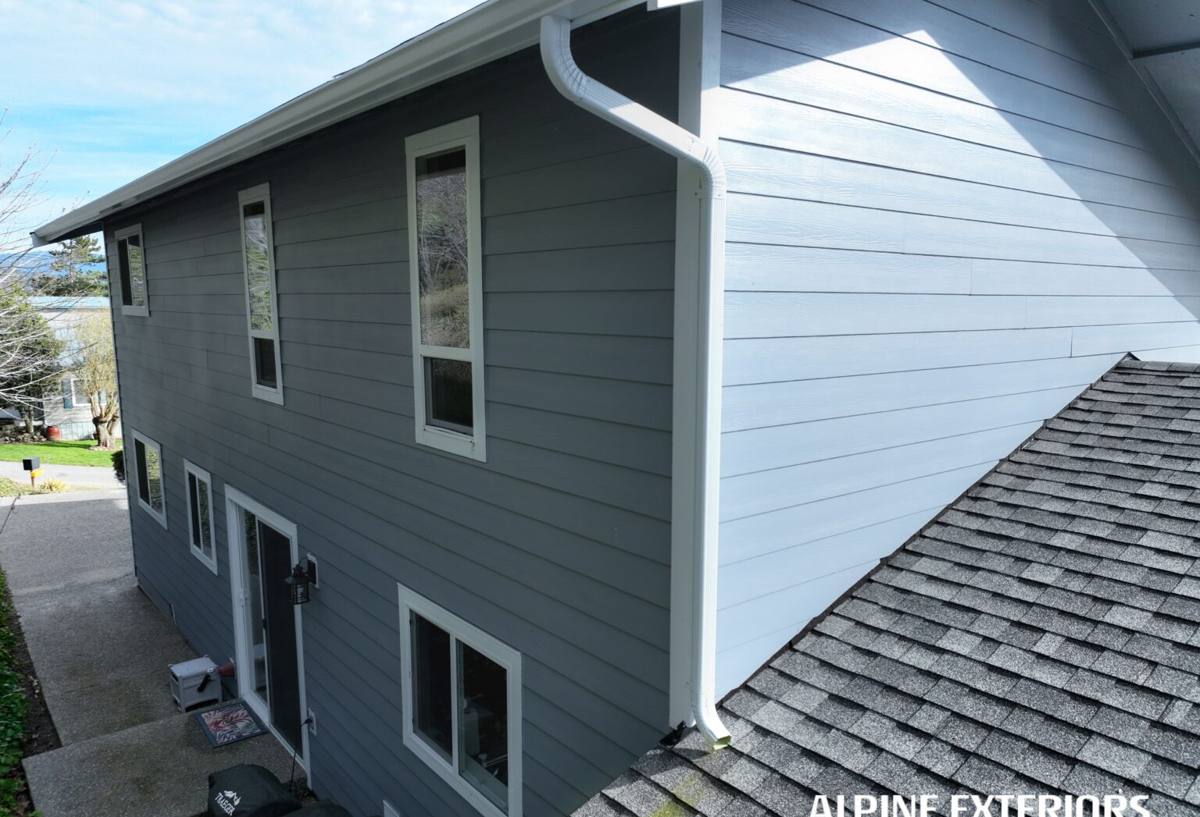
Why Skyline's Climate Is Hard on Roofs
Three things work against roofs in this part of Anacortes, and they compound each other over time rather than acting alone.
Salt Air
Proximity to saltwater accelerates corrosion on exposed metal — flashing, fasteners, gutter hardware, and vent caps all age faster here than they would further inland. Corroded fasteners back out or weaken, which is exactly the kind of small failure that turns a normal windstorm into a roof leak. It's part of why we pay attention to fastener and flashing material, not just the shingles, when we're repairing a roof in this area.
Driving Rain
Storms coming off the water often bring rain sideways, not straight down. Wind-driven rain finds gaps that vertical rain never would — under shingle tabs, around chimney flashing, at valleys where two roof planes meet, and along eaves where wind can drive rain up and under the first course of shingles. A roof that's watertight in a normal downpour can still leak in a driving-rain event if the details underneath aren't right.
Moss Season
Anacortes gets a long stretch of damp, shaded weather every year, and Skyline's tree cover adds to it. Moss and algae hold moisture against the roof surface, work their way under shingle edges, and add weight and friction that makes shingles more likely to lift or tear in wind. A roof with heavy moss growth going into a storm is more vulnerable than a clean one, storm for storm — which is one more reason routine moss control matters here beyond just appearance.
What Counts as Storm Damage
Not all storm damage looks dramatic. Some of it is easy to spot, and some of it isn't visible until you're on the roof or in the attic.
- Missing, cracked, or curled shingles, usually on the windward slope
- Lifted or torn ridge cap shingles along the roof peak
- Flashing pulled loose or bent at chimneys, skylights, and sidewalls
- Granule loss that leaves shingles thin and brittle-looking
- Damaged or clogged gutters that overflow and push water back under the roof edge
- Punctures or dents from wind-thrown branches or debris
- Water stains on attic sheathing or ceilings that show up days after the storm
That last one is why we tell Skyline homeowners not to assume a roof is fine just because nothing looks wrong from the driveway. Wind-driven rain damage often shows up as an interior stain a few days later, after water has had time to travel along the sheathing and find a low point — sometimes well away from where it actually entered the roof.
What a Correct Repair Actually Involves
A storm repair that only patches the visible damage often fails again in the next storm. Doing it right means understanding why the failure happened, not just covering it up.
Full Inspection, Not a Glance
We walk the roof surface, check the attic side where accessible, and inspect flashing, valleys, and penetrations — not just the spot that's obviously damaged. Storm damage rarely stays confined to one shingle, and a repair that ignores the surrounding area often has to be redone within a season or two.
Decking Check
If water got underneath the roofing material, we check the sheathing for soft spots or rot before closing anything back up. Repairing over damaged decking just hides a problem that gets worse, and it's the kind of shortcut that turns a modest repair into a much bigger job later.
Flashing and Underlayment
Given how much of Skyline's storm damage traces back to flashing and driving rain, we pay close attention to these details — replacing corroded or bent flashing rather than just resealing it, and making sure underlayment is intact wherever shingles were removed.
Matching Materials
We match shingle type, color, and where possible age and wear so a repair blends in rather than standing out as an obvious patch. On older roofs where exact matches aren't available, we're upfront about that before starting the work rather than surprising you afterward.
Our Repair Process
- Inspection and assessment. We look at the whole roof, not just the reported damage, and document what we find with photos.
- Honest scope. We tell you plainly whether this is a repair, or whether the damage — or the roof's overall condition — points toward something bigger. We don't upsell a repair into a replacement to pad the invoice, and we don't paper over damage that needs more than a patch.
- Written estimate. Scope and cost factors laid out before any work starts, so there are no surprises once the crew is on the roof.
- Repair work. Removal of damaged material, a decking check, flashing and underlayment repair, and reinstallation with matched materials.
- Cleanup and walkthrough. We clear debris and walk the finished work with you before we consider the job done.
Repair or Replace? Cost Factors to Weigh
Storm damage doesn't always mean a full new roof, but sometimes it's the event that reveals a roof was already near the end of its useful life. Costs vary a lot from job to job — a single flashing repair is a modest expense, while decking replacement across a large section starts to approach what a partial reroof would cost — so the honest answer depends on what we actually find. These are the factors that typically decide which way it goes.
| Factor | Favors Repair | Favors Replacement |
|---|---|---|
| Roof age | Under roughly 12-15 years | Nearing or past expected lifespan |
| Extent of damage | Localized to one section or slope | Spread across multiple slopes |
| Decking condition | Sound, no rot found | Soft spots or rot in multiple areas |
| Moss and algae history | Minimal, well-maintained | Heavy, longstanding growth |
| Prior repairs | Few or none | Multiple past patch jobs |
We'll give you a straight answer on where your roof falls, and we'll explain the reasoning rather than just naming a number.
Storm Damage and Insurance Claims
Many storm repairs in Skyline get filed as insurance claims, particularly when a specific event — a windstorm, a fallen branch — caused the damage. We can document the damage clearly with photos and a written scope that supports a claim, noting the apparent cause and extent so your insurer has something concrete to work from. That said, we're a roofing contractor, not a public adjuster, and we won't promise a specific claim outcome or coverage decision. What we can promise is an honest, well-documented assessment you can hand to your insurer alongside your own account of the storm.
After a Storm: What to Check
- Look at the roofline from the ground for missing or displaced shingles
- Check gutters and downspouts for granules, debris, or damage
- Look inside the attic, if accessible, for new water stains or damp insulation
- Check ceilings, especially near chimneys and skylights, for staining
- Note the date and, if it's safe to do so, take photos for your records
- Avoid climbing onto the roof yourself after a storm — wet, moss-covered surfaces are dangerous
Why a Crew That Knows Skyline Matters
A roofer who's worked Skyline before knows what tends to fail here and why — which slopes catch the wind, how fast moss builds back in the shaded lots, and which flashing details hold up against salt air and which don't. That's not a substitute for a thorough inspection of your specific roof, but it means we're not starting from zero, and it means the repair we recommend accounts for what actually happens to roofs in this neighborhood over time, not just what a generic storm-repair checklist says. It also means we can usually get someone out faster after a storm hits this part of Anacortes, since we're already working in the area.
If a recent storm has left you with a leak, missing shingles, or just a nagging feeling you should get the roof checked, we're glad to take a look. Reach out for a free, no-pressure estimate using the form below — we'll tell you honestly what we find and what it would take to fix it.