 Anacortes Exterior
 Windows Built for Skyline's Marine Climate
Skyline sits close enough to the water that homes here take a different kind of weather beating than houses further inland in Skagit County. Salt-laden air works into aluminum and steel components over time. Driving rain off Fidalgo Bay and the Sound doesn't just fall straight down — wind pushes it sideways into wall assemblies and window flanges. And the long, damp moss season that runs from fall through spring keeps siding, trim, and window sills wet for weeks at a stretch instead of drying out between storms the way they might in a drier climate.
None of that is dramatic on its own. But it's constant, and constant is what wears out a window installation that wasn't detailed correctly in the first place. A window that's a fine product in Arizona can still fail here in five years if the flashing, sealant, and drainage weren't done right for this climate. That's the piece we focus on for every Skyline job — not just the window unit, but everything around it that keeps water out.
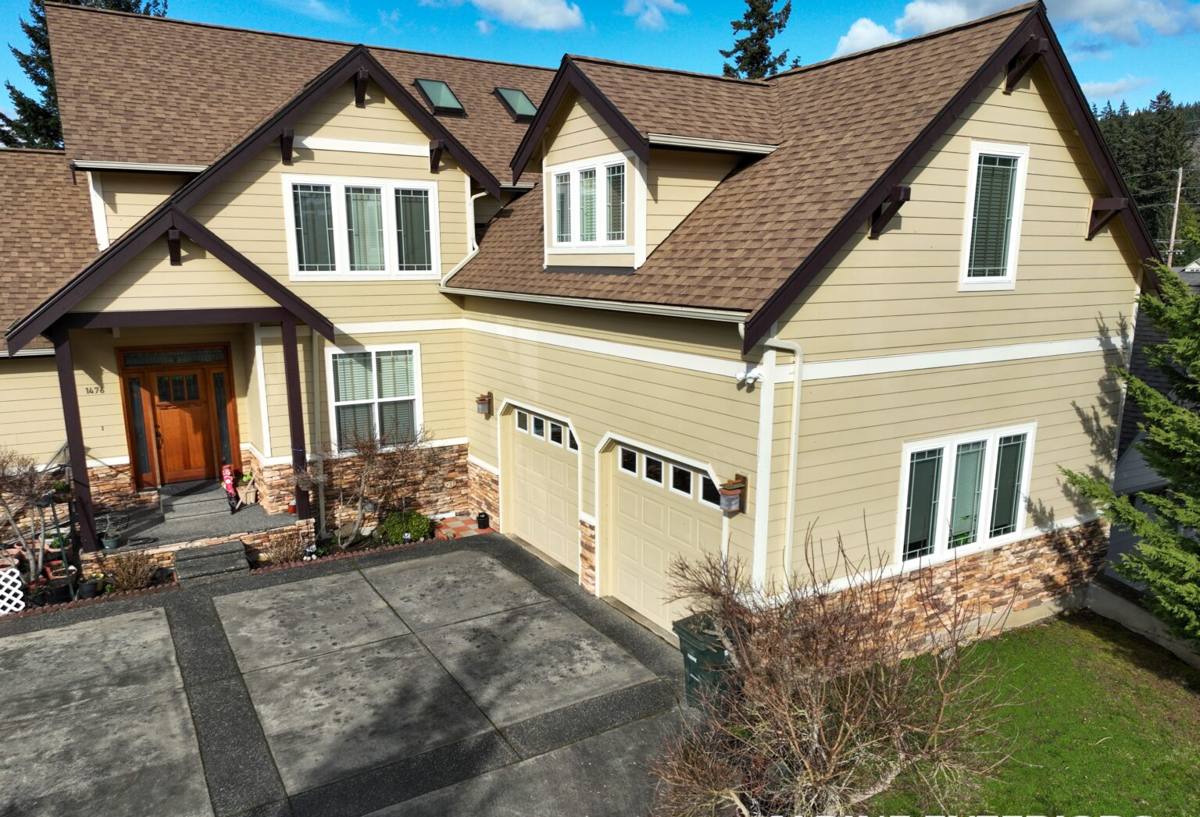
What Skyline Homes Actually Need From a Window Install
Most of the homes we work on in and around Skyline fall into a few categories: older single-family homes with original wood windows that have finally reached the end of their service life, homes with a prior aluminum window install from decades back that's now leaking or fogging, and newer construction where an owner wants better performance without redoing the whole wall.
Moisture Management Comes First
Before we talk about glass packages or frame materials, we look at how water is currently getting managed — or not — around the existing window openings. In a climate with this much sustained rain and humidity, the flashing details matter more than almost anything else on the job. A window that's air-sealed but poorly flashed will trap moisture behind the trim instead of shedding it, and that's how you end up with rot nobody sees until the siding comes off.
Wind-Driven Rain Resistance
Because Skyline gets exposure to weather moving off the water, we pay attention to how well a window and its installation resist wind-driven rain, not just static water testing. That means proper sill pan flashing, correctly lapped house wrap, and sealant placement that lets water drain out rather than pool.
Condensation and Moss-Season Humidity
During the wetter months, indoor-outdoor temperature and humidity differences show up fast as condensation on poorly performing glass or frames. A properly sized, properly installed window with a reasonable thermal break cuts down on that condensation, which in turn keeps moisture off sills and trim where mold and soft wood otherwise get a foothold.
What a Correct Window Installation Involves
A window installation is really two jobs layered together: setting the unit itself, and integrating it correctly into the wall's water and air barrier system. Skipping or rushing the second part is the most common reason window installs fail early, regardless of how good the window itself is.
- Removing the old window and inspecting the rough opening for rot, soft framing, or prior water damage before anything new goes in
- Repairing or replacing any damaged framing, sheathing, or sill material found during removal
- Installing a properly sloped sill pan so any water that gets past the window drains back outside instead of sitting on the sill
- Flashing the opening in the correct shingle-lap sequence — sill, jambs, then head — so water always sheds downward and outward
- Setting the window level, plumb, and square, with proper shimming so the frame isn't stressed and the sash operates smoothly for years
- Sealing and insulating the gap between the window frame and rough opening without over-packing it, which can bow the frame
- Integrating the flashing with the existing house wrap or weather-resistive barrier so the whole system works together rather than fighting itself
- Reinstalling or replacing exterior trim and caulking with a sealant rated for exterior exposure in a wet climate
Our Process for a Skyline Window Job
1. On-Site Assessment
We start by looking at your current windows, the condition of the openings, and any signs of past water intrusion — staining, soft trim, or fogged glass are all clues about what's happening behind the surface. This tells us whether it's a straight window swap or whether there's framing repair to plan for.
2. Straightforward Quote
You get a written estimate that covers the window units, installation labor, and any framing or trim repair we identified. We don't pad quotes with vague allowances — if we find something once we open a wall, we tell you before we proceed, not after.
3. Careful Removal and Opening Prep
Old windows come out carefully to protect interior finishes and siding. Any rot or damage gets addressed before a new window ever goes in the opening — installing a new window into a compromised opening just hides the problem for a few years instead of solving it.
4. Install and Flash
This is where the climate-specific details happen: sill pans, correct flashing sequence, air sealing, and integration with your home's water-resistive barrier.
5. Final Check and Cleanup
We test operation on every window, check seals, and walk the job with you before we call it done.
Choosing the Right Windows for This Climate
There's no single "best" window for every Skyline home — it depends on your home's age, exposure, and budget. What we focus on with every homeowner is matching frame material and glass package to how much weather exposure that side of the house actually gets.
| Frame Material | How It Handles This Climate | Maintenance Consideration |
|---|---|---|
| Vinyl | Good moisture and salt-air resistance; won't corrode | Low maintenance; limited repaintability if you want a color change later |
| Fiberglass | Very stable in temperature swings and damp conditions; strong long-term performer | Higher upfront cost, minimal upkeep |
| Wood (clad exterior) | Warm interior look; exterior cladding protects wood from direct weather | Requires attention to sealant joints where cladding meets frame |
| Aluminum | Strong but prone to condensation and slower corrosion near salt air without a thermal break | We recommend thermally broken aluminum only, and generally steer homeowners toward other materials for full sun/rain exposure |
We're upfront when a product isn't a good match for a given wall's exposure. That's a maintenance and moisture-behavior call on our end, not a knock on any manufacturer — it's about what holds up with the least fuss for you over the next 15-20 years.
Cost Factors for a Skyline Window Project
Every job is different, but the same handful of factors drive most of the cost variation we see on window installs in this area.
| Factor | Why It Affects Cost |
|---|---|
| Number and size of windows | More openings and larger units mean more material and labor time |
| Framing or rot repair needed | Openings with water damage need structural repair before a window goes back in |
| Frame material chosen | Vinyl, fiberglass, and clad-wood windows carry different material costs |
| Glass package | Double-pane vs. upgraded low-E or gas-filled units changes the price per unit |
| Trim and siding work | Matching existing exterior trim or siding around a new opening adds labor |
| Access and site conditions | Second-story or hard-to-reach windows take more time to install safely |
We give you a real number after seeing the job, not a phone estimate — window pricing varies enough between homes that a generic range isn't much use to you.
Why Hire a Crew That Already Works Skyline
Window installation isn't exotic work, but the details that make it last are climate-specific, and Skagit County's marine climate is not the same as installing windows in a drier part of the state. A crew that regularly works Skyline and the surrounding Anacortes area already knows what wind-driven rain does to a poorly flashed opening, what moss-season humidity does to a window that wasn't sealed correctly, and what salt air does to the wrong hardware over time.
That experience shows up in small decisions on the job — how a sill pan gets sloped, which sealant gets used where, how flashing gets lapped — that don't show up on a spec sheet but make the difference between a window install that's still tight in fifteen years and one that starts leaking in five.
Signs Your Current Windows Are Due for Replacement
- Fogging or moisture between the panes of double-pane glass, which means the seal has failed
- Visible rot, soft wood, or paint failure on the exterior trim around the window
- Windows that are hard to open, close, or lock, or that don't sit flush anymore
- Noticeable drafts or cold spots near the window even when it's fully closed
- Condensation forming on the interior glass regularly during cooler, damp months
- Visible water staining on interior sills or the wall below a window
If you're noticing any of these signs on a home in Skyline, or you're just ready to plan ahead before the next storm season, we're happy to take a look and walk you through what we find. Reach out for a free, no-pressure estimate using the form below — we'll assess your windows, explain what's going on, and give you a straightforward quote with no obligation.