 Anacortes Exterior
 Windows Built for Old Town Anacortes Conditions
Old Town Anacortes sits close enough to the water that its homes take a different kind of weathering than houses further inland in Skagit County. Salt-laden air moves through the neighborhood off Fidalgo Bay and the surrounding channels, wind-driven rain hits window assemblies at angles that flat-on-flat installations were never designed for, and the long gray stretch from fall through spring keeps wood, trim, and sealants damp for months at a time. Older homes in this part of Anacortes often still carry original or early-replacement windows, and by the time a homeowner notices a problem, moisture has usually already been working behind the frame for a while.
Window installation here isn't just a product swap. It's a chance to correct decades of small water-management shortcuts — gaps behind trim, undersized flashing, caulk used as a substitute for proper drainage — before they turn into a rot repair or a siding job. This page covers what Old Town Anacortes homes specifically need from a window installation, what we check for, and how we install so the work holds up through another few decades of Anacortes weather.
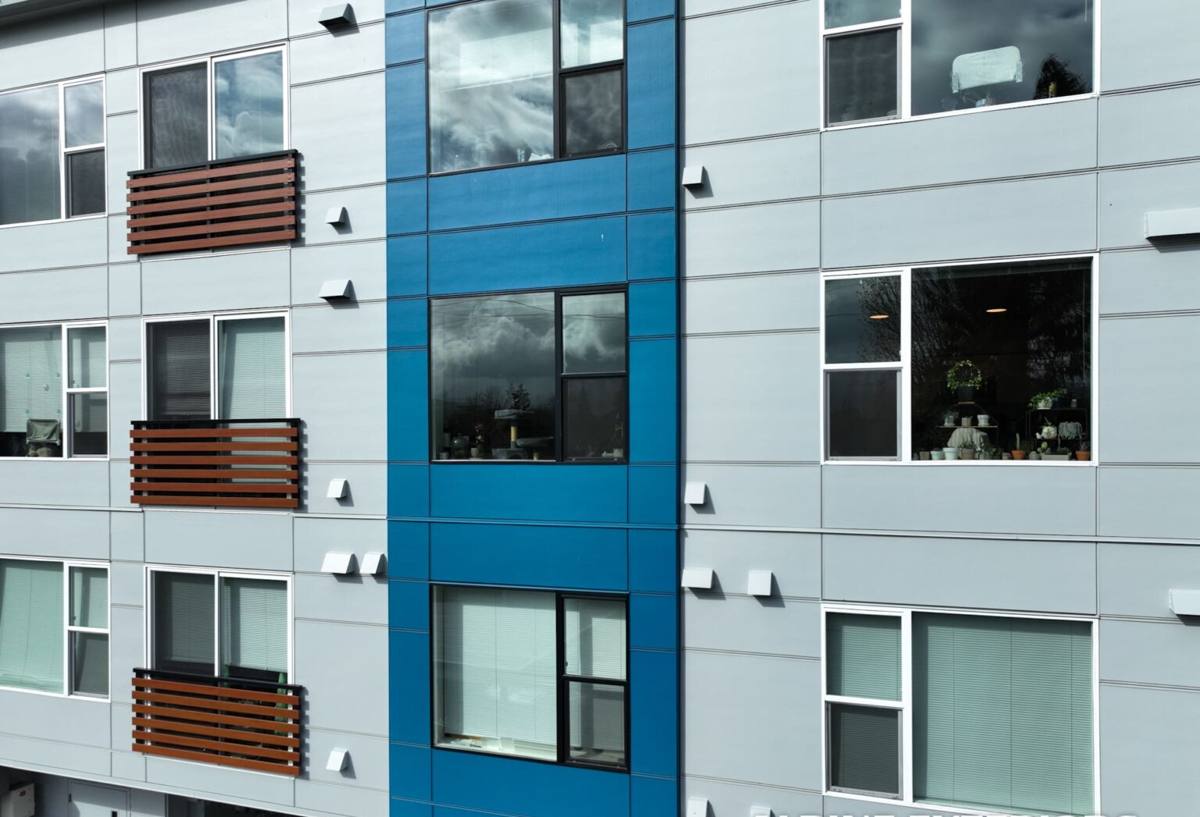
What Salt Air, Driving Rain, and Moss Season Do to Windows
Salt air
Airborne salt is corrosive to exposed metal hardware — hinges, cranks, locks, and especially lower-grade aluminum components. It also accelerates the breakdown of some sealants and finishes faster than the same products would wear in a drier, inland climate. This is one of several reasons we default to corrosion-resistant hardware and marine-appropriate sealants on jobs near the water, rather than treating every install the same regardless of exposure.
Driving rain
Anacortes gets weather that comes sideways off the Sound, not just straight down. A window that's caulked well on the surface but not properly flashed underneath will often look fine for years and then leak the first time wind pushes rain up under the sill instead of down and off it. Wind-driven rain finds the path of least resistance, and on an older home that path is usually a gap nobody can see from outside.
Moss and sustained dampness
Skagit County's long wet season keeps north- and shade-facing exterior surfaces damp for extended stretches, which is exactly the environment moss, algae, and eventually rot need to take hold. Wood sills and trim that stay wet longer than they get to dry are the first things to fail. This matters most on the shaded sides of a house and under roof overhangs that funnel runoff toward specific windows.
Signs an Old Town Anacortes Home Needs Window Attention
- Soft or spongy wood at the sill, jamb, or exterior trim when pressed
- Visible gaps or cracked caulk between the window frame and siding
- Fogging or a permanent haze between panes of double-pane glass (seal failure)
- Difficulty opening, closing, or locking a window that used to operate smoothly
- A cold draft near a closed window on a windy day
- Paint peeling or bubbling on interior trim near the window, which often signals moisture intrusion from outside
- Visible moss, algae, or dark staining on the sill or surrounding trim
- Noticeably higher heating bills without another explanation
Any one of these on its own isn't necessarily an emergency, but a combination of two or three — especially soft wood plus staining — usually means water has been getting behind the window assembly for a while.
What a Correct Window Installation Actually Involves
The window unit itself is only part of the job. Most of the long-term performance comes from what happens around it — the parts that get covered up and never seen again once the trim goes back on.
Removal and inspection
We pull the old window and inspect the rough opening before anything new goes in. This is where hidden rot, undersized or missing flashing, and old shortcuts get found. On an older Old Town Anacortes home, it's common to find that the original installation relied on caulk alone with no proper flashing behind it — something that may have held up for years but was never actually correct.
Flashing and drainage
Proper flashing directs water that gets behind the siding back out, rather than letting it pool at the sill. This includes sill pan flashing, side flashing that laps correctly with the water-resistive barrier, and head flashing that sheds water over the top of the window rather than into it. This is the single most important part of the job for a home exposed to driving rain, and it's the step that gets skipped most often on lower-cost installs because it's invisible once the trim is back on.
Air sealing and insulation
The gap between the window frame and the rough opening gets sealed with an appropriate low-expansion foam or backer rod and sealant — not stuffed with fiberglass and caulked over, which does little to stop air movement or moisture.
Sealants and hardware selection
Given the salt air exposure, we favor sealants and hardware rated for coastal or marine-adjacent use rather than standard-grade products that may degrade faster this close to the water.
Interior and exterior finish work
Trim gets reinstalled or replaced, caulk lines are tooled properly, and the window is tested for smooth operation before we consider the job done.
Window Frame Material — What Holds Up Best Near the Water
| Material | Salt air / moisture performance | Maintenance | Trade-offs |
|---|---|---|---|
| Vinyl | Good — won't corrode or rot, stable in damp conditions | Low — occasional cleaning | Frame can't be painted; color choices are fixed |
| Fiberglass | Very good — dimensionally stable, resists moisture and corrosion well | Low | Higher upfront cost than vinyl |
| Aluminum | Fair — prone to corrosion in salt air unless marine-grade and well-finished | Moderate — hardware and finish need monitoring | Conducts cold; not our default recommendation this close to the water |
| Wood / wood-clad | Fair to good with cladding, poor if exposed wood isn't well maintained | Higher — exposed wood needs regular painting/sealing | Best appearance for period-correct older homes, but demands upkeep in this climate |
There's no single "best" material for every home — a lot depends on the house's age, style, and how much upkeep the homeowner wants to take on. For an older Old Town Anacortes home where matching the original character matters, wood-clad windows can be the right call as long as the homeowner understands the maintenance commitment. For most replacement projects, vinyl or fiberglass hold up with the least ongoing effort in this climate.
Our Installation Process
- On-site assessment — we look at existing windows, exposure to wind and rain, and any visible signs of water damage before recommending anything.
- Product selection — matched to the home's style, budget, and exposure, not a one-size-fits-all default.
- Careful removal — old units come out without unnecessary damage to surrounding siding or trim.
- Rough opening inspection and repair — any rot or damage found gets addressed before the new window goes in, not covered over.
- Flashing and air sealing — installed to shed water correctly, sized and lapped for this climate.
- Window installation and leveling — set plumb, level, and square, then secured per manufacturer specifications.
- Finish work and testing — trim, caulking, and a full operational check before we call the job complete.
Permits and Working on Older Anacortes Homes
Window replacement in Anacortes typically requires a building permit, and the specifics can depend on the scope of work and whether the home has any historic designation or is within a district that has additional design review. We handle the permitting conversation as part of the job so homeowners aren't left figuring out city requirements on their own. Older homes also sometimes reveal surprises once we're into the wall — non-standard rough openings, old repairs, or framing that doesn't match modern spacing — and we account for that possibility upfront rather than treating every quote as if the home were new construction.
Why Hire a Crew That Already Works in Old Town Anacortes
A contractor who works this neighborhood regularly already understands how exposure varies block to block — which sides of a house tend to take the worst of the wind-driven rain, how much moss buildup is normal versus a sign of a bigger drainage problem, and what kind of window assemblies actually hold up here versus what looks fine on paper. That local pattern recognition matters more than it might seem: it's the difference between a crew guessing at what an older Skagit County home needs and one that's already seen the same failure points on similar homes nearby.
It also means faster, more realistic estimates. We're not learning the neighborhood's quirks on your project — we already know what to look for before we start.
What to Expect From an Estimate
- An honest look at your current windows, including any water damage already present
- Straight talk about which frame materials make sense for your home and exposure
- A clear scope of work covering flashing, sealing, and finish — not just "windows installed"
- No pressure to upsell products or add scope you don't need
If your Old Town Anacortes home has windows that are drafty, hard to operate, or showing signs of water intrusion, it's worth getting a second set of eyes on them before a small problem becomes a bigger repair. We offer free, no-pressure estimates — fill out the form below and we'll take a look.