 Anacortes Exterior
 Deck Repair Built for West Anacortes Conditions
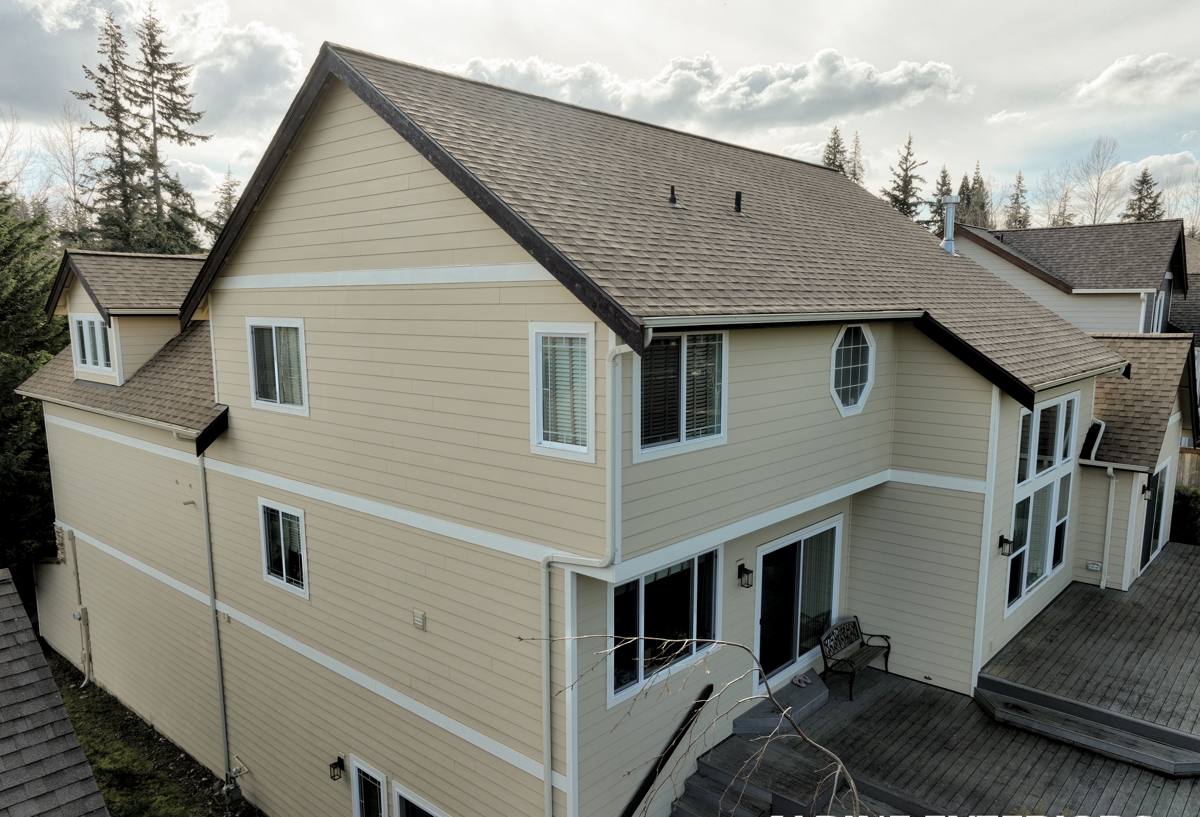
Homes on the west side of Anacortes sit closer to the water than almost anywhere else in Skagit County, and that location shapes what a deck goes through year after year. Salt-laden air off the Guemes Channel and Rosario Strait works its way into fasteners, hardware, and end grain. Driving rain off the Sound finds every gap in flashing and board spacing. And the long, damp shoulder seasons that define this part of Washington keep decks wet and shaded long enough for moss and algae to take hold and stay there. None of this means a deck is doomed — it means repairs have to account for all three of these things at once, not just patch the board that's obviously rotten.
We repair decks all over West Anacortes, and the pattern is consistent: the failures we find are rarely random. They cluster at ledger boards, fastener heads, end cuts, and anywhere water can pool instead of shed. A repair that doesn't address why that spot failed is a repair that fails again in a season or two.
What Anacortes Weather Actually Does to a Deck
Salt Air and Corrosion
Airborne salt accelerates corrosion in any exposed metal — nail heads, screw shanks, joist hangers, and railing brackets. Once a fastener starts rusting, it swells slightly, which cracks the wood fibers around it and lets moisture in even faster. On older decks built before galvanized or stainless fasteners were standard practice, this is one of the most common reasons boards work loose even when the wood underneath still looks fine.
Driving Rain and Wind-Driven Moisture
Anacortes doesn't just get rain — it gets rain pushed sideways off the water, which finds its way under flashing, behind ledger boards, and into end grain that isn't sealed. This is different from a sheltered inland deck where moisture mostly comes from above. West-facing and water-facing decks need attention to vertical water intrusion, not just horizontal drainage.
Moss, Algae, and Extended Dampness
Shaded decks, north- and west-facing exposures, and anything under tree cover in this area hold moisture long after a storm has passed. Moss and algae aren't just cosmetic — they hold water against the wood surface, and on painted or stained decking that trapped moisture is what eventually causes cupping, soft spots, and coating failure.
Signs a Deck Needs Repair — Not Just Cleaning
- Boards that flex, bounce, or feel spongy underfoot
- Fastener heads that are rusted, popped up, or stripped out
- Gaps opening up between boards or where decking meets the house
- Soft or discolored wood around posts, stair stringers, or the ledger board
- Railings that wiggle at the post base rather than the top rail
- Persistent moss or dark staining that comes back within weeks of cleaning
- Visible daylight or water staining underneath the deck at the ledger connection
Any one of these can be a simple fix. Several at once, especially near the ledger or support posts, usually means the framing needs a closer look before we touch the surface boards.
What a Correct Deck Repair Actually Involves
A repair that just swaps out the board people can see, without checking what's underneath, tends to fail again fast in this climate. Our process on every repair call includes:
1. Structural Inspection First
We check the ledger board attachment to the house, the condition of the joists and beams, post bases, and stair stringers before we talk about decking or railings. This is the part of the deck that actually holds people up, and it's also the part most likely to hide moisture damage under sound-looking surface boards.
2. Fastener and Hardware Assessment
Rusted or undersized fasteners get replaced with corrosion-resistant hardware rated for exterior and coastal exposure. If joist hangers or post connectors are compromised, we replace them — patching around failed hardware just moves the problem.
3. Isolating and Replacing Damaged Material
We remove wood back to solid, sound material rather than covering over soft or rotted sections. Where boards are replaced, we match spacing and fastening to allow proper drainage and airflow underneath.
4. Flashing and Water Management
Where the deck meets the house, proper ledger flashing is what keeps wind-driven rain from getting behind the siding and into the rim joist. This is one of the most commonly skipped steps in older or DIY deck work, and it's often the actual root cause when a ledger area keeps rotting.
5. Sealing and Finish
Cut ends, fastener holes, and any exposed new wood get sealed before final staining or finishing, so the repair doesn't become the next weak point.
Repair or Replace? Honest Cost Factors
Not every deck problem needs a full rebuild, and not every deck is worth repairing piece by piece. Here's how we walk homeowners through that decision:
| Factor | Favors Repair | Favors Replacement |
|---|---|---|
| Structural framing (joists, beams, ledger) | Sound, no rot or movement | Soft, cracked, or failing at connections |
| Extent of damage | Isolated to a few boards or one area | Spread across multiple sections or the whole surface |
| Age of the deck | Under 15-20 years, built to code | Older, undersized framing, or unpermitted original build |
| Fastener/hardware condition | Localized corrosion | Widespread rust on hangers and connectors |
| Design and drainage | Water sheds properly away from the house | Chronic pooling or missing flashing at the ledger |
As a rough guide, isolated board or railing repairs are a modest, contained cost. Ledger and framing work runs higher because it involves structural carpentry, not just surface replacement. Full deck rebuilds are the largest investment but reset the clock on everything at once, including drainage and fastener choices. We'll give you a real number after we've actually looked at the framing — not before.
Wood, Composite, and What We Recommend for This Area
Both traditional wood decking and composite materials have a place in West Anacortes, and the right choice depends on the homeowner's priorities more than any single "best" answer.
Wood decking, when properly maintained, performs well here and is the most straightforward and affordable to repair board by board — you can replace one damaged plank without touching the rest of the deck. The trade-off is that it needs regular cleaning and refinishing to keep salt air and moisture from getting a foothold, especially on shaded, moss-prone sections.
Composite decking resists moss growth and moisture absorption better on the surface, which appeals to homeowners who want less annual upkeep. Our professional standard is to be upfront that composite isn't maintenance-free — it still needs proper ventilation underneath and correct fastening, and repairs on some composite systems can be more involved because boards and hidden fastener systems are proprietary to the brand originally installed. We'll tell you honestly which approach fits your deck's condition and your maintenance appetite rather than pushing one material across the board.
Moss Season: What Homeowners Can Do Between Visits
Skagit County's long wet season means moss isn't a one-time cleanup — it's an ongoing maintenance item for shaded or water-facing decks. A few habits make a real difference between professional visits:
- Sweep leaves and debris off the deck regularly through fall so moisture doesn't get trapped underneath
- Keep gutters and downspouts clear so runoff isn't draining directly onto the deck surface
- Trim back overhanging branches to let more light and air reach shaded sections
- Rinse visible moss or algae growth before it spreads, using a gentle approach that won't drive water into seams
- Check railing posts and stair treads for movement each season, especially after a stretch of heavy weather
- Look underneath the deck occasionally for staining or soft wood near the ledger board
Why a Crew That Already Works West Anacortes Matters
Deck repair here isn't the same job as deck repair on the dry side of the state, or even a few miles inland. A crew that regularly works West Anacortes homes already knows which connections tend to corrode first in this air, which exposures hold moss the longest, and where wind-driven rain typically finds its way in on this kind of coastline. That familiarity means less time spent diagnosing and more time spent fixing the actual problem — and it means the repair is built to hold up against the specific conditions your deck faces, not generic conditions from a manual.
It also means we're not guessing about local expectations around permitting, typical construction styles in the area, or how a deck built decades ago compares to current best practice. We work within what's actually there, and we're honest when something needs more than a patch.
Ready for an Honest Look at Your Deck?
If your deck in West Anacortes has soft spots, rust-streaked fasteners, stubborn moss, or just doesn't feel as solid as it used to, we're happy to take a look. We offer free, no-pressure estimates — we'll tell you plainly what we find, what it involves to fix it right, and what your real options are, whether that's a targeted repair or something more. Use the form below to get started.