 Anacortes Exterior
 Storm Damage Roof Repair for Bow, WA
Bow sits close enough to the water that a roof here takes on a different kind of weather than a roof twenty miles inland. Homes in this part of Skagit County deal with salt-laden air off the bay, wind that funnels through open farmland and shoreline with little to slow it down, and long stretches of low-angle rain that doesn't just fall on a roof — it drives into it sideways. Add in a moss season that can run most of the year in a marine climate like this one, and you have a roof that's working harder than most people realize, even when nothing looks obviously wrong.
Storm damage repair out here isn't just patching a hole after a windstorm makes the news. It's understanding how wind, moisture, and organic growth interact on a roof over months and years, and knowing which of those interactions are urgent versus which ones are slow-building problems that show up as a leak long after the storm that caused them.
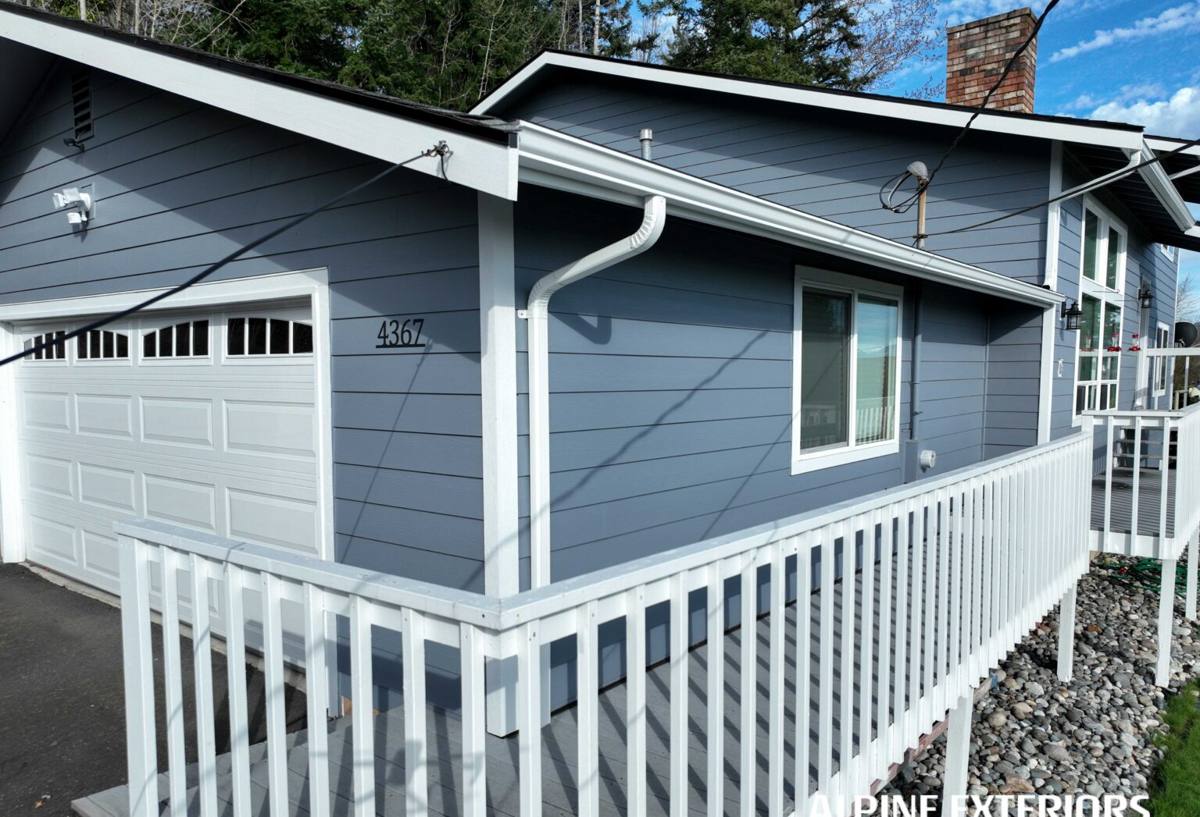
What Storm Damage Actually Looks Like on a Bow Roof
Not all storm damage announces itself. Some of it is obvious — missing shingles, a torn-back section of roofing, a tree limb through the decking. But a lot of what we get called out for in this area is quieter than that, and it's often the quiet damage that ends up costing homeowners the most because it sat unaddressed.
Wind Damage
Wind off the water and across open fields doesn't hit a roof evenly. It catches edges, ridges, and rake lines first, working shingles or panels loose from the fasteners without necessarily tearing them off completely. A shingle that's been lifted and re-seated by wind, then lifted again, loses its seal well before it looks visibly damaged from the ground.
Wind-Driven Rain Intrusion
Because storms here so often bring rain sideways rather than straight down, water finds its way under flashing, into vents, and along seams that would stay dry in a calmer rain event. This is one of the most common ways storm damage shows up weeks later as a ceiling stain, with the homeowner having no memory of a dramatic storm — just steady wind and rain doing their work.
Moss and Organic Growth Damage
Moss isn't a cosmetic issue. In a climate with this much sustained moisture, moss holds water against roofing material, works into seams and granule surfaces, and lifts shingle edges as it grows. A storm that would otherwise cause minor, repairable damage can do much more harm to a roof that already has moss compromising its surface and fastening points.
Debris Impact
Fir and cedar are common around this part of Skagit County, and both drop limbs readily in wind. Impact damage ranges from a few cracked or punctured shingles to compromised decking underneath, and the difference between those two matters a great deal for repair scope.
What a Correct Storm Repair Involves
A storm repair done right isn't just about replacing what's visibly missing. It's about making sure the repair addresses the actual path water is taking, not just the symptom that's easiest to see.
- Confirming the decking underneath damaged shingles or panels hasn't absorbed moisture or gone soft
- Matching replacement materials as closely as possible in type, profile, and weathering so the repair doesn't stand out or perform differently than the surrounding roof
- Re-establishing proper flashing at any valleys, penetrations, or edges disturbed by the damage or the repair itself
- Checking fastening patterns on surrounding shingles or panels that may have been loosened by the same wind event, even if they didn't fail outright
- Verifying that underlayment in the repaired section is intact and properly lapped, not just covered over
Skipping any of these steps is how a "repaired" roof ends up leaking again in the next storm — not because the visible damage wasn't fixed, but because something underneath it wasn't checked.
Our Process for Bow Homeowners
- Inspection. We look at the damaged area and the roof around it, including flashing, vents, and decking condition where accessible, not just the spot that's obviously affected.
- Documentation. We photograph and describe the damage clearly, which matters whether you're filing an insurance claim or just want a clear record of what was found and why we're recommending a given repair.
- Honest scope. We tell you plainly whether this is a targeted repair or whether the damage is a sign the roof needs broader attention. We don't pad a repair into a bigger job, and we don't undersell a job that genuinely needs more done.
- Repair. We match materials, correct flashing, and re-secure surrounding areas as needed — not just the failed section.
- Cleanup and follow-up. Debris is cleared, and we're available if anything about the repair doesn't hold up as expected in the next round of weather.
Storm Damage Scenarios: What Drives Cost and Scope
Every storm repair is different, but the factors below are the ones that most often determine whether a job is a straightforward patch or a more involved repair.
| Factor | Lower Complexity | Higher Complexity |
|---|---|---|
| Decking condition | Dry, solid beneath damage | Soft or water-stained, needs replacement |
| Extent of wind lift | Isolated to one section | Spread across ridge, edges, or multiple slopes |
| Moss presence | Minimal, roof otherwise clean | Established growth compromising surrounding material |
| Flashing involvement | Field shingles or panels only | Valley, chimney, or vent flashing disturbed |
| Material availability | Common profile, easy match | Discontinued or unusual material needing closer matching |
Because we can't quote a fixed price without seeing the roof, we always give a broad, honest range up front once we've assessed the damage, and we explain exactly which of these factors is driving the number.
Insurance Claims and Documentation
Many storm repairs in this area involve a homeowner's insurance claim, and the difference between a smooth claim and a frustrating one usually comes down to documentation. We provide clear photos and a written description of the damage that your adjuster can work from, and we're straightforward about what is storm-related damage versus what is pre-existing wear, like moss damage that predates the storm event. We'd rather tell you that plainly than let a claim get denied later over a discrepancy we could have flagged early.
Why Local Experience in Bow and Skagit County Matters
A repair crew that mostly works inland, or in drier parts of the state, doesn't always account for how differently a roof behaves in a marine environment like this one. Salt air affects fastener corrosion over time. Sustained moisture changes how quickly moss re-establishes after a cleaning. Wind patterns off open water and farmland behave differently than wind funneling between buildings in a denser town. A crew that already works roofs in Bow and the surrounding Anacortes area has seen these patterns repeat across many homes, and that experience shows up in the details — which fasteners we use, how tight we make flashing laps, and which parts of a roof we check even when they weren't the part that failed.
Reducing Future Storm Damage
Storm repair is also a good moment to address the conditions that made the damage worse than it needed to be. A few habits make a real difference in this climate:
- Keep gutters and valleys clear so wind-driven rain has somewhere to go instead of backing up under roofing material
- Have moss growth addressed before it has a chance to lift shingle edges or hold moisture against the roof surface
- Trim back tree limbs that overhang the roof, especially fir and cedar limbs prone to dropping in wind
- Have flashing checked periodically, not just after visible damage, since flashing failure is often silent until water finds its way in
- After any significant windstorm, do a visual check from the ground for lifted or missing material, even if nothing is leaking yet
None of this prevents every storm from causing damage, but it reduces how much damage a given storm causes, and it makes repairs smaller and less frequent over time.
Get an Honest Look at Your Roof
If a recent storm has you wondering about your roof's condition, or you've noticed a stain, a draft, or debris that suggests something happened up there, it's worth having it looked at before the next weather system comes through. We offer a free, no-pressure estimate for homeowners in Bow and the surrounding Anacortes area — use the form below to get started.