 Anacortes Exterior
 Siding Repair Built for Similk Beach's Exposure
Homes along Similk Beach sit close enough to the water that siding takes a different kind of beating than a house a few miles inland in Anacortes. Salt-laden air, wind-driven rain off the strait, and a long, damp moss season all work on exterior walls year-round. When we get a call for siding repair out here, we're rarely dealing with a single isolated problem. Usually it's a combination of moisture intrusion, coating failure, and organic growth that's been building for a while before it became visible from the street.
This page focuses specifically on siding repair for the Similk Beach area — what makes repair here different, what a correct repair actually involves, and when repair is the right call versus when it's time to talk about replacement.
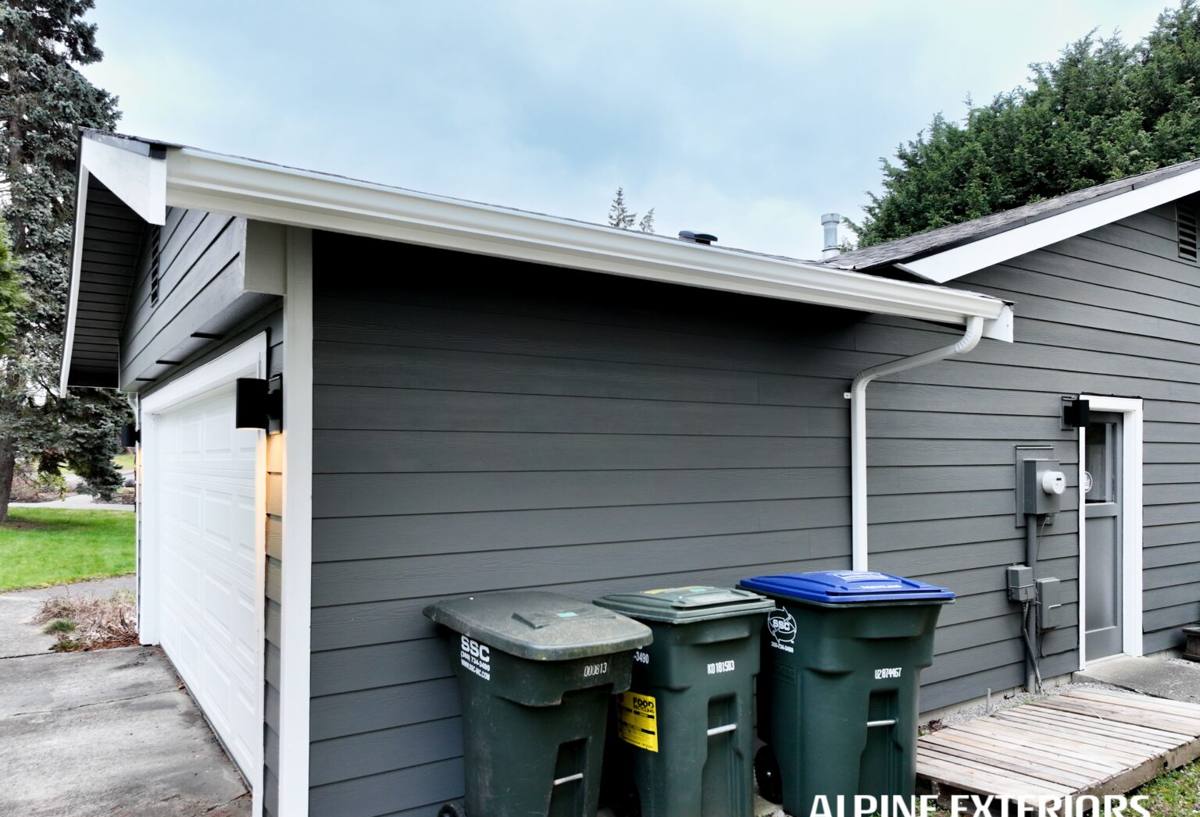
Why Similk Beach Siding Fails Differently
Salt Air and Coating Breakdown
Airborne salt is corrosive and hygroscopic — it pulls moisture out of the air and holds it against exposed surfaces. On siding, this accelerates coating breakdown, especially on the weather-facing walls that catch wind directly off the water. Fasteners, flashing, and any exposed metal trim are especially vulnerable to accelerated corrosion in this environment.
Driving Rain and Water Intrusion
Skagit County gets its share of rain generally, but waterfront and near-waterfront properties like those around Similk Beach take it at an angle, driven by wind, rather than falling straight down. That matters because driving rain finds gaps that vertical rain never would — at lap joints, around penetrations, at inside corners, and anywhere caulking has started to crack or pull away. Once water gets behind the siding plane, it doesn't dry out quickly in our climate, and that's when real damage starts.
Moss, Algae, and the Long Wet Season
Western Washington's extended damp season gives moss and algae a long runway to establish themselves on north-facing walls, under eaves, and anywhere airflow and sun exposure are limited. Beyond the cosmetic issue, moss holds moisture against the siding surface for extended periods, which is exactly the condition that leads to soft spots, delamination, and coating failure underneath.
What a Real Siding Repair Assessment Looks Like
A proper repair starts with figuring out whether the visible damage is the whole story or just the part you can see. We check:
- Whether damage is limited to surface coating or has reached the substrate underneath
- Condition of flashing at windows, doors, and any wall penetrations
- Caulking and sealant integrity at joints, corners, and trim transitions
- Signs of moisture behind the siding — soft board, staining, or bulging
- Fastener condition, especially on walls with direct wind and salt exposure
- Moss and algae coverage and whether it has migrated tightly against the surface for a long period
- Whether the original installation detail (overlaps, gaps, clearances) was correct to begin with
That last point matters more than homeowners often expect. A lot of repair calls trace back to an installation shortcut from years earlier — insufficient clearance at the bottom edge, missing kick-out flashing, or caulk used in place of proper flashing. Repairing the visible symptom without correcting the underlying detail just buys a few more years before the same problem reappears.
Repair vs. Replacement: How We Make the Call
Not every damaged section needs full replacement, and we're not going to tell you it does. But repair only makes sense when the underlying material and structure are sound. Here's roughly how we think through it:
| Situation | Typical Recommendation |
|---|---|
| Isolated coating wear or minor caulk failure, substrate solid | Spot repair and reseal |
| Cracked or damaged boards in a limited area, rest of wall sound | Section replacement with matched material |
| Soft or delaminated boards from long-term moisture intrusion | Replace affected section; correct the water entry point |
| Widespread coating failure or moisture damage across multiple walls | Full re-side is usually more cost-effective long term |
| Original siding material is prone to recurring moisture issues (see below) | Replacement discussion, especially on exposed elevations |
We'll always give you the honest read on which category your home falls into, including telling you when a repair is genuinely the right, cost-effective answer.
Why Existing Material Matters for Repair Options
What your home is currently sided with changes both what a repair can accomplish and how long it will hold up afterward. A few honest notes on common materials we encounter around Anacortes:
Vinyl siding can be spot-repaired reasonably well when panels are still available in a matching profile and color, but older vinyl fades unevenly, so a patched section can be visibly mismatched even when the repair itself is done correctly. Vinyl is also more brittle in cold, and repeated wind exposure near the water can accelerate cracking at fastener points.
Cedar and other wood siding can often be repaired at the board level, but wood is the material most sensitive to the exact conditions Similk Beach delivers — sustained moisture plus salt air is a tough combination for any wood coating system, and repaired sections need diligent, ongoing maintenance to keep pace with the rest of the wall.
LP SmartSide and other engineered wood products rely heavily on the factory coating and correct edge-sealing to resist moisture. Once water gets past a compromised edge or a coating breach, the underlying material can swell or soften, and that kind of damage often extends further than what's visible from outside — which is why what looks like a small repair sometimes turns into a bigger section replacement once we open the wall up.
Fiber cement (including James Hardie) holds up differently because it's not an organic material — it doesn't rot, and it isn't a food source for moss or algae the way wood-based products can be. Repairs to fiber cement are typically limited to correcting installation details, replacing an impact-damaged board, or refreshing caulking, rather than chasing moisture damage through the substrate.
Our Siding Repair Process for Similk Beach Homes
1. On-Site Assessment
We walk the exterior, check every elevation (not just the one you called about — the water-facing side often has issues that haven't shown themselves yet), and look at flashing, trim, and penetrations along with the siding itself.
2. Honest Scope and Straightforward Pricing
You get a clear explanation of what we found, what's driving it, and what it will take to fix — including options if there's a range of ways to approach it. No pressure to upsize a repair into a full re-side unless the underlying condition actually calls for it.
3. Correcting the Cause, Not Just the Symptom
If the damage traces back to a flashing gap, missing clearance, or a failed sealant joint, we fix that detail as part of the repair. Patching over a wall that still has an active water entry point just delays the next call.
4. Matched, Weather-Ready Materials
Where boards or panels need replacing, we match profile and finish as closely as the existing siding allows, and make sure new material and fasteners are appropriate for a near-waterfront, high-exposure wall.
5. Cleanup and Walkthrough
We walk the repaired area with you before we consider the job done, so you know exactly what was fixed and what to keep an eye on going forward.
Maintenance That Extends the Life of a Repair
A good repair holds up a lot longer with a little seasonal attention, especially this close to the water. A practical checklist for Similk Beach homeowners:
- Rinse salt residue off exterior walls a few times a year, particularly on wind-facing elevations
- Keep gutters clear so overflow isn't running down the siding face during heavy rain
- Trim back vegetation that shades walls and keeps them damp longer than the rest of the house
- Check caulking annually at trim joints and around windows and doors, and re-seal before it fully fails
- Address moss and algae early with a gentle wash rather than letting it establish for a full season
- Have any soft, discolored, or bulging siding checked promptly rather than waiting for it to spread
Why Hire a Crew That Already Works This Area
Similk Beach isn't a generic siding job. A crew that regularly works near-waterfront properties in Skagit County already knows where driving rain tends to find its way in on a given elevation, how much moss growth is normal versus a warning sign, and what level of corrosion protection actually holds up against salt air rather than looking fine for the first year and failing after that. That local pattern-recognition is the difference between a repair that gets fixed once and a repair that gets fixed correctly.
It also means we're not guessing at material choices. When repair isn't enough and replacement makes more sense, our standard is James Hardie fiber cement siding, engineered in HZ product lines specifically for climates with sustained moisture exposure, finished with a factory-applied ColorPlus coating that isn't relying on a field-applied paint job to hold color and protect the surface. It's non-combustible, it isn't a food source for moss or algae the way organic siding materials can be, and it carries a strong transferable warranty. We install it because, on homes exposed to conditions like Similk Beach sees, it's held up to the standard we're willing to put our name behind.
Get an Honest Look at Your Siding
If you're seeing soft spots, persistent moss, failing caulk, or coating that's giving out on a Similk Beach home, it's worth having someone look before the damage spreads further behind the wall. We'll give you a straightforward assessment, an honest repair-versus-replacement recommendation, and a free, no-pressure estimate — fill out the form below to get started.