 Anacortes Exterior
 Similk Beach Sits in a Tough Spot for Exterior Siding
Homes along Similk Beach face a combination of weather stresses that most inland Skagit County properties never have to deal with. Salt-laden air moves in off the water, wind-driven rain hits siding at an angle instead of straight down, and the shaded, damp shoulder seasons here run long enough that moss and algae get a real foothold on anything that stays wet. Any siding material installed in this neighborhood has to hold up to all three at once, year after year, not just survive one bad winter.
Salt Air and Slow Corrosion
Salt air doesn't just affect metal fasteners and flashing — it also breaks down cheaper paint films and caulk faster than it would a few miles inland. Siding that looks fine on a spec sheet can chalk, fade, or start letting moisture through years ahead of schedule once it's actually exposed to a marine environment like Similk Beach's.
Driving Rain and Wind-Driven Moisture
Wind off the water pushes rain sideways into wall assemblies, which puts far more stress on flashing, house wrap, and butt joints than a calm rainstorm would. If those details aren't built correctly, water finds its way behind the siding rather than running off the face of it — and that's where rot and hidden damage start.
A Long Moss Season
Shaded north and west-facing walls near the water stay damp longer into spring and fall than siding does elsewhere in the county. Moss and algae growth on siding isn't just cosmetic — it holds moisture against the surface and accelerates whatever deterioration is already happening underneath.
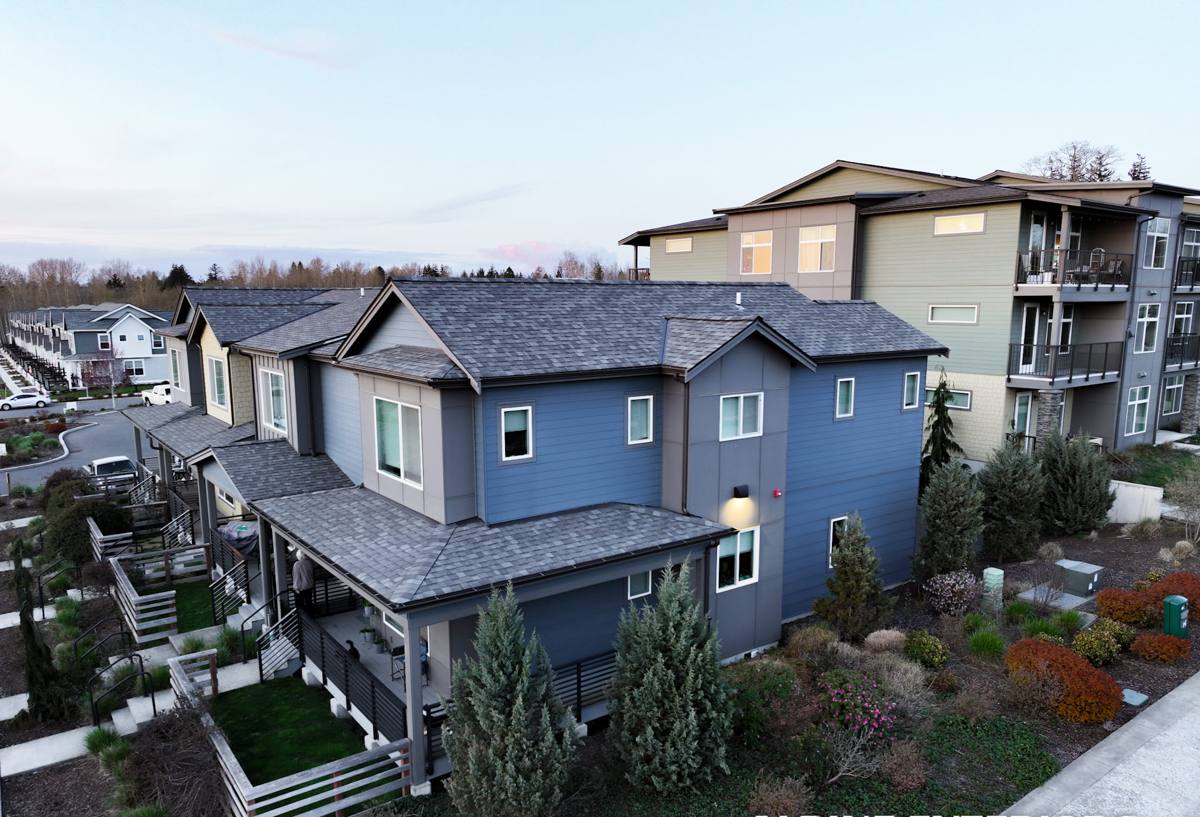
What James Hardie Fiber Cement Brings to This Kind of Exposure
We install James Hardie fiber cement siding exclusively, and in an environment like Similk Beach that's not a marketing choice — it's a practical one. Fiber cement is made from cement, sand, and cellulose fiber, which means it doesn't have the organic wood content that feeds rot or the all-plastic composition that can warp and fade under UV and salt exposure.
A Core That Doesn't Feed Moisture Problems
Because Hardie siding has no wood fiber for moisture to break down, it resists the swelling, cupping, and soft spots that show up on wood-based or wood-composite siding products after a few damp seasons near the water. It's also non-combustible, which matters to insurers and to homeowners thinking long-term about wildfire smoke and ember exposure during Washington's dry summer stretches.
HZ5 Engineering for This Climate
James Hardie makes region-specific formulations, and the HZ5 line is engineered for the wetter, harsher climate zones the Pacific Northwest falls into. That's the product line we use on Similk Beach jobs — it's built with this kind of moisture exposure in mind rather than a one-size-fits-all national formula.
ColorPlus Factory Finish
Field-painted siding is only as good as the paint job and the maintenance schedule behind it. Hardie's ColorPlus finish is baked on in a controlled factory setting, which gives it better fade resistance and a stronger bond to the substrate than most site-applied paint — a real advantage where salt air is already working against the finish every day.
Why We Only Install James Hardie
We don't install vinyl, LP SmartSide, Cemplank, Allura, or primed wood siding, and we won't pretend that's just personal preference. After years of doing exterior work in this region, we standardized on James Hardie because it's the product that consistently holds up to marine exposure, heavy rain, and moss pressure with the least long-term maintenance burden and the strongest transferable warranty backing it. Other products have their own strengths, but on a shoreline-adjacent property like this, we're not willing to put our name on an installation we don't believe will perform for the long haul.
What a Correct Installation Actually Involves
Fiber cement siding is only as good as the details behind it. A good-looking install with the wrong flashing or fastening pattern can still let water into the wall assembly — and on a property exposed to wind-driven rain, those mistakes surface faster than they would somewhere more sheltered.
Weather-Resistive Barrier and Flashing
Every job starts with a continuous weather-resistive barrier, properly lapped and taped, with flashing detailed at every window, door, and penetration so water is directed out and down rather than into the wall. This is the layer that does the real work if driving rain gets past the siding face — and it's the layer that's invisible once the job is done, which is exactly why it needs to be right the first time.
Fastening and Gapping to Spec
James Hardie publishes specific fastener types, spacing, and gapping requirements between boards and at butt joints, and those specs exist for a reason — correct gapping allows for expansion and keeps water from wicking into joints. We follow manufacturer installation instructions to the letter, which is also what keeps the material warranty intact.
Caulking and Sealant Choices
Not all sealants perform the same in a salt-air environment. We use sealants rated for the exposure and the substrate at joints, trim, and penetrations, and we don't over-caulk in places that are supposed to allow drainage — sealing the wrong spot can trap moisture instead of keeping it out.
Our Process for a Similk Beach Siding Project
- On-site inspection — we look at existing siding, trim, and any visible moisture damage before quoting anything.
- Measurement and material order — exact square footage, trim profiles, and HZ5 product selection based on your home's exposure.
- Tear-off and prep — removal of old siding, inspection of sheathing underneath, and repair of any rot found before new material goes up.
- Weather barrier and flashing installation — the step that determines how the wall performs for the next several decades.
- Siding installation — Hardie boards and trim installed to manufacturer spec for fastening, gapping, and clearance.
- Final walkthrough and cleanup — punch-list review with you before we consider the job finished, plus warranty registration paperwork.
Cost Factors for Fiber Cement Siding in Similk Beach
Every home is different, but these are the factors that most often move the price on a job in this neighborhood specifically.
| Factor | Why It Matters Here |
|---|---|
| Existing wall condition | Hidden moisture or rot behind old siding on shoreline-exposed walls adds repair scope before new siding can go up. |
| Wall exposure and orientation | Sides facing prevailing wind and rain often need extra flashing detail and sometimes a different trim approach. |
| Trim and detail work | Homes with more corners, windows, and architectural detail take more labor per square foot than a simple rectangular wall. |
| Siding profile and color | Lap width, shingle-style panels, and ColorPlus color selection all affect material cost. |
| Access and site conditions | Sloped lots, limited driveway access, or tight setbacks near the water can affect staging and labor time. |
Signs Your Similk Beach Home May Need New Siding
- Soft or spongy spots when you press on the siding, especially near the bottom courses
- Persistent moss or algae growth that comes back within weeks of cleaning
- Paint that's peeling, bubbling, or chalking faster than it used to
- Visible gaps, warping, or boards pulling away from the wall
- Rising energy bills that hint at moisture or air infiltration through the wall assembly
- Interior wall or ceiling stains near exterior walls, which can indicate water getting past the siding
Maintenance in a Salt Air, Moss-Prone Environment
Even a well-installed Hardie siding job benefits from a little routine attention in this climate. A gentle rinse a couple of times a year knocks back salt residue and early moss growth before it gets a grip, and keeping gutters clear reduces the amount of water running down the wall face during heavy rain. Trimming back vegetation that shades siding and keeps it damp longer also goes a long way toward keeping moss pressure down between cleanings.
Why Hire a Crew That Already Works This Neighborhood
Siding crews that mostly work drier, inland parts of Skagit County don't always think about wind-driven rain detailing or salt exposure the same way a crew that regularly works the Anacortes shoreline does. Knowing how Similk Beach's exposure differs from a job three miles inland changes decisions on flashing, fastener choice, and even which walls need extra attention during installation. That local familiarity, combined with only installing one product system we stand behind, is what lets us commit to a job we're confident will hold up here.
If you're weighing your siding options in Similk Beach or want a straight answer on what your home actually needs, we're happy to take a look and put together a free, no-pressure estimate — use the form below to get started.