 Anacortes Exterior
 Building New in Ship Harbor? Get the Windows Right the First Time
New construction is the one chance to get window installation right without fighting old framing, old flashing, or someone else's shortcuts. In Ship Harbor, that first chance matters more than in a lot of places. This is a marine-influenced corner of Anacortes, close enough to the water and the ferry terminal traffic that homes take a steady diet of salt-laden air, wind-driven rain off Rosario Strait, and long stretches of damp, low-light weather that keep moss and mildew active for much of the year. Windows installed correctly into new framing here will outlast the house's first roof. Windows installed with generic techniques borrowed from drier inland builds start showing problems in five to ten years — usually right around the time nobody remembers who did the work.
We install new-construction windows for builders and homeowners throughout Anacortes and Skagit County, and we treat Ship Harbor jobs with the same attention we'd want if it were our own house going up two blocks from saltwater. This page covers what that actually means.
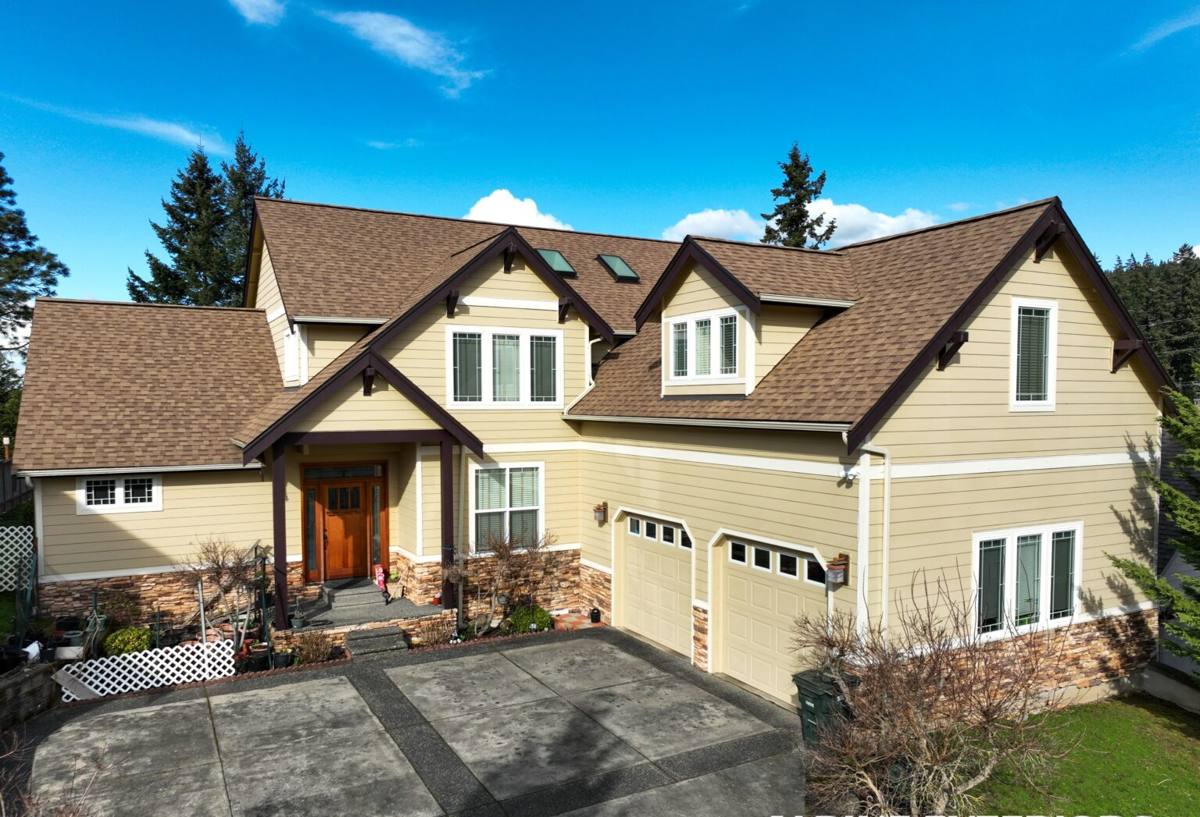
What Ship Harbor's Climate Does to a New Window Opening
Every coastal Anacortes neighborhood deals with rain and wind, but a few things stack up in Ship Harbor's favor of causing early failure if the install is sloppy:
- Salt air corrosion: Airborne salt accelerates corrosion on unprotected fasteners, cheap flashing tape, and lower-grade hardware. It doesn't just affect the window frame — it works on everything around it.
- Wind-driven rain: Storms off the Strait don't just fall straight down; they push rain sideways into wall assemblies. A window opening that isn't flashed to shed water outward, not just downward, will take on moisture during exactly the storms it's supposed to block.
- Extended damp season: Fall through spring in Skagit County is long and gray. Any water that gets behind a window doesn't dry out quickly — it sits, and that's when rot and mold get a foothold in framing that's otherwise brand new.
- Moss and organic growth: Moss doesn't just grow on roofs here. Given a shaded, damp sill or a poorly sloped trim detail, it will colonize exterior wood and hold moisture against the building longer than bare wood would on its own.
None of this means new construction in Ship Harbor is a special challenge — it means the standard techniques have to actually be followed, not shortcuted, because the climate will find every gap.
What a Correct New-Construction Window Install Actually Involves
Flashing Comes Before the Window, Not After
The single biggest difference between a window that lasts and one that doesn't is what happens before the window ever gets set in the opening. A correct install builds a drainage plane: sill pan flashing that slopes water back out of the wall, side flashing that laps over the sill pan, and head flashing that laps over the housewrap above. Done in the wrong order, or with tape substituted for proper pan flashing, water gets a path into the wall instead of out of it — and you won't know until the drywall stains or the sill starts to soften.
Housewrap and Weather-Resistive Barrier Integration
The window opening isn't an isolated detail — it has to tie into the whole-house weather barrier correctly, with proper shingle-lap sequencing so water sheds down and over each layer, never up and under it. This is standard construction science, but it's the step that gets rushed on tight build schedules, which is exactly where problems start.
Shimming, Squaring, and Fastening
A window that's out of square binds, doesn't seal against its own weatherstripping correctly, and stresses the frame over time. Correct shimming at the manufacturer's specified points, checked for level and plumb before final fastening, keeps the sash operating smoothly for the life of the window — not just on install day.
Insulation Without Overcompression
The gap between the rough opening and the window frame needs to be insulated, but low-expansion foam or backer rod has to be used correctly — packing standard spray foam into that gap can bow the frame inward and cause operational problems that don't show up until months later.
Interior and Exterior Sealant Details
Sealant is the last line of defense, not the first. A correct install relies on flashing and drainage to do the real work, with sealant backing it up at specific joints — not smeared everywhere as a substitute for proper flashing underneath.
Choosing Frame Material for a Coastal Anacortes Build
New construction gives you a real choice on window material, since there's no existing frame constraining the decision. In a salt-air, high-moisture environment like Ship Harbor, that choice matters more than in a drier inland build.
| Frame Material | How It Handles This Climate | Maintenance Reality |
|---|---|---|
| Vinyl | Good moisture and salt resistance, no corrosion risk, stable performance in damp conditions | Low — occasional cleaning, no repainting |
| Fiberglass | Excellent dimensional stability in temperature and moisture swings, strong resistance to coastal wear | Low — very durable finish, minimal upkeep |
| Wood (clad or unclad) | Handsome but vulnerable to moisture intrusion at joints and finish failure in salt air without diligent upkeep | High — regular finish maintenance is non-negotiable near saltwater |
| Aluminum | Strong but thermally conductive and prone to condensation issues in this climate unless thermally broken | Moderate — watch for condensation-related wear over time |
We'll walk through the trade-offs for your specific design — this isn't about pushing one product, it's about being honest that some materials ask more of a homeowner in this environment than others.
Glass and Performance Specs Worth Getting Right
New construction is also the moment to dial in glass performance instead of retrofitting it later. For Ship Harbor's exposure, we generally talk through:
- Low-E coatings tuned for the Pacific Northwest's mix of overcast days and low winter sun angles, not a hot-climate spec
- Argon-filled double or triple pane glazing for thermal performance through Skagit County's damp winters
- Impact and wind-load ratings appropriate to a site exposed to Strait winds, particularly on upper stories or unobstructed elevations
- Condensation resistance ratings, since interior humidity plus cold glass is a common source of window complaints in coastal Washington homes
Our Process on a Ship Harbor New-Construction Job
- Plan review: We look at rough openings, elevations, and exposure before the windows are ever ordered, flagging any opening that needs extra flashing attention due to wind or rain exposure.
- Product selection walkthrough: We talk through frame material, glass package, and hardware with the homeowner or builder based on the home's actual exposure — not a one-size-fits-all spec.
- Coordinated install timing: Windows go in at the right point in the build sequence, after the weather-resistive barrier is up and before siding closes in the details, so flashing laps correctly with no shortcuts.
- Flashing and drainage plane installation: Sill pans, side flashing, and head flashing installed in the correct order, every opening, every time.
- Window setting, shimming, and fastening: Squared, plumbed, and fastened to manufacturer spec.
- Final seal and inspection: Interior and exterior sealant details completed, then a walk-through check on operation, sealing, and squareness before we call it done.
Why a Local Crew Matters for This Specific Job
New-construction window flashing isn't complicated in theory, but it's the kind of work where local experience shows. A crew that's installed windows across Anacortes and Skagit County knows how hard Ship Harbor's wind-driven rain actually gets in a January storm, knows which elevations take the worst of it, and doesn't need to guess at flashing details because they've already seen what happens when those details are skipped on a nearby job. That's the difference between a crew reading a manufacturer's install guide for the first time and one that's applied it dozens of times in this exact climate.
It also means accountability. If a question comes up two years after your build — a sticky sash, a sill that needs a look — you're calling a crew that's still working in your neighborhood, not chasing down someone who did one job in the area and moved on.
Simple Checklist for Homeowners and Builders
- Confirm sill pan flashing is specified and installed before the window, not skipped or substituted with tape alone
- Ask what frame material is being used and why it fits a salt-air, high-moisture site
- Confirm the weather-resistive barrier laps correctly over the window's flashing at head and sides
- Check that low-expansion foam or backer rod is used in the shim gap, not standard high-expansion foam
- Make sure glass specs (Low-E, gas fill, condensation resistance) match Pacific Northwest conditions, not a generic default
- Get manufacturer warranty documentation and installer workmanship coverage in writing
Get a Straightforward Estimate
Whether you're a builder finishing out a Ship Harbor lot or a homeowner overseeing your own new build, we're happy to walk the plans, talk through window options for the site's exposure, and give you a clear, no-pressure estimate. Fill out the form below and we'll get back to you with real answers, not a sales pitch.