 Anacortes Exterior
 Roofing Built for Fidalgo Island, Not Just Anacortes in General
Fidalgo Island sits right where Puget Sound weather gets concentrated: salt-laden air off the water, driving rain that comes in sideways during winter storms, and shade pockets under fir and cedar canopy that stay damp for days after a system passes through. A roof that would be perfectly adequate in a drier inland town can fail early here if it wasn't detailed with this specific exposure in mind. When we install a new roof on Fidalgo Island, we're not just swapping shingles — we're building an assembly that has to shed constant moisture, resist corrosion from salt air, and stay clean enough that moss doesn't get a foothold in the first place.
This page is specifically about new roof installation for homes on Fidalgo Island. If you're weighing a full replacement versus a repair, or you just want to understand what a correct installation actually involves before you sign a contract, this is written for you.
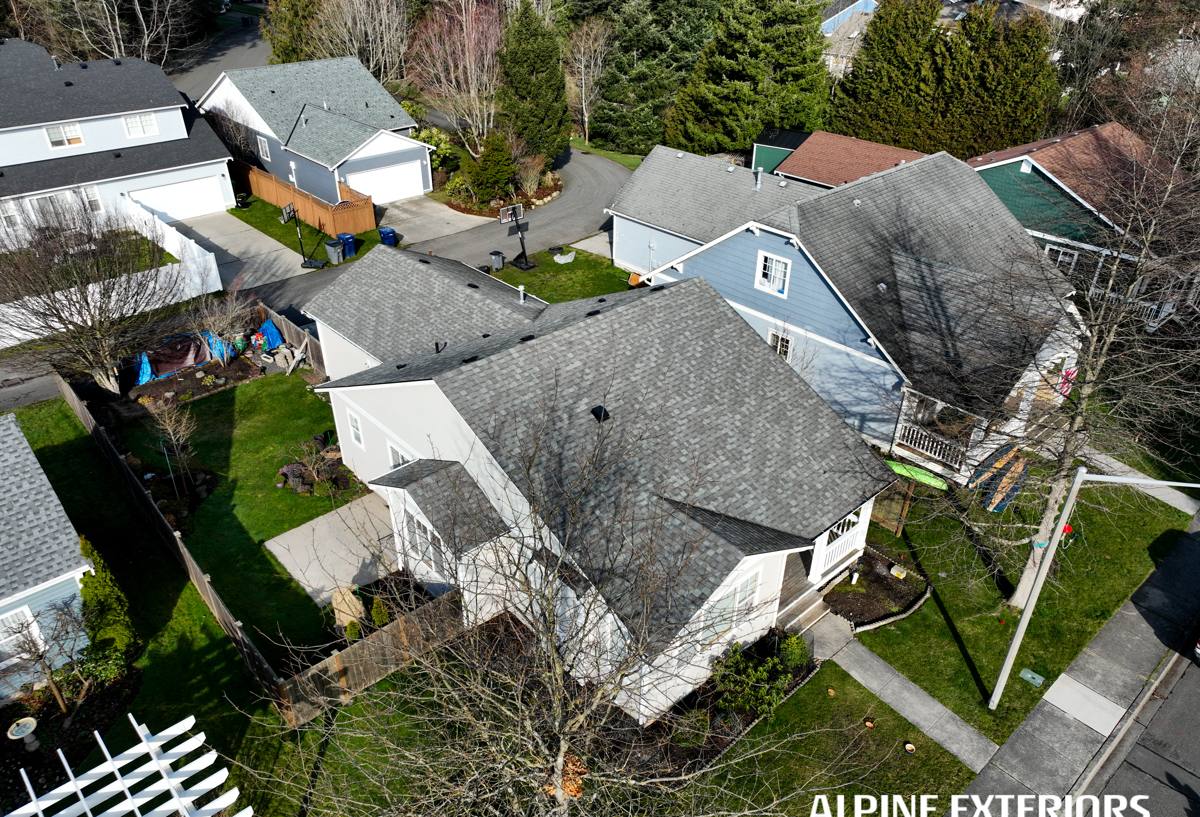
What Fidalgo Island's Climate Actually Does to a Roof
Salt Air and Metal Fatigue
Homes closer to the water — and that's a large share of Fidalgo Island — deal with airborne salt that accelerates corrosion on exposed fasteners, flashing, and any unpainted or lower-grade metal. Over years, this shows up as rust streaking at valleys, pitted nail heads, and flashing that fails quietly at the seams long before the field of the roof looks worn. It's a slow process, which is exactly why it gets missed until water is already getting into the deck.
Driving Rain and Wind-Driven Wet
Skagit County storms don't always drop rain straight down. Wind off the Sound pushes water sideways and up under lapped edges, which is a different stress than a calm, vertical rain event. Roofs here need underlayment and flashing details that assume water will be forced uphill and sideways at some point in their life, not just details that handle gravity-fed runoff.
Long Moss Season
Between the tree cover common on the island and a wet season that stretches from fall through spring, moss and algae have a long window to establish themselves. Moss isn't just cosmetic — its root structure lifts shingle tabs, holds moisture against the roofing material, and accelerates granule loss. A roof installed without moss-resistant strategy in mind will need moss treatment or premature repair within a handful of years, even if the shingles themselves are rated for decades of life.
What a Correct New Roof Installation Includes
A new roof is more than the shingles or panels you see. The visible layer is the last thing installed and the least important factor in whether the roof actually keeps water out for its full service life. Here's what we consider non-negotiable on every Fidalgo Island installation:
- Full tear-off and deck inspection — we don't roof over old layers; hidden deck rot from years of trapped moisture has to be found and replaced before anything new goes down.
- Ice-and-water shield at vulnerable zones — valleys, eaves, and around every penetration, since these are where wind-driven rain and standing meltwater cause the most damage.
- Synthetic underlayment across the full deck — a continuous secondary water barrier that buys time if the primary roofing surface is ever compromised by wind or debris.
- Corrosion-resistant flashing and fasteners — chosen specifically because of the salt exposure common near the water on the island, not generic hardware.
- Balanced intake and exhaust ventilation — proper airflow through the attic controls condensation, which matters as much as rain in a marine climate this humid.
- Moss-resistant material selection or treatment strategy — so the roof isn't fighting a losing battle against organic growth from year one.
Roofing Material Options for Island Homes
There's no single "best" material for every home — it depends on your roof's pitch, your home's style, your budget, and how much maintenance you're willing to stay on top of. Here's an honest comparison of what we typically install or discuss with Fidalgo Island homeowners:
| Material | Moisture & Moss Behavior | Maintenance Level | Typical Lifespan |
|---|---|---|---|
| Architectural asphalt shingles | Good with proper ventilation and algae-resistant granules | Low to moderate — periodic moss checks | 25-30 years |
| Standing seam metal | Excellent shedding, minimal moss anchoring surface | Low — occasional fastener/seam check | 40-50+ years |
| Cedar shake | Attractive but holds moisture longer, needs active moss management | High — regular treatment required | 20-30 years with upkeep |
| Synthetic composite shingles | Good moisture resistance, low organic growth | Low | 30-50 years |
We don't push cedar shake as a default here, and we're upfront about why: it's a beautiful, traditional look, but it holds moisture against itself longer than other materials, which means in a climate with this much sustained dampness it demands a maintenance commitment a lot of homeowners underestimate when they choose it. That's not a defect in the product — it's a trade-off, and we'd rather you know it going in than find out three years later.
Our Installation Process on Fidalgo Island
1. On-Site Assessment
We walk the roof and the attic, not just one or the other. Attic inspection tells us about existing ventilation problems, past leaks, and insulation condition that the roof surface alone won't reveal.
2. Material and Ventilation Plan
Based on your home's exposure — how close you are to the water, how much tree cover shades the roof, the pitch and complexity of the roofline — we put together a material recommendation and a ventilation plan specific to that roof, not a one-size answer.
3. Tear-Off and Deck Repair
Old roofing comes off completely. Any soft, rotted, or water-stained decking gets replaced before a single new shingle or panel goes down. This is the step that determines whether the new roof lasts its full rated life or fails early from below.
4. Underlayment and Flashing
Ice-and-water shield at the critical zones, synthetic underlayment across the field, and new flashing at every valley, wall intersection, chimney, and penetration. This is where most long-term leaks actually originate if it's rushed or done with generic materials instead of ones suited to salt exposure.
5. Roofing Installation
Installed to manufacturer specification with attention to nailing patterns, exposure lines, and fastener corrosion resistance — details that matter more here than in a drier, inland climate.
6. Ventilation and Cleanup
Intake and exhaust vents balanced, job site cleaned of debris and fasteners, and a final walkthrough so you understand what was done and why.
Why Hiring a Crew That Already Works Fidalgo Island Matters
A crew that regularly works this specific area already knows which parts of the island see the heaviest wind-driven rain, which neighborhoods have the most tree cover and therefore the worst moss pressure, and how close a given property is likely to be to salt air exposure. That local pattern recognition changes real decisions — flashing grade, underlayment coverage, ventilation sizing — before a single shingle goes on the roof. A crew unfamiliar with the island is working from a generic playbook and hoping it fits; we're not guessing, because we've already seen how roofs perform here over time.
Anacortes and the surrounding Skagit County area also has its own permitting process and inspection expectations, and a local crew has that relationship and familiarity built in rather than learning it on your project.
Signs Your Fidalgo Island Roof May Need Replacement, Not Repair
- Granule loss heavy enough that you're finding grit in gutters every season, not just after a storm
- Moss that keeps returning within a year or two of cleaning, even after treatment
- Soft spots or sagging visible from the ground or in the attic deck
- Multiple past repairs in different areas of the roof rather than one isolated problem
- Flashing that's visibly rusted or separating at valleys and penetrations
- Interior staining on ceilings that recurs after heavy wind-driven rain events specifically
If you're only seeing one or two of these and the roof is younger than two-thirds of its expected lifespan, a repair may still be the honest answer — we'll tell you that directly rather than upselling a full replacement you don't need yet.
Cost Factors Worth Understanding Before You Get Quotes
Roofing quotes on Fidalgo Island can vary widely, and the difference usually isn't padding — it's what's included. Before comparing numbers, understand what's driving the range:
| Factor | Why It Moves the Price |
|---|---|
| Roof pitch and complexity | Steep or multi-plane roofs take longer and require more safety setup |
| Deck condition | Hidden rot found during tear-off means added material and labor |
| Material choice | Metal and composite materials cost more upfront but less over the roof's life |
| Flashing and underlayment grade | Corrosion-resistant, full-coverage materials cost more but matter more here |
| Access and site conditions | Tree cover, tight lots, and staging space affect labor time |
A quote that looks unusually low is often missing one of these — most commonly deck repair contingency or upgraded flashing. Ask any contractor exactly what underlayment and flashing grade is included before comparing price against price.
A Straightforward, No-Pressure Estimate
If you're weighing a new roof for your Fidalgo Island home, we're happy to come take a direct look — at the roof surface and the attic — and give you a clear, honest assessment of what your roof actually needs given its age, exposure, and condition. No pressure, no inflated urgency. Use the form below to request a free estimate.