 Anacortes Exterior
 Why Siding Choice Matters More in Mount Vernon Than People Realize
Mount Vernon sits inland from Anacortes but still lives inside the same Skagit County weather pattern: damp winters, a marine air layer that carries salt and moisture well past the shoreline, and long stretches of the year where surfaces simply don't dry out fast. Add in the moss and algae pressure that comes from shaded lots, mature tree cover, and morning fog, and you have a climate that is quietly hard on exterior building materials — even though it rarely produces a dramatic storm event that would make a homeowner think "my siding needs attention."
That's the trap. Siding here doesn't usually fail because of one bad storm. It fails slowly, from repeated wetting and drying cycles, from moisture that gets behind the cladding and stays there, and from surface growth that traps humidity against the wall. A siding installation done right in Mount Vernon has to account for all of that from day one — not just look good on installation day.
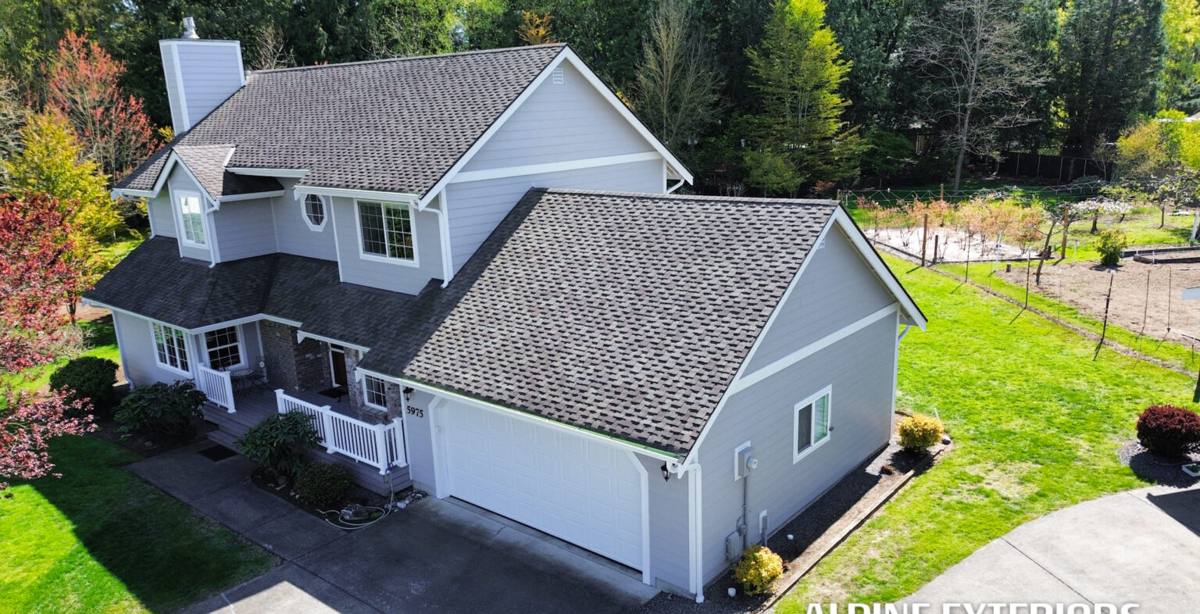
What Local Homes Actually Need From a Siding System
Before we talk about materials or install method, it helps to be specific about what the climate is actually asking of your siding:
- Dimensional stability when humidity swings from soggy winter to drier summer weeks
- Resistance to moisture absorption so the material itself doesn't become a reservoir that stays wet against the wall assembly
- A finish that resists moss, algae, and mildew staining without needing constant pressure washing or chemical treatment
- Corrosion-resistant fasteners and flashing since the marine air layer accelerates rust on unprotected metal, even inland from the water
- A weather-resistive barrier and flashing detail behind the siding that's actually installed correctly, not just present
Most siding failures we get called out to inspect in this area aren't really "siding problems" at all — they're water management problems that the siding happened to be sitting in front of.
How Siding Actually Fails Here
Moisture behind the cladding
Wind-driven rain doesn't need a hurricane to find its way behind poorly lapped siding, unsealed penetrations, or missing flashing at windows and trim. Once water gets behind the cladding in a climate that doesn't offer many fast-drying days, it stays there. Sheathing softens, fasteners lose their grip, and paint or factory finish starts failing from the back side out — which is why some siding looks fine from the street right up until it doesn't.
Moss and organic growth
Shaded siding, north-facing walls, and areas under tree canopy hold moisture longer and give moss, algae, and mildew exactly the conditions they need to take hold. On absorbent materials, that growth isn't just cosmetic — it holds additional moisture against the surface and accelerates whatever degradation is already happening underneath.
Fastener and trim corrosion
Salt-influenced air moves further inland than most people expect, especially with the Puget Sound and Skagit River delta nearby. Standard fasteners and unprotected metal trim can start showing corrosion years before a homeowner would expect, which shows up as rust streaking down the face of the siding.
What a Correct Siding Installation Actually Involves
A siding job is judged on what you can't see as much as what you can. Here's what has to happen underneath a quality installation, regardless of the finish product on top:
- Tear-off and substrate inspection — removing the old cladding and checking sheathing for rot, soft spots, or prior water damage before anything new goes on
- Repair of any damaged sheathing or framing found during tear-off, not just covering it up
- Weather-resistive barrier installed with correct lapping so water is directed down and out, not trapped
- Flashing at every window, door, and penetration — this is the single most common place we find shortcuts on older installs
- Correct fastener type, spacing, and penetration depth per manufacturer specification, not just "whatever holds it up"
- Proper clearance at grade, roofline, and any horizontal surfaces so the bottom edge of the siding isn't sitting in standing moisture
- Factory-finished or field-finished trim and caulking done to spec at joints and terminations
Skip any one of these steps and the siding on top — no matter the brand — is working against a compromised foundation.
Why We Install Only James Hardie Fiber Cement
We don't offer vinyl, LP SmartSide, or other fiber cement brands, and that's a deliberate standard, not a limitation of what we're capable of installing. In a climate defined by prolonged dampness, moss pressure, and salt-influenced air, the material choice matters as much as the workmanship.
James Hardie fiber cement is engineered specifically to resist the failure modes this region produces: it doesn't absorb and swell the way wood-based products can, it isn't prone to the softening or warping issues that show up on some engineered wood siding when moisture gets in at a cut edge or fastener hole, and it's non-combustible. Hardie's ColorPlus factory finish is baked on under controlled conditions and holds color and resists moss staining better than field-applied paint, which matters on shaded Mount Vernon lots where a wall can stay damp for days at a time.
Hardie also builds specific product lines engineered for different climate zones (their HZ5 line is built for exactly this kind of wet, temperature-swinging Pacific Northwest climate), and the company backs correctly installed product with a strong transferable warranty — which only holds up if the installation itself is done to their published specifications. That's the other half of why we standardized: a great product installed wrong still fails.
Material Comparison: What the Trade-Offs Actually Look Like
| Factor | James Hardie Fiber Cement | Vinyl Siding | Engineered Wood (LP-type) |
|---|---|---|---|
| Moisture absorption | Very low, engineered for wet climates | Doesn't absorb, but can warp and gap | Vulnerable at cut edges and fastener holes |
| Moss/algae resistance | Factory finish resists staining | Prone to green staining in shade | Prone to staining and surface breakdown |
| Fire resistance | Non-combustible | Combustible, can melt/deform | Combustible |
| Long-term maintenance | Low, factory-finished color holds | Low, but cracks/fades over time | Moderate to high, repainting and edge sealing needed |
| Warranty structure | Strong, transferable when installed to spec | Varies widely by manufacturer/grade | Varies, often shorter on finish |
This isn't a claim that other products are unusable — plenty of homes around the country wear them fine in drier climates. It's a statement about what holds up best under Skagit County's specific combination of prolonged moisture and moss pressure, which is why it's the only system we put our name behind.
Our Process for Mount Vernon Siding Projects
Every job starts with an on-site assessment, not a phone estimate. We walk the exterior, check for existing moisture damage, note shaded and high-exposure walls differently, and look at drainage, grade, and roofline details that affect how the new siding will perform. From there:
- We document substrate condition before any tear-off begins
- We remove old siding in sections to limit how long sheathing is exposed to weather
- We repair any damaged sheathing or framing before moving forward — no covering up a known problem
- We install and lap the weather-resistive barrier correctly, with attention to every window and door opening
- We flash penetrations and terminations per manufacturer detail, not a generic shortcut
- We install Hardie panels or lap siding to factory fastening specification
- We finish trim, caulking, and touch-up to match the ColorPlus finish
- We walk the finished job with the homeowner before calling it done
Signs Your Current Siding Is Already Losing the Fight
You don't need to wait for visible holes or missing panels to start planning a siding project. Watch for:
- Persistent moss or algae staining that comes back within weeks of cleaning
- Soft spots or slight give when you press on the siding, especially near the bottom courses
- Paint that's bubbling, peeling, or flaking rather than just fading evenly
- Visible gaps or warping at seams and corners
- Rust streaking below fasteners or trim
- A musty smell near exterior walls on the interior side
Any of these are worth a look before they turn into a sheathing repair on top of a siding replacement.
Why It Matters to Hire a Crew That Already Works This Area
Siding installation isn't a one-size-fits-all trade. A crew that works Anacortes, Mount Vernon, and the rest of Skagit County regularly already understands which walls take the worst weather exposure, how local permitting and inspection processes run, and what moisture and moss conditions actually look like on homes here versus a drier inland market. That local pattern recognition shows up in the details — where extra flashing attention gets paid, which sides of a house get finished with more care at the caulk lines, and which fastening adjustments matter given the humidity here compared to manufacturer's general specifications.
It also matters for accountability. A crew based in the region isn't disappearing after the invoice clears — warranty follow-up, minor touch-ups, and answering questions three years down the road are all easier when the contractor is still local and still standing behind the same standard they installed with.
Ready to Talk About Your Siding?
If your Mount Vernon home is due for new siding, or you're just not sure whether what you have is holding up the way it should, we're happy to take a look. We'll give you a straightforward, no-pressure assessment and a free estimate — no scare tactics, just an honest read on your home's exterior and what it actually needs. Fill out the form below to get started.