 Anacortes Exterior
 Building Decks for Mount Vernon's Skagit County Weather
Mount Vernon sits in the Skagit Valley, and like the rest of Skagit County it gets a long, wet stretch of the year where a deck spends more time damp than dry. Add in the moss and algae that take hold on any shaded or north-facing surface through fall and winter, and the driving rain that blows in off the water during storms, and you've got a climate that's genuinely hard on outdoor structures. A deck built to a generic spec sheet — the kind you'd use in a drier climate — will show it within a few seasons: cupped boards, soft spots around fasteners, rot creeping in at the ledger board, and a slick green film on the walking surface every winter.
A deck built for this region needs to be thought about differently from the ground up: drainage under and around it, spacing that lets air move and water shed, hardware rated for wet-side exposure, and a decking material chosen with moss and mildew in mind, not just looks. That's the whole approach behind how we build decks in Mount Vernon and across Skagit County — we're not building a deck that looks good on installation day, we're building one that still looks and performs like new five and ten years in.
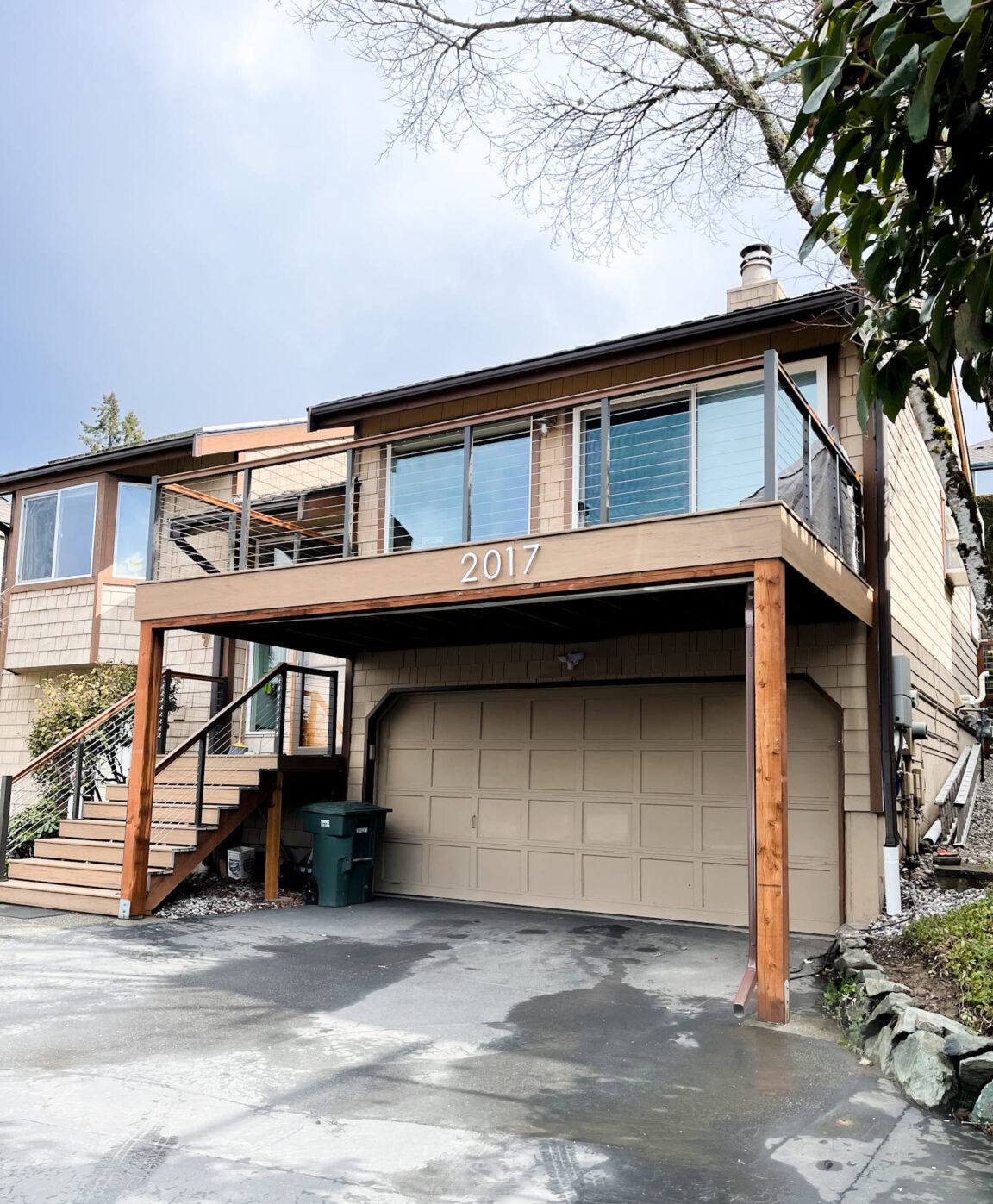
What a Correctly Built Deck Actually Involves
Footings and Framing
Everything starts below grade. Skagit Valley soil varies block to block — some lots drain well, others hold water and stay soft into late spring. Footings need to be sized and set to local frost depth and soil conditions, not just poured to the minimum. Undersized or shallow footings are one of the most common causes of a deck that starts to sag, rack, or pull away from the house within a few years.
Ledger Attachment and Flashing
The ledger board — where the deck attaches to the house — is the single most failure-prone connection on any deck in a wet climate. It has to be flashed correctly so water sheds away from the house band joist instead of running behind the siding or pooling against the ledger. We see more rot at this one connection than anywhere else on older decks, because it was either flashed wrong the first time or not flashed at all.
Joist Spacing and Fasteners
Joist spacing needs to match the decking material you're installing — composite and PVC boards generally need tighter spacing than solid wood to avoid flexing and long-term sagging between joists. Fasteners and structural hardware should be corrosion-resistant hardware rated for ground contact and wet exposure; mismatched or bargain-grade fasteners are a slow-motion failure point that doesn't show up until the deck is years old.
Drainage and Airflow Underneath
A deck that sits low to the ground or over unimproved dirt needs a plan for water and airflow underneath it — grading, ground cover, or in some cases a drainage system if the deck also needs to shed water for a covered patio or living space below. Trapped moisture under a deck is where rot and mold start, and it's invisible from the top until the damage is already done.
Choosing the Right Decking Material for This Climate
There's no single "best" decking material — the right choice depends on how much maintenance you're willing to do, your budget, and how the deck is used. Here's how the common options actually perform in a Skagit County environment:
| Material | Moss/Mildew Behavior | Maintenance | Typical Lifespan |
|---|---|---|---|
| Pressure-treated wood | Prone to moss and algae in shaded areas; needs regular cleaning | Annual cleaning, periodic sealing/staining | 15-20 years with upkeep |
| Cedar | Naturally more rot-resistant but still grows moss if shaded and neglected | Regular sealing to hold color and resist moisture | 15-25 years with upkeep |
| Composite decking | Resists rot but can still grow surface algae/moss if not cleaned | Occasional washing, no staining/sealing | 25-30+ years |
| PVC/capped polymer | Most resistant to moisture absorption; still needs periodic washing | Lowest maintenance of the group | 25-30+ years |
We install all of the above and will tell you honestly what fits your situation. Composite and PVC cost more up front but save real time and money on maintenance over the life of the deck — that trade-off matters more here than in a drier climate, because a wood deck that isn't kept up with sealing and cleaning degrades faster in the Skagit Valley than the same deck would somewhere with a shorter wet season. If budget points you toward wood, that's a legitimate choice too — it just means committing to the upkeep schedule.
Our Process, Start to Finish
- On-site assessment — we look at the site, grade, sun/shade exposure, and how the deck ties into the house before quoting anything.
- Honest estimate — a written scope and price range based on your material choice and the actual conditions on your lot, not a generic square-footage number.
- Design and permitting — we handle the permit process with Skagit County or the City of Mount Vernon depending on where the property sits, and design footings, framing, and railing to meet current code.
- Site prep and footings — excavation, footing placement, and inspection before any framing goes up.
- Framing and ledger work — structural framing, correct ledger flashing, and hardware installation.
- Decking, railing, and stairs — installed to the spacing and fastening pattern appropriate to the material.
- Final walkthrough — we go over the finished deck with you, including what maintenance it needs and when.
Permits and Building Considerations
Most deck projects above a certain height or size require a building permit, whether the property falls under City of Mount Vernon jurisdiction or unincorporated Skagit County. Requirements cover things like footing depth, railing height and baluster spacing, guardrail requirements near drop-offs, and structural connections at the house. Skipping the permit process might save time up front, but it creates real problems later — at resale, with insurance, or if something needs to be opened up for repair. We pull the required permits and build to the inspected code as a standard part of the job, not an add-on.
Signs Your Existing Deck Has a Problem
If you're not building new but wondering whether your current deck needs attention, these are the signs we look for first:
- Soft or spongy spots when you walk across the deck, especially near the house or stair landings
- Persistent moss or dark staining that comes back within weeks of cleaning
- Gaps opening up where the deck meets the house siding or ledger board
- Fasteners that are rusted, popped up, or leaving dark streaks in the wood
- Railings or posts that flex or feel loose when pushed
- Standing water on the deck surface after rain instead of shedding off
- Visible sagging between joists, especially under composite or PVC boards
Any one of these on its own might be minor. Several together, especially near the ledger connection, usually means it's worth having someone look at the structure before it becomes a safety issue rather than a cosmetic one.
Maintaining a Deck Through Skagit County Winters
Whatever material you choose, a little seasonal attention goes a long way here. Clearing leaves and debris before the wet season settles in keeps moisture from sitting against the boards. A yearly wash — even just a stiff brush and deck cleaner, not necessarily a pressure washer, which can damage wood fibers and composite surface caps if used carelessly — keeps moss and algae from building a foothold. Wood decks need their seal or stain checked annually and reapplied every couple of years depending on sun exposure. Composite and PVC decks need far less, but periodic washing still keeps the surface from getting slick, which matters on stairs and landings especially through the darker, wetter months.
Why It Matters That We Already Work in Mount Vernon
A crew that mostly builds decks somewhere drier and treats Mount Vernon as an occasional out-of-town job doesn't have the same instinct for what actually goes wrong here. We're based out of Anacortes and work throughout Skagit County regularly, which means we've seen how footings behave in local soil, how ledger flashing holds up (or doesn't) through a full wet season, and which material choices hold up under moss and salt-tinged coastal air versus which ones need more upkeep than homeowners expect going in. That local pattern recognition is what keeps a deck from becoming a maintenance headache three years after it's built.
If you're planning a new deck or trying to figure out whether an existing one needs repair or replacement, we're glad to come take a look and give you a straight answer — no pressure, no upsell. Reach out for a free estimate using the form below.