 Anacortes Exterior
 A deck in Mount Vernon lives outside all year, and Skagit Valley doesn't give it many easy months to do that in. Between the salt-laden air moving in off Skagit Bay, wind-driven rain that comes at the house sideways during Pacific storm fronts, and a moss season that runs longer here than it does in drier parts of the state, a deck built to a generic national spec tends to show its age fast. This page is about what a Mount Vernon deck actually needs to hold up, how we build them, and why a crew that already works this specific valley climate matters more than it might seem.
What Skagit Valley Weather Does to a Deck
Decks fail differently than siding, but the causes are the same three forces that wear down every exterior surface in this part of Skagit County. Salt air corrodes fasteners and hardware faster here than it would further inland, which matters enormously on a structure held together by hundreds of screws, bolts, and joist hangers. Driving rain doesn't just fall on a deck surface — it drives into ledger connections, post bases, and any joint where two materials meet, and it does this repeatedly across a wet season that can stretch for months. And moss, which thrives in the shaded, damp conditions common on north-facing decks and lots with mature tree cover around Mount Vernon, holds moisture against boards and framing long after a storm has passed.
None of that is dramatic in the moment. A deck doesn't fail in a single storm. It fails cumulatively — a fastener that starts to corrode in year three, a ledger connection that stays damp a little longer each winter, boards that hold moss on the shaded half of the deck while the sunny half stays clean. By the time any of that becomes visible as soft wood, a wobbly rail, or a stain that won't come off, the underlying problem has usually been building for years.
Why Mount Vernon Specifically
Mount Vernon sits down in the Skagit Valley flatland, close enough to the water and river system that humidity stays high for more of the year than it would on higher, more exposed ground. Homes on shaded lots or near mature landscaping deal with slower-drying decks than homes on open, sun-exposed sites. We factor that into how we frame, fasten, and finish every deck we build here — a deck plan that works fine in a drier Eastern Washington climate isn't automatically the right plan for a shaded lot in the Skagit Valley.
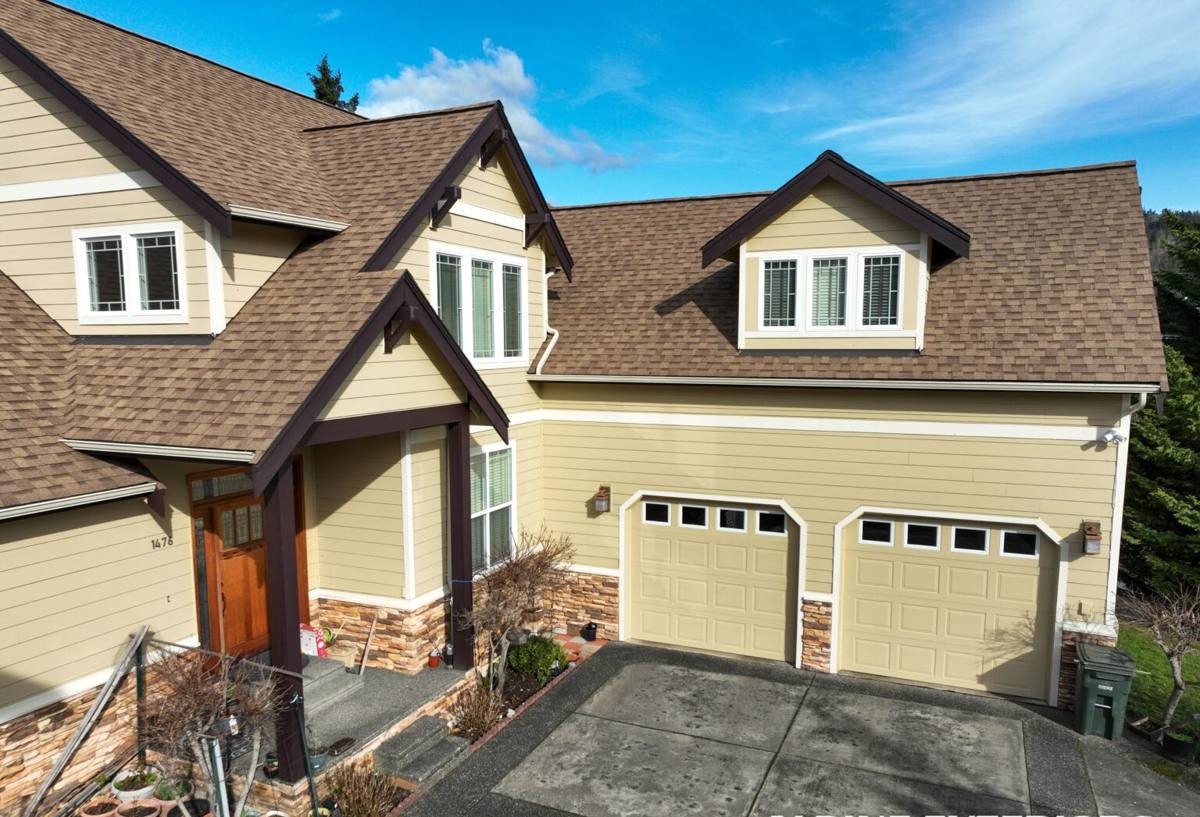
Decking Material: What We Recommend and Why
We build with a few different decking materials depending on the homeowner's budget, style, and how much ongoing maintenance they actually want to take on — but we're honest about the trade-offs of each rather than pushing whatever's easiest to install.
| Material | Upfront Cost | Maintenance | How It Handles This Climate |
|---|---|---|---|
| Pressure-treated wood | Lowest | Annual sealing/staining recommended | Needs consistent upkeep to shed moisture and resist moss; skipped maintenance shows up fast in a wet valley climate |
| Cedar | Mid-range | Regular sealing and moss control | Genuine natural look, but an organic surface asking for real ongoing care to perform in a climate with a long wet season |
| Composite decking | Higher upfront | Occasional washing, no sealing/staining | Doesn't absorb moisture into the board core, resists moss staining better, holds up well through repeated wet-dry cycles |
| PVC decking | Highest | Occasional washing | Fully synthetic, best moisture resistance of the group, premium price point |
Wood decking isn't a bad choice — it's a real, honest trade-off. It costs less upfront, it looks and feels like a traditional deck, and plenty of homeowners are happy to keep up with annual sealing. What we won't do is sell a wood deck as low-maintenance in this climate, because it isn't. If a homeowner wants a deck they can mostly ignore between washings, composite or PVC decking earns its higher upfront cost back in the years of sealing and staining it saves, particularly on shaded, moss-prone lots where wood surfaces stay damp longer.
What Correct Deck Framing Involves Here
The decking boards are what you see, but the framing underneath is what keeps a deck safe and level for decades, and it's where a climate like this one punishes shortcuts hardest. Correct framing on a Mount Vernon deck means a properly flashed ledger connection where the deck meets the house — this single detail is one of the most common sources of hidden rot on older decks, because a poorly flashed ledger lets water track directly into the house's rim joist. It means hot-dipped galvanized or stainless fasteners and hardware sized for coastal-air exposure, post bases set above grade and away from standing water, and joist spacing and blocking that meets current code for the loads the deck will actually see.
- Ledger board properly flashed and fastened where it meets the house — not just bolted and caulked over
- Corrosion-resistant fasteners and joist hangers rated for the moisture and salt-air exposure common in this area
- Post bases and footings set to keep wood framing off wet ground and away from standing water
- Joist spacing, blocking, and beam sizing matched to the actual deck dimensions and load, not a one-size template
- Proper board spacing and airflow underneath the deck to let framing dry out between rain events
- Rail and stair connections built to current code, inspected before the deck is signed off
The Ledger Connection: Why It Matters More Than People Think
If there's one place we spend extra time on every deck we build in this valley, it's the ledger. This is the board that ties the deck structure to the house itself, and it's also the single point where a moisture mistake does the most damage — because water that gets behind a poorly flashed ledger doesn't just rot the deck, it can work its way into the house's framing. Correct ledger flashing directs water away from that connection entirely rather than relying on caulk to hold it back, which matters in a climate that gives caulk a lot of repeated freeze-thaw and wet-dry cycling to fail in.
Our Process, Start to Finish
Building a deck that holds up here isn't complicated, but it does depend on doing each step in order and not skipping any of them.
- On-site assessment. We walk the property, look at sun and shade exposure, grade, drainage, and how the deck will tie into the house, and talk through what you actually want to use the space for.
- Design and material selection. We size the deck to the lot and the house, and walk through decking material trade-offs honestly — cost, maintenance, and how each option handles this specific climate.
- Permitting. Most deck work in Mount Vernon and unincorporated Skagit County requires a building permit, especially for anything attached to the house or above a certain height. We handle that process rather than leaving it to the homeowner.
- Framing and ledger installation. This is the structural work described above — the part that determines how the deck performs for the next twenty-plus years, not just how it looks on day one.
- Decking, railing, and stairs. Installed to the manufacturer's fastening specifications for whichever material was chosen, with attention to board spacing for drainage and airflow.
- Final walkthrough. We go over the finished deck with you, point out anything you should know for maintenance, and make sure everything meets code before we call the job done.
Deck Repair and Restoration
Not every project on this page is a new build. A lot of the deck calls we get in Mount Vernon are existing decks showing the effects of years of Skagit weather — soft or spongy boards, a ledger connection that's started to separate, rail posts that have loosened, or moss that's taken hold on the shaded side and won't come back off with washing alone. We inspect the framing underneath, not just the visible decking, before recommending a repair versus a rebuild. Sometimes a deck's structure is sound and only the decking surface needs replacing; sometimes the framing itself has been compromised by a moisture problem at the ledger or post bases, and patching the surface would just be covering up the real issue.
Signs a Deck Needs a Closer Look
- Boards that feel soft, spongy, or give slightly underfoot, especially on shaded sections
- Visible gaps, rust staining, or movement at the ledger board where the deck meets the house
- Railings or stair stringers that have loosened or developed noticeable play
- Persistent moss or dark staining that returns quickly after cleaning
- Fasteners showing rust streaks or corrosion around the head
- Standing water that doesn't drain from between boards after a day of dry weather
Sizing a Deck to How You'll Actually Use It
Custom means the deck gets designed around the house and the lot, not pulled from a standard template. A deck meant mainly for a grill and a couple of chairs doesn't need the same footprint, framing, or budget as one meant to host regular gatherings. Multi-level decks that step down with a sloped Mount Vernon lot, built-in seating, or a covered section that keeps part of the deck usable during the wet months are all things worth discussing at the design stage, before framing decisions lock in what's possible later. A covered or partially covered deck in particular is worth considering here — it extends the number of months a deck actually gets used and reduces how much direct rain exposure the decking surface takes over its life.
What Ongoing Deck Maintenance Actually Looks Like
Even a well-built deck benefits from a little seasonal attention in this climate, and what that attention looks like depends heavily on the material chosen.
| Task | Wood/Cedar Decks | Composite/PVC Decks |
|---|---|---|
| Cleaning | Wash and check for moss buildup each season, especially shaded areas | Occasional washing to clear pollen, debris, and surface moss |
| Sealing/staining | Recommended roughly every one to two years depending on exposure | Not required |
| Fastener check | Inspect visible fasteners periodically for rust or loosening | Inspect periodically; corrosion-resistant hardware still ages over decades |
| Underneath inspection | Check ledger and framing for moisture or rot every year or two | Check ledger and framing for moisture or rot every year or two |
That last row applies no matter what decking material sits on top — the framing is wood-based in almost every deck we build, decking material or not, and it's the part that actually determines the deck's structural life. A homeowner who keeps gutters clear above the deck, checks the ledger connection every year or two, and addresses any moss before it spreads is doing most of what a deck in this valley actually needs.
Why a Local Mount Vernon Crew Makes a Real Difference
Deck-building skill isn't unique to any one region, but knowing how a deck performs specifically in Skagit Valley conditions comes from building here repeatedly, not from a general contracting background somewhere drier. A crew that already works Mount Vernon knows which lots tend to stay shaded and damp, which fastener and hardware specs actually hold up against the local salt air over time, and what the permitting process with the city and county actually involves. That local pattern recognition is the difference between a deck built to a generic spec sheet and one built for the specific weather it's going to sit in for the next few decades.
What to Ask Before Hiring a Deck Builder
- Are they licensed, bonded, and insured, and can they show proof before any contract is signed?
- Will they pull the required building permit, or is that left to you?
- Can they explain how they'll flash and fasten the ledger connection specifically?
- Do they specify corrosion-resistant hardware suited to coastal-air exposure, or a generic fastener spec?
- Will they walk you through decking material trade-offs honestly, including maintenance, rather than just upselling the most expensive option?
- Do they have a track record of deck work specifically in Skagit County conditions?
If you're weighing a new deck, a rebuild, or repair work on a Mount Vernon home, we're happy to come take a look and give you a straight assessment of what your property and budget actually call for — no pressure, no generic sales pitch. Reach out for a free estimate and we'll walk the site with you and talk through what we see.