 Anacortes Exterior
 Roofing in the Skagit Valley: What Mount Vernon Homes Are Up Against
Mount Vernon sits inland from the coast we work along in Anacortes, but that doesn't mean the roof gets an easier ride. The Skagit Valley traps moisture. Tree cover, river-bottom humidity, and long stretches of overcast, drizzly weather mean roofs here often stay damp longer between storms than a roof out on open, breezy ground. Add in the driving rain events that roll through Skagit County most falls and winters, and you've got the two ingredients that shorten the life of an asphalt shingle roof faster than sun or heat ever will: standing moisture and moss.
Homes closer to the water in Anacortes deal with salt-laden air that accelerates corrosion on flashing, fasteners, and vents. Mount Vernon is a bit removed from that direct salt exposure, but the broader marine climate we all share in this corner of Washington still pushes salt-tinged moisture inland on west winds often enough that it belongs in the conversation. Combine that with a moss season that can run from October through May, and a shingle roof here needs to be installed with drainage, ventilation, and material choice all working together, not just nailed down and left to fend for itself.
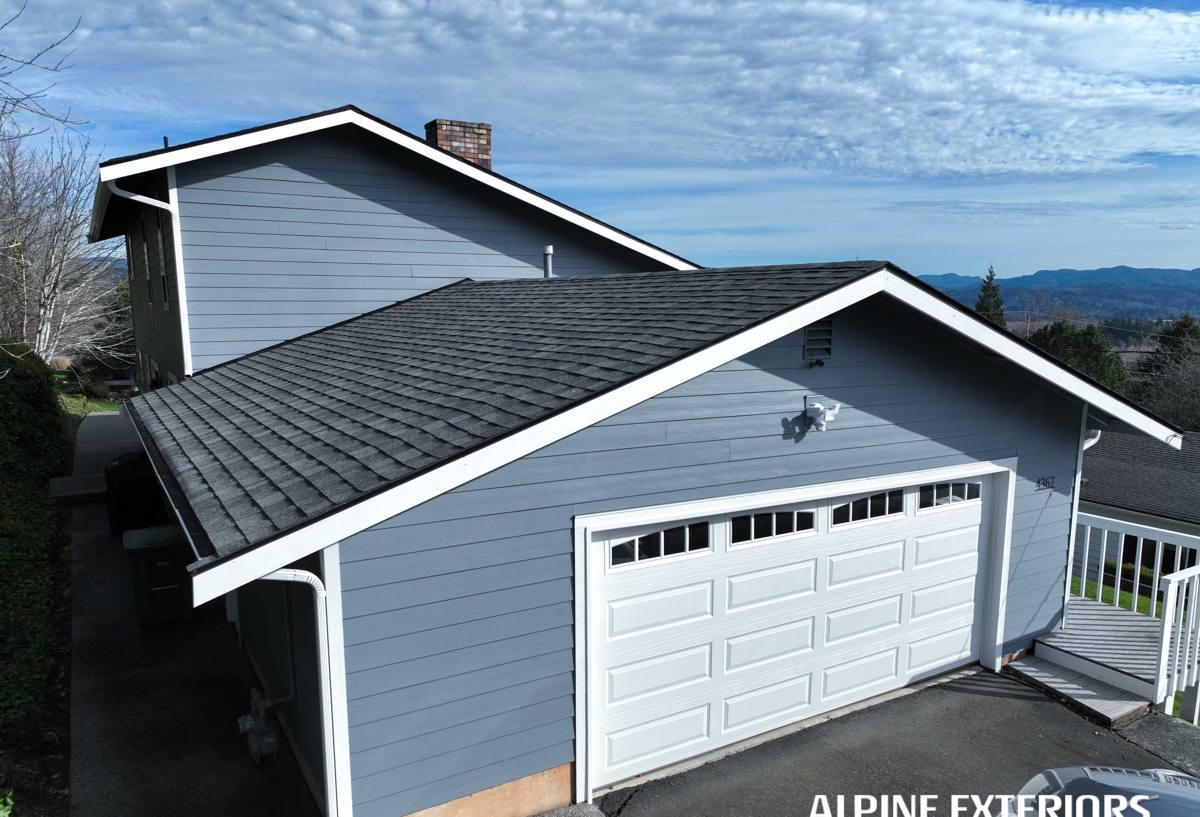
Why Asphalt Shingles Still Make Sense in This Climate
We get asked, fairly often, whether asphalt is even the right call for a valley home that sees this much rain and shade. In most cases, yes, as long as it's the right product installed the right way.
Cost and Availability
Asphalt shingles remain the most cost-effective roofing material for the vast majority of Mount Vernon homes, and materials are widely available, which keeps both new installs and future repairs straightforward.
Repairability
A damaged section of an asphalt roof can be opened up, repaired, and re-sealed without replacing the whole field, something that matters when a windstorm off the Salish Sea peels back a few tabs instead of taking the whole roof.
Fit With Local Homes
From older farmhouses to newer subdivisions built out toward the valley floor, asphalt shingles come in profiles and colors that match the mix of architecture around Mount Vernon without looking out of place next to a neighbor's roof.
Choosing a Shingle Built for This Climate
Not all asphalt shingles perform the same once moss and moisture get involved. The biggest decision a Mount Vernon homeowner makes isn't asphalt versus something else, it's which class of asphalt shingle actually holds up here.
| Shingle Type | Moss/Algae Resistance | Wind Rating | Best Fit |
|---|---|---|---|
| Standard 3-tab | Low unless treated | Lower | Budget rebuilds, secondary structures |
| Architectural/laminate | Moderate | Higher | Most Mount Vernon homes |
| Algae-resistant (copper/zinc granules) | High | Varies by line | Shaded lots, north-facing slopes, tree-heavy yards |
| Impact-rated | Depends on line | High | Homes wanting extra hail/debris protection |
For most of the reroofs we do around Mount Vernon, we steer homeowners toward an architectural shingle with algae-resistant granules as the baseline, not an upgrade. Given how long moss has to work on a shaded, moisture-holding roof out here, it's a cheap trade-off relative to years of cleaner appearance and less granule loss. One thing worth knowing before you buy: manufacturers typically warranty algae resistance separately from the general product warranty, and often for a shorter term. It's not a reason to skip the upgrade, but it's a detail we walk through so you know exactly what's covered and for how long.
What a Correct Installation Actually Involves
The shingle brand matters less than most homeowners think. What actually determines whether a roof lasts 15 years or 30 in this climate is everything underneath and around the shingle.
Tear-Off and Deck Inspection
We remove the old roofing down to the deck rather than layering over it. That's the only way to actually see the sheathing. Soft, delaminated, or water-stained decking is common on older Mount Vernon homes where a roof sat wet longer than it should have, and it has to be replaced before new shingles go down, not covered up.
Underlayment and Ice-and-Water Shield
A synthetic underlayment goes down across the whole deck as the primary water barrier beneath the shingles. At eaves, valleys, and around penetrations, the places water actually pools or funnels, we add self-adhered ice-and-water membrane. In a climate with this much sustained rain, those detail areas are where roofs fail first, long before the field of the roof does.
Drip Edge and Starter Course
Metal drip edge at the eaves and rakes directs water off the roof instead of letting it wick back under the first course. A proper starter strip along the eave, set with the correct offset from the first row of shingles, is what actually seals that edge against wind-driven rain. Skip it and the lowest, most exposed row of the roof is also the weakest.
Ventilation
A roof that can't breathe traps moisture in the attic, which works its way back up into the underside of the deck and shortens shingle life from below. Balanced intake at the eaves and exhaust at the ridge keeps that moisture moving out instead of sitting.
Flashing and Valleys
Step flashing at walls and chimneys, and properly woven or metal-lined valleys, are where a rushed installation shows up first as a leak. We flash these by hand rather than relying on shingles alone to shed water at transitions.
Nailing and Wind Rating
Correct nail placement and count, not staples, and not high-nailed above the manufacturer's line, is what actually gives a shingle its rated wind resistance. It's an easy step to shortcut and an easy one to check.
Our Process, Start to Finish
Every reroof we do in Mount Vernon follows the same sequence, and it also includes pulling the required roofing permit, so you're not the one tracking down paperwork.
- On-site inspection and estimate. We walk the roof, or get on it when conditions allow, check the attic for ventilation and moisture signs, and give you a written scope, not a rough guess.
- Material selection. We talk through shingle class, color, and upgrades like algae-resistant granules based on how much shade and tree cover your lot actually has.
- Scheduling around the weather. We plan tear-off days around the driest stretch we can find and keep the roof dried-in at the end of every work day, with no deck left exposed overnight.
- Tear-off and deck repair. Old roofing comes off, the deck gets inspected, and any soft or damaged sheathing is replaced before anything new goes down.
- Underlayment, flashing, and shingle installation. Ice-and-water shield at the vulnerable areas, underlayment across the field, then shingles installed to manufacturer spec for full wind and warranty coverage.
- Cleanup and magnetic sweep. Old material and debris hauled off, yard and driveway swept for nails.
- Final walkthrough. We go over the finished roof with you, explain any maintenance items specific to your lot, and hand over warranty paperwork.
Living With a Shingle Roof in Moss Season
Moss isn't just a cosmetic issue on a shingle roof, it actively shortens the roof's life. Moss holds moisture directly against the granule surface long after the rest of the roof has dried, which breaks down the asphalt underneath faster. As it spreads, its root-like structures work into the gaps between shingle tabs and can physically lift the edges, giving wind-driven rain a place to get underneath. A roof that's kept clear of heavy moss buildup simply lasts longer than one that isn't.
- Keep overhanging branches trimmed back so shaded sections of roof get more light and air movement.
- Clean gutters at least twice a year, since clogged gutters back water up under the shingle edge, especially during fall driving-rain events.
- Have moss physically removed rather than pressure-washed off, since pressure washing strips granules and shortens shingle life.
- Ask about zinc or copper control strips near the ridge on shaded roofs, since rain washing over them helps suppress new moss growth between cleanings.
- Have the roof looked at after any major windstorm, even if nothing looks obviously wrong from the ground.
Signs a Mount Vernon Roof Needs Attention
Asphalt shingles fail gradually, and a lot of the early warning signs are easy to miss from the ground.
- Granules collecting in gutters or at downspout outlets
- Shingles that look curled, cupped, or cracked, especially on south- or west-facing slopes
- Thick moss or algae staining across shaded sections
- Daylight visible through the roof deck from inside the attic
- Soft spots underfoot when walking the roof, or visible sagging from the street
- Water stains on interior ceilings, particularly after a heavy rain event
Any one of these is worth a look before it turns into a deck repair on top of a reroof.
What Drives the Cost of a Mount Vernon Reroof
We'd rather walk your roof and give you real numbers than throw out a figure that doesn't apply to your house. That said, a few factors consistently move the price up or down.
| Factor | Why It Matters |
|---|---|
| Roof size and pitch | More square footage and steeper slopes mean more material and more labor time and safety setup |
| Number of existing layers | Tear-off of multiple old layers takes longer and costs more in disposal than a single-layer tear-off |
| Deck condition | Soft or water-damaged sheathing found during tear-off adds material and labor to replace it properly |
| Shingle class chosen | Standard 3-tab costs less upfront than architectural or algae-resistant lines, but trades off longevity |
| Roof complexity | Valleys, dormers, skylights, and multiple penetrations all add flashing detail work |
| Ventilation upgrades | Adding proper intake and exhaust venting where a roof currently lacks it is a worthwhile add, not just a cost |
As a very broad range, most single-family asphalt reroofs in this area land somewhere between a few thousand dollars for a small, simple roof and well into five figures for a large or complex one. The only way to know where your home falls is a walk-through and a written estimate.
Why a Crew That Already Works Mount Vernon Matters
Roofing crews that only pass through Skagit County once in a while don't build the same instinct for this climate that a crew based in Anacortes and working this area regularly does. That shows up in small decisions: how much ice-and-water shield to run at a valley that collects more runoff than most, which slopes on a shaded lot need the algae-resistant upgrade, how to schedule tear-off days around a weather pattern that can turn in an afternoon.
Being Reachable When Weather Turns
Driving rain and windstorms don't wait for a convenient time, and a roof with a fresh problem needs a tarp before the next system rolls in, not a callback next week. A crew already working the area can get eyes on a damaged roof faster and knows how to make it watertight until permanent repairs happen.
It also shows up in accountability. A crew that works Mount Vernon regularly has a reason to get the details right the first time and to answer the phone if something needs a look after a storm. We're not driving in from out of the area for a one-time job, this is the region we work in.
If you're weighing a repair against a full reroof, or just want a straight answer on what your current roof has left in it, we're happy to walk it with you. Use the form below to request a free, no-pressure estimate.