 Anacortes Exterior
 Metal Roofing in La Conner: Built for the Channel Climate
La Conner sits right on the Swinomish Channel, which means homes here take a different kind of weather beating than a house ten miles inland. Salt-laden air moves off the water year-round, wind-driven rain comes in sideways during winter storms, and the shaded, moisture-heavy stretches of the year push moss growth on anything that holds shade or damp debris. A roof in La Conner isn't just shedding water — it's standing up to corrosion, wind uplift, and organic growth all at once. Metal roofing, installed correctly for this specific environment, handles all three better than most alternatives. Installed poorly, it becomes a maintenance headache faster than people expect.
We work throughout Skagit County and know La Conner's exposure specifically — the difference between a home tucked back from the water and one facing the channel directly matters for fastener choice, panel coating, and flashing detail. This page covers what that actually means for your roof.
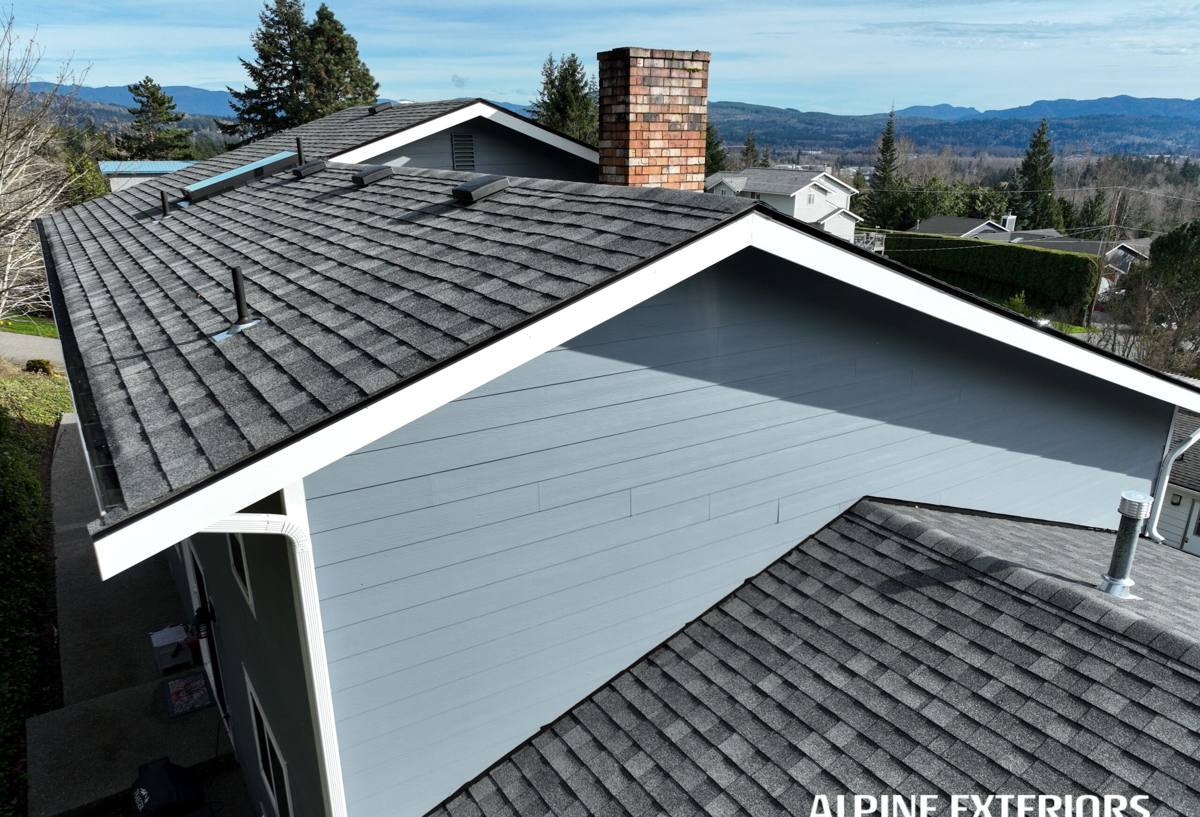
Why the Local Climate Changes the Job
Salt Air and Corrosion
Coastal and near-coastal salt exposure accelerates corrosion on unprotected steel fasteners, cut edges, and lower-grade coatings. It doesn't ruin metal roofing — metal roofing is still one of the better choices for this kind of exposure — but it means material selection and fastener spec aren't optional details. A panel and fastener system that's fine forty miles inland can show premature rust streaking or fastener failure near the channel if it wasn't chosen with that exposure in mind.
Driving Rain
Storms coming off the water bring rain at an angle, not straight down. That changes how flashing, underlayment laps, and panel seams need to be handled at valleys, walls, and penetrations. A roof that would shed water fine in calm rain can leak under wind-driven rain if laps run the wrong direction or if flashing relies on sealant instead of proper mechanical overlap.
Moss and Shaded Moisture
La Conner's tree cover and the general Pacific Northwest damp season create long stretches where north-facing slopes and shaded valleys stay wet. Moss doesn't have much to grab onto with a properly installed standing seam metal roof, which is one of the real advantages metal has over shingles here — but debris buildup at valleys and low-slope transitions still needs to be kept clear, and any spot where the finish is scratched through can become a starting point for both rust and moss.
What a Correct Metal Roof Install Involves Here
The panels get the attention, but most of what determines whether a metal roof performs for 30-50 years in this climate happens underneath and around them.
- Underlayment: A high-temp synthetic or self-adhered underlayment suited to metal's thermal movement, with full ice-and-water protection at eaves, valleys, and any low-slope section.
- Fastener spec: Corrosion-resistant fasteners matched to the panel metal, not a generic hardware-store screw — mismatched metals accelerate galvanic corrosion, especially with salt air in the mix.
- Panel seams: Mechanically seamed or properly overlapped panels, laid to shed wind-driven rain rather than relying on sealant as the primary water barrier.
- Flashing at penetrations and walls: Step flashing, counter-flashing, and pipe boots detailed to move water out and away, not just caulked over.
- Ventilation: Ridge and intake venting sized correctly so moisture doesn't get trapped under the panels, which matters more in a humid coastal climate than people assume.
- Ground and lower-panel protection: Extra care on cut edges and lower courses closest to salt exposure, where corrosion tends to start first.
Comparing Roofing Options for a La Conner Home
| Factor | Standing Seam Metal | Asphalt Shingle |
|---|---|---|
| Moss resistance | Strong — smooth surface, minimal debris grip | Weaker — granular surface holds moisture and debris |
| Wind-driven rain performance | Strong with correct seams/flashing | Adequate but more seam/edge vulnerability |
| Salt air durability | Strong with correct coating and fastener spec | Moderate — granule loss can accelerate near salt exposure |
| Typical lifespan | 30-50+ years | 15-25 years in this climate |
| Upfront cost | Higher | Lower |
| Maintenance | Low — periodic debris clearing, inspection | Moderate — moss treatment, more frequent repair |
Neither option is wrong for every home. Shingles remain a reasonable choice on a budget or for a shorter ownership horizon. Metal earns its higher upfront cost on homes where owners want to minimize long-term maintenance and are planning to stay put, or where the roof's exposure to salt air and driving rain is significant enough that longevity matters more than initial price.
Panel and Finish Choices That Matter Near the Water
Not all metal roofing is the same product wearing different colors. For a home with real salt exposure, we steer toward coatings and metals with a track record in coastal-adjacent conditions rather than the cheapest panel that technically qualifies as "metal roofing." That's a professional standard on our end, not a knock on every lower-cost option — it's about matching the coating and metal to how much salt and moisture this specific roof will see over its life. We'll talk through the trade-offs on your home specifically rather than defaulting to one product for every job.
Steel vs. Aluminum
Both are used successfully in coastal Washington. Steel with a quality protective coating performs well and costs less; aluminum resists corrosion inherently even if the finish gets scratched, which can matter more on a direct-water-view property. Which one makes sense depends on your home's specific exposure and budget, and it's worth discussing on-site rather than assuming.
Our Process for a La Conner Metal Roof
- On-site assessment: We look at your home's specific exposure — distance from the water, tree cover, roof pitch and valleys, existing ventilation — not just a generic measurement.
- Honest scope and options: You get a clear breakdown of panel and coating options with the trade-offs explained, not a single upsell pitch.
- Tear-off and deck inspection: Any existing roofing comes off so we can check the deck for rot or moisture damage before anything new goes down — a step that shouldn't get skipped just to save a day.
- Underlayment and flashing detail: This is where most of the long-term performance is decided, and where corners most often get cut on rushed jobs.
- Panel installation: Seamed and fastened to spec for wind and rain exposure specific to your site.
- Final walk-through: We go over what was done, what maintenance (if any) it needs, and answer questions before we consider the job finished.
Why a Crew That Already Works This Area Matters
A roofing crew that mainly works inland jobs isn't necessarily going to under-spec a coastal roof on purpose — but if they don't regularly deal with salt air corrosion or wind-driven rain off the channel, it's easy to default to standard inland practices that don't hold up as well here. Working La Conner and the surrounding Anacortes and Skagit County area regularly means we're not guessing at fastener corrosion resistance or flashing detail for this exposure — it's the standard we build to on every coastal job, not a special upgrade.
It also means faster response if something needs a look after a storm, and a crew that already understands the permitting and inspection norms for Skagit County rather than learning them on your project.
Maintenance: What a Metal Roof Actually Needs Here
- Clear debris from valleys and low-slope transitions once or twice a year, especially under trees.
- Visual check after major windstorms for lifted flashing or loose fasteners.
- Keep gutters clear so water isn't backing up against eave flashing.
- Address any scratched or exposed finish promptly, particularly on lower panels closer to salt spray, before corrosion can start.
- Have a professional inspection every few years rather than waiting for a visible problem.
That's a shorter list than most roofing types need in this climate, which is a large part of metal's appeal for homeowners tired of annual moss treatments and shingle repairs.
What Affects Your Cost
| Cost Factor | Why It Matters |
|---|---|
| Roof size and complexity | Valleys, dormers, and multiple pitches add labor and flashing detail |
| Panel and coating grade | Higher corrosion resistance for direct water exposure costs more upfront |
| Tear-off vs. overlay | Full tear-off with deck inspection is more thorough and typically the better long-term choice |
| Ventilation upgrades | Adding or correcting ridge/intake venting during the job |
| Access and site conditions | Steep pitch, water-side access, or landscaping constraints affect labor |
We don't quote a number without seeing the roof — anyone who does is guessing. What we can tell you upfront is that metal roofing generally costs more than asphalt shingles installed, and that the gap is usually worth it on homes with real coastal exposure and owners planning to stay long-term.
Get a Straight Answer on Your Roof
If you're weighing metal roofing for a La Conner home, the honest answer depends on your specific site — exposure, pitch, current roof condition, and how long you plan to stay. We're happy to come take a look and give you a straightforward assessment, no pressure and no generic sales pitch. Use the form below to request a free estimate.