 Anacortes Exterior
 Metal Roofing in Conway: Built for What This Valley Throws at a House
Conway sits in a part of Skagit County where weather doesn't pass through quickly — it settles in. Homes here deal with salt-laden air moving up from the sound, long stretches of driving rain through fall and winter, and a moss season that can run most of the year on a shaded or north-facing slope. A roof that isn't matched to that combination ages faster than it should, regardless of what the manufacturer's brochure promises. Metal roofing, installed correctly for this specific environment, is one of the more honest answers to that problem — not because it's trendy, but because it sheds water fast, gives moss less to hold onto, and doesn't absorb moisture the way some other materials do.
This page is specifically about metal roofing for Conway homes, not a general overview of the product. The climate here, the housing stock, and the way water and debris move across a roof in this part of the valley all shape what "doing it right" actually means.
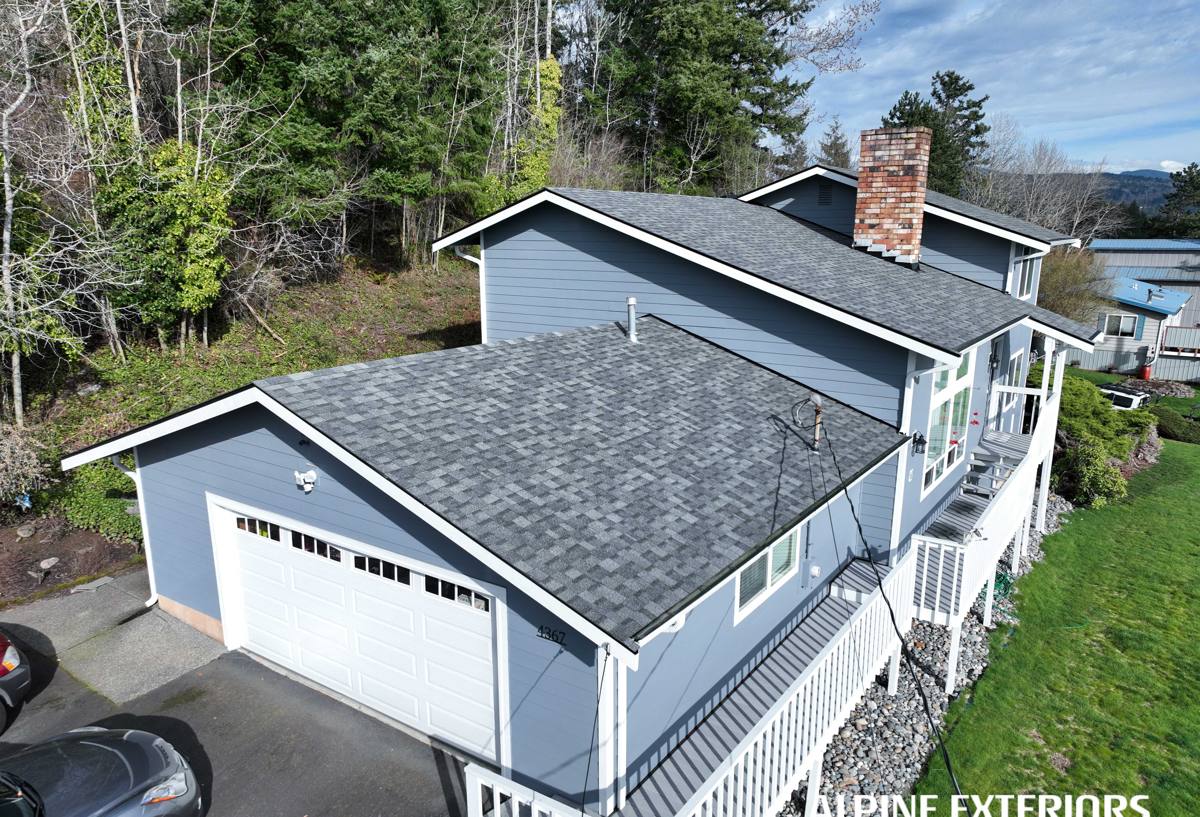
What Conway's Weather Actually Does to a Roof Over Time
It helps to be specific about the failure modes, because they're what drive every decision in a good metal roofing job:
- Salt air accelerates corrosion on fasteners, flashing, and any exposed metal edge that isn't properly coated or isn't the right alloy for a coastal-influenced climate.
- Driving rain — rain pushed sideways by wind, not just falling straight down — finds its way under laps, around penetrations, and into any seam that was cut corners on. This is where most "mystery leaks" actually start.
- Moss and organic growth hold moisture against a roof surface long after the rain has stopped, which is hard on shingles but far less of a structural threat on metal, since moss has a much harder time getting a foothold on a smooth, sloped metal surface.
- Freeze-thaw swings, even mild ones, stress any material that has absorbed water. Metal doesn't absorb water in the first place, which is a real advantage in a climate that goes from soaked to briefly frozen and back again.
None of this means every roof in Conway needs to be metal. It means that when a metal roof is the right call — new construction, a full re-roof, or a home with a low-slope section that's been fighting moisture for years — it needs to be installed with these specific stresses in mind, not just installed "to code" in a generic sense.
Why Metal Roofing Makes Sense for Many Conway Homes
Metal roofing isn't the right fit for every house or every budget, and we'll say so plainly if that's the case during an estimate. But for a lot of homes in this area, it solves problems that keep coming back with other materials:
- Water sheds quickly off a smooth metal surface instead of sitting and soaking in, which matters through the long wet stretch of a Skagit Valley winter.
- Moss and lichen have a much harder time establishing on metal than on shingles, cutting down on the yearly cleaning some homeowners feel stuck doing.
- A properly installed metal roof holds up well against wind-driven rain, which is common with storms moving up from the water.
- Lifespan, when the install is done correctly, is typically longer than asphalt shingle roofing — which matters on a property where re-roofing access, tree cover, or roof pitch make future work more disruptive than it needs to be.
Metal Roofing Options: What They're Actually Good At
Homeowners often come to us having already heard the term "standing seam" without knowing why it costs more than other metal systems, or whether that's the right choice for their specific roof. Here's a straightforward comparison of the systems we install most often in this area:
| System | How It's Fastened | Best Suited For | Maintenance Reality |
|---|---|---|---|
| Standing seam | Concealed clips, no exposed fasteners on the field of the roof | Long-term, low-maintenance performance; homes where minimizing future leak points matters most | Lowest upkeep of the three; occasional gutter and valley clearing |
| Exposed-fastener panel | Screws driven through the panel face into the deck or purlins | Outbuildings, garages, and budget-conscious re-roofs where cost matters more than a completely clean fastener-free look | Fastener washers age and need periodic inspection; re-torquing or replacement over the roof's life |
| Stone-coated steel | Interlocking panels, often profiled to resemble shingle or shake | Homes wanting a traditional roofline appearance with metal's underlying durability | Moderate; coating and granule surface should be checked after major storms |
We're generally cautious about exposed-fastener systems on primary residences in a climate this wet and salt-influenced — not because the panels themselves are a bad product, but because every exposed fastener is a future maintenance point, and in this environment those washers and screw heads take more of a beating over the years than they would somewhere drier. We'll walk through the honest trade-offs for your specific roof rather than defaulting to whatever's cheapest to install.
What a Correct Metal Roof Installation Actually Involves
Underlayment That Matches the Climate
Metal roofing lives or dies on what's underneath it. In a climate with this much sustained rain, we don't treat underlayment as an afterthought — a high-quality synthetic or self-adhered underlayment at eaves, valleys, and penetrations is what stands between a small leak and water sitting in your attic for a season before anyone notices.
Flashing and Penetrations
Chimneys, vent stacks, skylights, and roof-to-wall transitions are where the vast majority of metal roof leaks actually originate — almost never in the field of the panel itself. Correct flashing detail work, sized and lapped properly for driving rain rather than just straight-down rain, is where experience shows.
Fastener and Panel Selection
Coastal-influenced salt air means fastener and flashing material matters. Using the wrong grade of screw or trim in a salt-air environment shows up as rust streaking and early corrosion within a few years, not decades.
Ventilation
Metal roofs need proper attic or roof-deck ventilation to manage condensation. Skip this step and you can trade one moisture problem for another, just on the underside of the deck instead of the topside.
Our Process for a Conway Metal Roofing Job
- On-site assessment — we look at your existing roof structure, pitch, penetrations, and any signs of past moisture intrusion before recommending a system.
- Honest system recommendation — standing seam, stone-coated, or another option, based on your budget, roofline, and how much long-term maintenance you actually want to take on.
- Tear-off and deck inspection — we don't install new roofing over a deck with hidden rot or moisture damage; problems get addressed before the new system goes down.
- Underlayment and flashing detail work — done to handle wind-driven rain, not just a straight-down rain rating.
- Panel installation — with fastener and trim materials appropriate for a salt-air-influenced climate.
- Final walkthrough — we go over the finished roof with you, including what maintenance (if any) it actually needs going forward.
Maintenance Checklist for Conway Homeowners
One of the appeals of metal roofing is how little it asks of you afterward — but "little" isn't "none." A short seasonal routine keeps a metal roof performing the way it's supposed to:
- Clear gutters and valleys of needles and debris at least twice a year, more often under heavy tree cover.
- Do a visual check after major windstorms for lifted trim, loose fasteners, or debris impact.
- Rinse off accumulated organic debris (needles, leaf litter) on shaded slopes so moss and lichen don't get a foothold in the grime rather than the metal itself.
- Have penetrations and flashing points inspected every few years, since that's where a leak is most likely to start.
- Watch for any rust streaking near fasteners or cut edges, especially on exposed-fastener systems, and address it early rather than waiting.
Why Hiring a Crew That Already Works Conway Matters
Metal roofing installation is unforgiving of shortcuts in a way that shingle roofing sometimes isn't — a slightly-off flashing detail on a shingle roof might weep slowly for years before it's noticed; the same mistake on a metal roof tends to show up faster and more visibly. A crew that regularly works this stretch of Skagit County already knows how driving rain moves across a roof in this specific area, how much moss pressure to expect on a shaded north slope, and which fastener and flashing materials actually hold up against the salt air rather than just looking good on a spec sheet. That local, repeated experience is what separates a metal roof that quietly does its job for decades from one that starts causing problems within the first few wet seasons.
Get an Honest Look at Your Roof
If you're weighing metal roofing for a home in the Conway area — whether it's a full re-roof, new construction, or replacing a roof that's been fighting moss and leaks for years — we're happy to come take a look and give you a straightforward assessment. There's a free, no-pressure estimate form below; use it to tell us a bit about your roof and we'll go from there.