 Anacortes Exterior
 Why March Point Puts Windows to the Test
March Point sits close enough to the water and open exposure around Fidalgo Bay and the Guemes Channel that homes here take a different kind of weather beating than houses further inland in Skagit County. Salt-laden air works on aluminum hardware, exposed fasteners, and unprotected wood trim year-round. Driving rain off Puget Sound doesn't just fall straight down here — wind pushes it sideways into window assemblies, which means any gap or weak flashing detail becomes a leak point sooner rather than later. And the long, wet moss season that defines this part of Washington doesn't stop at your roofline; moss and algae film build up on north-facing sills, tracks, and trim wherever moisture sits and sun doesn't reach.
None of that makes window installation here impossible or exotic. It just means the margin for error is smaller. A window that would perform fine in a dry climate can fail early in March Point if it's installed without the right flashing sequence, sealant choice, or drainage path. That's the lens we use on every job in this neighborhood.
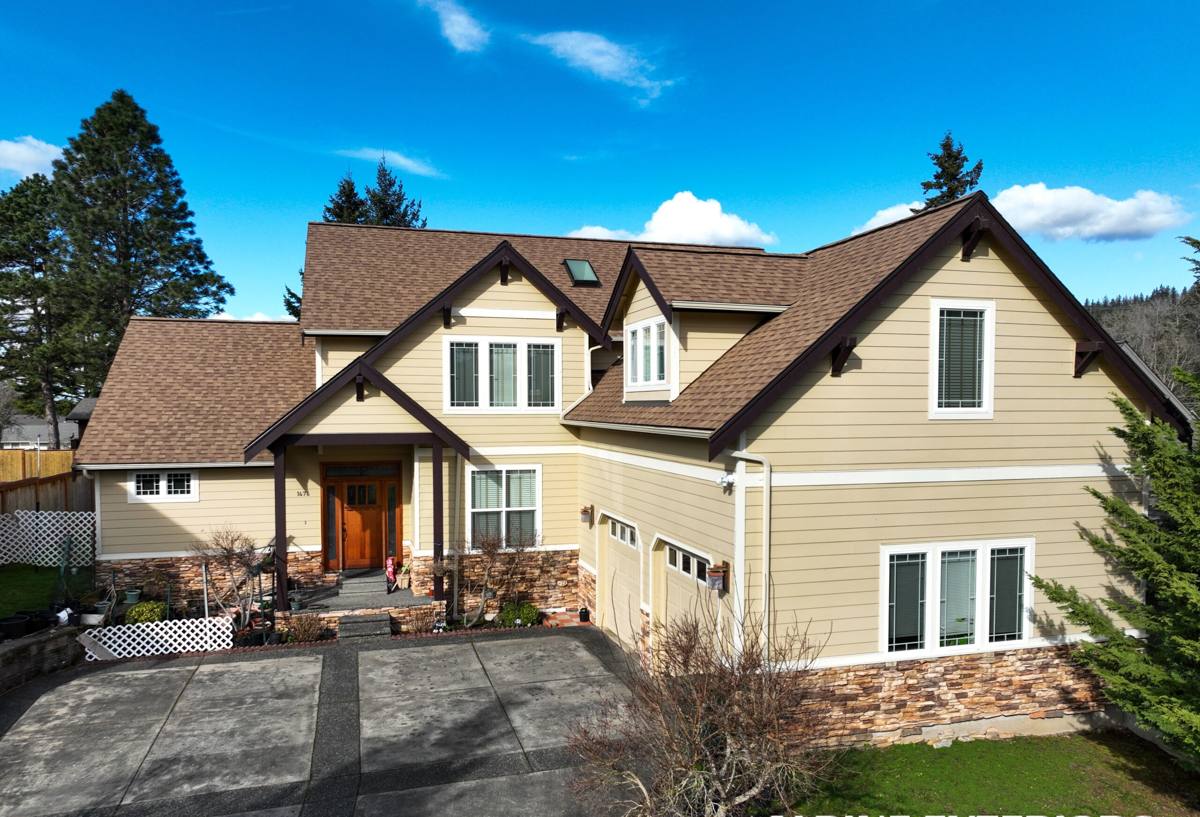
What Correct Installation Actually Involves
Window installation is often sold as a product decision — which brand, which frame material. The bigger factor in how long a window performs is almost always the installation detailing around it, not the window itself. In a climate like ours, that means:
Flashing and Drainage
Every opening needs a flashing sequence that sheds water down and out, not into the wall cavity. That includes sill pan flashing at the bottom of the opening (so any water that does get past the window has somewhere to go besides your framing), properly lapped house wrap integration, and head flashing that directs runoff clear of the window rather than behind the trim.
Sealant Selection and Placement
Not every exterior sealant holds up to sustained salt air and UV exposure the way it should. We use sealants rated for exterior marine-adjacent exposure and we're deliberate about where sealant goes — a fully sealed perimeter with no weep path can trap moisture just as badly as a gap that lets it in.
Fastener and Hardware Choice
Standard fasteners corrode faster in salt air. We use corrosion-resistant fastening appropriate to coastal exposure, especially on south and west-facing openings that catch the worst of the weather.
Signs a March Point Home Needs New Windows
Not every window problem means full replacement, but these are the signals worth taking seriously before they turn into framing damage:
- Fogging or a hazy film between panes on double-pane windows — the seal has failed and the gas fill is gone
- Soft or discolored wood trim around the window, especially at the bottom corners of the sill
- Visible moss, algae, or persistent dark staining on the sill or lower frame
- Drafts you can feel even when the window is fully latched
- Hardware that's corroded, stiff, or won't lock flush anymore
- Paint or finish that's bubbling or peeling specifically around the window opening, not the wider wall
- Noticeably higher heating bills without another clear cause
Our Process for March Point Installations
- On-site assessment. We look at existing flashing, sill condition, and framing before we ever talk product — a rotted sill changes the scope regardless of what window goes in.
- Honest measurement and product recommendation. We measure for the actual opening, not a catalog size, and recommend frame materials suited to that window's specific exposure (a north-facing window and a west-facing window in the same house can have different needs).
- Removal and opening prep. Old windows come out carefully to protect surrounding siding and trim, and we inspect the opening for hidden water damage before closing it back up.
- Flashing and sill pan installation. This is the step that determines whether the window performs for years or fails in a season — we don't skip or shortcut it regardless of time pressure.
- Window set and shimming. Proper shimming keeps the frame square and operating smoothly for years; a racked frame is one of the most common causes of premature seal failure.
- Insulation and air sealing. The gap between the window frame and rough opening gets sealed and insulated properly — not just stuffed with fiberglass, which does little for air infiltration.
- Exterior trim and sealant finish. Final sealant and trim work is done with attention to weep paths so water has an exit route.
- Walkthrough. We test every window's operation and lock function with you before we call the job done.
Frame Material Options for Coastal Exposure
There's no single "best" window material for every home — the right call depends on your home's style, budget, and how exposed a particular wall is. Here's how the common options hold up in our climate:
| Material | Salt Air / Moisture Behavior | Maintenance | Typical Fit |
|---|---|---|---|
| Vinyl | Good — won't corrode or rot, handles moisture well | Low — occasional cleaning | Most homes; strong value for coastal exposure |
| Fiberglass | Very good — dimensionally stable, resists warping in wet/dry cycles | Low | Homes wanting a wood-look profile with less upkeep |
| Wood (unclad) | Poor without diligent upkeep — most vulnerable to rot and moss in exposed spots | High — regular painting/sealing required | Historic or period-style homes where owners commit to maintenance |
| Wood-clad (aluminum or vinyl exterior) | Good on the exterior face; interior wood still needs normal care | Moderate | Homes wanting interior wood aesthetics with better exterior durability |
| Aluminum | Fair — can pit and corrode faster in salt air without a quality finish | Moderate | Less common for residential in this climate; better suited to sheltered exposures |
We'll talk through which of these makes sense for your specific walls — a south or west-facing opening exposed to weather off the water is a different decision than a sheltered north wall.
What Affects the Cost
We don't quote prices sight unseen, but these are the factors that move the number up or down on most March Point jobs:
| Factor | Why It Matters |
|---|---|
| Frame material | Vinyl is generally the most budget-friendly; fiberglass and wood-clad cost more upfront but can mean less maintenance over time |
| Number and size of openings | Larger and custom-sized windows cost more than standard sizes done in volume |
| Existing damage | Rotted sills or water-damaged framing found during removal add repair scope beyond the window itself |
| Exposure level | Openings facing prevailing wind and rain may warrant upgraded flashing or sealant details |
| Access | Second-story or hard-to-reach windows take more time and equipment |
| Trim and finish work | Matching existing trim profiles or repainting affects labor and material scope |
Why a Crew That Already Works March Point Matters
Window installation isn't just a national product installed the same way everywhere. The right approach in a dry inland climate isn't necessarily the right approach a few hundred feet from Fidalgo Bay. A crew that regularly works this neighborhood has already seen which flashing details actually hold up here, which sealants stay flexible instead of cracking in our wet-then-sun cycles, and which corners of a house tend to take the worst weather first. That local pattern recognition is hard to get from a crew that installs windows the same way in every climate zone they work.
There's also a practical side: being based in Anacortes means we're not driving two hours if a follow-up adjustment is needed, and we understand Skagit County permitting and inspection expectations without a learning curve on your project.
Permits, Timeline, and What to Expect
Straightforward window replacement (same size, same opening) often doesn't require a separate permit in most cases, but any change in opening size, structural header work, or work tied to a larger remodel usually does. We'll tell you upfront if your project needs one and handle that coordination rather than leaving you to figure it out.
Most standard window replacement jobs move quickly — often a single day for a typical home, longer if there's rot repair, custom sizing, or a larger number of openings. Weather is a real scheduling factor here: we plan installation days around forecasts to avoid opening up a wall during driving rain, which protects both your home and the quality of the install.
Maintaining Your Windows After Install
A correctly installed window still benefits from basic upkeep in this climate:
- Rinse salt residue off exterior frames and hardware periodically, especially after storms
- Keep sills and tracks clear of moss and organic debris so water doesn't sit and stain or degrade the finish
- Check exterior caulk lines annually for cracking or separation and touch up as needed
- Operate locks and hardware through their full range a few times a year so components don't seize
- Trim back vegetation that shades windows and keeps them damp longer than the rest of the house
None of this is heavy maintenance — it's the kind of seasonal check most Skagit County homeowners already do for the rest of their exterior.
If you're seeing drafts, fogged glass, or sill damage on a March Point home, we're happy to take a look and give you a straight read on what's actually needed — no pressure, no upsell. Use the form below to request a free estimate.