 Anacortes Exterior
 Building Decks for March Point's Coastal Conditions
March Point sits out on the water, surrounded by Fidalgo Bay and Padilla Bay, which means every deck built out here deals with a different set of conditions than a deck built a few miles inland in downtown Anacortes. Salt-laden air moves through constantly, wind-driven rain hits decks at angles that inland homes never see, and the shaded, damp stretches of the year let moss and algae take hold fast. A deck built without those specifics in mind will look fine for a season or two and then start showing problems — soft spots, corroding hardware, slick surfaces — well before it should.
We build decks specifically with March Point's exposure in mind: material choices, fastener grade, drainage detailing, and framing protection all get adjusted for a marine environment rather than treated like a standard build. That's the difference between a deck that needs real work in year five and one that's still solid at year fifteen.
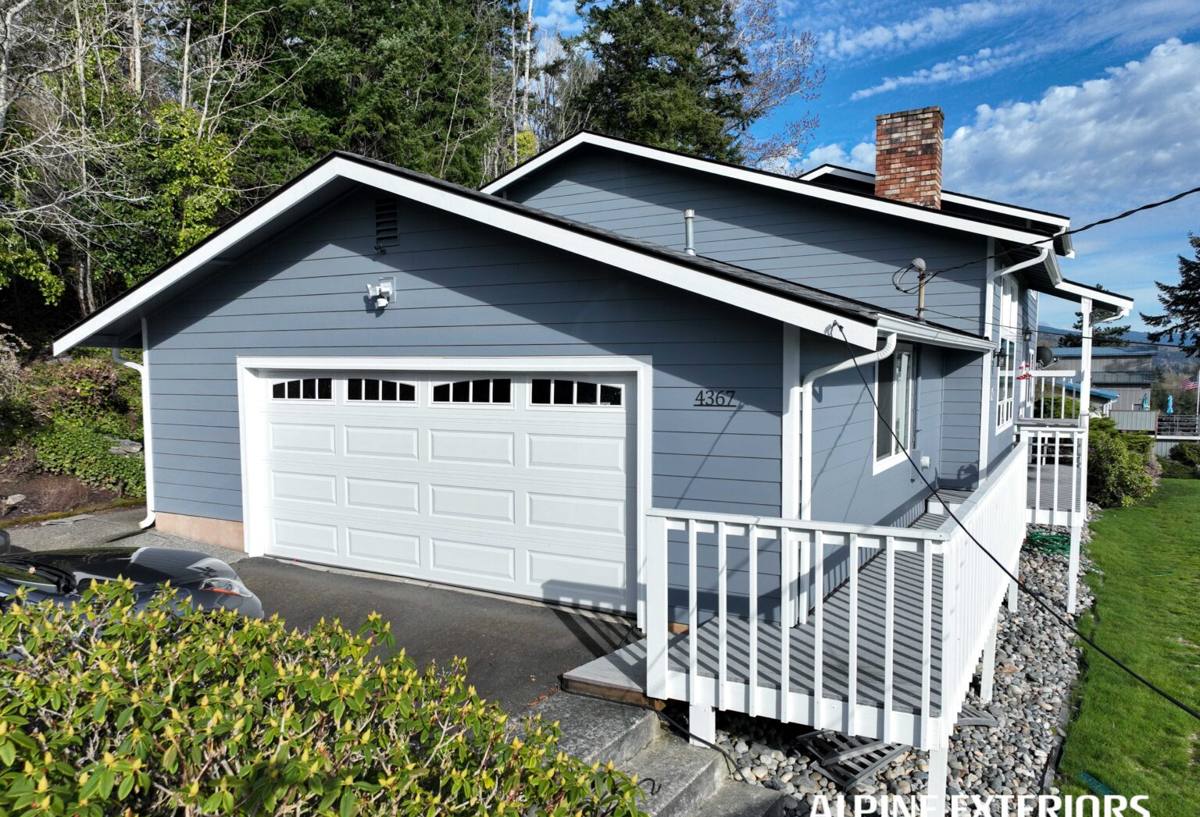
What Salt Air, Driving Rain, and Moss Actually Do to a Deck
Salt Air and Corrosion
Airborne salt accelerates corrosion on anything metal — screws, joist hangers, bolts, flashing. On a standard build using construction-grade or even galvanized fasteners, that corrosion can start within a few years this close to open water. Rust stains bleed into decking boards, hardware weakens at load-bearing connections, and the parts of the deck you can't see — the framing — are usually where the damage is worst before anyone notices.
Driving Rain and Trapped Moisture
Storms coming off the water don't fall straight down; they drive sideways into ledger boards, fascia, and the gaps between decking. That moisture works its way into end grain, fastener holes, and any spot where two pieces of material meet without a gap or flashing to shed water. Wood framing that stays damp for extended stretches is where rot starts, usually at the ledger connection to the house or at joist ends — both structural points you don't want failing quietly.
Moss, Algae, and Surface Buildup
Skagit County's long wet season and the shade many March Point lots get from trees or the house itself create ideal conditions for moss and algae to establish on decking surfaces. Beyond looking bad, a mossy deck surface is a genuine slip hazard, and moss holds moisture against the board surface longer than open air would, which speeds up wear on whatever material is under it.
Choosing the Right Decking Material for This Environment
There's no single "best" decking material for every homeower — it depends on budget, how much upkeep you're willing to do, and how much of the coastal exposure the specific spot on your property actually gets. Here's how the common options hold up in March Point's conditions specifically.
| Material | Coastal Exposure Performance | Maintenance | Typical Lifespan Here |
|---|---|---|---|
| Pressure-treated wood | Needs sealing/staining on a regular schedule or moisture gets in at cut ends and fastener holes | High — annual cleaning and periodic re-sealing | 10-15 years with consistent upkeep |
| Cedar | Naturally rot-resistant but still needs finish maintenance in salt air; grays and can develop moss without cleaning | Moderate to high | 15-20 years with upkeep |
| Capped composite | Strong choice — the cap resists moisture absorption and staining, handles salt air well | Low — occasional washing | 25+ years |
| PVC decking | Fully synthetic, essentially immune to moisture and salt-driven degradation | Low | 25-30+ years |
We don't push everyone toward the same material. Real wood has a warmth and a price point that still makes sense for a lot of homes, especially if you're the type who doesn't mind an annual sealing routine. But if the deck is on the exposed side of the house or gets direct weather off the water, we're honest that a capped composite or PVC product will save you real maintenance headaches over the years, even though the upfront cost is higher.
Framing and Structure: What's Under the Boards Matters More
The decking surface is what you see, but the framing underneath is what actually determines how long a deck lasts. On any March Point build, we pay particular attention to a few things that generic decking jobs sometimes skip:
- Ledger flashing — where the deck attaches to the house needs proper flashing that sheds water away from the wall assembly, not just a bolt pattern and caulk
- Joist protection — joist tape or a comparable moisture barrier on top of framing lumber keeps standing water from soaking into end grain where fasteners penetrate
- Fastener grade — stainless steel or coated fasteners rated for coastal/marine use, not standard exterior-grade hardware that will rust prematurely this close to the water
- Post bases and hardware — structural connectors that sit above grade and shed water rather than trapping it against the post
- Beam and post sizing — built to current code for the loads and spans involved, not undersized to save material cost
None of this is visible once the deck is finished, which is exactly why it matters who's doing the framing. A deck can look great for photos on day one regardless of what's underneath it — the framing choices are what separate a deck that's still tight and solid in year twelve from one that needs a rebuild.
Drainage and Moisture Management
Good drainage is arguably the single biggest factor in how long a deck lasts in a wet coastal climate. We build in board gaps sized correctly for the material (composite and PVC need slightly different spacing than wood to account for expansion), slope decking subtly away from the house where the design allows it, and make sure any under-deck space isn't sealed up in a way that traps humidity against the framing. For decks that sit low to the ground or over areas without much airflow, we look at whether venting or a drainage system underneath makes sense so water isn't just sitting under the structure through the wet months.
Gutter and downspout placement near the deck matters too — if roof runoff is dumping onto or near the deck structure, that's added water load the deck doesn't need, and it's worth addressing as part of the project rather than after the fact.
Our Process for a March Point Deck Build
- On-site assessment — we walk the property, look at sun/shade exposure, wind direction, drainage patterns, and how close the build site is to open water or prevailing weather
- Design and material conversation — honest talk about what materials fit your budget and how much maintenance you actually want to take on long-term
- Permitting — we handle the permit process through the applicable jurisdiction so the build is inspected and compliant, not something you have to untangle later when selling the house
- Framing — structural work built to the fastener, flashing, and joist-protection standards described above
- Decking installation — proper spacing, fastening pattern, and edge detailing for whichever material you've chosen
- Railing, stairs, and finish details — built and installed to code, matched to the house
- Final walkthrough — we go over the finished deck with you, including what maintenance (if any) the material you chose will need going forward
Maintaining a Deck in a Salt Air, High-Moss Environment
Whatever material you choose, a little seasonal attention goes a long way in this climate. Here's what we recommend to March Point homeowners regardless of who built the deck:
- Sweep off standing debris (needles, leaves) regularly — trapped organic matter holds moisture and feeds moss growth
- Wash the deck surface at least once a year, more often on shaded sections, to knock back algae and moss before it establishes
- Check fastener heads and railing hardware annually for early rust staining, especially on wood decks
- Inspect the ledger board connection to the house yearly — this is the single most common failure point on older decks
- Reseal or re-stain wood decking on the schedule the product calls for — don't stretch it because the deck "still looks okay"
- Keep gutters clear so roof runoff isn't adding extra water load onto or near the deck
Why a Crew That Already Works March Point Makes a Difference
Anacortes and greater Skagit County have plenty of general contractors who can frame a deck. What's different about a crew that regularly works in March Point specifically is that we've already seen how this exact exposure — the wind off the bay, the salt air, the shaded wet stretches that grow moss fast — affects a build over time. That shapes real decisions: which fastener grade we won't cut corners on, where we add extra flashing attention, which materials we'll steer you away from for a fully exposed, water-facing deck even if they're cheaper up front.
It also means we're familiar with the permitting process for this area and know what inspectors are looking for on structural work, which keeps the project moving instead of stalling on paperwork or corrections.
Get a Free Estimate
If you're planning a new deck or replacing one that's showing its age out at March Point, we're happy to come take a look, talk through material options honestly, and give you a straightforward, no-pressure estimate. Fill out the form below and we'll get in touch to schedule a time that works.