 Anacortes Exterior
 La Conner's Waterfront Climate Asks More of a Roof
La Conner sits right on the Swinomish Channel, and that waterfront location shapes everything about how a roof ages here. Homes get near-constant exposure to moist, salt-laden air coming off the water, long stretches of driving rain through the fall and winter, and shaded, damp conditions that keep moss and algae active almost year-round. A roof that would hold up fine in a drier inland part of Skagit County can wear out early here if it wasn't specified and installed with this environment in mind.
This isn't a generic new roof page. It's about what actually matters when you're putting a new roof on a home in La Conner specifically: the material choices that hold up to salt air, the drainage and ventilation details that keep moss and moisture from winning, and the installation practices that separate a roof that lasts from one that starts showing problems in five or six years.
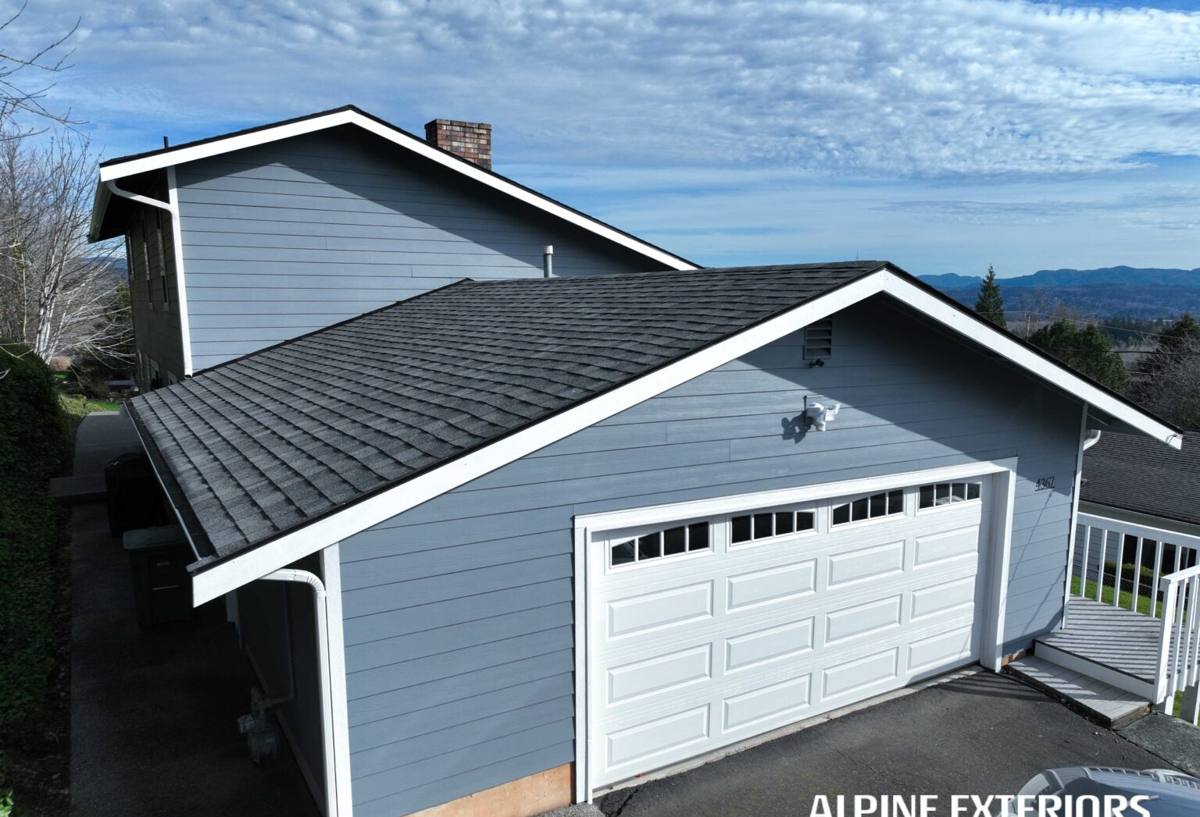
What Salt Air and Marine Moisture Actually Do to a Roof
Salt air is corrosive to exposed metal, and it's persistent — it doesn't take a storm to carry it inland, just the everyday breeze off the channel. On a roof, that shows up in a few predictable ways over time:
- Unprotected or lower-grade fasteners and flashing metal can corrode faster than they would a few miles inland, leading to rust streaking and eventual leaks at penetrations.
- Metal roofing and metal accessories need coatings and alloys rated for coastal or marine exposure, not just standard-grade product.
- Constant moisture in the air keeps roof surfaces damp longer after rain, which is exactly the environment moss, lichen, and algae need to establish themselves.
- Sealants and adhesives can break down faster under repeated wet-dry, salt-air cycling if they're not rated for the exposure.
None of this means a home near the water can't have a durable, good-looking roof. It means the material grade, fastener spec, and flashing detail have to be chosen for the environment rather than defaulted to whatever's cheapest or most common inland.
Moss, Rain, and Why Roof Drainage Design Matters Here
Skagit County's wet season runs long, and La Conner's tree cover and channel-side humidity extend the window where moss and moisture can take hold on a roof. Moss isn't just cosmetic. As it grows, it holds water against the roofing surface, lifts shingle edges, and works its way into laps and fastener lines — all of which shortens the life of the roof underneath it.
A correct new roof installation addresses this at the design stage, not with a maintenance plan bolted on afterward:
Drainage and Airflow Come First
Proper slope transitions, clean valley design, and adequate roof ventilation keep the deck and shingles drying out between rain events instead of staying damp for days. A roof that can't shed water efficiently or breathe underneath will grow moss faster no matter what shingle is on top.
Material Choice Matters More Here Than in Drier Areas
Some roofing products resist moss and algae growth better than others, and in a location like La Conner that difference is worth weighing seriously rather than treating as a minor upgrade.
Comparing Roofing Systems for a La Conner Home
There's no single "right" roofing material for every home — it depends on the roof's pitch, the home's style, and the budget. But in a marine, moss-prone environment, some trade-offs matter more than they would elsewhere.
| Roofing System | Salt Air / Moisture Behavior | Moss Resistance | Typical Lifespan Here |
|---|---|---|---|
| Standard architectural asphalt shingle | Performs well with correct flashing and fasteners; standard grade is fine for most homes not in direct salt spray | Moderate — benefits from algae-resistant granules and good ventilation | 20–30 years with proper install and upkeep |
| Algae-resistant (AR) asphalt shingle | Same durability as standard, added surface protection | Better — copper-infused granules actively resist growth | 20–30 years, often cleaner-looking longer |
| Standing seam metal roofing | Requires marine-grade coatings/fasteners in this location; done correctly, sheds water fast | High — smooth surface gives moss little to grip | 40–50+ years with correct coating spec |
| Composite / synthetic shake | Good moisture resistance, stable in wet-dry cycling | Moderate to good depending on product | 30–40+ years |
For most La Conner homes, algae-resistant architectural shingles hit the right balance of cost, appearance, and moss resistance. Homes closer to the water, with lower-slope roofs, or with heavy tree shade often do better with metal, where the up-front cost is higher but the moss and maintenance picture is meaningfully better over the life of the roof.
What a Correct Installation Actually Involves
The roofing material only performs as well as the installation underneath it. In a wet, salt-exposed climate, the details that get skipped on a rushed job are exactly the ones that cause early failures.
Tear-Off and Deck Inspection
A full tear-off lets us actually see the roof deck — soft spots, water staining, or rot from old leaks don't show up until the old roofing is off. Covering over a compromised deck is one of the most common causes of a "new" roof leaking within a few years.
Ice and Water Shield in the Right Places
Valleys, eaves, and roof penetrations are where water concentrates and where wind-driven rain — common off the channel — can push moisture backward under standard underlayment. These areas need self-adhering ice and water membrane, not just felt or synthetic underlayment alone.
Flashing That's Sized and Sealed for the Exposure
Chimneys, skylights, vents, and wall intersections are the most common leak points on any roof. In a salt-air environment, flashing metal and fasteners need to be corrosion-resistant, and every seam needs to be lapped and sealed correctly — not just caulked over as a shortcut.
Ventilation Sized to the Attic
Balanced intake and exhaust ventilation keeps moisture from building up under the deck, which protects both the roofing above and the framing below. Under-ventilated attics are a quiet cause of premature shingle failure and hidden rot.
Fastening Pattern and Wind Exposure
Waterfront and open-exposure lots see stronger, more direct wind than a sheltered inland lot. Nailing pattern and fastener count should match the manufacturer's high-wind specification, not the minimum standard pattern.
Our Process, Start to Finish
- On-site inspection and estimate. We look at the existing roof, deck condition, ventilation, and any problem areas — flashing, valleys, moss buildup — and give you a straightforward written estimate.
- Material selection. We walk through the material options that make sense for your roof's pitch, exposure, and budget, including the moss- and salt-resistance trade-offs above.
- Scheduling around the weather. Given how much rain Skagit County sees, we plan tear-off and dry-in carefully so your home isn't left exposed if weather shifts.
- Tear-off and deck repair. Old roofing comes off, the deck gets inspected, and any soft or damaged sheathing is replaced before anything new goes down.
- Underlayment, flashing, and installation. Ice and water shield in vulnerable areas, correct flashing at every penetration, and the roofing system installed to manufacturer spec and high-wind fastening standards.
- Ventilation check. We confirm intake and exhaust venting is balanced for the attic space, adjusting if the existing setup was inadequate.
- Cleanup and final walkthrough. Site cleaned, magnetic sweep for stray fasteners, and a walkthrough so you know exactly what was done and what to expect going forward.
Permits, Older Homes, and La Conner's Character
La Conner is a small, historic waterfront town, and homes in its older neighborhoods sometimes come with roof lines, trim details, or visual character worth respecting even on a full re-roof. Depending on the property, there can be town-level permitting or review steps involved before work starts. We handle permitting as part of the job and will flag early if your property is one where extra review applies, so there are no surprises mid-project.
Older homes in this area also more often have original or multiple-layer roofing, undersized ventilation by today's standards, or deck framing that needs a closer look before a new roof goes on. None of that is unusual — it's just something a crew familiar with La Conner's housing stock knows to check for up front rather than discovering halfway through the job.
What Drives the Cost of a New Roof in La Conner
| Factor | Why It Affects Cost |
|---|---|
| Roof size and number of planes | More square footage and more valleys/hips mean more material and labor time |
| Deck condition | Rot or soft sheathing found during tear-off requires replacement before roofing can go on |
| Material choice | Standard asphalt, algae-resistant asphalt, metal, and composite systems have different material and labor costs |
| Pitch and access | Steep roofs or difficult site access require more safety setup and labor time |
| Flashing and penetration count | Chimneys, skylights, and multiple vents each add flashing work |
| Ventilation upgrades | Adding or correcting intake/exhaust venting is a smaller add-on when done during a full re-roof |
Because every roof and every home is different, we don't quote sight-unseen pricing — but a written, itemized estimate after inspection means you know exactly what you're paying for and why.
A Homeowner's Maintenance Checklist for a New Roof Here
A correctly installed roof still benefits from basic upkeep in this climate. This isn't a sales pitch for a maintenance contract — it's what actually extends the life of a roof on the water:
- Keep gutters and downspouts clear so water isn't backing up under the roof edge during heavy rain.
- Trim back overhanging branches to reduce shade, debris, and moss pressure on the roof surface.
- Have moss or algae growth addressed early with proper cleaning methods rather than pressure washing, which can strip granules and shorten shingle life.
- After major windstorms, do a visual check (from the ground, or have it checked) for lifted shingles or damaged flashing.
- Keep an eye on attic ventilation — blocked soffit vents or insulation stuffed into intake vents undo the benefit of a properly designed system.
Why a Crew That Already Works in La Conner Matters
Roofing crews who mostly work drier, inland areas don't always default to marine-grade flashing, algae-resistant materials, or high-wind fastening patterns — because they don't usually need to. On a waterfront, moss-heavy property, those aren't upgrades, they're the baseline for a roof that's actually going to last. Working regularly in La Conner and the surrounding Skagit County waterfront means knowing which details to get right the first time, rather than learning it from a callback.
If you're planning a new roof for a home in La Conner, we're happy to come take a look, walk the roof, and give you a straightforward, no-pressure estimate — just fill out the form below to get started.