 Anacortes Exterior
 Why La Conner Roofs Wear Differently Than Roofs Inland
La Conner sits right on the water, and that changes what a roof has to deal with year-round. The combination of salt-laden air off the Swinomish Channel, wind-driven rain, and long stretches of damp, shaded weather creates conditions that inland Skagit County homes simply don't face at the same intensity. Asphalt shingles are a durable, proven product, but "durable" only holds true when the roof underneath them is built to handle the specific way this climate attacks a roofline.
Salt air accelerates corrosion on exposed metal fasteners, flashing, and vents. Driving rain finds gaps that a calmer climate would never expose, pushing water sideways under shingle edges instead of just down. And the extended damp season here means moss, moisture, and organic growth get more time to work into a roof surface every single year than they would somewhere drier. None of this means asphalt shingle roofing is a poor fit for La Conner — it means the installation details matter more here than almost anywhere else in the region.
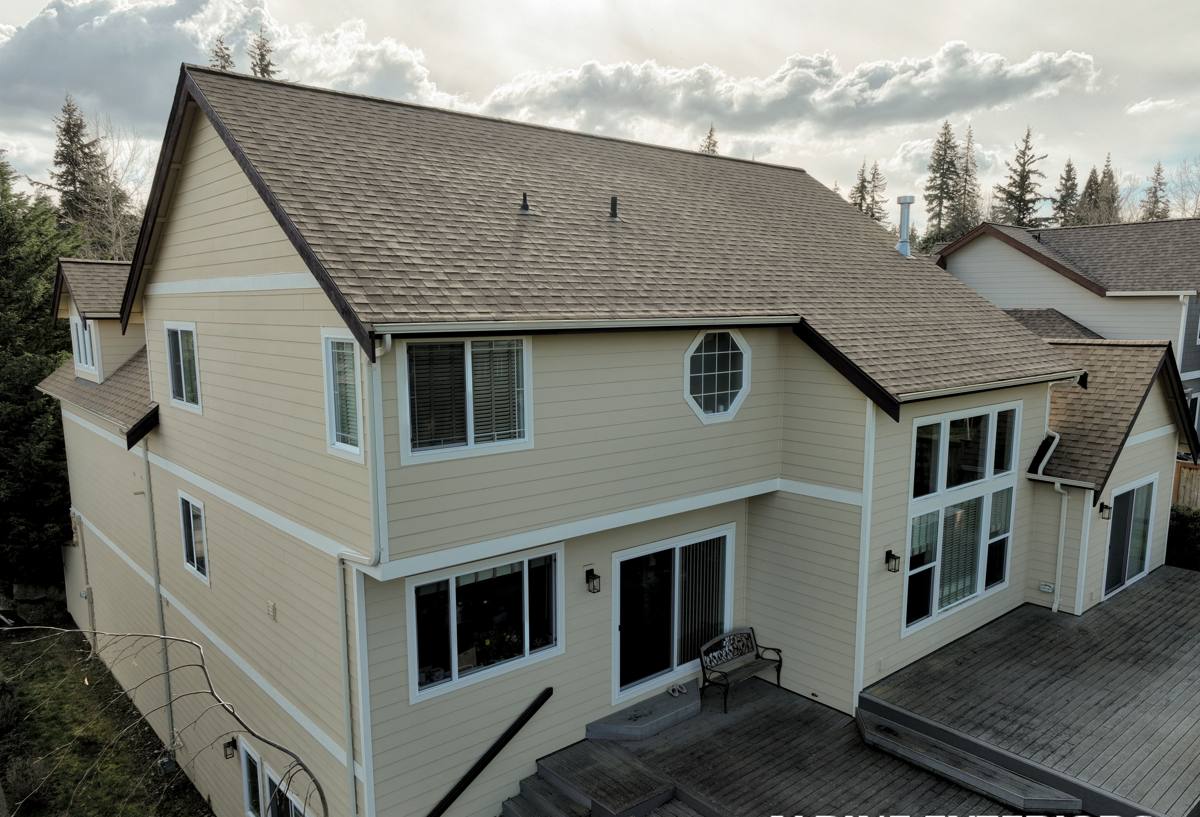
What a Correctly Installed Roof Needs in This Climate
A shingle roof that's going to hold up near the water isn't just "shingles nailed to plywood." The parts you don't see are what actually determine whether the roof performs for its full expected life or starts causing problems in year eight or ten.
Underlayment and Water Barrier
In a marine climate with driving rain, we treat synthetic underlayment and ice-and-water shield membrane as non-negotiable, not upgrades. Eaves, valleys, skylight edges, and any low-slope transitions get self-adhered membrane specifically because wind-driven rain in this area routinely gets pushed uphill under shingle tabs — a standard felt underlayment alone isn't built to stop that.
Flashing and Fasteners
Salt air is hard on unprotected metal. We use corrosion-resistant flashing and fasteners rated for coastal exposure around chimneys, sidewalls, plumbing vents, and any roof-to-wall transitions, since these are the points where a standard-grade fastener will start showing rust years before the shingles themselves show any wear.
Ventilation
Proper intake and exhaust ventilation keeps the underside of the roof deck dry and at a stable temperature. In a damp climate like La Conner's, a poorly ventilated attic traps moisture, which shortens shingle life from underneath and can lead to sheathing rot that has nothing to do with the shingles themselves being bad.
Choosing the Right Shingle for Salt Air and a Long Moss Season
Not every asphalt shingle product is built the same, and the differences matter more in a coastal, shaded, damp environment than they would in a drier inland climate. We look at algae resistance, wind rating, and granule quality as the three factors that matter most for La Conner homes specifically.
| Shingle Tier | Typical Wind Rating | Algae/Moss Resistance | Best Fit |
|---|---|---|---|
| Standard 3-tab | 60-70 mph | Minimal or none | Budget projects, low moss exposure, full-sun roofs |
| Architectural (laminated) | 110-130 mph | Often includes algae-resistant granules | Most La Conner homes — good balance of durability and cost |
| Premium/designer architectural | 130+ mph | Enhanced algae-resistant granule technology | Shaded, north-facing, or heavy tree-cover roofs prone to moss |
For most homes in and around La Conner, we recommend architectural shingles with algae-resistant (AR) granules as the baseline, not the upgrade. The AR granules contain copper or zinc compounds that slow the growth of the algae and moss that thrive in this region's shade and moisture. On roofs with heavy tree cover or north-facing slopes that rarely see direct sun, stepping up to a premium AR shingle is usually worth the difference in how long the roof stays clean and performing well.
Our Process for a La Conner Roofing Project
We keep the process straightforward and communicate at each stage so there are no surprises once the roof is opened up.
1. On-Site Inspection and Assessment
We walk the roof and the attic space, not just look from the ground. We're checking deck condition, existing ventilation, flashing points, and signs of past moisture intrusion — all of which affect the scope and the honest recommendation we give you.
2. Written Scope and Straight Answers
You get a clear explanation of what the roof needs and why, including which parts of the job are driven by code, which are driven by manufacturer warranty requirements, and which are our professional recommendation based on the site conditions.
3. Tear-Off and Deck Inspection
Old roofing comes off down to the deck so we can actually see what's there. Any soft, rotted, or delaminated sheathing gets identified and replaced before anything new goes down — no covering up a problem with a new layer of shingles.
4. Water Barrier, Flashing, and Ventilation Install
This is where the climate-specific work happens: ice-and-water membrane at vulnerable points, corrosion-resistant flashing, and a ventilation path that actually moves air through the attic space.
5. Shingle Installation
Shingles go down to manufacturer nailing specifications and wind-rating requirements, not shortcuts. Proper nailing pattern and placement is one of the most common places corners get cut on lower-quality installs, and it's one of the biggest factors in whether a roof survives a real windstorm off the water.
6. Final Walkthrough and Cleanup
We walk the finished roof with you, confirm everything matches the agreed scope, and do a magnetic sweep and full site cleanup so there's no debris or stray fasteners left behind.
Moss, Algae, and Ongoing Maintenance
Even a well-installed roof in this climate benefits from basic seasonal attention. Moss and algae aren't a sign of a failed roof — they're a normal part of owning a shingle roof in a damp coastal environment — but left unmanaged, moss can lift shingle edges and hold moisture against the roof surface longer than it should be there.
- Have gutters and valleys cleared of debris at least twice a year, since trapped organic matter is what moss needs to get started
- Watch for dark streaking or green growth on north-facing slopes and shaded sections first — that's where it typically shows up earliest
- Avoid pressure washing shingles directly, which can strip granules and shorten shingle life; low-pressure treatment methods are safer
- Trim back overhanging branches where practical to reduce shade and debris buildup on the roof surface
- Have the roof visually checked after major windstorms, which are common off the water, to catch lifted or damaged shingles early
- Keep attic ventilation paths clear of insulation blocking soffit vents, since blocked intake ventilation undermines even a well-installed roof
Attic Ventilation and Moisture: Often Overlooked
We bring this up separately because it's one of the most common gaps we find on existing La Conner roofs, and it's invisible from the ground. A roof can have excellent shingles and still fail early if the attic underneath isn't breathing correctly. In a climate with this much ambient moisture, warm, humid air that gets trapped in an attic condenses on the underside of the roof deck, which can lead to mold, rot, and reduced shingle lifespan from below — problems that often get misdiagnosed as a shingle or workmanship issue when the real cause is airflow. Balanced intake (soffit) and exhaust (ridge or roof vents) ventilation is a basic, inexpensive part of a correct install, and it's worth checking on any existing roof where you've noticed higher energy bills, ice buildup at the eaves in cold snaps, or musty smells in the attic.
Repair or Full Replacement: How We Help You Decide
Not every roofing problem in La Conner means a full tear-off. We give you an honest assessment of where your roof actually stands rather than defaulting to the bigger job.
| Factor | Leans Toward Repair | Leans Toward Replacement |
|---|---|---|
| Age of shingles | Under 12-15 years | Approaching or past manufacturer's expected lifespan |
| Extent of damage | Isolated area (one slope, one flashing point) | Widespread across multiple slopes |
| Deck condition | Sound, no rot found | Soft spots or moisture damage present |
| Granule loss | Minor, localized | Widespread bald patches or exposed mat |
| Number of past repairs | First or second repair | Repeated repairs to the same areas |
If a roof is otherwise sound and the issue is isolated — a damaged flashing point, a section that took wind damage, a leak traced to one specific spot — a targeted repair is the honest recommendation, and that's what we'll tell you. Replacement makes sense when the underlying deck, ventilation, or overall shingle condition means repairs would just be delaying the same problem.
Why Local, La Conner-Familiar Experience Matters
A roofing crew that regularly works in and around La Conner and the broader Anacortes area already understands how this specific stretch of Skagit County behaves — the wind exposure off the channel, which slopes tend to hold moss longest, and how far driving rain typically pushes under an edge during a real storm. That's different knowledge than a crew that mostly works inland or in a drier part of the state. It shows up in small decisions during installation: where extra membrane goes, which fastener grade gets used, how ventilation gets balanced for a shaded lot near the water. Those decisions are hard to correct after the fact, which is why getting them right the first time, from a crew that's seen how local roofs actually age, matters more here than the brand name on the shingle wrapper.
What's Included and What to Expect
Every asphalt shingle project includes a written scope so you know exactly what's being done, manufacturer-compliant installation to keep material warranties intact, and a workmanship guarantee on our labor. We'll also walk you through the manufacturer's warranty terms directly, since the coverage on materials versus installation defects is often misunderstood — we'd rather explain it plainly upfront than leave you guessing later.
If you're weighing a repair, a full replacement, or just want an honest read on where your roof currently stands, we're glad to come take a look. Reach out for a free, no-pressure estimate using the form below.