 Anacortes Exterior
 Roofing on an Island Is a Different Job
Guemes Island sits just across the ferry channel from Anacortes, but a roof out here lives a different life than one a few miles inland in Skagit County. Homes are more exposed to salt-laden air coming off the water, wind-driven rain has fewer trees and buildings to break it up before it hits the house, and the shaded, moisture-heavy pockets of the island grow moss faster than almost anywhere else in the region. A roof that would hold up fine in a sheltered mainland neighborhood can wear out early here if it wasn't built with island conditions in mind.
New roof installation on Guemes Island isn't just about swapping old shingles for new ones. It's about choosing materials and installation details that account for salt exposure, sustained moisture, and the practical realities of getting a crew and materials to and from an island that's only reachable by ferry.
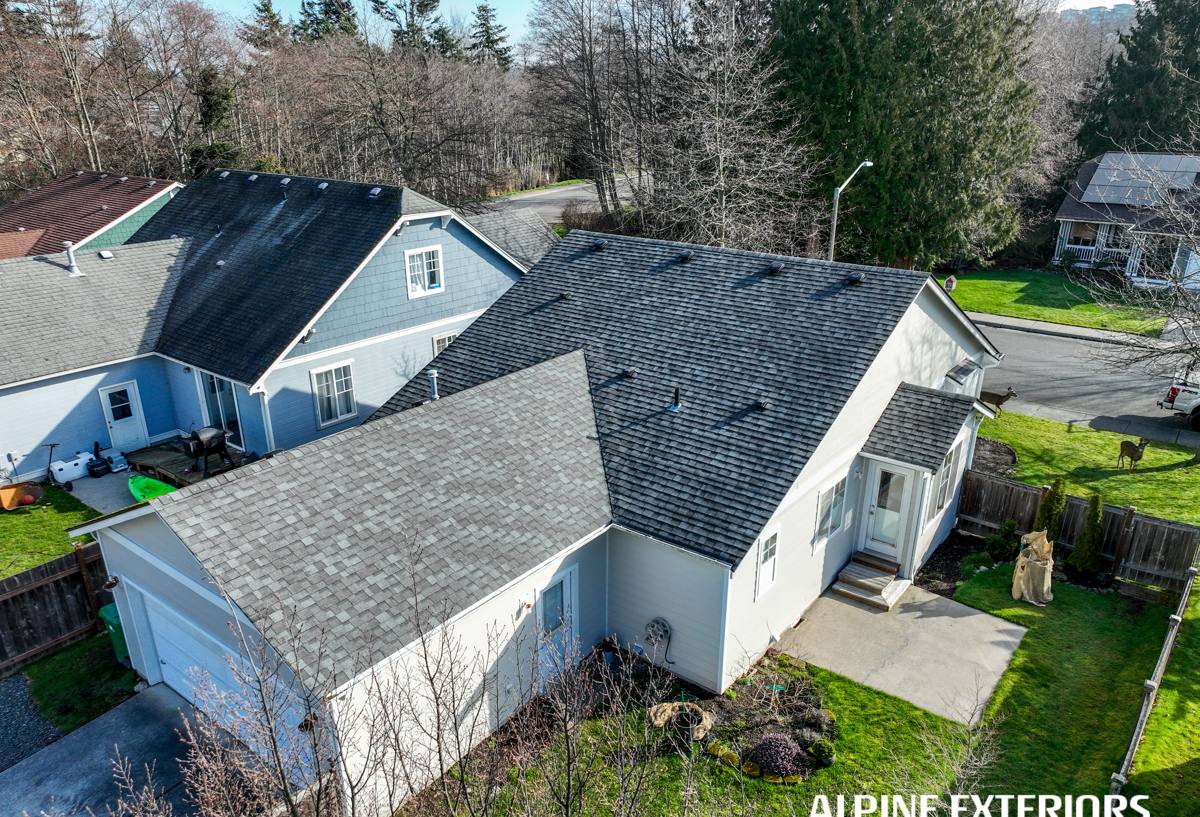
What the Climate Actually Does to a Guemes Island Roof
Salt Air and Metal Fatigue
Airborne salt from the surrounding water settles on roofing surfaces, flashing, fasteners, and any exposed metal. Over years, that accelerates corrosion on lower-grade fasteners and flashing, and it can dull or degrade certain coatings faster than the manufacturer's general climate ratings assume. This is one of the biggest reasons material and fastener selection matters more here than it does on a typical inland re-roof.
Driving Rain and Wind Exposure
Being surrounded by open water means less windbreak. Rain doesn't just fall on a Guemes Island roof, it gets pushed sideways into laps, valleys, and edges. That puts real stress on underlayment quality, flashing detail, and how tightly the roofing material is fastened down. Weak points that would never show themselves in a calmer setting get found quickly here.
Moss, Shade, and Standing Moisture
Wooded lots and marine-layer humidity mean roofs on Guemes Island spend a lot of the year damp. Moss and lichen take hold in shaded, north-facing sections and in areas with poor airflow, and once established they hold moisture against the roofing surface, working their way under shingle edges and granules over time. A roof with proper ventilation, the right pitch drainage, and a moss-resistant material choice fights this far better than one installed without those factors in mind.
Signs Your Guemes Island Roof Needs Replacing, Not Just Repair
- Granule loss showing up in gutters or at the base of downspouts, especially on shaded slopes
- Moss or lichen that keeps returning within a season or two of cleaning, even after treatment
- Curling, cupping, or cracked shingles concentrated on the sides that face open water or prevailing wind
- Soft spots in the decking, visible sagging, or daylight through the attic at eaves and valleys
- Rusted or lifting flashing around chimneys, vents, and skylights
- Interior staining on ceilings or in the attic after wind-driven rain events, not just steady rain
- A roof approaching or past the upper end of its material's realistic service life given island exposure
If you're seeing one or two of these, a repair may still make sense. Multiple items on this list, especially decking damage or repeat interior leaks, usually mean the roof system as a whole has reached the point where patching costs more over time than replacing it correctly once.
What a Correct New Roof Install Involves Here
A roof installed for Guemes Island's conditions needs a few things done right that a cheaper or rushed job tends to skip:
Underlayment and Water Barriers
Given the wind-driven rain exposure, we don't treat underlayment as an afterthought. Ice and water shield or a comparable self-adhered membrane belongs at eaves, valleys, and around every roof penetration, not just in the spots code requires as a minimum. This is the layer that protects the decking if wind pushes water past the surface roofing material.
Ventilation
Balanced intake and exhaust ventilation keeps the underside of the roof deck dry and reduces the moisture buildup that feeds moss growth and rot. On a moisture-heavy island lot, ventilation isn't optional — it's one of the biggest factors in how long the new roof actually lasts.
Flashing and Fasteners
Given salt air exposure, we pay close attention to flashing material and fastener grade around chimneys, skylights, vents, and roof-to-wall transitions. Cutting corners here is invisible on install day and expensive five years later when corrosion shows up as a leak.
Fastening for Wind
Every roofing material has a manufacturer-specified nailing or fastening pattern, and higher wind-exposure zones often call for tighter patterns than the bare minimum. On an open, water-exposed site, we fasten to the pattern that matches the actual exposure, not just the cheapest allowable spec.
Choosing a Roofing Material for This Location
| Material | How It Handles Salt Air & Moisture | Moss Resistance | General Lifespan |
|---|---|---|---|
| Architectural asphalt shingle | Good with quality underlayment and flashing; standard fasteners can corrode faster near open water | Moderate — benefits from algae/moss-resistant granules | 20–30 years, shorter under heavy shade and salt exposure without upkeep |
| Metal roofing (standing seam or coated panel) | Very good when coatings and fasteners are rated for coastal/marine exposure | High — sheds moisture quickly, little surface for moss to grip | 40–60+ years with correct coating and fastener spec |
| Synthetic/composite shingle | Good; resists moisture absorption better than wood-based products | Moderate to high depending on product | 30–50 years, product-dependent |
We don't install wood shake or shingle roofing on island homes like this. It's a maintenance-heavy product in a low, wet, shaded environment, and it holds moisture against the roof deck in exactly the conditions that cause the most trouble here. That's our standard for this climate, not a judgment on the product in a drier setting.
Cost Factors Homeowners Should Know
| Factor | Why It Matters on Guemes Island |
|---|---|
| Roof pitch and access | Steeper or harder-to-reach roofs take more labor and safety setup, same as anywhere, but ferry logistics can add to scheduling if extra equipment is needed |
| Decking condition | Moisture-related decking replacement is more common here than in drier inland areas and should be priced as a possibility, not assumed away |
| Material grade | Coastal-rated fasteners and flashing cost more up front but reduce corrosion-driven repairs later |
| Tear-off and disposal | Getting a dumpster or disposal trailer to and from the island adds a logistics step that a mainland job doesn't have |
Our Process for Guemes Island Roof Installations
- On-site inspection. We look at the existing roof, decking, ventilation, and any signs of moisture damage before quoting anything.
- Honest scope and estimate. You get a clear breakdown of what's being replaced, the material options that make sense for your exposure, and why.
- Scheduling around the ferry. We plan material delivery and crew transport around ferry sailing times so the job stays on schedule instead of losing a day to a missed sailing.
- Staging materials efficiently. Because every trip back to the mainland costs time, we stage materials, tools, and disposal in a way that minimizes extra ferry runs.
- Tear-off and decking check. Old roofing comes off, and we inspect the decking underneath before anything new goes down — this is where hidden moisture damage gets found and addressed.
- Installation to spec. Underlayment, flashing, ventilation, and the roofing material go in to the standard the exposure actually calls for, not just code minimums.
- Cleanup and haul-off. Debris and old materials leave the island with us — nothing gets left behind for you to deal with.
Why It Matters That We Already Work on Guemes Island
A contractor unfamiliar with island work can turn a straightforward roof replacement into a scheduling headache — missed ferry sailings, materials staged incorrectly, or a crew that doesn't account for the extra time island logistics add to a job. Working Guemes Island regularly means we plan around the ferry schedule as a matter of course, know what it takes to move materials and equipment efficiently, and don't treat the island as an inconvenient add-on to a mainland route.
It also means we've seen how roofs actually perform out here over time — which details hold up to the salt air and driving rain, and which shortcuts show up as problems a few years down the road. That's knowledge that only comes from doing the work in this exact setting, not from a generic regional roofing spec sheet.
After the New Roof Goes On
A correctly installed roof still benefits from basic upkeep in this climate. A simple annual routine keeps a Guemes Island roof performing the way it's supposed to:
- Clear debris and needles from valleys and gutters before fall rains set in
- Check shaded, north-facing sections for early moss growth and treat it before it spreads
- Have flashing around chimneys, vents, and skylights visually checked every year or two
- Confirm attic ventilation isn't blocked by insulation or debris
- Address any small leak signs immediately rather than waiting for the next dry season
If your Guemes Island home needs a new roof, or you're not sure whether repair or replacement is the right call, we're happy to take a look and give you a straight answer. Fill out the form below for a free, no-pressure estimate.