 Anacortes Exterior
 Flounder Bay's Windows Take a Different Kind of Beating
Flounder Bay sits close enough to the water that its homes deal with a steady mix of salt-laden air, wind-driven rain, and long stretches of gray, damp weather that most inland Skagit County properties simply don't see as often. Windows here aren't just glass and trim — they're one of the main barriers between your living space and a marine climate that never really lets up. When a window is installed correctly for this kind of exposure, it can last decades. When it's installed the way a crew might install one in a drier part of the state, problems show up early: fogged glass, soft trim, drafts that seem to come from nowhere.
This page is about window installation specifically for Flounder Bay properties — what the local climate demands, what a correct installation actually involves, and how we approach the work so it holds up.
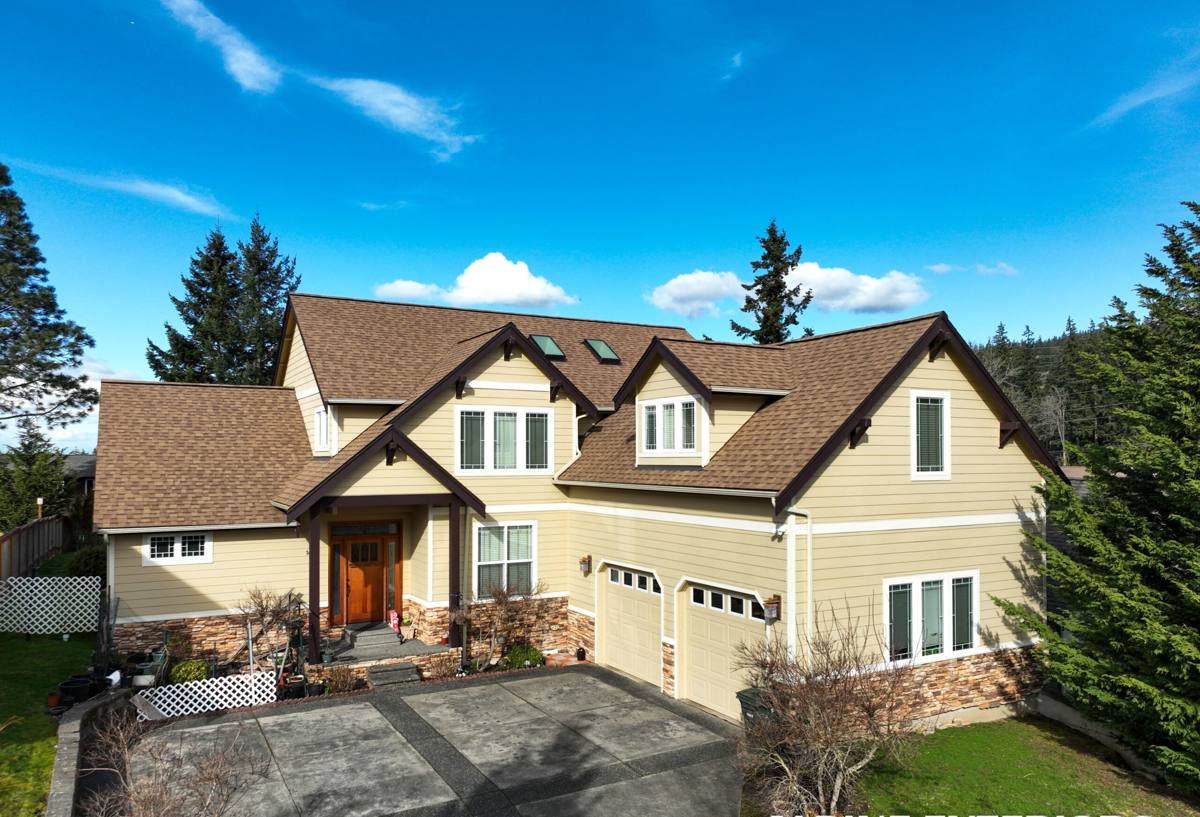
What Salt Air, Driving Rain, and Moss Season Do to Windows
Anacortes' position on the water means Flounder Bay homes are exposed to airborne salt that settles on exterior surfaces and accelerates corrosion on hardware, screws, and lesser-grade metal components. Combine that with wind-driven rain that hits windows at an angle rather than falling straight down, and you get water pressure at the window's edges that a standard, inland-style installation isn't always built to resist.
Then there's moss season — the long stretch of wet, mild weather that lets moss and algae take hold on anything that stays damp and shaded. Around windows, that usually means trim boards, sills, and the transition where the window frame meets siding. Moss holds moisture against wood and painted surfaces far longer than plain rain does, which is part of why window trim in this area tends to fail from the bottom up if it wasn't detailed correctly during installation.
The Practical Result
None of this means Flounder Bay homes need exotic materials or unusual designs. It means the installation details — flashing, sealant choice, drainage paths, and hardware — have to be treated as load-bearing parts of the job, not afterthoughts. A window that's a perfectly good product can still fail early if it's set into the wall without accounting for where water and moisture will actually go.
What a Correct Window Installation Actually Involves
A window installation is more than removing an old unit and setting a new one in the opening. Done right, it's a sequence of steps where each one protects the wall assembly behind it.
Flashing and Water Management
Proper flashing directs any water that gets past the window's exterior seal back out and away from the wall framing, rather than letting it pool at the sill or work its way into the wall cavity. In a driving-rain environment like Flounder Bay, this step matters more than in drier regions — it's the difference between a small amount of incidental moisture draining harmly away and that same moisture sitting against wood framing for weeks.
Sealant Selection and Placement
Not every exterior sealant is rated for constant damp exposure or holds up against salt air over time. We use sealants chosen for this climate, applied at the specific points that need a continuous water seal — while still leaving the assembly able to drain and dry rather than trapping moisture inside the wall.
Fastener and Hardware Choice
Salt air is hard on standard fasteners and hardware. Corrosion-resistant screws and hardware cost a little more up front but avoid the streaking, weakening, and premature failure that plain hardware can show within just a few years this close to the water.
Fit, Shimming, and Insulation
A window that's shimmed unevenly or insulated poorly around the frame will draft, and drafts in a marine climate also mean condensation risk where warm interior air meets a cold, leaky frame. Getting the reveal even and the gap properly insulated — not overpacked, not left hollow — is a basic step that's easy to rush and costly to get wrong.
Signs a Flounder Bay Window Needs Replacing, Not Just Repair
- Fogging or moisture between the panes of a double- or triple-pane window — the seal has failed and can't be repaired
- Soft, spongy, or visibly rotted trim or sill material around the frame
- Persistent moss or algae growth on the sill or lower trim that keeps coming back after cleaning
- Drafts you can feel with a hand near the frame on a windy day
- Windows that are difficult to open, close, or lock — often a sign the frame has shifted or swollen
- Visible daylight or gaps between the frame and the surrounding wall or trim
Some of these can be addressed with targeted repair or re-sealing. Others — especially failed seals and rotted framing — mean the window and its surrounding assembly need to come out and be replaced properly.
Window Material Options for This Climate
There's no single "best" window material for every home — the right choice depends on your budget, the home's style, and how much upkeep you want to take on. Here's how the common options compare for a marine, moss-prone climate like Flounder Bay's:
| Material | Moisture & Salt Air Behavior | Maintenance | General Cost Position |
|---|---|---|---|
| Vinyl | Doesn't rot or corrode; performs well in salt air | Low — occasional cleaning | Lower to mid-range |
| Fiberglass | Very stable in wet, temperature-shifting conditions; strong corrosion resistance | Low | Mid to higher |
| Wood (unclad) | Attractive but needs consistent maintenance to resist rot in constant damp exposure | High — regular painting/sealing | Mid to higher |
| Wood-clad (exterior-protected) | Exterior cladding shields wood from moisture; interior keeps a wood look | Moderate | Higher |
| Aluminum | Can corrode in salt air unless properly coated; conducts cold, raising condensation risk | Moderate | Lower to mid-range |
For most Flounder Bay homes we recommend vinyl or fiberglass as a practical baseline — both resist the moisture and salt exposure this area sees without demanding ongoing upkeep. Wood and wood-clad options remain a fine choice for homeowners who want that look and are prepared for the maintenance it requires; we'll walk through the trade-offs honestly rather than push whichever product is easiest to install.
Our Installation Process
| Step | What Happens |
|---|---|
| 1. On-site assessment | We look at existing window condition, framing, siding type, and any visible moisture or rot before quoting anything |
| 2. Measurement and product selection | Exact sizing and material/style discussion based on your home and budget |
| 3. Removal | Old window and any compromised trim or sheathing removed carefully to expose the full opening |
| 4. Repair of underlying damage | Any rotted framing or sheathing found during removal is addressed before the new window goes in — this is common near the water and shouldn't be skipped |
| 5. Flashing and installation | Flashing, sealant, and the window unit are installed per manufacturer specs and adjusted for this climate's exposure |
| 6. Insulation and interior finish | Gaps insulated properly, interior trim reset or replaced |
| 7. Final check | Operation, seal, and weatherproofing checked before we consider the job done |
Permits and Local Requirements
Window replacement in Anacortes and unincorporated Skagit County can require a permit depending on the scope of the work — particularly if structural framing is altered or if the home is in a designated flood or shoreline area, which is worth checking for properties near the water in and around Flounder Bay. We handle the permit question as part of quoting the job rather than leaving homeowners to figure it out on their own.
Why a Local Anacortes Crew Matters for Flounder Bay
A contractor who mainly works drier, inland jobs may install a window correctly by general standards and still miss the details that matter specifically here — the flashing detail that handles wind-driven rain, the hardware upgrade that resists salt corrosion, or the trim gap that becomes a moss trap by year two. Working in and around Anacortes and Flounder Bay regularly means those details aren't guesswork; they're just how the job gets done in this environment.
It also means we're realistic about timing. Skagit County's wet season affects scheduling and cure times for sealants and exterior work, and a crew familiar with the area plans around that instead of promising a timeline that weather won't allow.
Questions Worth Asking Any Window Contractor
- Do you check and repair underlying framing or sheathing damage before installing the new window?
- What flashing and sealant products do you use, and are they rated for constant coastal moisture exposure?
- Are you using corrosion-resistant fasteners and hardware given the salt air here?
- What's the manufacturer's warranty, and does your installation practice keep that warranty valid?
- Will you pull permits if the scope requires it?
- Can you walk me through the actual steps of the install, not just the product being used?
A contractor who can answer these clearly, without hedging, is generally one who's done this kind of work enough times to know what actually matters.
If you're dealing with drafty, foggy, or aging windows on a Flounder Bay property, we're happy to take a look and give you a straightforward, no-pressure estimate — just fill out the form below.