 Anacortes Exterior
 Flounder Bay's Siding Problem Isn't Like Inland Anacortes
Homes along Flounder Bay sit close to the water, which means they take on a different combination of stresses than a house a few miles inland in Skagit County. Salt-laden air moves off the water and settles on every exterior surface. Wind-driven rain hits siding at angles that shingles and lap boards further from shore rarely see. And because the area stays shaded and damp for long stretches of the year, moss and algae get a head start on siding that a sunnier lot wouldn't have to deal with until later in the season.
None of that means Flounder Bay homes need something exotic. It means the ordinary siding replacement job has to be done with more attention to the details that fail first near saltwater: end cuts, fastener choices, flashing at penetrations, and the gap between siding and grade. Skip those details and a new siding job can look fine for a year or two before problems that were baked in on install day start showing up.
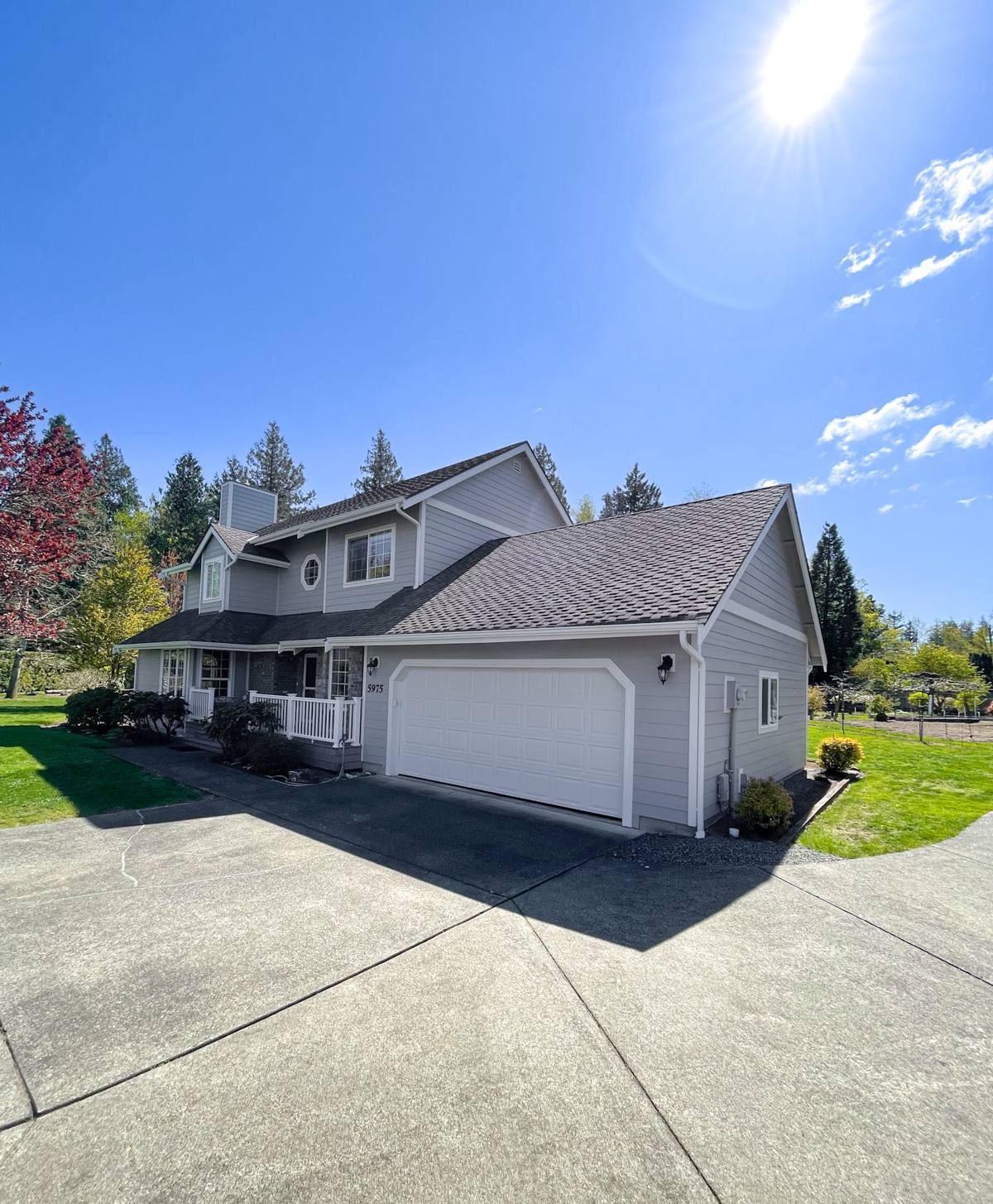
What Salt Air and Moss Actually Do to Exterior Siding
Salt Air
Airborne salt is corrosive to exposed metal fasteners, flashing, and trim. On wood-based sidings it also accelerates moisture uptake at cut edges and joints, since salt is hygroscopic — it pulls moisture out of the air and holds it against the material. Over years, that shows up as swelling, soft spots, and paint that won't hold no matter how often it's redone.
Driving Rain
A waterfront lot on Fidalgo Island gets more wind-driven rain than a sheltered inland site. That rain doesn't just run down the face of the siding — it gets pushed sideways and upward at laps, corners, and window trim. If the weather-resistive barrier behind the siding, the flashing details, and the lap overlaps aren't installed correctly, water finds its way behind the cladding instead of running off it.
Moss and Algae
Shaded, damp conditions near the water let moss and algae establish faster than they would on a sun-exposed inland wall. On some siding materials that's just a cosmetic nuisance you power-wash off. On others, sustained moisture from moss cover softens the material underneath, which is a slower but more expensive problem.
Why We Install Only James Hardie Siding
We don't carry vinyl, LP SmartSide, primed wood, cedar, or other fiber cement brands, and that's a deliberate call, not a limitation of what we're able to install. In a climate like Flounder Bay's — persistent moisture, salt exposure, moss pressure — the material that goes on the wall determines how much of this problem you're still dealing with in ten years.
James Hardie fiber cement is engineered specifically for wet, coastal-adjacent climates like ours. It's non-combustible, dimensionally stable when it gets wet (unlike wood-based products that swell and shrink), and it comes with a factory-applied ColorPlus finish that's baked on under controlled conditions rather than painted on-site — which matters when salt air is working against every finish on the house. Hardie also builds region-specific HZ5 product formulations for areas that see the freeze-thaw and moisture cycling common to the Pacific Northwest.
That doesn't mean every other product is a bad product in the abstract. Vinyl is inexpensive and low-maintenance in mild climates. Wood-based composite sidings can look good and install quickly. But we've made a professional judgment, based on what we see fail first in Skagit County's coastal microclimates, that the trade-offs those materials carry — moisture sensitivity at cut edges, shorter finish life in salt air, or warranty structures that don't hold up as well under real coastal exposure — aren't worth it on a home that's going to sit a few hundred feet from saltwater. Hardie is what we're willing to put our name behind here.
What a Correct Siding Replacement Involves
Replacing siding on a Flounder Bay home isn't just pulling off old boards and nailing up new ones. A correct job addresses the whole wall assembly, not just the visible layer:
- Full tear-off and inspection — old siding comes off so the sheathing underneath can actually be checked for rot, soft spots, or prior water damage instead of being covered up.
- Repair before re-cover — any damaged sheathing or framing gets replaced before anything new goes on. Covering up a compromised wall with new siding just hides the problem for a few more years.
- Weather-resistive barrier — a correctly lapped and taped house wrap or building paper goes on before siding, so any water that does get past the cladding has a drainage path instead of a place to sit.
- Rainscreen or proper drainage gap — especially important on a wind-driven-rain site, this lets water that reaches the back of the siding drain and dry instead of staying trapped against the wall.
- Flashing at every penetration — windows, doors, vents, and hose bibs are where most siding failures start. Correct flashing, not just caulk, is what keeps water out at these points.
- Corrosion-resistant fasteners — in a salt-air environment, fastener choice matters more than it would inland. We use fasteners rated for the exposure, not whatever's cheapest.
- Correct clearance at grade — siding needs a gap above grade, decks, and hardscaping so it isn't sitting in standing moisture.
Our Process for a Flounder Bay Siding Replacement
- On-site assessment — we walk the exterior, check for existing moisture damage, and look at how the house is oriented relative to prevailing wind and rain.
- Written scope and product selection — we go over which Hardie profile and HZ formulation fits the home and help narrow down color and texture options.
- Tear-off and sheathing repair — old siding and trim come off, sheathing is inspected and repaired as needed before anything new is installed.
- Weather barrier and flashing installation — house wrap, drainage plane, and flashing go in first, since this layer does more long-term work than the siding itself.
- Hardie installation to manufacturer spec — correct nailing patterns, gaps, and fastener spacing, since Hardie's warranty is tied to installation being done to their published specifications.
- Trim, caulking, and final detailing — corners, window and door trim, and transitions are finished and sealed.
- Walkthrough — we review the finished work with the homeowner before calling the job done.
Choosing the Right Hardie Line for a Waterfront Lot
Hardie's product lines aren't one-size-fits-all, and on a bay-adjacent home the choice matters more than it would on a sheltered inland lot.
| Consideration | Why it matters at Flounder Bay |
|---|---|
| HardiePlank lap siding | The standard workhorse profile; widely used on waterfront homes for its proven moisture and impact performance. |
| HardiePanel vertical siding | Often used for accent sections or modern facades; drainage detailing behind it matters even more given wind-driven rain exposure. |
| ColorPlus factory finish | Baked-on finish holds up better against salt air than field-applied paint, and reduces how soon repainting becomes necessary. |
| Color and sheen choice | Darker colors show less moss shading over time; texture affects how visible water streaking becomes near the waterline of the home. |
| HZ5 formulation | Engineered for regions with more moisture cycling, which fits Skagit County's wet, temperate-marine climate. |
Signs a Flounder Bay Home Needs Siding Replacement Now
Some warning signs are easy to miss until they're already expensive. Worth checking for before winter weather sets in:
- Persistent moss or algae growth that comes back within weeks of cleaning
- Soft or spongy spots when you press on siding, especially near the bottom courses
- Paint that's peeling, bubbling, or won't hold a fresh coat
- Visible gaps, warping, or cupping in siding boards
- Staining or discoloration that follows a pattern near windows, corners, or trim
- A musty smell or visible mold on interior walls that back onto exterior siding
- Rust streaking from fasteners or trim hardware
What Factors Actually Drive Cost
Every quote is different, but the line items that move the number most on a Flounder Bay job tend to be the same:
| Factor | Effect on Cost |
|---|---|
| Sheathing or framing repair needed | Damage found during tear-off is the most common reason a quote changes once work is underway. |
| Home size and wall complexity | More corners, dormers, and trim details mean more labor and material waste. |
| Siding profile (lap vs. panel vs. shingle-style) | Profile and installation method affect both material and labor cost. |
| Access and site conditions | Waterfront lots with limited staging space or steep grades can add setup time. |
| Trim and detail work | Corner boards, window trim, and fascia work add labor beyond the flat siding area. |
Why Hiring a Crew That Already Works Flounder Bay Matters
A siding crew that's worked other homes in this specific area already knows how the wind and rain hit these lots, which sides of a house take the worst of the weather, and which details — flashing, drainage gaps, fastener choice — actually get tested by this climate instead of a milder one. That's different knowledge than general siding experience from a drier or more sheltered part of the county. It's also easier to schedule and coordinate with a crew based in Anacortes rather than one traveling in from further out, particularly if follow-up work or a warranty question comes up later.
If your Flounder Bay home is due for new siding, we're happy to walk the exterior with you, point out what we see, and put together a straightforward, no-pressure estimate — no obligation, no pressure tactics, just a clear look at what the job actually involves. Reach out using the form below to get started.