 Anacortes Exterior
 Why Fidalgo Island Siding Takes a Different Approach
Fidalgo Island sits right where the marine air off Rosario Strait and Guemes Channel meets everything a Pacific Northwest winter can throw at a house. Homes here deal with a combination that a lot of siding products simply weren't built for: near-constant salt-laden moisture, driving wind-blown rain that hits siding at an angle instead of straight down, and long stretches of shaded, damp weather that let moss and algae get a foothold on anything that stays wet too long. Add in the freeze-thaw swings Skagit County sees most winters, and you've got an environment that finds every weak point in a siding system within a few years, not a few decades.
That's the backdrop for every siding decision we make on Fidalgo Island. We install James Hardie fiber cement siding exclusively, and on a site like this one, the reasons aren't abstract — they show up directly in how a house performs after five, ten, and twenty years of island weather.
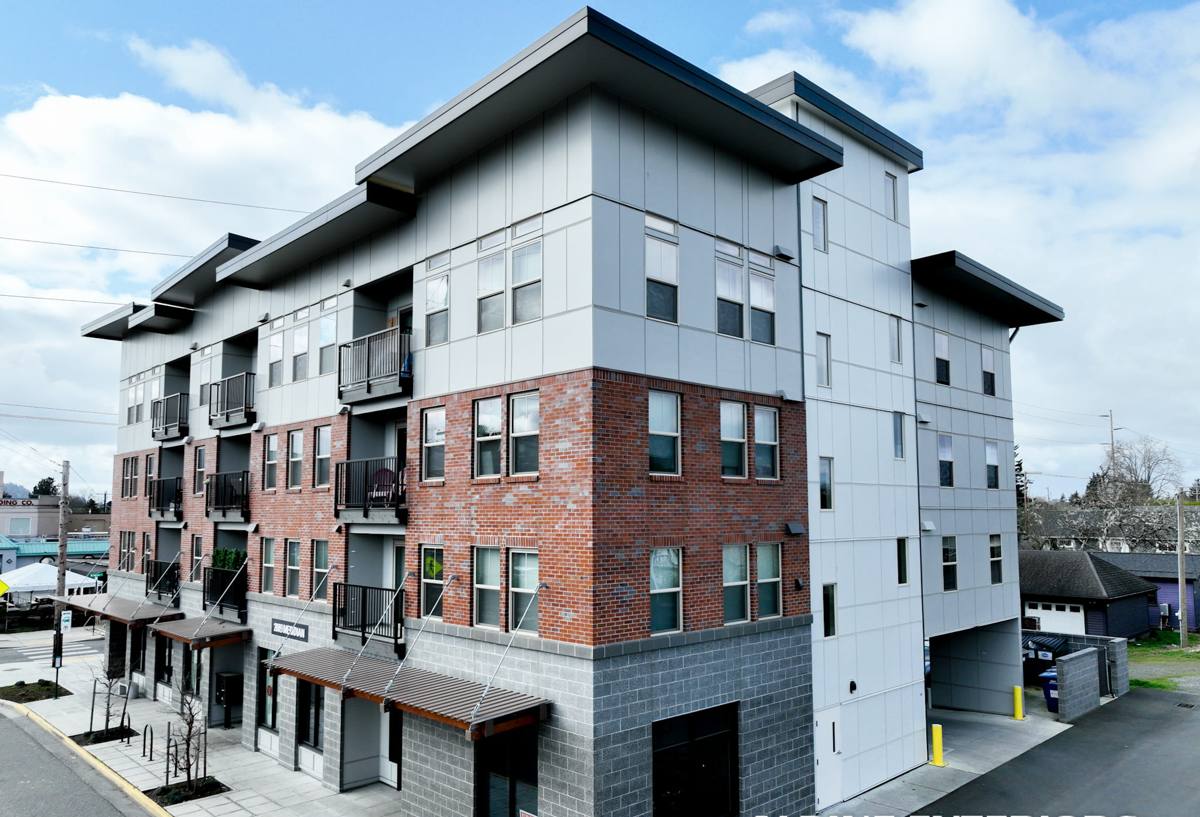
What Salt Air and Moisture Actually Do to Siding
Salt air isn't just a coastal talking point — it's a chemical reality for anything mounted to the outside of a house. Airborne salt accelerates corrosion in fasteners and metal trim, and it interacts with paint films differently than inland air does, often causing coatings to break down faster than their rated lifespan suggests. Combine that with rain that gets driven sideways by wind off the water, and siding on Fidalgo Island takes on moisture from angles that manufacturers' lab testing doesn't always account for.
Moss and Algae Season Is Longer Here Than It Feels
Because so much of Anacortes and the surrounding island sits under tree cover or in the shadow of hills and structures, siding surfaces can stay damp for days after a storm passes. That extended damp window is exactly what moss and algae need to establish. Once organic growth gets a grip on a siding surface, it holds moisture against that surface even longer, which compounds the problem year over year if the material and finish underneath aren't built to resist it.
Why We Standardized on James Hardie for This Climate
James Hardie fiber cement is engineered from cement, sand, and cellulose fibers — a composition that doesn't rot, doesn't swell with moisture absorption the way wood-based products can, and is non-combustible. For a marine environment like Fidalgo Island, the practical benefit is straightforward: the board itself isn't the weak link. It holds its shape and structural integrity through repeated wet-dry cycles in a way that wood-based and some engineered wood siding products struggle to match over the long run.
ColorPlus Technology and the Salt Air Problem
James Hardie's ColorPlus factory-applied finish matters more here than in a drier inland market. Because the color coat is baked on in a controlled factory process rather than field-applied, it resists the fading and chalking that field-applied paint often shows first in coastal exposure. It also comes with a separate finish warranty specifically covering that coating — which is relevant on an island where paint films take more abuse than the manufacturer's general-market testing typically assumes.
HZ5 and Climate-Engineered Product Lines
James Hardie makes region-specific formulations under its HZ (HardieZone) system, engineered for different moisture and freeze-thaw profiles across the country. For the Pacific Northwest, that means a formulation suited to sustained damp conditions rather than one optimized for a dry climate. Installing the right HZ line, in the right thickness and profile, is part of what separates a correctly specified Hardie install from one that just uses "Hardie board" as a generic material without matching it to the actual site conditions.
What a Correct Fiber Cement Install Involves on Fidalgo Island
The material is only half the equation. Fiber cement siding fails prematurely almost exclusively because of installation mistakes, not because the product itself gave out. On a coastal site, the margin for error is smaller because moisture finds gaps faster.
- Proper weather-resistive barrier and drainage plane behind the siding, not just a house wrap stapled up and covered
- Correct fastener spacing, type, and depth — corrosion-resistant fasteners matter more here given the salt air
- Rain screen or furring strategy where the site calls for it, to let moisture drain and the wall assembly dry between storms
- Manufacturer-specified clearances at grade, roofline, and any horizontal trim so water doesn't wick into cut edges
- Sealed and primed field cuts — an unsealed cut edge is one of the most common entry points for moisture on any fiber cement job
- Correct joint and butt-seam treatment so panels aren't trapping water at the seams
- Flashing integration at windows, doors, and any wall penetrations that's coordinated with the siding plane, not treated as a separate trade's problem
Every one of those items is a place where a rushed or unfamiliar crew can create a callback in year three instead of a wall system that performs for decades. On an island site with more wind-driven rain exposure than a typical inland lot, the details around drainage and flashing carry more weight than they would on a sheltered property.
Our Process for Fidalgo Island Siding Projects
We approach every siding job on the island the same structured way, adjusted for the specific exposure of the site:
- Site assessment — we look at wind exposure, shade patterns, existing moisture damage, and how the current siding and trim have held up, which tells us a lot about what the next system needs to handle.
- Substrate and sheathing check — before new siding goes up, we confirm what's underneath is sound. Covering up rot or compromised sheathing just relocates the problem.
- Product and profile selection — matching the right James Hardie line, plank width, and texture to the home's style and to the site's actual moisture exposure.
- Installation to manufacturer spec — following James Hardie's published fastening, clearance, and flashing requirements, not shortcuts that happen to look finished from the ground.
- Final detailing — caulking, touch-up, and trim work done to hold up under the freeze-thaw and salt exposure this location sees.
Fiber Cement vs. Other Common Siding Choices
Homeowners on Fidalgo Island often ask how fiber cement stacks up against the other materials they see around Anacortes. Here's a straightforward comparison focused on how each performs in this specific climate:
| Factor | James Hardie Fiber Cement | Vinyl | Wood-Based / Engineered Wood |
|---|---|---|---|
| Moisture & rot resistance | Does not rot; cement-based composition | Doesn't rot but can warp and gap over time | Vulnerable to moisture absorption and rot if finish fails |
| Salt air / coastal performance | Factory finish resists fading and chalking | Can become brittle and discolored faster near salt air | Finish breaks down faster under salt exposure |
| Fire resistance | Non-combustible | Combustible, can melt or deform | Combustible |
| Moss/algae resistance | Dense surface resists organic growth better long-term | Can trap moisture at seams, encouraging growth | Porous surfaces are more hospitable to moss and algae |
| Maintenance over 15+ years | Lower — factory finish holds up; occasional caulk/touch-up | Low upfront, but cracking and fading show up over time | Higher — repainting and moisture monitoring needed |
This is why our answer, when a Fidalgo Island homeowner asks about vinyl or an engineered wood product, is honest rather than dismissive: those products have real strengths in the right application, but for this specific coastal, high-moisture environment, we've made the professional call to install only what we're confident will hold up to it — James Hardie fiber cement.
Cost Factors Specific to This Job
Every siding estimate depends on the specifics of the house, but a few factors come up more often on Fidalgo Island projects than elsewhere in Skagit County:
| Factor | Why It Affects Cost Here |
|---|---|
| Existing sheathing condition | Coastal moisture exposure means a higher chance of hidden rot that needs repair before new siding goes on |
| Wind exposure of the lot | More exposed sites may need additional flashing and rain-screen detailing |
| Home access and site layout | Waterfront and hillside lots common on the island can affect staging and scaffolding needs |
| Trim and detail complexity | Older island homes often have more architectural detail requiring custom trim work |
| Removal of existing siding | Tear-off and disposal of failing material adds labor beyond the new install itself |
Signs Your Fidalgo Island Home May Need Siding Attention
- Visible moss or algae staining that returns shortly after cleaning
- Soft spots, bubbling, or warping, especially on north- and west-facing walls
- Paint that's peeling or chalking faster than it used to
- Gaps opening up at seams, corners, or trim boards
- Rising energy bills that may point to a compromised weather barrier behind the siding
- Visible fastener corrosion or staining running down from nail heads
None of these on their own mean a full replacement is necessary — but on a marine-exposed site, they're worth having looked at before they turn into sheathing or framing damage that costs a lot more to fix.
Why Local Experience on Fidalgo Island Matters
A siding crew that mostly works drier inland areas of Skagit County will still know how to hang fiber cement correctly on paper. What they won't necessarily have is a working feel for how a specific island lot's wind exposure, shade pattern, and salt proximity should change the drainage plane, fastener choice, and flashing detailing on that particular job. We work Anacortes and Fidalgo Island regularly enough to recognize which sites need extra rain-screen detailing, which need more attention at grade clearance because of drainage patterns, and which have the kind of prevailing wind exposure that makes wind-driven rain a bigger factor than it would be a few miles inland. That local pattern recognition is part of what keeps a siding job performing well past its warranty period, not just at the final walkthrough.
Get a Straightforward Estimate
If you're weighing a siding project on Fidalgo Island — whether it's a full replacement or you're trying to figure out how much longer your current siding has — we're happy to take a look and give you an honest read on where things stand. Reach out for a free, no-pressure estimate using the form below.