 Anacortes Exterior
 Why Fidalgo Island Decks Wear Differently
A deck on Fidalgo Island doesn't age the way a deck in a drier, inland climate does. Sitting where the Salish Sea meets Skagit County, homes here take on a steady diet of salt-laden air, wind-driven rain that gets pushed sideways under railings and into ledger connections, and a long, damp shoulder season where moss and algae get a real foothold on any horizontal surface that doesn't dry out quickly. None of that is dramatic on its own. What it does is compound — moisture sits a little longer, fasteners corrode a little faster, and wood that would last two decades somewhere drier can show real trouble in half that time.
That's the backdrop for every deck repair call we take in this area. The goal isn't just to patch what's visibly broken — it's to understand why that spot failed first, because on a marine-influenced site like this, the same conditions that damaged one board or one post base are working on the rest of the structure too.
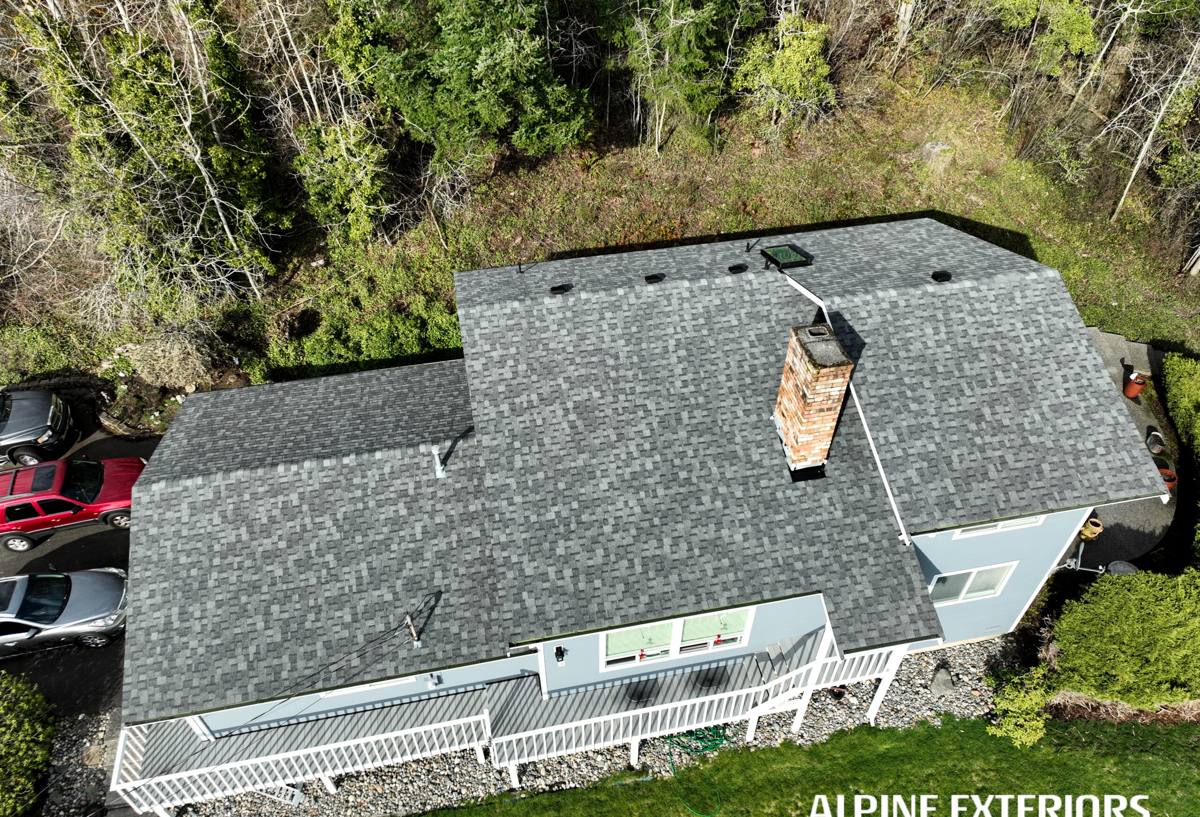
How Salt Air and Moisture Actually Damage a Deck
Fastener and Hardware Corrosion
Salt air accelerates corrosion in metal connectors, screws, and nails — especially anything that isn't rated for coastal or treated-lumber exposure. Once a fastener starts rusting, it loses holding strength and can also react with the surrounding wood, leaving dark staining and softened fibers around the head. On older decks we often find a mix of fastener types from different repair eras, and it's rarely the newest ones that are the weak link.
Trapped Moisture at Connection Points
Ledger boards, post bases, stair stringers, and anywhere two pieces of framing meet are the highest-risk spots. Driving rain gets pushed into these joints by wind off the water, and if the original flashing or drainage detail was skipped or done cheaply, water has nowhere to go. It sits, the wood swells and dries repeatedly, and rot sets in from the inside — often before there's any visible sign on the surface.
Moss, Algae, and Surface Breakdown
Skagit County's long damp season keeps horizontal deck surfaces wet for extended stretches, which is exactly what moss and algae need. Beyond being slippery and unattractive, a persistent moss layer holds moisture directly against the wood surface, which softens fibers and accelerates checking and splintering — particularly on the north side of a house or under heavy tree cover, both common on Fidalgo Island lots.
Signs a Deck Needs Repair — Not Replacement
Most decks don't need to be torn out and rebuilt. What they need is targeted repair of the parts that actually failed, done correctly, so the rest of a sound structure keeps performing. Here's what we look for to make that call honestly:
- Soft, spongy, or visibly darkened decking boards — usually a repair-in-place issue unless it's spread across most of the deck field
- Rust streaking around fastener heads or metal connectors — a hardware and localized wood-condition check
- Movement or wobble at the railing posts — almost always a connection or blocking problem, not a full railing replacement
- Stair stringers that flex or show cracking — a structural repair, addressed before it becomes a safety issue
- Gaps opening up at the ledger board where the deck meets the house — a flashing and fastening issue that needs correcting, not just re-caulking
- Persistent moss or dark staining even after cleaning — points to a drainage or airflow problem underneath, not just a surface issue
- Widespread rot at multiple framing members, or a deck built without proper footings — this is where replacement becomes the honest recommendation
A big part of our job on the first visit is telling you which category your deck falls into — and being straightforward when full replacement really is the more cost-effective answer, rather than repeatedly patching a structure that's past that point.
What a Correct Deck Repair Actually Involves
A repair that just replaces the board you can see and leaves everything underneath alone tends to fail again within a season or two on a site like this. Doing it right means checking the framing, not just the surface.
Structural Inspection First
Before any board comes off, we check the framing members, ledger connection, post bases, and any load path that could be hiding damage the homeowner can't see from above. This is especially important around ledger boards and stair connections, which take the brunt of wind-driven rain in this area.
Matching Materials Correctly
Repairs need to use lumber and hardware rated for the exposure they're going into — properly treated framing lumber, and fasteners and connectors rated for coastal or high-moisture use, not standard interior-grade hardware. Mixing corrosion-resistant hardware with untreated lumber, or the reverse, just moves the failure point somewhere else.
Flashing and Drainage Detailing
Where the deck meets the house, and at any point water could pool or get trapped, correct flashing and a slight drainage slope matter more here than in a drier climate. This is the detail most likely to have been skipped or under-built on an older deck, and it's usually the actual root cause when we find rot at a ledger board.
Finish and Sealant Appropriate to the Exposure
Whatever finish or sealant goes on at the end needs to be one suited to marine air and repeated wet-dry cycles — and reapplied on a schedule, not treated as a one-time fix. We'll tell you honestly what maintenance interval your specific repair needs to hold up.
Our Repair Process
- On-site assessment. We walk the whole deck, not just the spot you called about, checking framing, connections, and drainage — because on a coastal property, related damage is common.
- Clear scope and honest recommendation. You get a plain explanation of what's actually wrong, what repair options exist, and — if it applies — when replacement is the more sensible call.
- Repair using exposure-rated materials. Framing, fasteners, and connectors matched to marine-influenced conditions, not generic hardware-store stock.
- Correct the root cause, not just the symptom. If a drainage or flashing detail caused the failure, we fix that detail as part of the repair — otherwise you're paying for the same fix again in a few years.
- Finish and maintenance guidance. We explain what upkeep your specific repair needs and how often, based on your deck's orientation, tree cover, and exposure.
Repair vs. Replacement: How We Weigh It
| Factor | Leans Toward Repair | Leans Toward Replacement |
|---|---|---|
| Extent of damage | Isolated to a few boards, posts, or one connection | Rot or corrosion spread across most of the structure |
| Framing condition | Main structural members are sound | Joists, beams, or footings compromised |
| Deck age | Within its expected service life | Original build already near or past typical lifespan |
| Original construction quality | Built with proper flashing, footings, and connections | Missing flashing, undersized footings, or code gaps |
| Cost over time | Repair cost is a fraction of rebuild cost | Repeated repairs are approaching replacement cost |
Broadly, straightforward board and hardware repairs are a modest expense; structural repairs involving framing or ledger work cost more due to the labor involved in doing it correctly; and a full rebuild is a larger investment but resets the clock with materials suited to this climate from the start. We'll give you real numbers for your specific deck during the estimate — not a generic range that doesn't reflect what we actually find.
Keeping a Repaired Deck in Good Shape
A correct repair holds up a lot longer with a small amount of regular upkeep, especially given how much moss and moisture this area sees. After a repair, we recommend:
- Sweeping debris and standing water off the surface regularly, especially through fall and winter
- Treating moss and algae growth before it builds up a thick layer, rather than after
- Checking railings and stair connections for movement once or twice a year
- Reapplying sealant or finish on the schedule appropriate to your deck's exposure and orientation
- Keeping gutters and downspouts clear so runoff isn't draining directly onto or under the deck
Why a Crew That Already Works Fidalgo Island Matters
Deck repair isn't a one-size-fits-all trade. A crew that regularly works Anacortes and the surrounding Skagit County waterfront already knows which connection points fail first in this environment, which materials actually hold up against salt air instead of just looking good on a spec sheet, and how much drainage and flashing detail a given exposure really needs. That local pattern recognition is the difference between a repair that solves the problem and one that just delays it. We also know that every lot on Fidalgo Island is a little different — tree cover, wind exposure, and orientation to the water all change what a deck needs, and we account for that rather than applying a generic fix.
Get an Honest Look at Your Deck
If your deck has soft spots, rust staining, a wobbly railing, or just isn't holding up the way it used to, we're happy to take a look and give you a straight answer about what it needs. Reach out for a free, no-pressure estimate using the form below.