 Anacortes Exterior
 Why Flounder Bay Homes Need a Different Approach to Windows
Flounder Bay sits close enough to the water that homes here deal with a combination most inland Skagit County properties never have to think about: salt-laden air, wind-driven rain coming off Rosario Strait and the surrounding waterways, and long stretches of damp, low-sun weather that keep moisture sitting against a house far longer than it does elsewhere. Windows are one of the first building components to show the wear from that combination, and they're also one of the biggest sources of wasted heating and cooling energy once seals and glazing start to fail.
A window that performs fine in a dry inland climate can underperform quickly near the water. Salt air accelerates corrosion on hardware and certain frame finishes. Repeated wetting and drying cycles stress seals and caulking. And the moss and algae that thrive in this region's humidity can hold moisture against sills and trim long after a storm has passed. None of this means windows near Flounder Bay need to be exotic or overbuilt — it means the glass, frame material, and installation details need to be matched to the actual conditions the house sits in, not to a generic spec sheet.
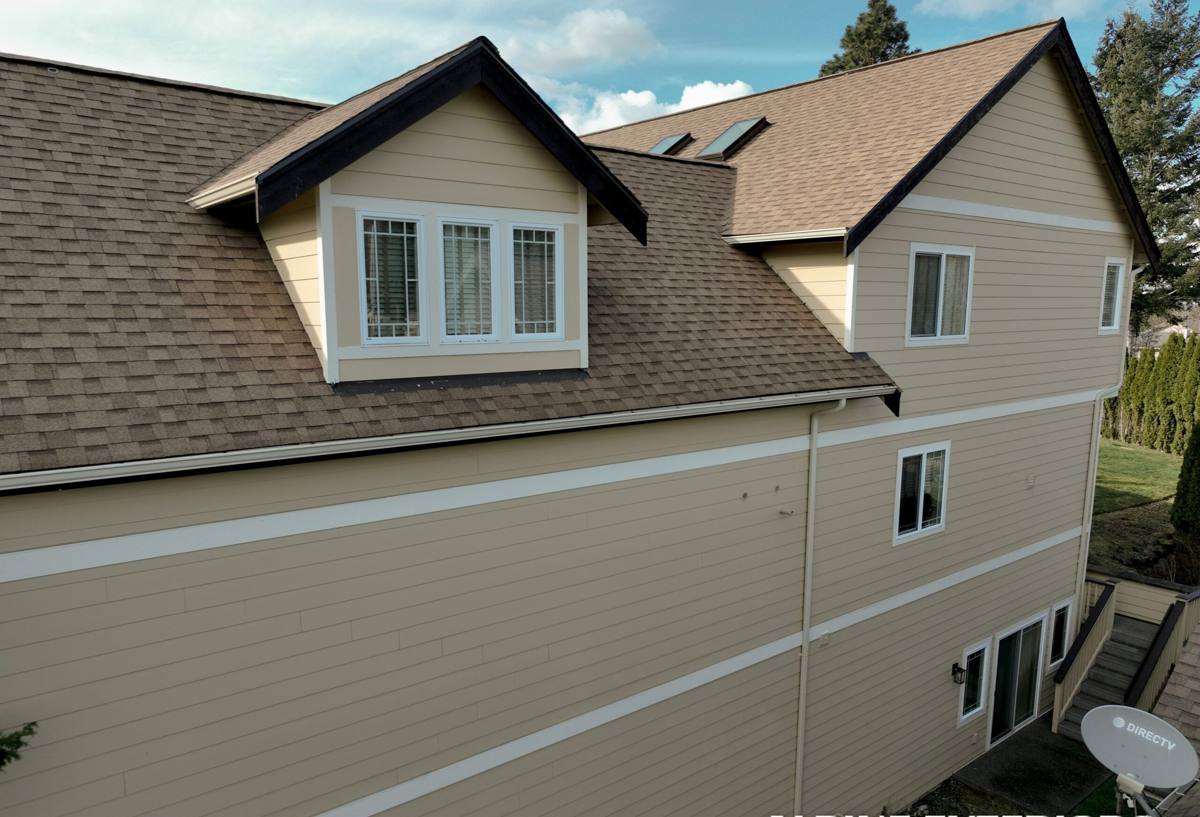
What Anacortes' Marine Climate Does to Windows Over Time
Anacortes and the rest of Fidalgo Island get a marine climate that's milder in temperature swings than most of the country but much wetter and windier than people expect. That combination shows up in windows in a few predictable ways:
- Corrosion on hardware and fasteners: salt in the air reacts with lower-grade metal components over years, causing stiff locks, pitted hinges, and streaking on frames.
- Seal and gasket fatigue: constant damp-dry cycling breaks down weatherstripping and glazing seals faster than in drier regions, leading to drafts and fogged double-pane glass.
- Wood rot at sills and corners: wind-driven rain finds any gap in flashing or caulking, and once water gets behind trim it doesn't dry out quickly in our climate.
- Moss and algae buildup: organic growth on sills, tracks, and exterior trim holds moisture against the window assembly and accelerates the rot and corrosion above.
- Condensation issues: older or poorly sealed units fog between panes or sweat on interior glass during cold, wet stretches, which is usually a sign the seal has already failed.
Individually these are minor. Left unaddressed for years, they compound — a small hardware corrosion issue becomes a lock that won't close, which becomes a gap that lets in rain, which becomes sill rot. Catching the pattern early, or building it out of the design from the start with the right products, is the difference between a window system that lasts decades and one that needs constant patching.
What "Energy-Efficient" Actually Means for This Location
"Energy-efficient" gets used loosely in the window industry, so it's worth being specific about what actually affects performance and durability in a place like Flounder Bay.
Glass Packages
Most energy-efficient replacement windows today use double- or triple-pane insulated glass units (IGUs) with a low-emissivity (low-E) coating and an inert gas fill, usually argon, between the panes. The low-E coating reduces heat transfer through the glass without darkening the view noticeably. In our climate, where winters are damp and cool rather than brutally cold, a well-specified double-pane low-E unit is often the right balance of performance and cost — triple-pane makes more sense for north-facing exposures, homes closer to open water with more wind load, or owners specifically prioritizing sound dampening and maximum efficiency.
Frame Material
Frame material matters as much as glass near salt water. Vinyl frames are a common, cost-effective choice and hold up well to moisture when properly installed, though quality varies widely between manufacturers. Fiberglass frames offer strong dimensional stability and resist the expansion and contraction that comes with our temperature swings, at a higher price point. Aluminum-clad wood combines a durable exterior with a warmer interior look, but the wood core requires that flashing and seals be done correctly, since any water intrusion behind the cladding is harder to spot early. We evaluate frame choice against how exposed the specific elevation of the house is to wind and rain, not just personal style preference.
Installation Details
The best glass and frame in the world will underperform if the installation doesn't manage water correctly. That means proper flashing integration with the existing wall assembly, correct sill pan detailing so any water that does get past the exterior has somewhere to drain, and sealants rated for marine/coastal exposure rather than generic caulk. This is where a large share of window failures near the water actually originate — not from a bad product, but from a rushed or generic installation that didn't account for wind-driven rain.
Frame Material Comparison
| Frame Type | Moisture/Salt Resistance | Maintenance | Typical Cost Position |
|---|---|---|---|
| Vinyl | Good when quality-grade and properly installed | Low — no painting, rinse as needed | Lower to mid |
| Fiberglass | Very good — stable in temperature and moisture swings | Low | Mid to higher |
| Aluminum-clad wood | Good on the exterior; wood core is moisture-sensitive if flashing fails | Moderate — periodic seal/paint checks | Higher |
| Bare wood | Requires diligent upkeep near salt air | High — regular painting/sealing | Mid to higher |
We don't push one frame material as universally "best." We walk the specific elevation of the house that faces the weather, look at how exposed it is, and talk through the maintenance the homeowner is realistically willing to do, then recommend accordingly.
Signs Your Windows Are Costing You Money
Homeowners in Flounder Bay often live with underperforming windows longer than necessary because the signs are gradual rather than sudden. Worth checking for:
- Visible fog or moisture between the panes of a double-pane window — this means the seal has failed and the insulating gas is gone.
- A noticeable draft near the window frame on a windy day, even with the window fully latched.
- Difficulty locking or latching that's gotten worse over the past year or two — often a sign of hardware corrosion or frame movement.
- Soft or discolored wood trim at the sill or corners, or moss/algae established directly on the frame.
- Condensation forming on the interior glass regularly during cold, wet weeks.
- A noticeably higher heating bill in winter compared to similar-sized homes nearby, with no other explanation.
- Street or wind noise that seems louder than it should be for the window's age.
Any one of these on its own isn't an emergency. Several together, especially on the side of the house that takes the most wind and rain, usually means it's time to have the windows looked at before a minor issue turns into water damage behind the wall.
Our Process for Flounder Bay Window Projects
- On-site assessment. We look at every window being considered, checking frame condition, sill and flashing details, current seal performance, and which elevations take the most weather exposure.
- Straight talk on what's needed vs. optional. Some windows just need better weatherstripping or a resealing job. Others genuinely need full replacement. We tell you which is which rather than defaulting to the bigger job.
- Product selection matched to exposure. We recommend glass package and frame material based on which side of the house the window is on, not a one-size-fits-all package.
- Proper removal and prep. Old units come out carefully so we can inspect the rough opening for hidden rot or water damage before anything new goes in — this step gets skipped by rushed crews and is where a lot of long-term problems start.
- Correct flashing and sealing. Sill pans, flashing tape, and marine-grade sealants are installed to manage water the way this climate demands, not the minimum a manufacturer's instructions require.
- Final check and walkthrough. Every window is tested for smooth operation and a tight seal before we consider the job finished, and we walk the homeowner through what to expect and how to maintain the new windows.
Maintenance That Actually Extends Window Life Here
Even the best window installation benefits from a small amount of upkeep in a climate like this. A few habits go a long way:
- Rinse salt residue off exterior frames and glass a few times a year, especially after storms.
- Clear moss and debris from sills and tracks before it has a chance to hold moisture against the frame.
- Check and touch up exterior caulking annually, particularly on south- and west-facing units that take the brunt of wind-driven rain.
- Operate locks and hardware periodically even on windows you don't open often, so corrosion doesn't set in unnoticed.
- Watch for early signs of trim discoloration or softness and address it before it spreads.
What Affects Cost
Every project is different, but the main factors that move window replacement cost up or down are consistent:
| Factor | Impact on Cost |
|---|---|
| Number of windows and their size | Direct — more or larger openings mean more material and labor |
| Frame material chosen | Vinyl generally lowest, fiberglass and clad-wood higher |
| Glass package (double vs. triple-pane, upgraded coatings) | Triple-pane and specialty coatings add cost but improve performance and noise reduction |
| Condition of the existing rough opening | Hidden rot or water damage found during removal adds repair work |
| Access and elevation | Upper-story or hard-to-reach windows take more labor time |
| Trim and finish work | Matching existing exterior trim or interior finishes adds scope |
We give homeowners a real, itemized number after the on-site assessment rather than a rough guess over the phone — too many variables in an older coastal home to do it responsibly any other way.
Why Local Experience in Flounder Bay Matters
A window contractor who mostly works inland or in drier parts of the state may not think twice about frame material, flashing detail, or hardware grade — because in their normal working conditions, it doesn't matter as much. In Flounder Bay, and around Anacortes generally, those choices determine whether a window installation holds up for twenty-plus years or starts showing problems in five. Working this specific stretch of Skagit County regularly means we've seen how different products and installation approaches actually perform against real salt air, real wind-driven rain, and a real moss season, not just how they're rated on a spec sheet. That experience shapes every recommendation we make, from frame material to sealant choice to how we detail a sill.
If your Flounder Bay home has windows that are drafty, fogged, hard to operate, or just old enough that you're wondering whether they're costing you money every winter, we're happy to take a look. We offer free, no-pressure estimates — walk the house with you, point out anything worth knowing, and give you honest options with real numbers, no obligation. The form below is the fastest way to get that scheduled.