 Anacortes Exterior
 Roof Replacement in Edison: Built for What Skagit County Actually Throws at It
Edison sits in a corner of Skagit County where farmland, tidal flats, and open water all meet, and that combination is hard on a roof. Homes here deal with salt-laden air drifting in off the bay, driving rain that comes in sideways during winter storms, and long stretches of shade and dampness that keep moss growing nearly year-round. A roof replacement in this area isn't just about swapping old shingles for new ones — it's about choosing materials and installation details that hold up to this specific mix of conditions instead of a generic "any climate" spec.
We work throughout the Anacortes and Skagit County area, and Edison's roofs get a particular kind of wear compared to homes further inland. If your roof is nearing the end of its life, or a recent inspection turned up problems you weren't expecting, here's what actually matters for a replacement that lasts out here.
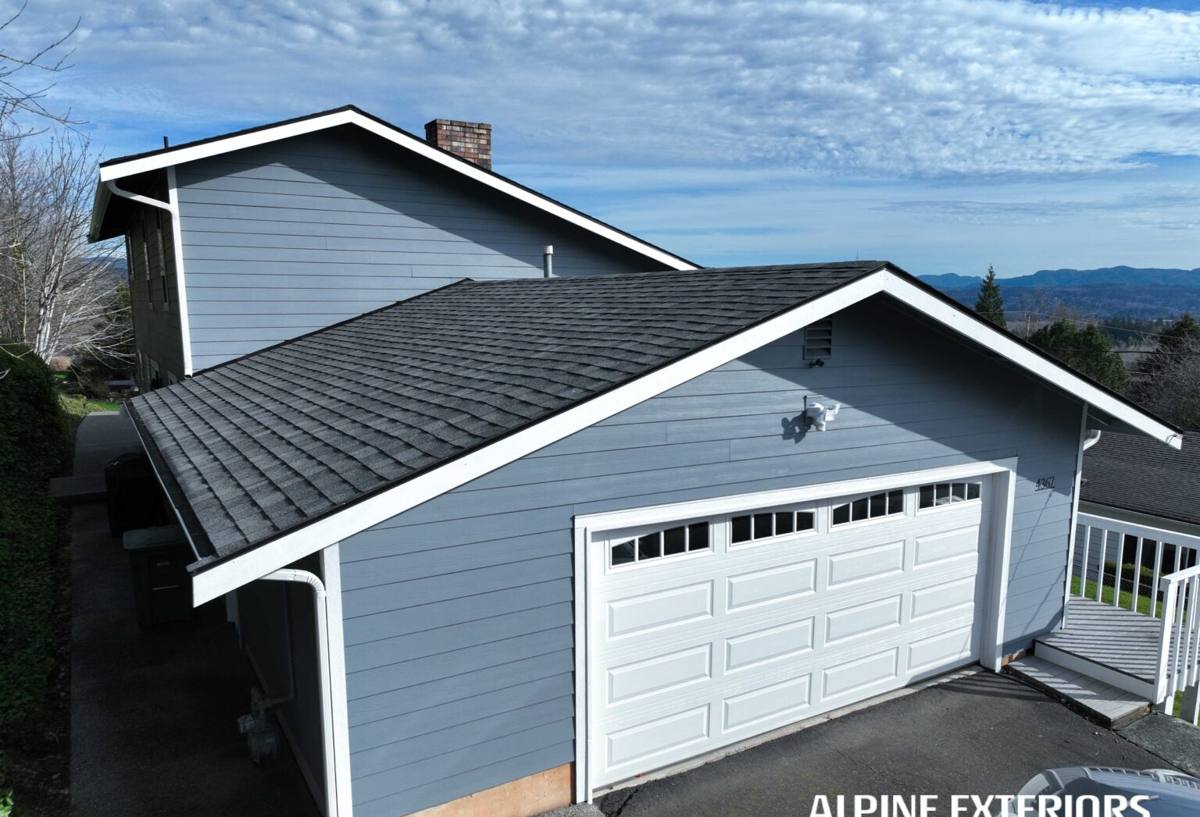
What Edison's Homes Are Up Against
Salt Air and Corrosion
Proximity to Samish Bay and Padilla Bay means airborne salt is a constant, low-level presence on exposed metal — flashing, fasteners, vents, and gutter hardware. Standard fasteners and low-grade flashing corrode faster here than they would twenty miles inland. Over years, that corrosion is often the real reason a roof starts leaking, even when the shingles themselves still look serviceable.
Driving Rain and Wind
Storms coming off the Salish Sea don't just drop rain straight down — they push it sideways under wind gusts, which means water gets tested against every lap, seam, and flashing detail on a roof, not just the open field of shingles. A roof that would perform fine in a calmer climate can still leak here if the underlayment, flashing, and edge details weren't installed with wind-driven rain in mind.
Moss and Shade
Between tree cover, marine humidity, and Skagit County's long wet season, moss finds a foothold fast on north-facing slopes and anywhere debris collects. Moss holds moisture against the roofing material, works its way under shingle edges, and can shorten the life of an otherwise sound roof by years if it's left unmanaged.
Signs an Edison Roof Needs Replacing, Not Patching
Not every roof problem calls for full replacement — but a few signs usually mean patching is a temporary fix at best:
- Granule loss heavy enough that shingles look bald or the gutters are full of grit
- Multiple layers of moss regrowth even after cleaning, especially on shaded slopes
- Soft or spongy decking felt underfoot, or sagging visible from the ground
- Rusted, lifted, or missing flashing around chimneys, vents, and valleys
- Interior water stains, especially ones that reappear after cleaning or minor repairs
- Shingles curling, cracking, or missing tabs across large sections rather than isolated spots
- The roof is past 20–25 years old (asphalt) and has never been fully replaced
If you're only seeing one or two of these, a repair may still make sense. If several are true at once, replacement is usually the more honest recommendation — and we'll tell you that directly during an inspection rather than stringing out repairs on a roof that's already at the end of its service life.
Choosing the Right Roofing Material for This Climate
There's no single "best" roofing material for every home — it depends on your budget, roof pitch, how much shade the property gets, and how long you want to go between maintenance. Here's how the common options stack up for a property like one in Edison:
| Material | How It Handles Salt Air | How It Handles Moss/Moisture | Typical Lifespan |
|---|---|---|---|
| Asphalt composition shingle | Good with corrosion-resistant fasteners and flashing | Needs periodic cleaning/treatment; moss-resistant algae-shield options help | 20–30 years |
| Standing seam metal | Excellent when specified with marine-grade coatings and fasteners | Sheds moisture fast; minimal moss adhesion on smooth panels | 40–60+ years |
| Synthetic/composite shingle | Good; less prone to granule loss than asphalt | Moderate; still benefits from periodic moss control | 30–50 years |
We don't push one product on every roof. A steep, heavily shaded slope in Edison often does better long-term with metal or a treated composite, while a well-ventilated southern exposure can get decades of solid service out of a quality asphalt shingle. We'll walk you through the honest trade-offs — upfront cost, maintenance burden, and appearance — rather than just upselling the most expensive option.
Why We're Selective About Low-End Materials
Some budget shingle lines and thin-gauge flashing products simply aren't built with coastal exposure in mind — not because they're poorly made in general, but because their warranty terms and installation tolerances assume a drier, calmer climate than Skagit County delivers. We'd rather spec a product correctly for this environment than install something that looks fine on day one and underperforms by year five.
What a Correct Roof Replacement Involves Here
A roof replacement done right in this climate involves more than the visible shingle layer. The details that don't show once the job is finished are usually what determine whether the roof holds up:
- Full tear-off to inspect decking, not a layover — hidden rot or soft sheathing under existing shingles is common on older Edison roofs and has to be addressed before new material goes down
- Ice-and-water shield at eaves, valleys, and penetrations — the areas most exposed to wind-driven rain get a self-adhering membrane, not just felt underlayment
- Corrosion-resistant fasteners and flashing rated for coastal/marine exposure, especially around chimneys, skylights, and vent stacks
- Proper attic and roof ventilation so moisture from inside the home doesn't condense against the underside of the decking — a common cause of premature rot in humid coastal climates
- Correct nailing pattern and exposure per manufacturer spec, since under- or over-driven fasteners are a leading cause of early wind and rain failures
- Gutter and drip edge integration that actually moves water off the roof instead of letting it back up under the shingle edge
Our Process for Edison Roof Replacements
We keep the process straightforward and try to minimize surprises:
- On-site inspection and estimate. We look at the current roof, decking condition where accessible, ventilation setup, and any trouble spots (chimneys, valleys, skylights) before quoting anything.
- Material selection. Based on your roof's pitch, shade exposure, and budget, we recommend a product that fits — and explain why, in plain terms.
- Scheduling around the weather. Given how much rain this area gets, we plan tear-off and dry-in stages to keep your home protected if weather shifts mid-project.
- Tear-off and decking repair. Old material comes off, decking gets inspected, and any soft or damaged sheathing is replaced before anything new goes on.
- Underlayment, flashing, and installation. Ice-and-water shield, underlayment, flashing, and the roofing material go on per manufacturer spec, with attention to the coastal-specific details above.
- Cleanup and walkthrough. We clear debris, run a magnetic sweep for stray fasteners, and walk the finished roof with you before calling the job done.
Why Hiring a Crew That Already Works Edison Matters
A roofing crew that mostly works drier, inland climates can still do competent work — but they may not default to marine-grade fasteners, extra ice-and-water coverage, or the ventilation detailing that Skagit County's coastal exposure calls for unless they're specifically thinking about it. Working this area regularly means we're already accounting for salt air corrosion, wind-driven rain, and moss pressure as standard practice, not as an afterthought or an upcharge.
It also means practical familiarity with permitting through Skagit County, realistic scheduling around this region's rain patterns, and knowing which roof details tend to fail first on homes near the water versus homes further inland.
Maintaining Your New Roof After Installation
A correctly installed roof still benefits from basic upkeep, especially in a climate like this one:
- Clean gutters at least twice a year so water isn't backing up under the roof edge
- Address moss growth early with gentle treatment rather than pressure-washing, which can strip granules
- Trim back overhanging branches to reduce shade and debris buildup on north-facing slopes
- Have the roof looked at after major windstorms, especially around flashing and vent penetrations
None of this is complicated, but skipping it is one of the most common reasons a roof underperforms its expected lifespan in a coastal climate.
If your Edison home's roof is showing its age, or you just want an honest read on how much life it has left, we're happy to take a look. The estimate is free, there's no pressure to commit on the spot, and you'll get a straight answer about whether you need a full replacement or something less.