 Anacortes Exterior
 Why Cap Sante Siding Wears Differently Than Inland Homes
Cap Sante sits above the marina, exposed to weather coming straight off the water. That position gives the neighborhood some of the best views in Anacortes, but it also means the siding on these homes takes a harder hit than siding a few miles inland in Skagit County. Salt-laden air corrodes fasteners and trim metal faster than dry air does. Driving rain off the channel doesn't fall straight down — it drives sideways into wall assemblies, finding gaps around trim, corners, and penetrations that would stay dry on a more sheltered lot. And the long gray stretch of fall through spring here means siding often stays damp for days at a time, which is exactly the condition moss, algae, and mildew need to take hold.
None of this means Cap Sante homes need exotic materials or unusual construction. It means the ordinary parts of a siding job — the water-resistive barrier, the flashing details, the fastener choice, the caulking — have to be done correctly, every time, because this location doesn't forgive shortcuts the way a drier site might. A siding replacement done to a lower standard shows its weaknesses here faster than almost anywhere else in the county.
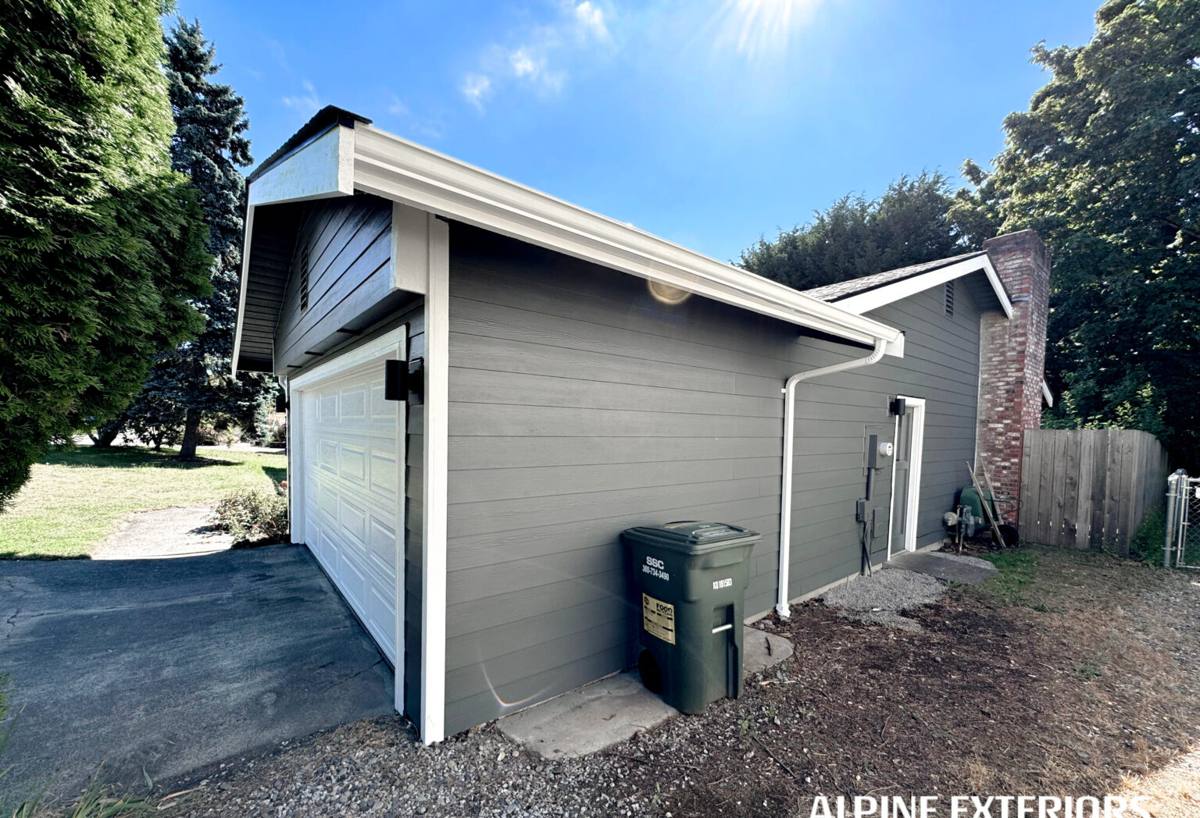
Signs a Cap Sante Home Actually Needs Replacement, Not Repair
Not every siding problem calls for a full tear-off. But in this climate, certain signs mean patching is a temporary fix at best.
- Soft or spongy spots when you press on the siding, especially near the bottom courses and around window and door trim
- Persistent moss or dark algae streaking that returns within weeks of cleaning, particularly on north- and west-facing walls
- Visible gaps, warping, or bowing in lap siding, which usually points to moisture already trapped behind it
- Paint that fails repeatedly on the same wall sections no matter how often it's redone
- Rust staining running down from nail heads or trim fasteners — a common tell in salt-exposed neighborhoods like this one
- A musty smell in an interior room that shares a wall with a suspect area outside
If you're seeing more than one of these at once, there's a good chance moisture has already gotten past the siding and into the wall assembly, not just the surface. That's a replacement conversation, not a caulk-and-paint conversation.
What a Correct Siding Replacement Actually Involves
Full Tear-Off, Not Cover-Over
Installing new siding over old is faster and cheaper, but it traps whatever moisture or rot is already in the wall and hides it for years. On a site exposed to as much rain and salt air as Cap Sante, that's a bad trade. A proper job means stripping the old siding down to the sheathing so the crew can actually see what's underneath.
Inspecting and Repairing What's Underneath
Tear-off is also the only point where anyone can honestly assess the sheathing, framing, and window flashing. Soft sheathing gets replaced, not painted over. Any rot found at this stage gets cut out and repaired before a single new panel goes up — covering rot with new siding just buys it more time to spread.
A Continuous Water-Resistive Barrier
Behind the siding, a correctly lapped and taped weather-resistive barrier is what actually keeps wind-driven rain out of the wall. Seams, laps, and every penetration — pipes, vents, hose bibs, electrical — need to be sealed in the right order so water sheds down and out instead of finding a way in.
Flashing at Every Transition
Windows, doors, deck ledgers, and roof-to-wall intersections are where most siding failures actually start. Proper step flashing, head flashing, and kick-out flashing at these points matter more to long-term performance than the siding material itself. This is also where corner-cutting is hardest to spot after the fact — and easiest to get away with on a job nobody's checking closely.
Corrosion-Resistant Fasteners and Trim
Given the salt exposure this close to the water, fastener and trim metal choice isn't a minor detail. Standard hardware can start showing rust streaks within a couple of seasons in a spot like Cap Sante. Fasteners rated for coastal exposure cost a little more up front and save homeowners from staining and premature failure down the road.
Why We Install Only James Hardie Fiber Cement
We don't install vinyl, LP SmartSide, primed spruce, cedar, or other fiber cement brands. That's a deliberate standard, not a lack of options. Vinyl expands and contracts more than this exposure tolerates well, and it can't match fiber cement's resistance to the moisture cycling this climate produces. Wood-based and engineered-wood sidings need consistent maintenance to keep moisture out of their edges — miss a year of upkeep on a rainy, salt-exposed lot like this one and the consequences show up fast. Other fiber cement brands exist, but we standardized on James Hardie specifically for its factory-cured ColorPlus finish, its HZ product lines engineered for wet, coastal climates like ours, and a transferable warranty backed by a manufacturer with a long track record.
Hardie fiber cement is non-combustible, doesn't support moss and algae growth the way wood-based products can, and holds its factory finish for years without the repainting cycle that cedar and primed spruce demand. For a neighborhood that sees this much salt air and rain, it's the product we're comfortable standing behind.
Our Process, Start to Finish
- On-site assessment: We walk the exterior with you, check for existing moisture damage, and look at trim, flashing, and drainage conditions specific to your lot's exposure.
- Written estimate: A clear scope covering tear-off, sheathing repair allowances, barrier and flashing work, Hardie product line and color, and trim details — no vague line items.
- Tear-off and inspection: Old siding comes off, sheathing and framing get inspected, and any rot or damage is documented and repaired before moving forward.
- Barrier and flashing installation: Weather-resistive barrier, window and door flashing, and all penetration seals go in first, correctly lapped and sealed.
- Hardie installation to manufacturer spec: Panels and trim installed with correct fastener spacing, clearances, and caulking per James Hardie's published requirements — the details that determine whether the warranty actually holds.
- Final walkthrough: We go over the finished work with you before calling the job done, not just before submitting the invoice.
What Drives the Cost of a Cap Sante Siding Job
| Factor | Why It Matters Here |
|---|---|
| Extent of hidden sheathing/framing damage | Only visible after tear-off; long-term moisture exposure near the water raises the odds of finding it |
| Home size and wall complexity | More corners, dormers, and roof-to-wall transitions mean more flashing detail and labor |
| Hardie product line and profile | Lap siding, panel systems, and shingle-style profiles carry different material costs |
| Access and site conditions | Hillside lots and tight waterfront setbacks can affect staging, scaffolding, and material handling |
| Trim and accessory scope | Corner boards, fascia, and soffit work done at the same time adds cost but avoids a mismatched second project later |
| Fastener and hardware upgrades | Corrosion-resistant hardware for salt exposure costs more than standard but avoids early staining and failure |
We won't quote a number without seeing the house, but these are the variables that actually move the price — worth asking about directly when you're comparing bids.
Why It Matters That We Already Work This Neighborhood
A crew that's worked Cap Sante and other Anacortes waterfront and hillside properties already knows what this exposure does to a wall assembly, and they've already made the judgment calls about flashing, fastener selection, and barrier detailing that this location demands. A crew that mostly works drier, sheltered inland sites can install technically fine work that still underperforms here, simply because the margin for error is smaller this close to the water. Local experience isn't a marketing line — it changes what a crew notices during tear-off and how they detail the parts of the job that don't show up on a finished wall.
What to Ask Before You Sign a Contract
- Will the crew do a full tear-off, or is this a cover-over job?
- Who inspects the sheathing once the old siding is off, and how is damage documented and priced?
- What weather-resistive barrier and flashing details are specified, in writing?
- Is the siding James Hardie, and is it being installed to the manufacturer's published spec so the warranty stays valid?
- What fasteners and trim hardware are being used, given the salt exposure?
- Is there a written, itemized estimate — not just a lump-sum number?
Any contractor should be able to answer these clearly and without hesitation. If the answers are vague, that's worth treating as a warning sign before work starts, not after.
Maintaining Hardie Siding After Installation
Fiber cement cuts down on maintenance, but it isn't zero-maintenance, especially in a climate that grows moss as readily as this one. A yearly rinse-down to keep organic growth from establishing, prompt attention to any caulking that starts to crack or pull away, and keeping gutters and downspouts clear so water isn't sheeting down the wall all go a long way toward getting the full lifespan out of the installation. Correctly installed Hardie siding with proper flashing behind it should need very little beyond that.
If your Cap Sante home is showing signs of siding trouble, or you're planning ahead before it gets worse, we're happy to take a look and walk you through what we'd actually recommend. Reach out for a free, no-pressure estimate using the form below.