 Anacortes Exterior
 Why Burlington-Area Roofs Wear Out Differently
Roofs in the Burlington area near Anacortes don't fail the same way roofs do in drier parts of the state. The combination of salt-laden air off Puget Sound, long stretches of driving rain, and a moss season that can run most of the year puts a different kind of stress on a roof system than homeowners moving here from inland climates might expect. Fasteners corrode faster near the water. Wind-driven rain finds its way under shingles that would hold up fine somewhere with gentler weather. And moss doesn't just sit on the surface — it works its way under shingle tabs and holds moisture against the roof deck long after the rain has stopped.
None of this means Burlington roofs are doomed to fail early. It means a roof replacement here has to be planned and installed with this specific climate in mind, not treated as a generic tear-off-and-reshingle job. The materials, the flashing details, the ventilation, and the underlayment all matter more here than they would in a milder climate, and skipping any of them shows up as a leak, a soft spot, or premature shingle failure within a few years instead of decades.
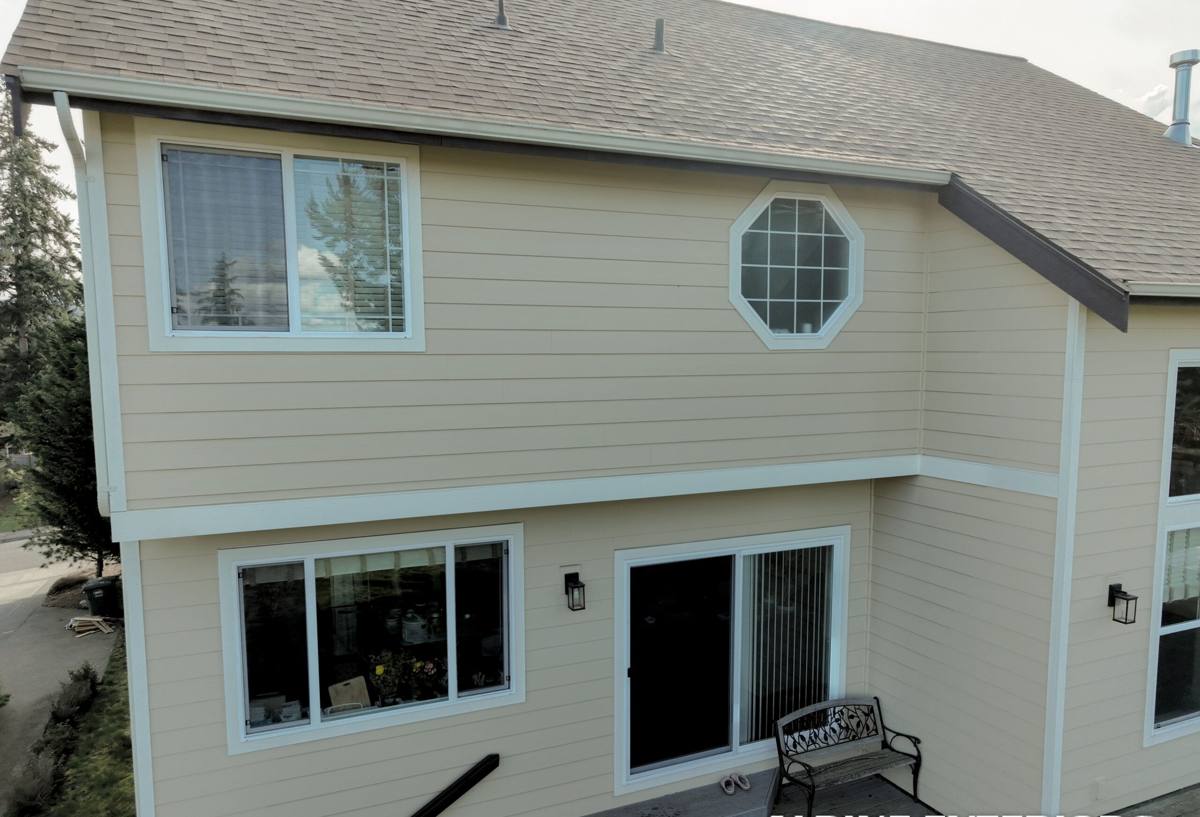
Signs a Burlington Roof Has Reached the End of Its Life
Not every roof problem means you need a full replacement — plenty can be handled with a repair. But there's a point where patching stops making sense and a full tear-off is the more honest recommendation. Common signs we look for on Skagit County homes include:
- Granules collecting in gutters and downspouts, a sign the shingle surface is breaking down
- Shingles that are cupping, curling, or cracking, especially on south- and west-facing slopes
- Persistent moss growth that keeps returning within a season or two of cleaning
- Dark streaking or soft, spongy areas underfoot when walking the roof
- Daylight visible through the attic sheathing, or damp insulation after a storm
- A roof that's already 20-25+ years old for asphalt composition, or showing widespread wear regardless of age
If a roof is showing two or three of these at once, replacement is usually the more cost-effective path than continuing to chase individual repairs.
What a Correct Roof Replacement Actually Involves
A roof replacement is more than swapping old shingles for new ones. The parts of the job that don't show once it's finished are the ones that determine whether the roof lasts 10 years or 30 in this climate.
Tear-Off and Deck Inspection
We remove the existing roofing down to the deck rather than layering over old material. That's the only way to actually see the plywood or plank sheathing underneath — and in a region with this much rain exposure, it's common to find sections that have softened from long-term moisture intrusion, particularly around old flashing points or valleys. Any compromised decking gets replaced before anything new goes down. Roofing over a soft deck just hides the problem for a while.
Underlayment and Water Protection
Given how much driving rain this area sees, underlayment choice matters more here than in drier climates. We use synthetic or felt underlayment rated for the exposure, with self-adhering ice-and-water membrane at the vulnerable points — eaves, valleys, and roof-to-wall transitions — where wind-driven rain is most likely to work its way backward under the shingle line.
Flashing Details
Most roof leaks don't start in the field of the roof — they start at flashing: chimneys, skylights, vent pipes, and where a roofline meets a wall. We replace flashing as part of a full roof replacement rather than reusing old pieces, and we pay close attention to step flashing and counterflashing at wall intersections, since that's a common failure point on homes in this region.
Ventilation
Proper intake and exhaust ventilation keeps the attic space at a stable temperature and lets moisture escape instead of condensing against the underside of the deck. In a climate this damp, poor ventilation accelerates deck rot and can void shingle warranties outright. We check existing ventilation as part of every replacement and correct it where it's undersized or blocked.
Choosing Roofing Materials for Skagit County Weather
There's no single "best" roofing material — the right choice depends on budget, roof pitch, how long you plan to stay in the home, and how much maintenance you're willing to keep up with. Here's how the common options actually perform in this climate:
| Material | Salt air / rain performance | Moss resistance | Typical lifespan |
|---|---|---|---|
| Asphalt composition (architectural) | Good with proper flashing and underlayment | Moderate — benefits from zinc/copper strips | 25-30 years |
| Asphalt composition (3-tab) | Fair — thinner profile, less wind resistance | Lower — flatter profile holds moisture | 15-20 years |
| Metal (standing seam) | Excellent when properly coated/fastened | High — sheds moisture quickly | 40-50+ years |
| Composite/synthetic shake | Good — doesn't absorb moisture like wood | Moderate to high | 30-40 years |
We don't install cedar shake as a standard offering. It can look good going on, but in a climate with this much sustained moisture and moss pressure, it demands a level of ongoing maintenance and treatment that most homeowners underestimate — and when that maintenance lapses, moisture problems follow. That's a trade-off judgment based on what holds up here, not a knock on the material itself.
Our Roof Replacement Process
Homeowners generally want to know two things upfront: what's going to happen to their property, and how long it's going to take. Here's the general sequence for a residential roof replacement in the Burlington area:
- On-site inspection and measurement — we walk the roof, check the attic, and identify any deck or ventilation issues before quoting
- Written estimate — material options, scope, and a clear price, not a vague range
- Material selection — you choose the product and color; we advise based on your roof's exposure and pitch
- Property protection — landscaping, siding, and windows are covered before tear-off begins
- Tear-off and deck repair — old roofing removed, deck inspected and repaired as needed
- Underlayment, flashing, and ventilation installed — the parts that determine long-term performance
- New roofing installed to manufacturer specification
- Cleanup and magnetic sweep for nails and debris, plus a final walkthrough
Most single-family roof replacements in this area are completed in one to three days of active work, weather permitting — though scheduling around Skagit County's rain patterns is part of the planning, not an afterthought.
What Affects the Cost of a Roof Replacement
Every roof is different, so we won't quote a number without seeing the property, but these are the main factors that move the price up or down:
| Factor | Why it matters |
|---|---|
| Roof size and pitch | Steeper roofs require more safety setup and labor time |
| Layers of existing roofing | Multiple old layers add tear-off time and disposal cost |
| Deck condition | Rotted or soft sheathing needs replacement before new roofing goes on |
| Material choice | Asphalt, metal, and composite carry different material and labor costs |
| Roof complexity | Valleys, dormers, chimneys, and skylights add flashing work |
| Access | Tight lots or difficult staging can add setup time |
After Replacement: Keeping Moss and Debris From Shortening Its Life
A correctly installed roof still needs basic upkeep in this climate — the difference is that maintenance becomes about staying ahead of moss and debris, not chasing leaks. A short list worth keeping:
- Clear gutters and valleys of needles and debris at least twice a year, more often under fir or cedar trees
- Have moss growth removed gently — no pressure washing, which can strip granules and shorten shingle life
- Check zinc or copper strips (if installed) periodically, as they lose effectiveness over time
- Trim back overhanging branches to reduce shade and debris buildup
- Schedule a visual roof check after major windstorms
- Watch for granule buildup in gutters as an early warning sign, not just an aesthetic issue
Why a Crew That Already Works Burlington Matters
Roofing crews unfamiliar with Skagit County conditions sometimes spec materials and details that are standard elsewhere but underperform here — underlayment rated for light rain instead of sustained wind-driven exposure, or ventilation calculations that don't account for how much moisture this climate actually holds in the air. A crew that works this area regularly already knows which flashing details tend to fail on local homes, which slopes catch the worst of the moss, and how to sequence a tear-off around rain rather than getting caught mid-job when weather rolls in off the water. That local pattern recognition doesn't show up on a spec sheet, but it shows up in how long the roof actually lasts.
If your roof is showing its age or you're just not sure whether it needs a repair or a full replacement, we're happy to take a look and give you a straight answer. Fill out the form below for a free, no-pressure estimate — there's no obligation, and we'll tell you honestly what your roof needs.