 Anacortes Exterior
 New-Construction Windows in Burlington: What the Term Actually Means
"New-construction" windows aren't a product — they're an installation method. A new-construction window has a nailing fin (sometimes called a flange) around the perimeter of the frame that gets fastened directly to the wall sheathing before siding goes on. That's different from a retrofit or "pocket" replacement window, which is sized to slip into an existing frame without disturbing the siding or trim around it.
If you're building a new home in Burlington, adding a room, or doing a full tear-down to the studs on an addition, you want new-construction windows installed the correct way from the start. Get this stage wrong and you're not looking at a callback in a year or two — you're looking at rot inside the wall cavity that nobody notices until the siding comes off or a wall starts smelling musty.
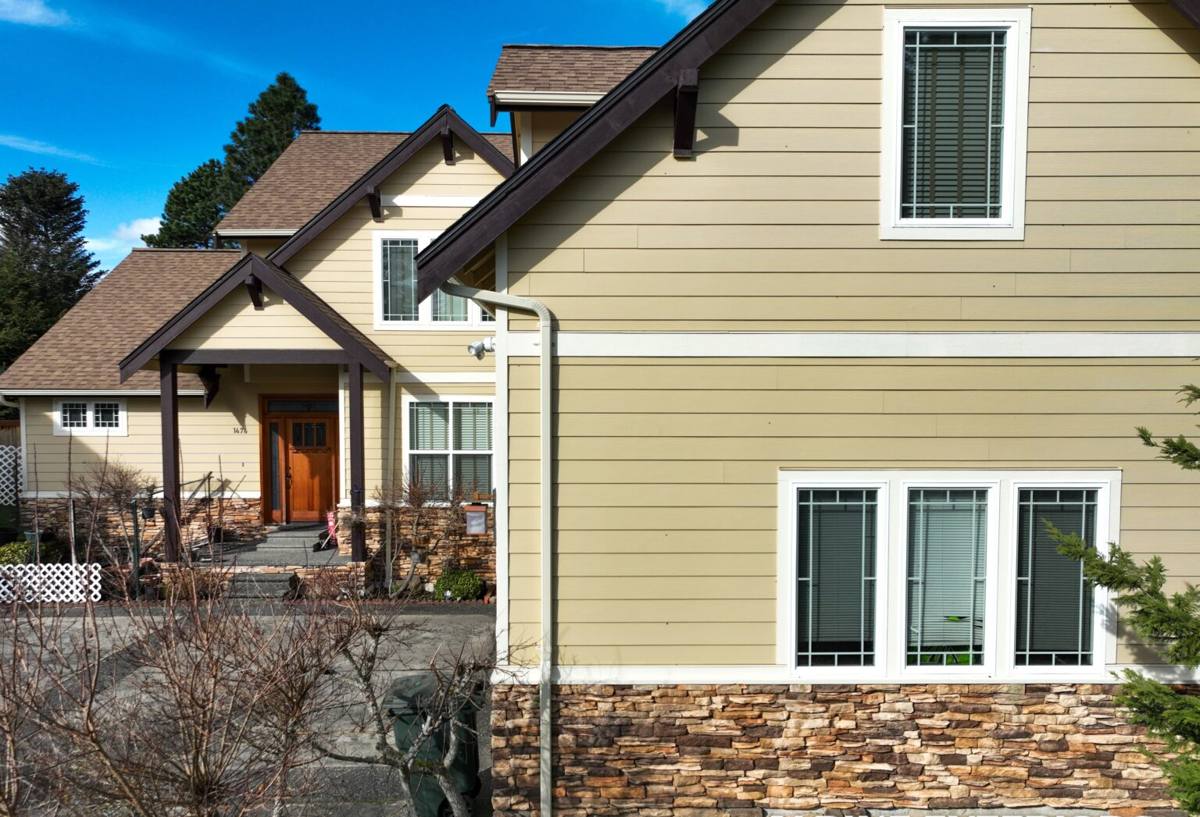
Why Skagit County's Climate Raises the Stakes on This Install
Burlington sits inland from the water but still gets the full weather pattern that defines this part of Skagit County — long stretches of driving rain off the Sound, salt-laden air that moves inland further than most people expect, and a wet season that runs long enough to grow moss on anything that holds moisture. None of that is unusual for western Washington, but it matters more at the window opening than almost anywhere else on the house.
A window opening is a hole cut into your weather-resistive barrier. Every seam, lap, and fastener around that opening is a place water can get behind the cladding if it isn't detailed correctly. In a drier climate, a mediocre flashing job might go years without showing a problem. Here, with rain loading that can run for days at a stretch and humidity that never fully lets framing dry out between storms, a bad seal shows itself — usually as staining, soft trim, or mold smell inside a wall — much sooner. Moss and organic growth on nearby siding and trim is also a sign that water is sitting where it shouldn't, which is worth checking around window flashing specifically, not just the roofline.
What a Correct New-Construction Install Actually Involves
The Flashing and Water Management Sequence
The order of operations at a rough opening is not optional — it's what keeps water moving down and out instead of into the wall. A correct sequence generally looks like this:
- Sill pan flashing installed first, sloped slightly to the exterior, so any water that gets past the window has a dedicated path out.
- Weather-resistive barrier (house wrap) cut and folded into the opening, integrated with the sill pan — not just stapled around it.
- Window set into the opening, shimmed level and square, fastened through the nailing fin per the manufacturer's schedule.
- Jamb and head flashing lapped over the fin in the correct shingle-style order — sides before the head, head flashing lapping over the house wrap above it.
- Sealant used only where the manufacturer and window type call for it — sealing the wrong spot can trap water instead of letting it drain.
Skip the sill pan or reverse the lapping order and the window can look perfect from inside the house for years while water quietly works into the sheathing below it.
Nailing Fin vs. Block Frame
Most new-construction windows in this region use a nailing fin set over the WRB. Some products — particularly certain vinyl and fiberglass lines — use a block frame or "flush fin" design meant to sit further into the wall assembly, which changes how the flashing details need to be built. We match the flashing method to the specific window product being installed rather than using one generic detail for everything, since manufacturer instructions differ and using the wrong sequence can void the window's warranty.
Choosing a Frame Material for Burlington Conditions
Frame material affects how a window handles the wet-and-mild cycle typical of Skagit County winters, plus long-term exposure to salt-carried air.
| Material | How It Handles Local Conditions | Trade-offs |
|---|---|---|
| Vinyl | Won't rot or corrode from moisture or salt air; low maintenance | Frame can expand/contract with temperature swings; limited color/repaint options |
| Fiberglass | Dimensionally stable, holds up well to sustained damp and coastal exposure | Higher upfront cost than vinyl |
| Wood-clad | Warm interior look, exterior cladding shields the wood from weather | Any breach in the cladding or sealant exposes wood to rot risk over time; needs attentive detailing |
| Aluminum | Strong and slim sightlines | Poor insulator unless thermally broken; can be prone to condensation in our humidity without the right spec |
We don't push one brand or material as universally "best" — the right call depends on the home's design, budget, and how much long-term maintenance the owner wants to take on. What we won't do is install a product using a shortcut detail just because it's faster, since that trade-off shows up as a moisture problem down the road, not a cost savings.
How Our Process Works for Burlington Builds
For new-construction and full-tear-out projects, we coordinate directly with the builder or general contractor rather than working in isolation:
- Review the window schedule and rough opening sizes against the actual products ordered, before framing is locked in.
- Walk the openings once sheathing and WRB are up, checking that rough openings are square, level, and correctly sized before windows arrive.
- Install sill pans, integrate the WRB, set and fasten the windows, and flash each opening per the manufacturer's method.
- Photograph flashing details at each opening before siding covers them — useful documentation if a warranty question ever comes up.
- Final walk-through to check operation, seals, and trim readiness before the siding crew or trim carpenter moves in.
Timing matters on a build schedule. We work with your builder's sequence rather than holding up siding or interior finish work, but we won't rush the flashing sequence to hit a date — that's the one part of the job that's expensive to fix once it's covered up.
New-Construction vs. Retrofit: Which Do You Need?
Homeowners sometimes call about "new windows" without knowing which category their project falls into. A quick way to tell:
- Building new, adding square footage, or already down to the studs with siding off? You need new-construction windows with full flashing integration.
- Existing home, siding and trim staying in place, just swapping out old windows? That's a retrofit/pocket replacement — a different product and a different install method.
- Not sure which category an addition or major remodel falls into? That's worth a site visit before ordering windows, since the wrong product for the opening type causes real problems.
Common Mistakes We See in New-Construction Window Installs
Most window failures we get called out to inspect trace back to a handful of recurring issues, not a bad window product:
- No sill pan, or a sill pan that wasn't sloped to drain to the exterior.
- House wrap stapled around the opening instead of integrated into the flashing layers.
- Flashing tape or head flashing installed out of shingle-lap order, directing water behind the barrier instead of over it.
- Sealant used everywhere as a catch-all instead of only where the window design calls for it, trapping moisture that has nowhere to drain.
- Fastening schedule not followed, leaving a window under-secured for wind and settling loads.
Every one of these is invisible once siding and trim go on — which is exactly why the install matters more than the window brand.
What Affects Cost
| Factor | Why It Moves the Price |
|---|---|
| Frame material | Vinyl runs lower upfront; fiberglass and wood-clad cost more per unit |
| Window size and count | Larger openings and higher counts mean more labor and material per project |
| Wall assembly complexity | Multi-layer WRB systems, rainscreen gaps, or unusual siding details add flashing steps |
| Access and stage of construction | Coordinating around scaffolding or a tight builder schedule can affect labor time |
| Energy code glass package | Higher-performance glass and gas fills add cost but are often required by current code |
We give a written estimate based on your actual window schedule and wall assembly, not a rough per-window guess — the flashing complexity varies enough project to project that it's worth walking the plans first.
Why a Crew That Already Works Burlington Matters
New-construction window flashing isn't a set of universal rules — it's a set of details that have to match the specific wall assembly, siding type, and window product on your project, applied correctly in the right order. A crew that regularly works in and around Anacortes and Skagit County has already seen how these details hold up through a real Pacific Northwest wet season — not just how they look on install day. That local track record is what keeps a flashing detail from becoming next winter's moisture problem.
If you're planning a new build or addition in Burlington and want the window openings done right the first time, we're happy to take a look at your plans and walk you through the process. Reach out for a free, no-pressure estimate using the form below.