 Anacortes Exterior
 Composite Decking Built for the Way Bow Actually Weathers
Bow sits close enough to the water that salt air is part of daily life, and it sits squarely in the path of the long, wet stretch that runs from late fall through spring. Add in a moss season that can linger on north-facing and shaded decks well into summer, and you have a set of conditions that are genuinely tougher on an outdoor deck than most manufacturers' glossy brochures let on. Composite decking handles this combination better than wood, but only when it's specified and installed with these specific conditions in mind. A deck built the same way you'd build one in a dry inland town is not the deck Bow homes need.
This page is about one job: composite decking for homes in and around Bow. Not a general decking overview, not a sales pitch for one manufacturer — just what we've learned about doing this job correctly in this specific corner of Skagit County.
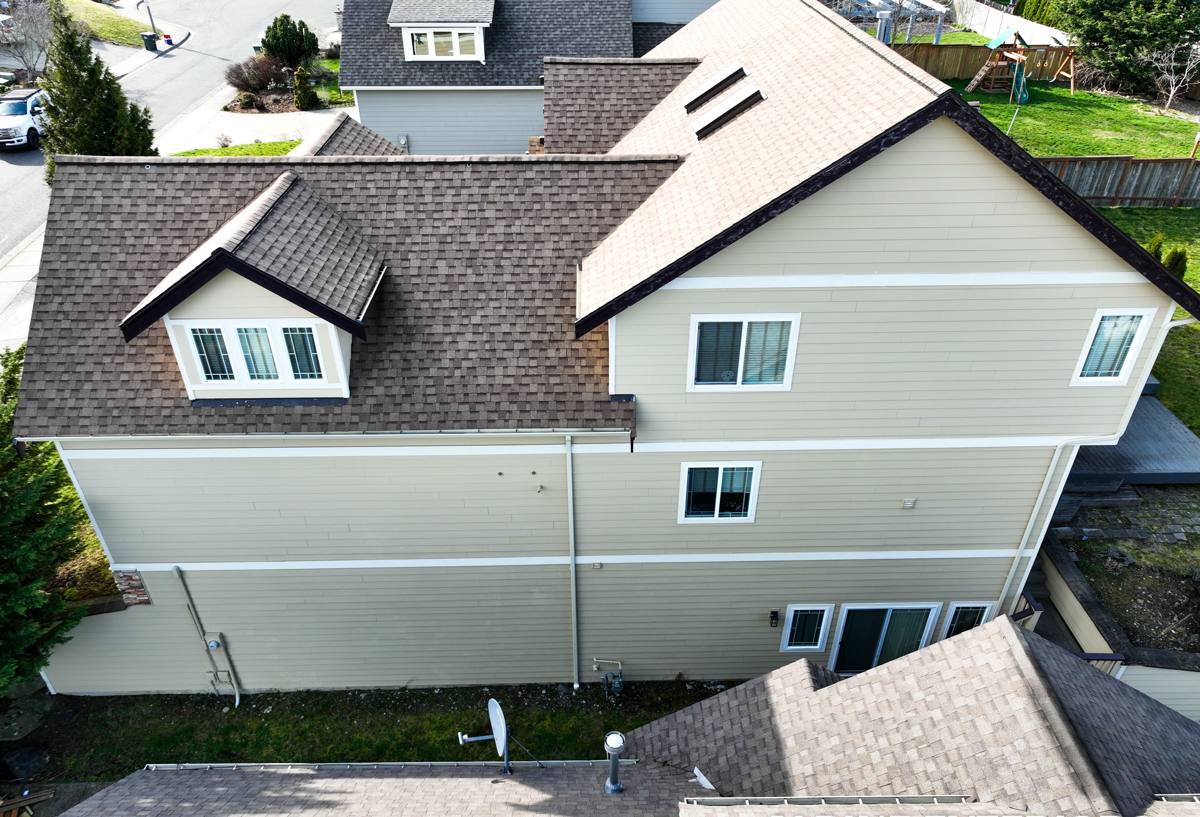
What Salt Air, Driving Rain, and Moss Season Actually Do to a Deck
Each of these three factors stresses a deck differently, and a correct installation addresses all three at once, not just the one that's easiest to sell against.
Salt Air
Salt-laden air accelerates corrosion on anything metal — fasteners, joist hangers, railing brackets, screws. On a deck near the water, unprotected or mismatched hardware can start showing rust streaks and weakening well before the boards themselves show any wear. This is a hardware and connector problem as much as it is a board problem, and it's one that's easy to overlook if the crew building your deck is used to working further inland.
Driving Rain
Composite boards themselves don't absorb water the way wood does, but the framing underneath, the flashing where the deck meets the house, and the way water is allowed to drain off the surface all still matter enormously. Driving rain finds gaps — around ledger boards, at fastener penetrations, at the edges where decking meets siding — and pushes water into places a light drizzle never would. A deck that looks fine on a dry day can still be rotting a structure underneath if the water management wasn't handled right at build time.
Moss Season
Shaded and north-facing decks around Bow can stay damp for weeks at a stretch during the wet months, and that's exactly the environment moss and algae need to take hold. Once moss establishes itself in the texture of a deck board, it holds moisture against the surface and can make boards dangerously slick. Some composite boards resist this better than others, and board spacing and airflow underneath the deck make a real difference in how fast (or slow) moss becomes a problem.
Choosing the Right Composite Board for This Climate
Not all composite decking is built the same, and in a climate like Bow's, the differences that matter most are moisture behavior, surface texture, and how the board is capped.
| Board Type | How It Handles This Climate | Trade-Offs |
|---|---|---|
| Fully capped composite | Best resistance to moisture absorption, staining, and moss taking hold in the surface texture | Higher upfront cost than uncapped boards |
| Uncapped or partially capped composite | More prone to surface moisture uptake and algae growth in shaded, damp spots | Lower cost, but higher long-term maintenance in a wet climate |
| Wood-plastic composite (early generation) | Can hold moisture at the core over time, especially with poor drainage underneath | Lower material cost, shorter realistic service life here |
| Cellular PVC decking | Doesn't absorb moisture at all; performs well against rain and salt air | Different look and feel than composite; higher cost |
We don't push one manufacturer over another as a matter of course — we size the board to the site. A deck tucked under trees on the shaded side of a Bow home needs a different surface texture than an open, sun-exposed deck facing the water. What we won't do is install a bargain-tier uncapped board on a shaded, damp site and call it a long-term solution — that's setting a homeowner up for a moss and staining problem within a couple of seasons, and we'd rather tell you that up front than fix it later.
Fasteners and Hardware
Given the salt air, we spec fasteners and structural hardware rated for corrosion resistance, not just whatever ships cheapest with a given board system. Hidden fastener clip systems also matter here — clips and screws that aren't rated for coastal exposure can start failing under the deck surface long before anything is visible from above.
The Substructure Is Where Most Deck Failures Actually Start
Homeowners understandably focus on the decking surface, but the framing underneath is what determines whether a deck lasts 10 years or 25. In a wet climate like Bow's, we treat the substructure as the priority, not an afterthought.
- Pressure-treated framing rated for ground contact where it's in contact with concrete piers or sits close to grade
- Joist tape or flashing on top of every joist to keep standing water off the wood and slow rot at fastener points
- Proper ledger board flashing where the deck attaches to the house, so driving rain can't work its way behind the siding
- Board spacing and airflow underneath the deck sized to let the structure dry out between rain events, not just after it
- Drainage sloped away from the house at the deck surface, not toward it
Skip any one of these and the deck can look perfect for a few years while rot or corrosion builds underneath, unseen.
How We Approach a Composite Deck Build in Bow
Every site is a little different, but the process holds to the same order every time:
- Site walk and assessment — we look at sun exposure, drainage patterns, proximity to the water, and existing structure condition before recommending anything.
- Board and hardware selection — matched to that specific site's shade, exposure, and use, not a one-size answer.
- Permitting — Skagit County permit requirements are confirmed and pulled before work starts, not treated as optional paperwork.
- Demolition and structural assessment — if we're replacing an existing deck, we check the ledger connection and framing condition before building on top of it.
- Framing and flashing — substructure, joist protection, and ledger flashing installed to hold up under sustained wet weather, not just pass a dry-day inspection.
- Decking installation — boards and hidden fasteners installed per manufacturer spec, with attention to spacing for drainage and airflow.
- Railing and hardware — corrosion-rated hardware throughout, especially anywhere close to open water or exposed to prevailing wind.
- Final walkthrough — we go over maintenance expectations specific to your site's shade and exposure before we call the job done.
Maintenance That Actually Matters Here
Composite decking is lower-maintenance than wood, not maintenance-free — especially in a climate that grows moss on a shaded deck the way Bow's does. A short seasonal routine keeps a deck looking and performing the way it should:
- Sweep debris and organic matter (leaves, needles, seed pods) off the deck regularly during fall and winter — trapped debris holds moisture against the board surface
- Rinse the deck periodically, especially shaded areas, to keep early moss and algae growth from getting a foothold
- Check gutters and downspouts near the deck so overflow isn't dumping extra water directly onto the deck surface
- Inspect visible hardware once or twice a year for early rust or corrosion, particularly on decks with direct water exposure
- Keep planters and other items that trap moisture from sitting directly on the deck surface for long stretches
None of this is heavy labor — it's the difference between a deck that stays clean and slip-resistant for its full service life and one that develops a moss problem that's much harder to remove once it's established.
Why a Crew That Already Works in Bow Makes a Real Difference
A contractor who mostly builds decks in drier, inland parts of the state will size framing, fasteners, and drainage for a different climate than Bow actually has. We work this specific stretch of Skagit County regularly, which means we already know to spec corrosion-resistant hardware without being asked, to plan for moss-prone shaded sites rather than being surprised by them a year in, and to handle county permitting without it stalling the schedule. That local familiarity shows up less in the sales pitch and more in the parts of the deck you never see once it's built — the flashing, the fasteners, the drainage — which is exactly where a deck's real lifespan gets decided.
Get a Straight Answer for Your Property
Every deck site around Bow has its own mix of sun, shade, wind exposure, and drainage, and that mix should drive the board, fastener, and framing choices — not a generic package. If you're planning a new composite deck or replacing one that's showing its age, we're glad to walk the site with you and give you a straightforward, no-pressure estimate using the form below.