 Anacortes Exterior
 Asphalt Shingle Roofing Built for Sedro-Woolley's Climate
Sedro-Woolley sits inland from Anacortes along the Skagit River valley, but that doesn't mean the roof over your head gets an easier ride than homes closer to the water. Between salt-tinged air pushing in from the coast, long stretches of driving rain off the Sound, and a moss season that can run nine months out of the year, asphalt shingle roofs here take a steady beating. A roof that's installed correctly for this climate looks the same as one installed for a dry-climate home — until you look closer at the details that actually matter: underlayment choices, ventilation, flashing work, and how the shingles are fastened and sealed.
We work throughout Skagit County, including Sedro-Woolley, and we've seen firsthand what happens when a roof is installed to a generic spec instead of a Pacific Northwest one. This page covers what a proper asphalt shingle roof looks like for this area, what our process involves, and what to ask before you hire anyone to do the work.
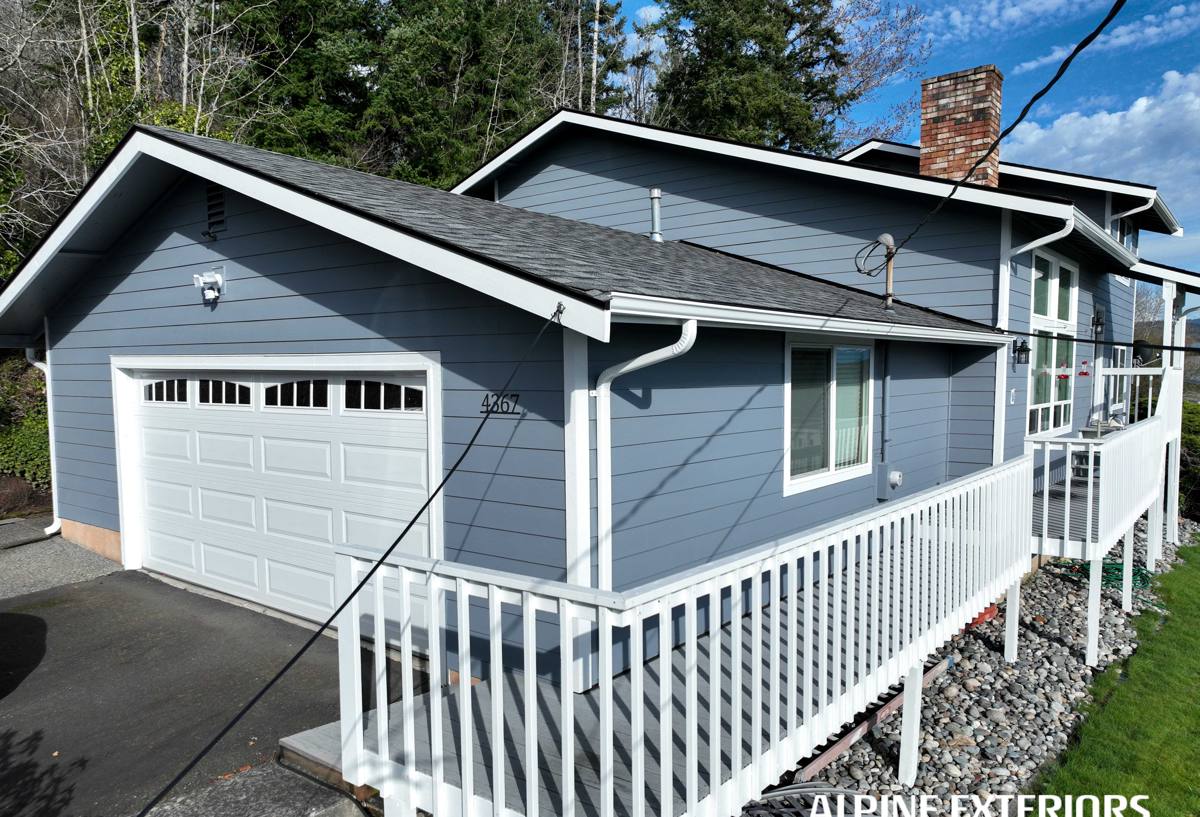
Why Sedro-Woolley's Weather Is Harder on Roofs Than It Looks
Sedro-Woolley doesn't get hammered by direct ocean spray the way waterfront Anacortes properties do, but moist marine air still moves through the valley regularly, and it carries the same slow corrosive effect on exposed metal fasteners, flashing, and vents. Combine that with the region's long wet season — months of low-intensity rain rather than short heavy storms — and you get roofs that stay damp for extended periods rather than drying out quickly between rain events.
That prolonged dampness is exactly what moss, lichen, and algae need to take hold. Shaded roof sections, north-facing slopes, and anywhere debris collects from nearby trees will green up faster than homeowners expect. Left unaddressed, moss doesn't just look bad — its root structure lifts shingle edges, holds water against the roof deck, and accelerates granule loss. Add in the occasional windstorm that comes through the Skagit Valley, and you've got a climate that punishes shortcuts in roofing work more than most.
What This Means for Shingle Selection and Installation
It means a roof spec'd for, say, the high desert or a dry southern climate isn't automatically the right spec here. Underlayment, ventilation, and moss-resistant granule options all deserve real consideration for a Skagit County home, not a one-size-fits-all approach.
What a Correct Asphalt Shingle Job Actually Involves
Asphalt shingles are a mature, well-understood product, but the roof's performance over 20-30 years comes down almost entirely to installation quality and the assembly beneath the shingles — not the shingles alone. Here's what we consider non-negotiable on every tear-off and re-roof:
- Full tear-off to the deck on re-roofs, so we can inspect and repair any rotted or soft sheathing before new material goes down — layering over old shingles hides problems and shortens the life of the new roof.
- Ice-and-water shield at eaves, valleys, and penetrations — a self-adhering membrane that seals around nail penetrations, critical in a climate where wind-driven rain can push water under standard felt at vulnerable points.
- Synthetic underlayment across the field of the roof for a more consistent moisture barrier than old-style felt, which degrades and wrinkles faster in persistently damp conditions.
- Balanced intake and exhaust ventilation so the attic can actually dry out between wet stretches, rather than trapping moisture that leads to sheathing rot from underneath.
- New flashing at every valley, wall intersection, and roof penetration — chimneys, vents, skylights — rather than reusing old flashing that may already be corroded or improperly seated.
- Correct nailing pattern and placement per the manufacturer's specification, which is one of the single biggest factors in wind resistance and warranty validity, and one of the easiest things for a rushed crew to get wrong.
Moss and Algae: Managing the Long Wet Season
Given how much of the year this region spends damp, moss and algae prevention deserves its own conversation rather than an afterthought. There are two angles worth thinking through with any roofer: the shingle itself and how the roof is maintained afterward.
Algae-Resistant Shingle Options
Many shingle lines now include algae-resistant granules — typically copper-containing granules blended in during manufacturing — that slow the growth of the blue-green algae responsible for the dark streaking you see on older roofs. These aren't a permanent fix and they don't stop moss, which is a different organism that takes root in accumulated organic debris rather than growing on the granule surface itself. But on a shaded or north-facing roof plane in Skagit County, algae-resistant granules are a reasonable upgrade to discuss.
Moss Prevention Through Design and Maintenance
Moss control has more to do with keeping the roof clear of debris, maintaining good airflow, and addressing shaded areas than it does with any single shingle feature. Zinc or copper strips installed near the ridge can help suppress moss growth over time as rain carries trace metal ions down the roof plane. We'll flag during our inspection whether your property's tree cover and roof orientation make this worth considering.
Our Process for a Sedro-Woolley Roofing Project
- On-site inspection — we walk the roof and attic, check for soft decking, inadequate ventilation, existing moss or algae buildup, and flashing condition, and take honest note of what's driving the current problems.
- Straightforward estimate — we walk you through material options, what your roof's slope and exposure actually call for, and a clear cost breakdown, without upselling products your home doesn't need.
- Scheduling around the weather — asphalt shingle installation needs a dry deck and reasonable temperatures to seal properly. We plan projects with the Skagit Valley's rain patterns in mind rather than rushing work into a wet window.
- Tear-off and deck inspection — full removal of old roofing, with any deteriorated sheathing replaced before anything new goes down.
- Underlayment, flashing, and shingle installation — done to manufacturer specification, including proper nailing patterns and sealing at every penetration.
- Ventilation check — confirming intake and exhaust are balanced for the attic space, not just aesthetically matched.
- Final walkthrough — we go over the finished roof with you, including simple maintenance pointers specific to your property's exposure and tree cover.
Cost Factors for Asphalt Shingle Roofing
Every roof is different, and we won't quote a number without seeing the property, but these are the main factors that move the price up or down on most Sedro-Woolley homes:
| Factor | How It Affects Cost |
|---|---|
| Roof size and pitch | Steeper roofs require more safety equipment and labor time, increasing cost per square |
| Number of layers to remove | Tearing off multiple old layers costs more in labor and disposal than a single-layer tear-off |
| Deck condition | Rotted or soft sheathing discovered during tear-off requires repair or replacement before shingles go on |
| Shingle tier | Standard three-tab, architectural, and premium/designer shingles vary significantly in material cost and expected lifespan |
| Roof complexity | Valleys, dormers, skylights, and chimneys each add flashing work and labor time |
| Ventilation upgrades | Adding intake or exhaust vents where the existing system is inadequate adds modest cost but improves long-term performance |
| Access | Difficult site access — steep driveways, limited staging area, tall trees — can affect labor and equipment costs |
Signs a Sedro-Woolley Roof Needs Attention
Because this climate hides roof problems well — a leak can travel along a rafter before showing up as a stain far from its actual source — it helps to know the early warning signs rather than waiting for an obvious failure:
- Granules collecting in gutters or at downspout outlets, a sign shingles are past their protective lifespan
- Visible moss or thick algae staining on north-facing or shaded roof planes
- Curling, cupping, or cracked shingles, especially on slopes that get the most sun exposure
- Soft spots or noticeable sagging when walked on the roof or viewed from the attic
- Daylight visible through the roof deck from inside the attic
- Rusted or lifting flashing around chimneys, vents, or skylights
- Musty attic smell or visible moisture staining on attic sheathing, both signs of ventilation or moisture problems
Why Hiring a Crew That Already Works This Area Matters
Roofing crews who work Skagit County regularly build a working knowledge of what actually goes wrong on local homes — which roof orientations collect moss fastest, which older neighborhoods tend to have particular decking or ventilation quirks, and how long a project can realistically sit exposed before the next rain moves in. That local knowledge shows up in small decisions throughout a project: how tear-off is staged and tarped, how ventilation is balanced for a Pacific Northwest attic rather than a drier climate, and how flashing details are handled around the penetrations that cause most leaks.
It also matters for accountability. A crew that's planning to keep working in Sedro-Woolley and greater Anacortes has every reason to stand behind the work it does here, because its reputation travels through the same neighborhoods year after year.
Questions Worth Asking Any Roofing Contractor
- Will the job include a full tear-off, or will new shingles go over the old layer?
- What underlayment and ice-and-water shield products are included, and where will they be installed?
- How will attic ventilation be assessed and addressed, not just the shingles themselves?
- Is the crew doing the work directly, or is it being subcontracted?
- What does the workmanship warranty cover, separate from the manufacturer's material warranty?
Maintaining Your Roof After Installation
A well-installed asphalt shingle roof in this climate still benefits from basic upkeep. Keeping gutters clear so water doesn't back up under the eaves, trimming back tree limbs that shade the roof and drop debris, and having the roof looked at every few years for early moss growth or flashing wear will all extend the life of the investment. None of this requires a large ongoing commitment — it's the kind of periodic attention that catches small issues before Skagit County's wet season turns them into bigger ones.
Get a Straight Answer About Your Roof
Whether you're dealing with visible moss, aging shingles, or you're simply planning ahead for a re-roof, we're happy to take a look and give you an honest read on where your roof stands. If you're in Sedro-Woolley or elsewhere around Anacortes and Skagit County, reach out for a free, no-pressure estimate using the form below.