 Anacortes Exterior
 Why West Anacortes Siding Wears Differently
Homes on the west side of Anacortes face a tougher combination of exposures than most of Skagit County ever sees. Being closer to open water means more direct salt air, more wind-driven rain hitting walls at an angle instead of falling straight down, and a longer moss and mildew season because these homes simply don't dry out between storms the way an inland house does. Siding here doesn't fail because it's old — it fails because moisture and salt exploit small gaps faster than they would elsewhere, and once water gets behind a wall, the damage is often worse than what you can see from the yard.
That's the context every siding repair in this part of Anacortes needs to be evaluated in. A patch that would hold up fine on a sheltered inland lot can fail within a season or two if it's facing prevailing wind and rain here. Repairs done right account for that from the start.
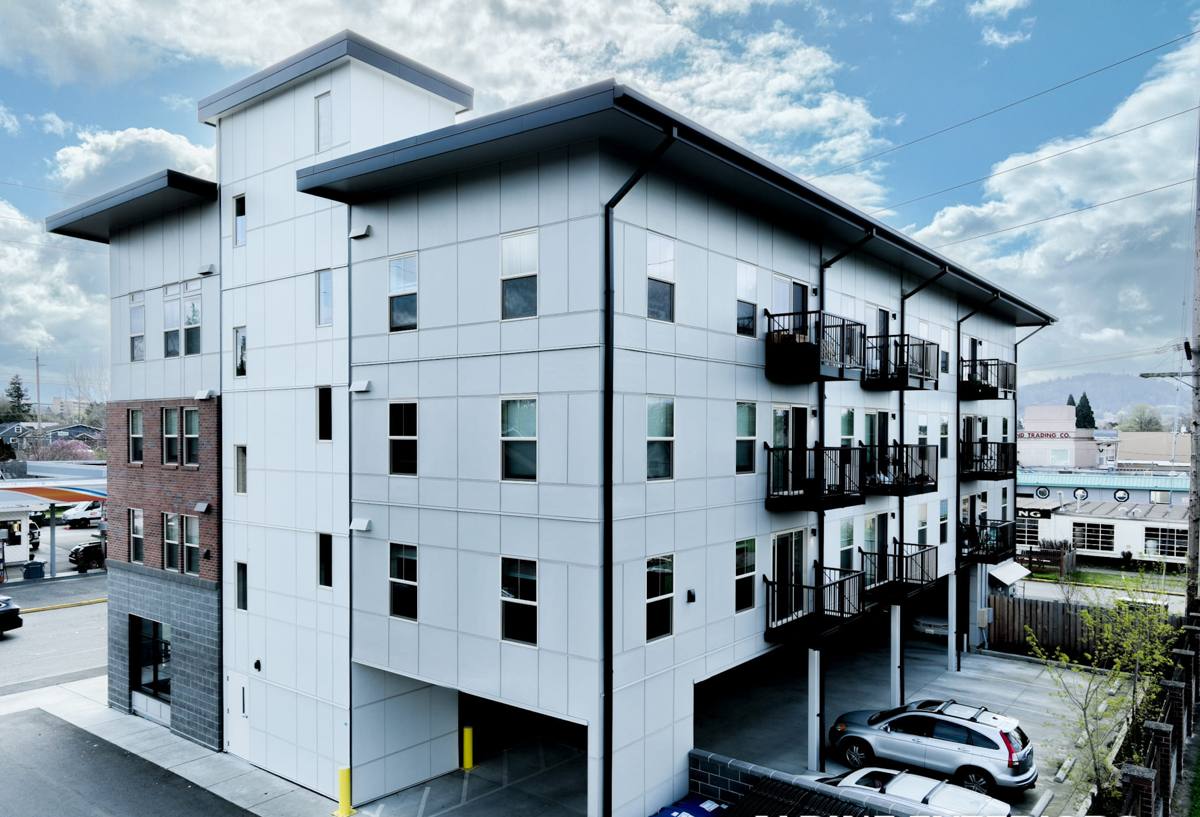
What Salt Air, Rain, and Moss Actually Do to Siding
Salt Air
Airborne salt accelerates corrosion on fasteners, flashing, and any exposed metal trim. When nails or staples holding siding in place start to corrode, they lose their grip, and panels or boards begin to loosen, curl, or pull away at the edges — often years before the siding material itself would otherwise need attention.
Wind-Driven Rain
Rain that hits a wall horizontally behaves differently than rain falling straight down. It gets pushed into seams, laps, and butt joints that were only ever designed to shed vertical water. Over time this drives moisture behind the cladding at exactly the joints and penetrations — window trim, corner boards, utility penetrations — where a repair is most likely to be needed.
Moss and Organic Growth
Shaded, north- and west-facing walls near the water hold moisture longer, which means moss, algae, and mildew get a longer growing season here than on a typical inland Skagit County property. Left alone, that growth holds water against the siding surface and finish, softening paint and, on wood-based products, softening the substrate underneath.
Signs Your West Anacortes Home Needs Siding Repair
Most siding damage announces itself well before it becomes a structural problem, if you know what to look for. We recommend homeowners in this area do a simple visual walk-around at least once a year, especially after the wet season.
- Soft spots when you press on the siding, especially near the bottom courses and around windows
- Visible gaps, cracks, or separation at seams, corners, and butt joints
- Paint that's bubbling, peeling, or chalking in patches rather than evenly across the wall
- Persistent moss or dark streaking that returns quickly after cleaning
- Rust staining below nail heads or metal trim
- Warping, buckling, or boards that look wavy from an angle
- Interior clues: peeling paint, musty odor, or discoloration on inside walls that share an exterior wall with damaged siding
- Increased pest activity around siding edges, which often follows softened or moisture-damaged material
Any one of these can be isolated and minor. Several appearing together, especially on a west- or water-facing wall, usually means moisture has already gotten behind the cladding and the repair needs to address more than the surface.
What a Correct Siding Repair Actually Involves
A repair that only replaces the visible damaged piece and stops there is a common shortcut — and in a marine-exposed location like West Anacortes, it's the kind of shortcut that guarantees a repeat call in a year or two. A repair done to the correct standard includes a few steps that aren't optional here, even if they add time to the job.
1. Find the Water's Actual Path
Damaged siding is usually a symptom, not the cause. Before anything gets removed, we look at flashing, trim, and drainage paths around the damaged area to understand how water is reaching that spot, not just where it's showing up.
2. Check What's Behind the Siding
Once the damaged section is opened up, we inspect the water-resistive barrier, sheathing, and framing underneath. If there's rot or sustained moisture damage in the structure itself, that has to be addressed before new siding goes back on — patching over compromised sheathing just hides the problem for another season.
3. Correct the Flashing and Drainage Detail
If the original installation lacked proper flashing at a window head, a butt joint, or a penetration — which is common on older installs not built for this level of wind-driven rain — the repair is the opportunity to fix that detail permanently, not just replace the material that failed because of it.
4. Match Material and Finish Appropriately
Where the existing siding is still sound and simply needs a section repaired, we match the profile, reveal, and finish as closely as possible. Where the surrounding material is showing its age or the damage is widespread, we'll tell you honestly when a full re-side makes more sense than chasing more patches.
Repair or Replacement? What Actually Tips the Decision
Homeowners often ask us to just "fix the bad spot," and sometimes that's exactly the right call. Other times, a spot repair is a short-term fix for a problem that will show up two feet away next winter. Here's how we think through it.
| Factor | Favors Repair | Favors Full Replacement |
|---|---|---|
| Extent of damage | Isolated to one or two areas | Recurring in multiple locations across the house |
| Underlying sheathing/framing | Sound once opened up | Soft, rotted, or moisture-damaged in more than one spot |
| Age and condition of existing siding | Siding is otherwise performing well | Siding is near or past its expected service life |
| Material availability | Existing product/profile can still be matched | Existing product is discontinued or won't blend visually |
| Wall exposure | Sheltered wall, minor exposure | Direct west or water-facing exposure with a history of repeat problems |
| Cost outlook | Lower cost now, addresses the immediate issue | Higher upfront cost, resets the clock on the whole wall or house |
We'll always give you our honest read on which side of that table your situation falls on. If a repair is the right call, we do it correctly. If it isn't, we'll say so before you spend money on something that won't hold.
How Our Repair Process Works
- On-site inspection: We look at the damaged area, the surrounding siding, and the exposure of that particular wall — a west-facing wall near the water gets evaluated differently than a sheltered side yard.
- Honest assessment: You get a clear explanation of what's causing the damage, what repair options exist, and whether a patch or a larger scope makes sense.
- Written estimate: No surprise add-ons once work starts — if we find hidden damage once we open the wall, we stop and talk to you before proceeding.
- Removal and structural check: Damaged material comes off, and anything underneath — sheathing, framing, water-resistive barrier — gets inspected and repaired as needed.
- Flashing and detail correction: Any flashing or drainage detail that contributed to the failure gets corrected, not just re-covered.
- Siding installation: New material goes on to manufacturer specification, with attention to fastening, clearances, and sealant use appropriate for a marine climate.
- Final walkthrough: We show you what was found and what was done, so you understand the condition of your home, not just the invoice.
Why We Lean on James Hardie Fiber Cement for Repairs
We install James Hardie fiber cement siding exclusively, and that shows up in how we approach repairs too. If your home is already clad in Hardie, we can match it precisely — the ColorPlus factory finish and HZ product lines are engineered for exactly the kind of climate exposure West Anacortes deals with, so a correctly done repair blends in and performs like the rest of the wall.
If your home currently has a different siding product and you're weighing repair against a longer-term fix, we'll walk you through why fiber cement holds up differently against salt air and driving rain than vinyl, engineered wood, or other fiber cement alternatives — it doesn't corrode, it isn't a food source for the organic growth that thrives in this climate, and its factory-applied finish is built to resist the fading and moisture cycling that coastal exposure causes. We won't push a full re-side when a repair is the right answer, but when replacement is on the table, Hardie is what we stand behind.
Why Local Experience in West Anacortes Matters
Siding repair is detail work, and the right detail depends on knowing how a specific wall behaves in a specific location. A crew that regularly works homes on the west side of Anacortes already understands which walls take the worst of the wind-driven rain, how fast moss returns on shaded elevations near the water, and which flashing shortcuts show up again and again on homes built before these exposure patterns were well understood. That local pattern recognition is the difference between a repair that treats the symptom and one that fixes the actual cause.
It also means we're not guessing at seasonal timing. Skagit County's wet season windows and this area's exposure mean repair work scheduled and sequenced with that in mind holds up better than work done without accounting for it.
Maintaining Your Siding Between Repairs
Whether your repair is a small patch or a larger section, a few habits extend the life of the work:
- Rinse siding gently once or twice a year to keep salt residue and organic growth from building up, especially on water-facing walls
- Keep gutters and downspouts clear so roof water isn't adding to what your siding already has to shed
- Trim back vegetation that keeps a wall shaded and damp longer than it should be
- Do a quick visual check after major windstorms, when flying debris or flexing can loosen fasteners or trim
- Address small issues — a lifted corner, a hairline gap at a joint — while they're still small
If you're seeing damage, softness, or repeat problems on your siding anywhere on the west side of Anacortes, we're happy to take a look and give you a straight answer on what it needs. Reach out for a free, no-pressure estimate — the form below gets you started.