 Anacortes Exterior
 West Anacortes: A Climate That Tests Every Seam
West Anacortes sits close enough to the water that homes here deal with a version of weather that inland Skagit County doesn't see as often: salt-laden air off Rosario Strait and Guemes Channel, driving rain that comes in sideways during winter storms, and long stretches of gray, damp months where anything shaded or north-facing stays wet far longer than it should. Add in the moss and algae growth that thrives in that kind of dampness, and you've got a set of conditions that will find any weakness in a home's exterior — especially a siding style with as many seams as board and batten.
Board and batten is a vertical siding pattern: wide panels or boards installed side by side, with narrower strips (the "battens") covering each joint. It's a classic look, and it's a great fit for a lot of the architecture in and around West Anacortes — but every one of those batten joints is a potential water entry point if it isn't detailed correctly. In a climate this wet, "correctly" isn't optional.
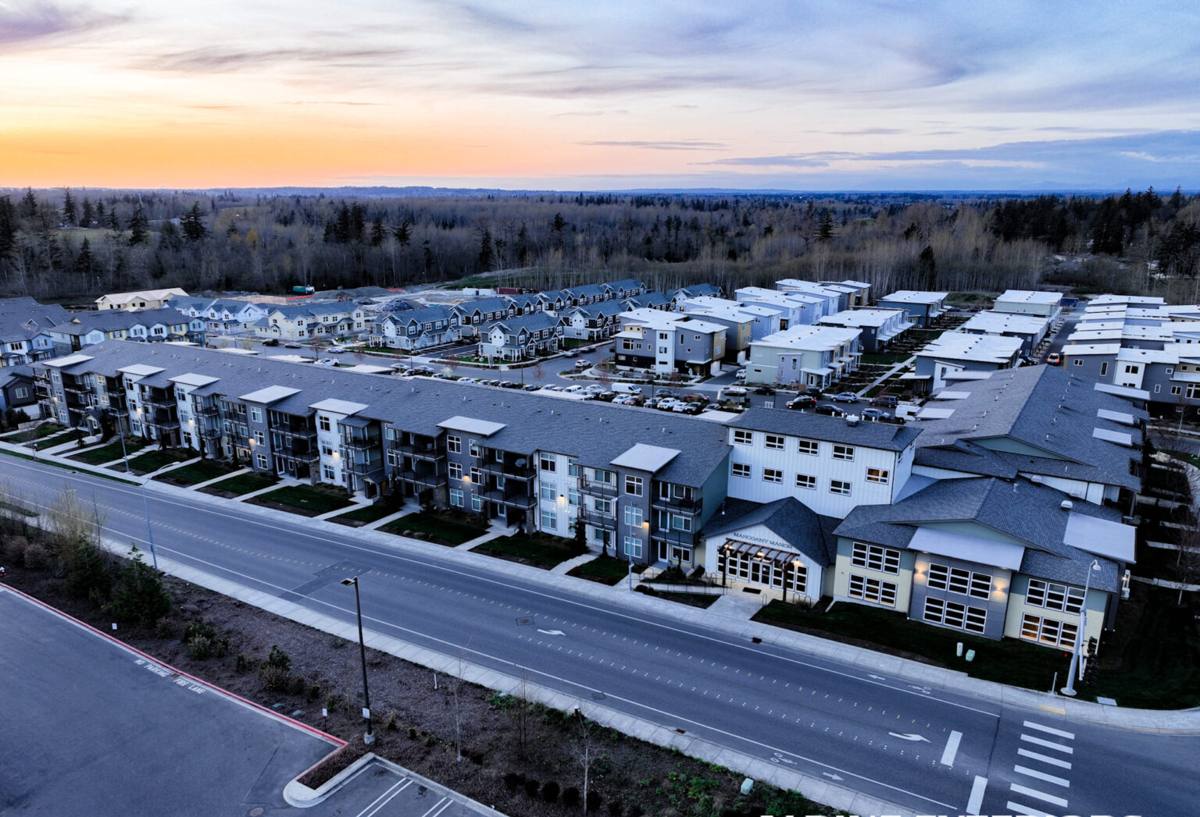
Why Board & Batten Fits This Neighborhood
West Anacortes has a mix of older homes with real character and newer builds going for a clean, modern coastal look, and board and batten works for both. The vertical lines read as farmhouse-simple on an older cottage-style home and as sharp and contemporary on a newer build, often paired with horizontal lap siding as an accent on gables, dormers, or a front entry. It's one of the more versatile siding profiles we install, which is part of why we see so much interest in it from homeowners in this area specifically.
The other reason it fits well here: board and batten's strong vertical lines tend to shed water faster than a flat panel, when it's built with the right drainage plane behind it. That's an advantage in a place that gets the rainfall Anacortes does — but only if the installation takes advantage of it. Done wrong, the extra seams work against you instead.
What Marine Exposure Does to Board & Batten Siding
Salt air is corrosive to fasteners and hardware, and it accelerates the breakdown of paint films and caulking over time. On a siding style with dozens of batten strips, each one held on with its own fastener pattern, that adds up to a lot of exposed connection points. If a contractor uses the wrong fastener material or spacing, or relies on caulk instead of proper flashing to keep water out of those seams, salt air and driving rain will find the failure point faster in West Anacortes than they would twenty miles inland.
Moss and algae are the other half of the equation. West-facing and shaded elevations in this neighborhood stay damp for extended periods during the fall and winter, and organic growth doesn't just look bad — sustained moisture against a wood-based product invites rot at the exact seams that board and batten depends on staying tight. This is one of the biggest reasons we steer homeowners away from wood board and batten in coastal Skagit County: it's the highest-maintenance version of an already seam-heavy siding style, in exactly the climate least forgiving of missed maintenance.
Material Matters: Fiber Cement vs. Wood vs. Vinyl Board & Batten
We only install James Hardie fiber cement board and batten. We don't install wood, vinyl, or engineered wood alternatives, and the reasoning is climate-specific, not just a brand preference:
| Material | How it handles salt air & rain | Maintenance burden | Long-term risk in this climate |
|---|---|---|---|
| James Hardie fiber cement | Non-combustible, dimensionally stable, factory-sealed edges resist moisture wicking | Occasional rinsing; ColorPlus finish holds color without repainting on the manufacturer's schedule | Low, when installed with correct flashing and rain screen |
| Wood (cedar, primed spruce) | Absorbs moisture at seams and end grain; swells and shrinks with damp cycles | Regular repainting/staining, moss treatment, caulk maintenance | High — rot at battens and joints is common in wet, shaded conditions |
| Vinyl | Doesn't rot, but battens and panels can warp or gap with temperature swings; caulk-dependent seams | Low, but limited repair options once faded or cracked | Moderate — appearance and seam integrity degrade over time near salt air |
Wood board and batten can look beautiful the day it's installed, but it puts the ongoing maintenance burden — repainting, recaulking, watching for rot at every seam — squarely on the homeowner, in a climate that punishes any lapse. Vinyl avoids the rot issue but isn't built to handle the same wind-driven rain loads or long-term UV and salt exposure without visible wear. James Hardie's fiber cement formulation is engineered specifically for wet climates like ours, which is why it's the only board and batten product we put our name behind.
James Hardie's HZ Product Engineering
James Hardie manufactures its siding in climate-specific formulations, and the HZ5 line is engineered for the wetter Pacific Northwest climate zone that includes Anacortes and the rest of Skagit County. That matters for board and batten specifically, because the product needs to hold its shape and resist moisture absorption at every batten joint — not just across a flat wall panel.
What a Correct Board & Batten Installation Actually Involves
Board and batten has more opportunities to go wrong than standard horizontal lap siding, simply because it has more seams and more fastening points. A correct install isn't complicated, but it isn't optional to skip steps either.
Rain Screen & Furring Strips
Vertical siding should be installed over a furring strip system that creates a drainage gap between the siding and the weather-resistive barrier. This gap lets any water that gets past the battens drain down and out instead of sitting against the sheathing. In a climate with West Anacortes' rainfall totals, this detail is one of the biggest differences between siding that lasts and siding that traps moisture.
Flashing & Weather Barrier
Every window, door, and roofline transition needs proper flashing integrated with the weather-resistive barrier before the first board goes up. Board and batten's vertical joints also need attention where horizontal trim boards intersect them — those are common failure points if the flashing sequence is done out of order.
Fastening & Batten Spacing
James Hardie specifies fastener type, placement, and spacing for board and batten assemblies, and battens need consistent coverage over each panel seam without over-driving nails, which can crack the material or compromise its seal. Corrosion-resistant fasteners matter more here than in drier inland climates, given the salt air.
Factory Finish
James Hardie's ColorPlus finish is baked on at the factory under controlled conditions, which gives it better adhesion and color consistency than field-applied paint — an advantage in a climate where wet weather limits the number of good painting days anyway.
Our Process for West Anacortes Homes
We work in this neighborhood regularly, which means we already know what wind exposure and moisture patterns look like on a west-facing wall near the water versus a more sheltered lot a few blocks inland — and we adjust flashing and drainage detailing accordingly rather than treating every home the same. Our process on a board and batten project generally runs:
- On-site assessment of existing siding, sheathing condition, and moisture exposure by elevation
- Removal of old siding and inspection/repair of any water damage found underneath
- Installation of weather-resistive barrier, flashing at all penetrations, and furring strips for proper drainage
- James Hardie board and batten installation to manufacturer fastening specifications
- Final trim, caulking at appropriate joints only (not as a substitute for flashing), and cleanup
We don't quote a board and batten job without seeing the specific elevations involved, because a shaded, wind-exposed wall facing the water needs different attention than a sheltered south wall — even on the same house.
Living With Board & Batten in West Anacortes: Maintenance Through the Seasons
Even the right material needs some seasonal attention in this climate. A short annual routine keeps board and batten siding performing the way it should:
- Rinse siding annually, and more often on shaded or north-facing walls where moss and algae tend to establish first
- Trim back vegetation and tree cover that keeps any section of the wall shaded and damp longer than the rest of the house
- Inspect caulking at trim and penetration points once a year, since even good caulk has a service life
- Check gutters and downspouts before the fall rains — overflow near a wall accelerates moss growth and water exposure on board and batten seams
- Watch for any soft spots or discoloration near the base of the wall, a common sign of moisture intrusion that's worth catching early
None of this is heavy maintenance — it's the kind of upkeep that fits into a normal homeowner routine. That's part of the appeal of fiber cement over wood board and batten, which demands far more from the homeowner to stay ahead of this climate.
What Board & Batten Siding Costs
Board and batten typically costs somewhat more than standard lap siding to install, mainly due to labor — more individual pieces, more precise fastening, and more detail work at seams and trim. Exact pricing depends on the home's size, existing siding condition, and how much repair work is needed underneath.
| Cost factor | Why it matters |
|---|---|
| Wall square footage and elevation count | More corners and transitions mean more trim and flashing detail work |
| Condition of existing sheathing | Water damage found during tear-off adds repair costs before new siding goes up |
| Batten spacing and reveal width | Narrower spacing means more material and labor per wall |
| Trim and accent detailing | Window trim, corner boards, and transitions to other siding profiles add labor |
| Site access | Tight lots or multi-story sections near the water can affect equipment and labor time |
Questions to Ask Before You Hire
Board and batten is easy to install poorly and hard to install well, so vetting a contractor matters more here than with simpler siding profiles. Before hiring anyone for a board and batten project in West Anacortes, ask:
- Are they a James Hardie-certified or preferred installer, and can they explain the specific fastening and flashing requirements for board and batten?
- Do they install a furring strip and drainage gap system behind vertical siding, or nail directly to the weather barrier?
- How do they detail flashing at windows, doors, and horizontal trim intersections with the battens?
- Are they licensed and insured to work in Washington, and can they provide proof?
- Have they worked on homes in this specific area, with this specific salt air and rain exposure?
A contractor who can answer these clearly, without hesitation, is one who actually understands what this siding style needs — not just how to nail boards to a wall.
If you're considering board and batten siding for a home in West Anacortes, we're happy to take a look and walk you through what your specific elevations need. Reach out for a free, no-pressure estimate using the form below.