 Anacortes Exterior
 Storm Damage Roof Repair for Conway Homes
Conway sits in the lower Skagit River valley, a stretch of flat, open farmland between Mount Vernon and Stanwood that catches weather differently than the hillier ground around it. When a storm rolls in off the Sound, there's little to slow it down before it reaches a Conway rooftop. That open exposure, combined with Skagit County's marine climate, means storm damage here tends to be more widespread across a roof rather than isolated to one corner — and it's often less obvious from the ground than homeowners expect.
This page covers what storm damage repair actually looks like for a Conway home: what to watch for, what a correct repair involves, and how our process works when you call us after a wind event or a hard rain that just wouldn't quit.
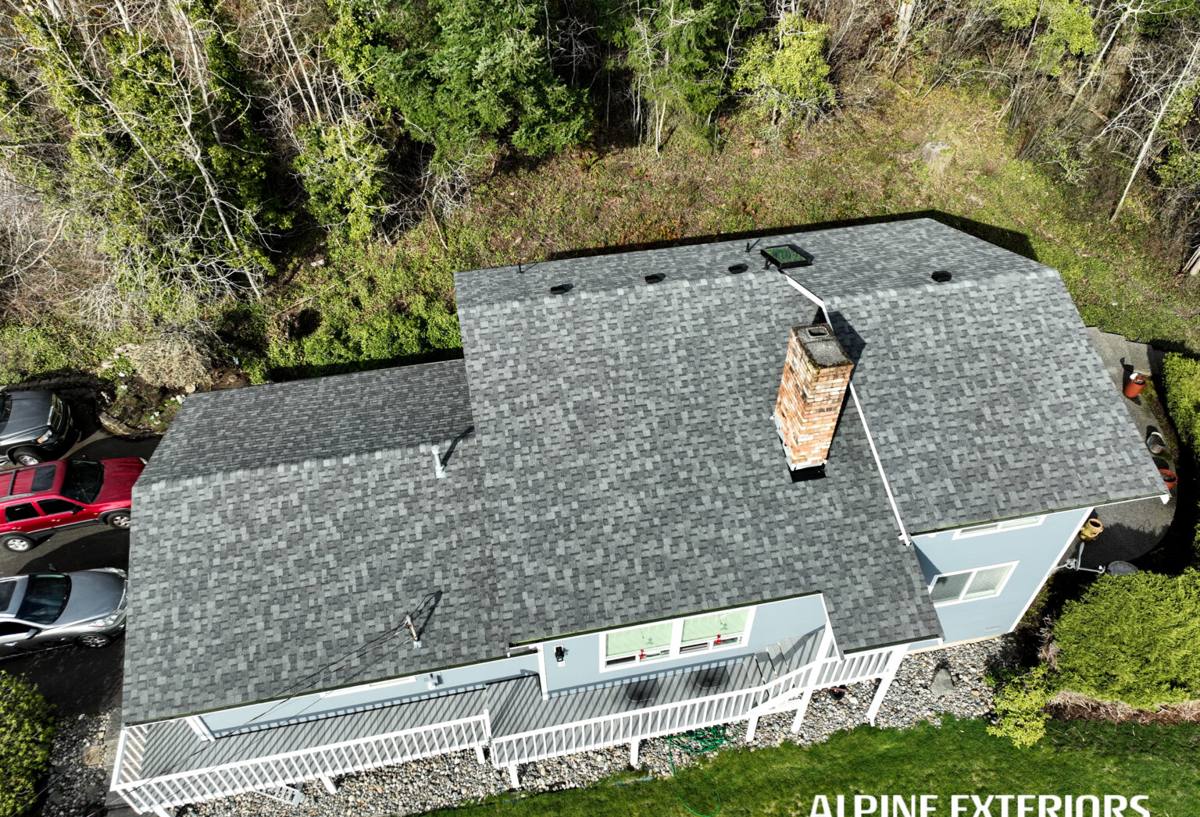
Why Conway Roofs Take a Different Kind of Beating
Anacortes Exterior Contractor works roofs all over Skagit County, and Conway's combination of open terrain and river-valley weather patterns creates a distinct set of stressors:
Wind With Nothing to Break It Up
Rural and semi-rural stretches like Conway don't have the tree cover or tightly packed neighboring structures that can blunt gusts before they hit a roofline. Wind moving across open fields tends to hit rooflines at a steadier, more sustained force, which is exactly the kind of load that works shingle tabs loose over time or finishes the job on a roof that was already marginal.
Driving Rain and Standing Moisture
Low-lying valley ground holds humidity longer after a storm passes. That extra moisture dwell time matters for roofs — wet underlayment and sheathing take longer to dry out between rain events, which gives any small breach more opportunity to actually soak in rather than just bead off.
A Long Moss Season
Western Skagit County's mild, wet winters are close to ideal moss-growing conditions, and moss doesn't just sit on a roof looking bad — it holds moisture against the shingle surface and lifts tabs as it grows, which makes storm damage worse when it happens. A roof with moss buildup going into a windstorm is more vulnerable than a clean one, full stop.
Salt-Tinged Marine Air
Even away from the immediate shoreline, Puget Sound's marine air carries salt content that accelerates corrosion on exposed metal — flashing, fasteners, gutter hardware. Storm-driven rain pushes that salt-laden moisture into seams and laps it wouldn't normally reach, which is why storm repairs out here need to account for metal condition, not just shingles.
What Actually Counts as Storm Damage
Homeowners often picture storm damage as a hole or missing shingles you can spot from the driveway. In practice, a lot of the damage we find after a Conway windstorm is less dramatic but just as serious:
- Lifted or creased shingle tabs — wind gets under the tab edge, breaks the seal, and the shingle no longer lies flat even if it's still attached
- Granule loss — wind-driven rain and hail-like debris strip the protective granule layer, aging the shingle prematurely even without visible tearing
- Flashing separation — around chimneys, vents, and roof-to-wall junctions, where sustained wind flex works fasteners loose
- Debris impact — branches and blown material can crack or puncture shingles without leaving an obvious gap
- Ridge cap damage — the ridge takes the most direct wind load of any part of the roof and is a common first failure point
- Gutter and fascia separation — wind can pull gutters partly loose, which then lets water track behind fascia boards during the next rain
None of these always show up as an active leak right away. That's the trap — a roof can look intact after a storm and still have compromised spots that leak three storms later, once the damage has had time to work.
What a Correct Repair Involves
A Real Inspection, Not a Drive-By
We get on the roof (or use a pole camera when pitch or safety makes that the smarter call) and check the full field, not just the area a homeowner reports. Wind damage is rarely confined to one spot — if wind was strong enough to lift shingles in one area, it was hitting the whole roof, so we look at ridges, valleys, penetrations, and gutter lines together.
Matching What's There
A patch that doesn't match the existing shingle profile or color is a repair that looks like a repair forever, and worse, it can create a seam that performs differently than the surrounding roof. Where an exact match isn't available because a shingle line has aged or discontinued, we tell you that up front and talk through the honest options rather than installing something that clashes.
Flashing and Underlayment, Not Just Shingles
Given how much of Conway's storm damage shows up at flashing and transition points, a repair that only replaces visible shingles and ignores the flashing underneath is a repair that fails again in the next storm. We check underlayment condition wherever we open a section of roof — if it's saturated or degraded, that gets addressed as part of the repair, not left for later.
Cleanup That Doesn't Leave a Mess
Storm repair work generates old shingle material, nails, and granule debris. We clear it from the roof, gutters, and ground — magnetic sweep included — before we call the job done.
How Our Process Works
- You call or request an estimate. Tell us what you noticed — missing shingles, a leak, debris on the roof — and roughly when the storm hit.
- We schedule an inspection. For active leaks we move faster; for cosmetic damage we'll find a time that works without rushing.
- We document what we find. Photos and a written scope of damage, which matters if you end up filing an insurance claim.
- We give you a straight repair plan. What needs fixing, why, what it involves, and a real cost range — no upselling a full replacement when a repair will genuinely hold.
- We do the work. Most storm repairs on a Conway home are a one-day job unless structural sheathing is involved.
- We follow up. If a repair was done ahead of a full evaluation, we'll flag anything worth watching so it doesn't surprise you next season.
Repair or Replace? What Actually Drives That Decision
Storm damage doesn't automatically mean a new roof, and it doesn't automatically mean a quick patch either. The right call depends on a few honest factors:
| Factor | Points Toward Repair | Points Toward Replacement |
|---|---|---|
| Roof age | Under roughly 12-15 years, matching material likely available | Near or past its expected service life already |
| Damage extent | Isolated to one slope or a handful of shingles | Spread across multiple slopes or ridges |
| Underlying deck condition | Sheathing is dry and sound where checked | Rot, soft spots, or repeated moisture staining found |
| Shingle condition elsewhere | Rest of the roof still has good granule coverage and flat tabs | Widespread granule loss or curling beyond the storm-damaged area |
| Match availability | Existing shingle line still in production | Discontinued line, patch would visibly mismatch |
We'll walk you through where your roof lands on each of these before recommending anything — a repair should hold, not just hide the problem until next season.
Storm Damage and Insurance Claims
Most homeowner policies cover sudden storm damage, but the claims process goes smoother when the documentation is solid from the start. A few things worth knowing:
- Photograph what you can safely see from the ground before any repair work starts — adjusters want to see the "before" condition
- Get an inspection promptly after a storm; damage left open to weather can complicate a claim if it worsens before it's assessed
- A written, itemized scope of damage from your contractor carries more weight with an adjuster than a verbal description
- Not every roof issue found during a storm inspection is storm-related — normal wear gets separated out, and we'll tell you plainly which is which rather than lumping everything into a claim
We're not a public adjuster and won't pretend to be one, but we can give you documentation that makes your claim easier to support.
Why a Crew That Already Works Conway Matters
Storm repair isn't just a technical skill — timing and local familiarity matter. A contractor who already works this stretch of Skagit County knows that Conway's open exposure means storm damage assessments shouldn't stop at the first visible spot, knows which flashing details tend to fail first in valley wind, and isn't learning the area's climate behavior on your roof for the first time. That familiarity translates into faster, more accurate inspections and repairs that account for what's actually likely to happen here again, not a generic storm-repair checklist built for a different climate.
Reducing Storm Damage Risk Between Now and the Next Storm
A roof that's already in good condition weathers a storm better than one carrying moss, loose debris, or aging flashing into it. A simple pre-storm-season checklist for Conway homeowners:
- Clear moss buildup before it has a chance to lift shingle tabs
- Clean gutters and downspouts so wind-driven rain has somewhere to go
- Trim back branches that could become storm debris on the roof
- Have loose or lifted shingles from a prior storm repaired before the next one arrives
- Check attic ventilation — trapped moisture weakens sheathing from underneath, making it more vulnerable to wind stress from above
- Have flashing around chimneys and vents checked every couple of years, since corrosion from marine air is gradual and easy to miss
None of this eliminates storm risk, but it closes the gaps that turn a routine windstorm into an emergency repair.
If a recent storm left you with missing shingles, a new leak, or just some uncertainty about what your roof went through, we're glad to take a look. Reach out for a free, no-pressure estimate using the form below.