 Anacortes Exterior
 Building Decks for Cap Sante's Waterfront Climate
Cap Sante sits close to the water on the edge of Anacortes, and that location shapes everything about how a deck should be built here. Homes in this part of Skagit County get a steady dose of salt-laden air off the marina and Rosario Strait, frequent driving rain pushed in by wind off the water, and long stretches of shade and dampness that keep moss and algae active for most of the year. A deck built to a generic spec sheet, without accounting for that combination, tends to show problems early — corroding hardware, soft framing, slick surfaces, and finishes that fail well ahead of schedule. A deck built for this specific environment holds up the way it should.
This page covers what a deck built for Cap Sante actually needs: the right materials, the right fasteners, correct framing and drainage, and a maintenance plan that fits the climate instead of fighting it.
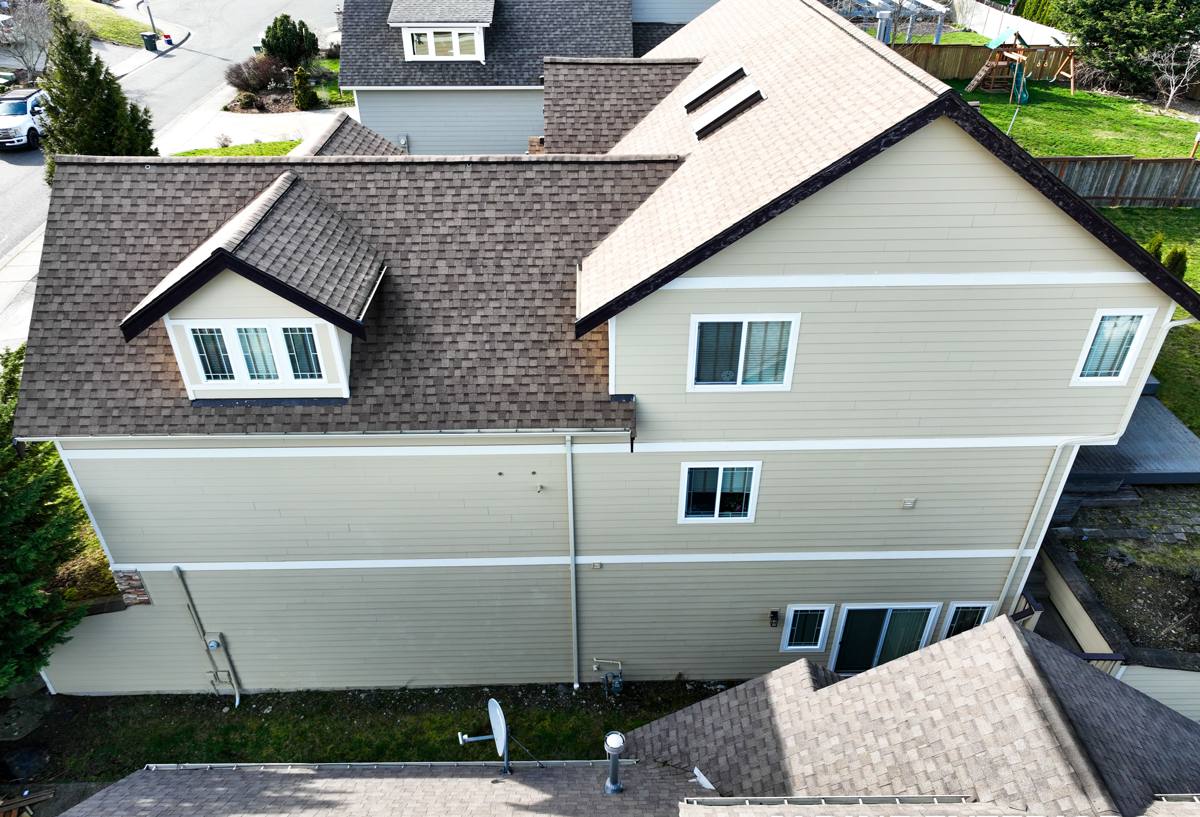
What This Location Does to a Deck
Salt Air
Proximity to the marina and open water means airborne salt is a constant, low-grade presence on every exterior surface, including decks that aren't directly waterfront. Salt accelerates corrosion in fasteners, connectors, and any exposed metal hardware. Left unaddressed, this shows up first as rust streaking on decking boards, then as weakened structural connections that aren't visible until they fail.
Driving Rain
Wind-driven rain off the water doesn't fall straight down — it gets pushed sideways under railings, into ledger connections, and along the underside of decking, which is exactly where standing water causes the most damage. Flat, low-slope decks in exposed spots are especially prone to water pooling if the framing wasn't pitched correctly from day one.
Moss and Shade
Many Cap Sante lots have mature trees or sit on north-facing slopes with limited direct sun for large parts of the year. Combined with regional rainfall, that creates ideal conditions for moss, algae, and mildew to take hold on decking surfaces, stair treads, and railings — not just a cosmetic issue, but a real slip hazard on stairs and landings.
Choosing Decking Material for This Environment
There's no single "best" decking material — the right choice depends on budget, how much upkeep the homeowner wants to take on, and how exposed the deck is to sun, shade, and salt air. Here's how the common options actually perform in a Cap Sante setting.
| Material | Upfront Cost | Maintenance | Performance in Salt Air & Moss |
|---|---|---|---|
| Pressure-treated wood | Lowest | Annual cleaning and re-sealing recommended | Prone to moss and algae in shaded areas if not sealed and cleaned regularly; treated lumber resists rot but not surface growth |
| Cedar | Moderate | Regular sealing to hold color and resist moisture | Naturally moisture- and insect-resistant, but softer surface can trap grime and support moss without upkeep |
| Composite decking | Higher | Periodic washing, no sealing or staining | Resists rot and doesn't absorb moisture like wood, but textured surfaces can still grow algae in constant shade and need occasional scrubbing |
| Capped PVC decking | Highest | Low — occasional rinse | Fully sealed surface sheds moisture and resists staining and algae growth best of the group, at a higher material cost |
We install all of the above. Our job is to walk through the trade-offs honestly and let the homeowner's budget, sun exposure, and appetite for maintenance drive the decision — not a preference for one product line.
Framing and Substructure — the Part You Don't See
Decking gets all the attention, but the framing underneath is what determines whether a deck lasts fifteen years or thirty-five. In a wet, salt-exposed climate, three things matter most:
Ledger Attachment and Flashing
Where a deck attaches to the house is the single most common failure point on any deck, anywhere — and in a climate with this much driving rain, it matters even more. Proper flashing at the ledger board keeps water from working its way behind siding and into the house framing, which is a far more expensive problem than anything happening on the deck surface itself.
Joist Spacing and Pitch
Framing needs to be spaced correctly for the decking material chosen (composite and PVC generally require tighter joist spacing than wood) and pitched slightly away from the house so water sheds instead of pooling against the structure.
Footings
Skagit County's soil and moisture conditions mean footings need to be set to proper frost depth and bear on stable soil, not just poured to a shallow, convenient depth. Undersized or shallow footings are a common source of deck movement and settling over time.
Hardware and Fasteners — Why Salt Air Changes the Rules
This is the area where cutting corners is invisible at first and expensive later. Standard galvanized fasteners are built for general exterior use, not for a marine-influenced environment like Cap Sante. Over time, salt air breaks down standard coatings faster than inland conditions would, leading to rust staining and weakened connections at exactly the points holding the deck to the house and ground.
| Hardware Type | Typical Use | Fit for Cap Sante |
|---|---|---|
| Standard galvanized | General exterior fasteners and connectors | Adequate inland; accelerated corrosion risk this close to salt water and marina air |
| Ceramic-coated / polymer-coated | Fasteners rated for treated lumber | Better than standard galvanized, still not the top tier for direct salt exposure |
| Stainless steel (305/316 grade) | Fasteners, structural connectors, railing hardware | Best available corrosion resistance for salt air; 316 grade is the higher standard for coastal and marine-adjacent settings |
For decks in Cap Sante, we default to stainless fasteners and connectors at critical structural points — not because it's required everywhere, but because it's the difference between hardware that looks the same in year one and year fifteen, versus hardware that's visibly rusting by year three.
Railings, Stairs, and Code Requirements
Railings and stairs are both a safety issue and a code compliance issue, and they take the brunt of weather exposure on most decks. Anacortes and Skagit County follow the state building code for guard height, baluster spacing, and stair rise/run — a permitted deck project needs to meet those requirements regardless of the material chosen.
Beyond code minimums, a few things matter specifically for this climate:
- Railing posts and connections should use corrosion-resistant hardware, since they're often the most exposed part of the structure.
- Stair treads need a surface texture or material that stays gripable when wet and mossy, not just when dry.
- Baluster and post spacing should account for material expansion and contraction through wet-to-dry cycles so connections don't loosen over time.
- Any built-in bench, planter, or feature should be designed to shed water rather than trap it against structural members.
Our Deck Building Process
The process is straightforward, but doing each step correctly is what separates a deck that performs for decades from one that needs early repair.
- Site visit and design: we assess sun exposure, drainage, existing structure (if replacing a deck), and how the space will actually be used.
- Material selection: honest walkthrough of decking, hardware, and railing options based on budget and maintenance preference.
- Permitting: we handle the permit application and inspections through the city or county as required for the scope of work.
- Demolition (if applicable): removal of the old deck, checking the ledger and house framing behind it for hidden water damage before building new.
- Framing: footings, ledger flashing, joists, and structural connections built to proper spacing and pitch.
- Decking and railing installation: surface material and railing system installed per manufacturer spec where applicable.
- Final walkthrough: we go over the finished deck with the homeowner, including basic care specific to the material chosen.
Maintenance in a Moss-Prone, Salty Climate
Every deck, regardless of material, does better with a little seasonal attention in this climate. None of this is complicated, but skipping it is how moss gets a foothold and hardware starts to show rust.
- Rinse or sweep debris off the deck surface regularly, especially in fall when leaf litter accumulates and holds moisture against the boards.
- Clean the deck surface at least once a year (more often in heavily shaded areas) to remove early moss and algae growth before it spreads.
- For wood decks, re-seal or stain on the manufacturer-recommended schedule — don't wait until the finish has visibly failed.
- Check railing posts, stair connections, and any visible hardware periodically for rust staining, which is an early warning sign worth addressing before it spreads.
- Keep gutters and downspouts near the deck clear so roof runoff isn't dumping extra water onto or under the structure.
Why Hire a Crew That Already Works Cap Sante
A deck built to a national average spec is a deck built for the wrong climate. Crews that regularly work in and around Cap Sante already know which fastener grade holds up near the marina, how far to pitch framing given the local rain patterns, and which spots on a given lot are going to stay damp and shaded most of the year. That local pattern recognition is the difference between a deck that gets specified correctly the first time and one that needs early repairs because a detail was overlooked.
Working locally also means we're familiar with the permitting process through the City of Anacortes and Skagit County, so that part of the project moves without unnecessary delay or rework.
Get an Honest Look at Your Project
Every lot in Cap Sante is a little different — sun exposure, existing structure, and how close you are to the water all affect what makes sense for your deck. If you're planning a new deck or need to replace one that's showing its age, we're happy to come take a look and give you a straightforward, no-pressure estimate using the form below.