 Anacortes Exterior
 Windows on the Similk Beach Waterfront Take a Different Kind of Beating
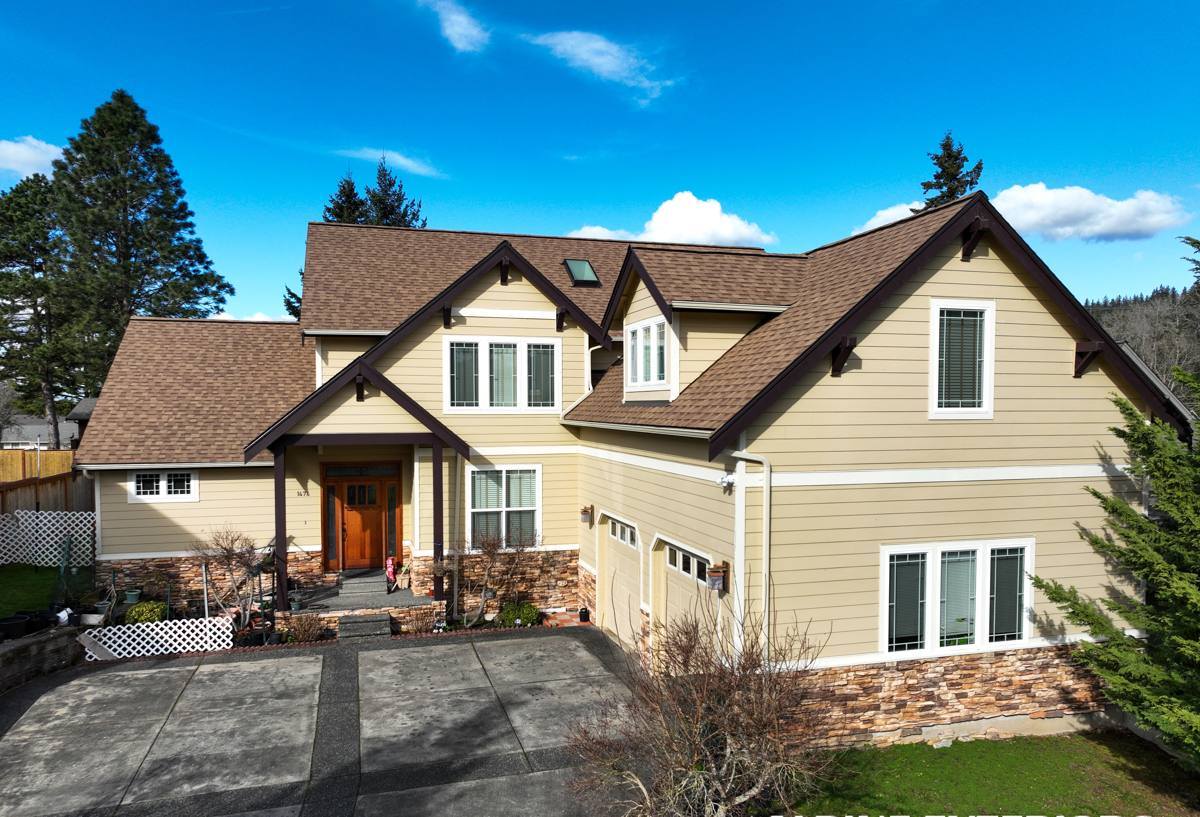
Similk Beach sits close enough to the water that its homes deal with a version of Skagit County weather that inland Anacortes properties don't see as intensely. Salt-laden air moves off Similk Bay and Similk Bay Preserve area waters, driving rain comes in sideways off the water during winter storms, and the shaded, damp pockets around mature trees and shoreline vegetation keep moss and mildew active for most of the year. Windows here are working harder than the manufacturer's spec sheet assumes, and that changes what "correct installation" actually means for this neighborhood.
This page covers window installation specifically for Similk Beach properties — what the salt air and rain exposure demand, what a proper install looks like, and how our process is built around the conditions this stretch of Anacortes actually sees, not a generic checklist written for a drier climate.
What Salt Air, Driving Rain, and Moss Do to Windows Over Time
Three separate stresses compound on a Similk Beach home, and each one attacks a different part of the window system.
Salt Air
Airborne salt is corrosive to exposed metal hardware — hinges, locks, screws, and especially aluminum framing components. On older windows near the water, we regularly see pitted or seized hardware years before it would fail on an equivalent inland install. Salt exposure also accelerates the breakdown of some sealants and finishes faster than their rated lifespan suggests.
Driving Rain
Wind-driven rain doesn't just fall on a window, it gets pushed sideways and upward into any gap in the flashing or sealant. On a west- or water-facing wall, this is a sustained pressure event during winter storms, not an occasional splash. A window that's watertight in calm weather can still leak under driving rain if the flashing detail behind the trim wasn't done correctly.
Moss and Moisture
Skagit County's long wet season means anything that stays damp — a sill, a bottom corner, a gap in caulking — stays damp for months at a stretch. That's exactly the environment moss, algae, and wood rot need. Once moisture gets behind a window frame and can't dry out between rain events, the damage compounds quietly until it shows up as soft trim or interior staining.
Signs a Similk Beach Home Needs Window Attention
- Condensation building up between the panes (a sign the seal has failed on a double- or triple-pane unit)
- Visible pitting, chalky residue, or seized hardware on window locks and hinges
- Soft or discolored trim and sill wood, especially on water-facing walls
- Persistent moss or dark streaking around the frame that comes back soon after cleaning
- Noticeable draft or cold air near the frame during winter storms
- Windows that are difficult to open, close, or lock — frames can swell or shift with moisture cycling
- Rising heating bills without another clear explanation
Any one of these can be minor on its own. Several together usually mean the window system — not just the glass — is compromised.
What a Correct Window Installation Actually Involves
A window install that will hold up near Similk Beach isn't just popping a new unit into an old opening. The parts that matter most are the ones you won't see once the trim goes back on.
Flashing and Weather Barrier Integration
Flashing tape and building wrap have to be layered correctly — each layer overlapping the one below it, shingle-style — so water sheds down and out rather than working its way behind the sheathing. This is the single most common failure point we find when we open up an older install: flashing that was skipped, installed backward, or not tied into the existing weather barrier.
Sill Pan Protection
A sloped sill pan under the window opening gives any water that does get past the sash a way to drain back out instead of pooling against the framing. On a wall that regularly takes driving rain, this detail is not optional.
Sealant Selection and Placement
Not every exterior sealant is rated for the same movement and UV exposure, and salt air shortens the working life of the wrong product. We use sealants suited to marine and coastal exposure, placed with a "back-dammed" technique so trapped moisture has somewhere to escape rather than pooling behind the sealant bead.
Insulation Around the Frame
Gaps around the window frame need low-expansion foam or backer rod and sealant — packed too tight, it can bow the frame; too loose, it's a thermal and air leak. Getting this right affects both energy performance and long-term comfort near drafty walls.
Hardware and Fastener Choice
Near the water, stainless steel or coated corrosion-resistant fasteners and hardware aren't a luxury upgrade — they're what keeps hinges and locks operating smoothly for the life of the window instead of seizing up in five or six years.
Frame Materials: What Holds Up Near the Water
Material choice matters more on a Similk Beach property than it does further inland. Here's how the common options compare for this specific exposure.
| Material | Salt Air / Moisture Resistance | Maintenance Needed | Typical Cost Range |
|---|---|---|---|
| Vinyl | Good — won't corrode or rot, some UV fading over decades | Low — occasional cleaning | Lower |
| Fiberglass | Very good — dimensionally stable, resists moisture and salt | Low | Mid to upper-mid |
| Aluminum | Fair — prone to pitting and corrosion in salt air unless well-coated | Moderate — watch hardware and finish | Mid |
| Wood / Wood-clad | Poor without diligent upkeep — rot risk in sustained damp exposure | High — regular painting/sealing | Upper |
We don't push one material on every home. A well-maintained wood window can still be the right call for a historic property, but we're honest that it asks more of the homeowner in a climate like this one. For most Similk Beach replacements, vinyl or fiberglass frames offer the best balance of upfront cost and long-term resistance to what the salt air and rain will do to them.
How We Handle a Similk Beach Window Installation
- On-site assessment — we check existing flashing, sill condition, and framing for hidden moisture damage before quoting, not after the job starts
- Accurate measurement and product selection — matched to the opening, the wall's sun/wind exposure, and your budget
- Removal and inspection — old units come out carefully so we can inspect the sheathing and framing underneath for rot or prior water intrusion
- Repair before install — any soft wood or compromised sheathing gets addressed before a new window goes in; installing over hidden damage just hides a bigger repair later
- Sill pan, flashing, and weather barrier tie-in — done in the correct layered sequence, every time
- Window set, shim, and fasten — leveled and secured with corrosion-resistant hardware
- Insulate, seal, and trim — interior and exterior finish work completed to match the home
- Final walkthrough — operation, locks, and seals checked with you before we consider the job done
Why a Crew That Already Works Similk Beach Matters
Window installation isn't a one-size-fits-all trade, and coastal Skagit County work isn't the same job as installing windows in a dry inland subdivision. A crew that already works this stretch of Anacortes knows which walls take the worst of the driving rain, which sealants actually hold up to sustained salt exposure, and what the moss and moisture patterns typically look like once trim comes off an older window. That local pattern recognition is what keeps a job from turning into a callback six months later. It also means straight answers — if a window doesn't need replacing yet and a repair or better maintenance routine will buy it years, we'll say so.
Keeping New Windows Performing Near the Water
A correct install is the foundation, but a little seasonal upkeep goes a long way in this environment.
- Rinse salt residue off frames and glass a few times a year, more often on water-facing sides
- Keep weep holes (the small drainage openings along the bottom of the frame) clear of debris and moss
- Lubricate locks and hinges periodically to prevent salt-related sticking
- Inspect exterior caulking annually and touch up any cracking before winter storm season
- Trim back vegetation that keeps a wall or window shaded and damp longer than necessary
- Watch for early condensation between panes — it's cheaper to address a failing seal than a fully fogged unit
Get a Straight Answer for Your Similk Beach Home
Every home on Similk Beach faces this weather a little differently depending on which direction it faces, how close it sits to the water, and how old the current windows are. Rather than guessing at what your home needs from a description, we'd rather take a look. If you'd like an honest assessment and a free, no-pressure estimate for window installation at your Similk Beach property, use the form below and we'll get you scheduled.