 Anacortes Exterior
 Siding Repair Built for Ship Harbor's Marine Exposure
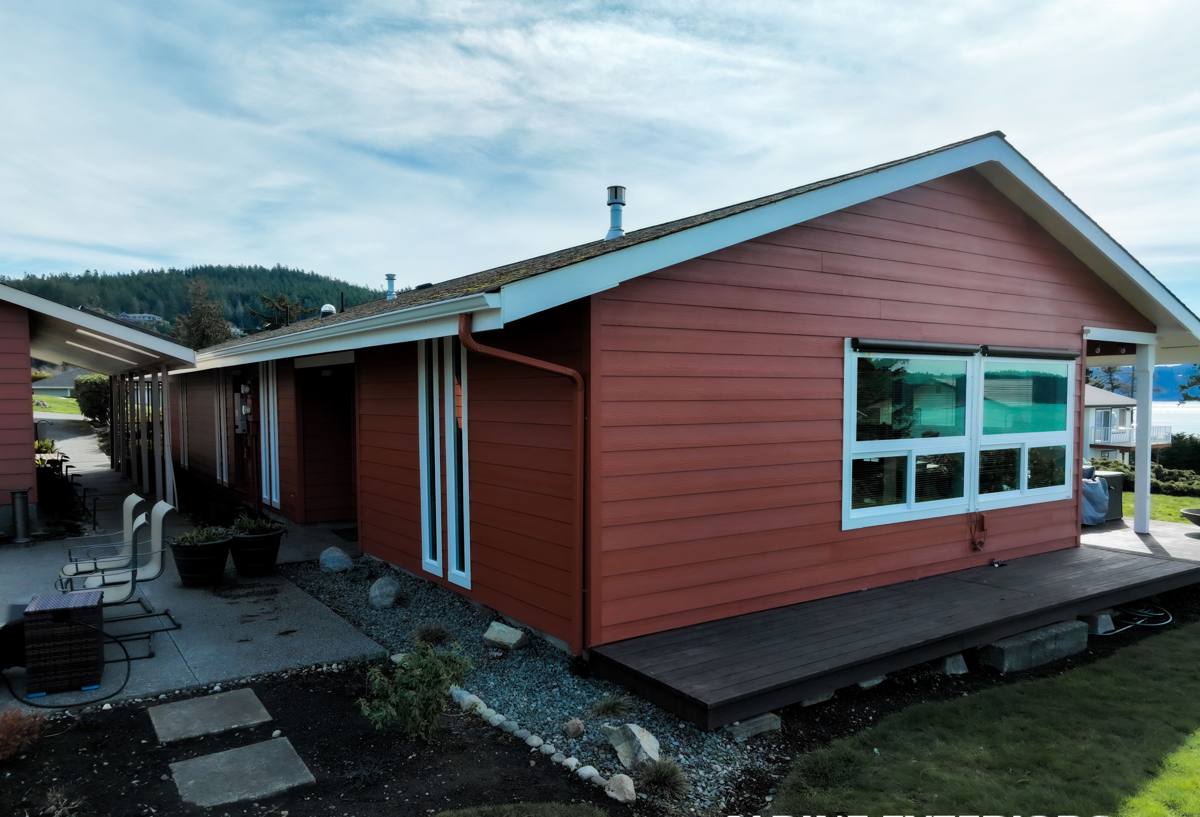
Ship Harbor sits close enough to the water that homes here take a different kind of beating than siding just a few miles inland in Skagit County. The combination of salt-laden air off Rosario Strait, wind-driven rain, and a moss season that can stretch from October through May puts constant pressure on exterior walls. Siding repair in this part of Anacortes isn't just about patching what's visibly broken — it's about understanding why that damage started in the first place and making sure the fix doesn't just fail again in two years.
We work on homes throughout this stretch of Fidalgo Island regularly, and the failure patterns we see near the harbor are consistent enough that we can usually tell a homeowner what we'll find before we even get a ladder up. That familiarity matters more than most homeowners realize when they're choosing who to call.
Why Ship Harbor Siding Wears Differently
Salt Air and Corrosion
Airborne salt doesn't just affect metal — it accelerates the breakdown of caulking, fasteners, and paint film on wood and composite siding. Salt is hygroscopic, meaning it pulls moisture out of the air and holds it against the siding surface longer than it would sit in a drier inland location. That extended dampness is what actually does the damage, not the salt itself.
Driving Rain and Wind Exposure
Homes with any water view or elevation near Ship Harbor tend to catch wind-driven rain at angles that push moisture up under laps and around trim that would stay dry on a more sheltered lot. Over time, wind-driven rain finds every gap in caulking, every under-nailed course, and every spot where flashing was skipped.
Moss, Algae, and Shade
Anacortes' long, wet shoulder seasons give moss and algae months to establish themselves on north-facing walls and anywhere tree cover blocks sun and airflow. Moss holds moisture against the siding surface almost like a sponge, which is one of the more common hidden causes of rot we find once we pull a section of damaged siding off a wall that looked fine from the ground.
What "Correct" Siding Repair Actually Involves
A lot of siding repair in this region is done as a cosmetic patch — caulk the crack, dab on some paint, call it done. That approach almost never holds up near the water, because it treats the symptom without addressing the moisture path underneath. Here's what a repair should actually include:
1. Find the Real Source of the Damage
Cracked or bulging siding is a symptom. The cause is usually one of a handful of things: failed caulking joints, missing or damaged flashing above a window or door, a gap where trim meets siding, or moisture trapped behind moss and algae growth. We open up the affected area enough to see what's actually happening behind the surface before deciding on a repair plan.
2. Check for Rot in the Sheathing
If moisture has been getting behind the siding for any length of time, the wall sheathing underneath can be compromised even when the siding itself still looks salvageable. Repairing over rotten sheathing just delays a bigger, more expensive repair. This is the step that gets skipped most often in quick patch jobs, and it's the one that matters most.
3. Match Materials and Fastening Correctly
Replacement pieces need to match the existing siding's profile, thickness, and exposure so the repaired section doesn't telegraph a visible seam or create a new water trap. Fasteners should be corrosion-resistant and driven to the manufacturer's spec — not just whatever will hold the board in place for now.
4. Rebuild the Flashing and Sealant Details
Any repair that touches a window, door, or trim intersection is an opportunity to correct flashing that was likely part of the original problem. New caulking should go over properly lapped flashing, not act as the only barrier against water.
Common Ship Harbor Siding Problems We See
| Symptom | Likely Cause Near the Water | Repair Approach |
|---|---|---|
| Soft or spongy siding near the bottom edge | Splash-back moisture and poor ground clearance | Cut back and replace affected boards, correct clearance and drainage |
| Peeling paint or finish loss on one wall only | Prevailing wind and rain direction concentrating exposure | Repair damaged sections, evaluate whether that wall needs a more weather-resistant material |
| Dark streaking or green growth | Shade, moisture retention, limited airflow | Clean, address the moisture source, trim back vegetation where possible |
| Cracking at butt joints and corners | Caulk failure and thermal movement | Remove failed sealant, inspect substrate, reseal with proper joint prep |
| Bubbling or bulging near windows | Failed or missing flashing | Remove siding, correct flashing, reinstall or replace siding |
Our Process for a Ship Harbor Siding Repair
- On-site inspection: We walk the exterior, paying particular attention to water-facing walls, areas near grade, and any spots with visible moss or algae history.
- Probe and assess: Where damage is suspected, we check for soft spots and, where needed, open up a section to look at the sheathing and framing behind it.
- Honest scope of work: We tell you plainly whether this is a contained repair or whether the damage points to a bigger problem worth addressing now rather than patching around.
- Repair or replace as needed: Damaged material comes out, sheathing issues get corrected first, and new siding and trim go in matched to the existing wall.
- Flashing and sealant correction: Any flashing detail involved in the failure gets rebuilt properly, not just caulked over.
- Final check: We walk the repair with you and point out anything else on the exterior worth keeping an eye on.
Repair vs. Replacement: How We Decide
Not every siding problem near Ship Harbor needs a full replacement, but a lot of homes reach a point where repeated repairs on the same wall stop making financial sense. A few signs it's time to talk about replacement instead of another patch:
- The same section has already been repaired more than once
- Rot has spread into the sheathing in multiple locations, not just one isolated spot
- The siding material itself (not just the finish) is failing — swelling, delaminating, or crumbling
- You're planning to repaint or refinish soon anyway and want to stop the cycle
- The home is on a water-facing lot where the current material simply isn't suited to the exposure
When replacement makes more sense than another repair, our recommendation is James Hardie fiber cement siding. It's non-combustible, engineered for moisture resistance, and available in an HZ5 formulation designed for harsher, wetter climates — which fits the exposure this part of Anacortes actually sees. We don't install vinyl, LP SmartSide, or other fiber cement brands, and we're glad to explain why if you're weighing your options.
Maintenance That Extends the Life of a Repair
A good repair only stays good if the wall around it is maintained. A few habits make a real difference for homes in this area:
| Task | Why It Matters Here | Frequency |
|---|---|---|
| Rinse walls, especially north-facing and shaded sides | Removes salt residue and slows moss/algae buildup | 1-2 times per year |
| Inspect caulking at joints and trim | Salt air and UV exposure accelerate sealant breakdown | Annually |
| Trim back vegetation touching the siding | Improves airflow, reduces trapped moisture | As needed |
| Check and clear gutters and downspouts | Overflow is a major contributor to wall moisture near the water | Twice yearly, before and after the wet season |
| Walk the exterior after major storms | Catches new damage before it sits through another wet season | After significant wind/rain events |
Why Local Experience With Ship Harbor Homes Matters
A crew that mostly works drier, inland jobs can still do competent siding repair, but they're often guessing at exposure conditions that a Skagit County waterfront-area contractor already knows from experience. We know which walls near Ship Harbor tend to fail first, how far moss damage typically extends once it's visible on the surface, and which flashing shortcuts show up again and again in homes built or re-sided years ago. That familiarity shortens the diagnostic process and helps avoid a repair that looks fine but leaves the underlying cause untouched.
It also means we're not experimenting on your home. We've already seen how different repair approaches hold up over a few Anacortes winters, and we bring that into every scope of work we write.
Get a Straight Answer on Your Siding
If you're seeing cracked caulking, soft spots, moss buildup, or paint failure on a Ship Harbor home, it's worth getting an honest look before the damage spreads further into the wall structure. We'll tell you plainly whether it's a straightforward repair or something bigger, with no pressure either way. Reach out for a free estimate using the form below.