 Anacortes Exterior
 Siding Repair in a Skagit County Climate
Homes around Mount Vernon and Anacortes deal with a specific combination of weather that's harder on exterior siding than most homeowners realize. Salt air moving inland off Fidalgo Bay and the Salish Sea accelerates corrosion on fasteners and trim. Driving rain, pushed sideways by wind off the water, finds every gap in flashing and caulk that a calmer climate would never expose. And a long, damp moss season keeps north-facing walls and shaded siding wet for weeks at a stretch. None of this means siding fails faster here than everywhere else — it means it fails in specific, predictable ways, and a repair that doesn't account for those ways doesn't hold.
This page is about siding repair specifically — patching, replacing damaged sections, and fixing the moisture and fastener problems that show up on homes in and around Mount Vernon. It's not a full-replacement page. Plenty of siding problems in this area can be repaired correctly if someone diagnoses them correctly first.
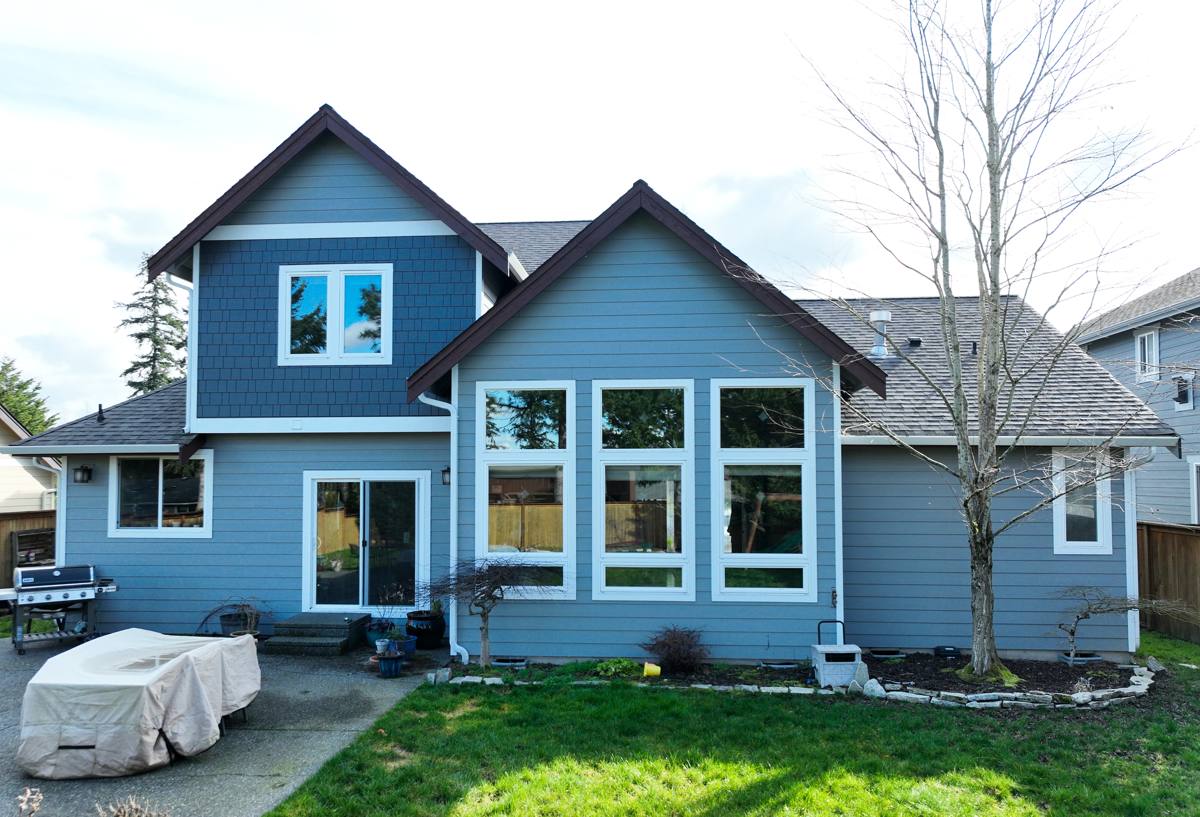
What's Actually Failing When Siding "Needs Repair"
Most repair calls in this region trace back to one of a handful of root causes. Understanding which one you have changes what the correct fix looks like.
Signs You Can Spot From the Ground
- Dark streaking or green-black growth, usually on shaded or north-facing walls — a sign moss and algae have had time to establish, which points to a wall that stays wet longer than it should
- Visible cracking or splitting at panel edges and butt joints, often worse near roof lines and downspouts where water concentrates
- Nail heads popping or "backing out," which is common where salt-air corrosion has weakened the fastener over time
- Caulk that's shrunk, cracked, or pulled away from joints and trim — this is frequently the first failure point, well before the siding itself is damaged
- Soft or spongy spots when you press on the siding near the bottom of walls, around windows, or near hose bibs and deck ledgers
What's Often Hidden Behind the Siding
The visible damage is rarely the whole story. Water that gets behind siding through a failed joint or missing flashing can travel down the wall before it shows up as a stain or soft spot on the surface. By the time you see a problem, the house wrap, sheathing, or framing behind it may already be affected. This is the main reason we don't quote siding repairs from photos or a drive-by — a proper repair estimate involves opening up the damaged area to see what's actually happening underneath.
Repair vs. Replace: How We Make the Call
Not every damaged section needs to come off the wall, and not every damaged section should stay. The decision usually comes down to a few factors we walk through with the homeowner directly.
| Factor | Favors Repair | Favors Replacement |
|---|---|---|
| Extent of damage | Isolated to one or two panels/areas | Spread across multiple walls or elevations |
| Sheathing condition | Dry, sound wood behind the siding | Soft, delaminated, or water-stained sheathing |
| Material behind the damage | Fiber cement or sound original material | Degraded engineered wood, cedar, or failed vinyl |
| Age of existing siding | Newer install, still under warranty terms | Original siding is decades old or discontinued |
| Cause of the failure | One-time event (impact damage, isolated flashing gap) | Systemic moisture intrusion or ongoing rot |
A homeowner in Mount Vernon with one cracked panel from a fallen branch and dry sheathing behind it is a straightforward repair. A home with rot spreading along a bottom course because of a long-term flashing gap is a different conversation — patching that section without addressing the water source just buys a year or two before the same spot fails again.
Why Color and Material Matching Is Harder Than It Looks
One detail that surprises a lot of homeowners: getting a repaired section to actually match the rest of the wall is often the hardest part of the job, not the easiest. Field-painted siding — cedar, primed spruce, or repainted fiber cement — fades unevenly over years of UV exposure and salt air, so a brand-new painted panel next to weathered ones can stand out even with a "matching" paint color. Vinyl siding fades and becomes brittle with age, which means an older panel and a new replacement panel from the same manufacturer may not be a perfect color match years later, and matching profiles from discontinued vinyl lines can be difficult.
This is one of the reasons our crews work almost exclusively with James Hardie fiber cement siding finished with the factory ColorPlus process. Because the color is baked on at the factory rather than field-applied, replacement panels from the same color line hold a much more consistent match over time than field-painted alternatives, and Hardie's ColorPlus finish carries its own finish warranty separate from the substrate warranty. That doesn't mean every repair on a Mount Vernon home involves new Hardie product — plenty of repairs are straightforward patches to existing material. But when a section needs to be replaced outright, or when a homeowner is tired of chasing color-match problems on an aging cedar or engineered-wood system, we'll walk through what switching that section (or the whole elevation) to Hardie actually involves.
Our Siding Repair Process
- On-site inspection. We look at the damaged area and the surrounding wall, not just the spot you called about — siding problems are rarely isolated to a single panel.
- Opening the area if needed. If there's any sign moisture has gotten behind the siding, we pull the affected section to check the house wrap, flashing, and sheathing before we quote anything.
- Identifying the water path. A repair that doesn't fix how water got in will fail again. We trace it back to the actual source — failed caulk, missing kick-out flashing, a bad butt joint, whatever it is.
- Repair or replacement of the affected material. Depending on what we find, that's a clean patch, a full panel swap, or in some cases replacing the sheathing underneath before any new siding goes back up.
- Correct flashing and sealant detailing. This is where a lot of prior repairs go wrong — the visible siding gets fixed but the flashing and joint details underneath don't, so the same failure comes back in a season or two.
- Final walk-through. We show you what we found, what we did, and what to keep an eye on going forward.
Why a Crew That Already Works Mount Vernon and Skagit County Matters
Repair work rewards local familiarity more than new installs do, because so much of it is diagnostic. A crew that's worked on homes throughout Skagit County has already seen how salt air corrodes fasteners on homes closer to the water, how moss and moisture behave differently on shaded lots versus open ones, and which failure patterns show up on the older housing stock common to this area versus newer construction. That experience shortens the guesswork on a repair call and helps avoid the trap of fixing what's visible while missing what's not.
There's also a practical scheduling side to it. Siding repair in this region has a real weather window — you don't want panels or sheathing exposed during a stretch of driving rain, and a crew that works the area regularly plans around Skagit County's weather patterns rather than fighting them. If a permit is required for the scope of work, a local crew also knows how that process typically runs in this jurisdiction, which keeps a repair from stalling out mid-project.
Preventing the Next Repair Call
Some of what causes repeat siding repairs in this climate is preventable with basic maintenance. A few things worth checking once or twice a year, especially heading into the wet season:
- Look at caulked joints around windows, doors, and trim for cracking or separation — this is usually the first thing to fail and the cheapest to catch early
- Check for moss or algae buildup on shaded walls and roof-adjacent siding, and have it cleaned gently rather than pressure-washed, which can drive water behind panels
- Make sure gutters and downspouts are directing water away from siding, not dumping it against a wall or foundation
- Trim back vegetation that keeps siding shaded and damp longer than the rest of the house
- Walk the exterior after any major windstorm and look for loosened panels, popped fasteners, or new gaps at trim
- Keep an eye on any area that's needed a repair before — a spot that failed once is worth watching more closely than the rest of the house
What a Fair Repair Estimate Looks Like
A repair estimate that's worth trusting should tell you what was actually found behind the siding, not just what it costs to patch what's visible. It should distinguish between a cosmetic fix and a fix that addresses the water source. And it should be honest about whether the damaged area is a good candidate for a patch or whether replacement — of that section, or eventually the whole elevation — is the more durable answer. We'd rather tell a Mount Vernon homeowner that a small repair will genuinely hold than sell a bigger job that isn't needed yet, and we'd rather tell you replacement is coming than patch over rot and let you find out the hard way.
If you're dealing with cracked, stained, or soft siding on a home in Mount Vernon or anywhere around Anacortes, we're happy to take a look and give you a straight answer on what's going on and what it'll take to fix it. The estimate is free, there's no pressure to move forward, and the form below is the easiest way to get started.