 Anacortes Exterior
 Building Decks for Ship Harbor's Marine Climate
Ship Harbor sits close enough to the water that every outdoor structure on your property feels the effects of it. Salt-laden air moves through the neighborhood year-round, driving rain comes in sideways off the strait during winter storms, and the shaded, damp conditions common to Skagit County give moss and algae months at a time to take hold on any horizontal wood surface. A deck built without those specifics in mind will show its age fast — soft spots in the decking, rust streaks below the fasteners, and a slick green film that makes the whole surface unsafe to walk on by the second or third winter.
A deck built correctly for this specific location is a different story. The framing, fastener choices, decking material, and even the way the boards are spaced all need to account for what this stretch of Anacortes throws at a structure. This page covers what that actually looks like — not generic deck-building advice, but what we specifically do differently for homes in and around Ship Harbor.
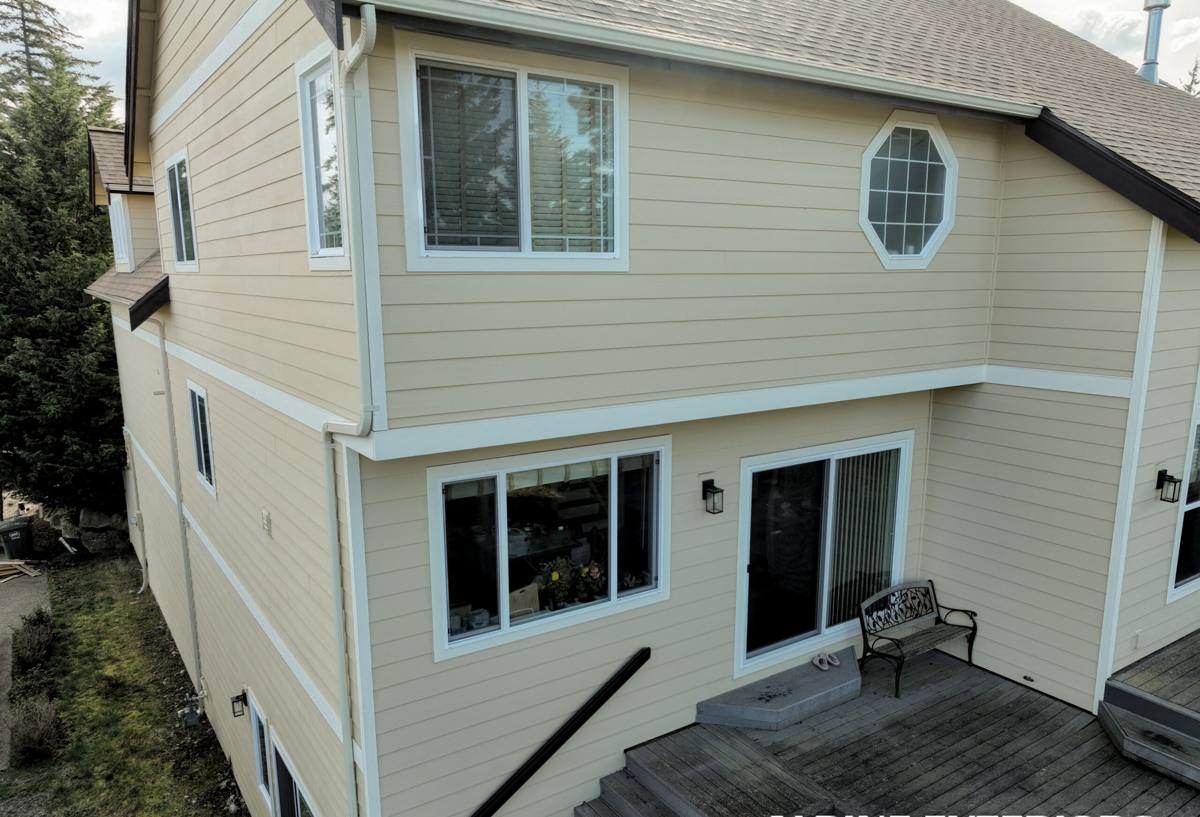
What Salt Air and Moisture Do to a Deck Over Time
Before talking about solutions, it helps to understand the failure pattern. Decks near the water don't usually fail all at once — they fail in a predictable sequence, and knowing that sequence is what lets a contractor build around it.
Fasteners and Hardware
Standard galvanized screws and nails are built for general construction, not sustained salt exposure. Over a few seasons near the water, the zinc coating on lower-grade hardware breaks down faster than it would inland, and once that happens the fastener starts to corrode from the outside in. You'll see it first as rust bleeding out around screw heads on the deck surface — a cosmetic problem at first, but a sign that the fastener itself is weakening underneath.
Framing and the Ledger Board
The ledger board — the piece that attaches the deck to the house — is the single most important structural connection on any deck, and it's also the part most exposed to wind-driven rain in a location like Ship Harbor. If the flashing behind it isn't installed correctly, water gets trapped between the ledger and the house siding, and that moisture doesn't dry out quickly in our climate. That's how rot starts in a place you can't see it until the damage is already significant.
Decking Surface Wear
Constant damp shade is exactly what moss and algae need to establish themselves, and a deck surface that stays wet longer than it should — because of poor board spacing, poor drainage, or the wrong material choice — becomes a maintenance headache and a slip hazard within a couple of years.
Choosing the Right Decking Material for Ship Harbor
There's no single "best" decking material for every home — it depends on your budget, how much maintenance you're willing to do, and how close you are to direct salt spray versus general marine humidity. Here's how the common options actually perform in this specific environment.
| Material | How It Handles Salt Air & Moisture | Maintenance Burden |
|---|---|---|
| Pressure-treated wood | Handles moisture well when properly sealed; needs reapplication of sealant on a regular schedule to keep performing | Higher — annual cleaning and periodic sealing |
| Cedar | Naturally moisture- and insect-resistant, but still needs finish maintenance to prevent graying and moss growth in shaded spots | Moderate to high |
| Composite decking | Doesn't absorb moisture or rot, resists moss better than wood but still needs surface cleaning to prevent algae film | Lower — periodic washing |
| PVC / capped polymer | Fully sealed surface, best resistance to moisture and staining, least susceptible to moss taking hold | Lowest |
We'll walk through these trade-offs honestly during an estimate. A composite or capped polymer product usually costs more upfront but saves on the recurring maintenance that a shaded, damp lot near Ship Harbor will demand from a wood deck. If you want the look and feel of real wood and are prepared to stay on top of sealing, we can build that correctly too — the framing underneath matters more than the surface material either way.
Framing and Structure: Where Deck Problems Actually Start
Most deck failures we get called out to fix started underneath the visible surface, not on top of it. For a Ship Harbor build, we pay particular attention to a few structural details:
- Ledger flashing: proper metal flashing and a waterproof membrane behind the ledger board, installed to shed water away from the house framing rather than trap it
- Joist protection: a moisture barrier tape on top of each joist so screws don't create an entry point for water into the wood grain
- Post footings: footings set below frost depth and sized for our soil conditions, so the structure doesn't shift as the ground freezes and thaws through a wet Skagit County winter
- Airflow underneath: enough clearance and ventilation below the deck so the framing can actually dry out between rain events instead of sitting damp for weeks
None of this is visible once the deck is finished, which is exactly why it's the part that gets shortcut on lower-bid jobs. It's also the part that determines whether your deck is still solid in fifteen years or needs structural repair in five.
Fasteners and Hardware That Actually Hold Up
Given how much fastener corrosion drives visible deck damage near the water, we use stainless steel or high-grade coated fasteners rated for coastal exposure on the connections that matter most — structural hardware, ledger bolts, and joist hangers. It costs more than standard hardware, but replacing a rusted-out joist hanger means tearing into a finished deck, so it's not a place worth cutting corners for a short-term savings.
The same logic applies to railings. Metal railing components and their mounting hardware take direct exposure to salt air, and we spec hardware and finishes for that exposure rather than treating a Ship Harbor railing the same as one built twenty miles inland.
Designing for Moss, Algae, and Drainage
Skagit County's rain pattern — long stretches of steady moisture rather than short heavy downpours — is what makes moss such a persistent problem on decks here. A few design choices make a real difference:
- Proper board spacing so water drains through rather than pooling on the surface
- Deck orientation and any structure above it accounted for, since shaded areas hold moisture and grow moss far longer than sun-exposed sections
- Grooved or textured decking surfaces in shaded zones, which resist the slick moss film better than smooth-faced boards
- A drainage plan for the ground underneath the deck, so water isn't sitting against footings and framing long-term
We also talk with homeowners about a realistic cleaning schedule. Even the best-designed deck near Ship Harbor benefits from a periodic wash to knock back algae before it gets a foothold — it's a lot easier to prevent than to remove once it's established.
Our Deck Building Process
Every deck we build follows the same sequence, adjusted for your specific lot and layout:
- On-site assessment: we look at sun exposure, drainage, existing structure condition, and how close the build site is to direct wind and salt exposure
- Design and material walkthrough: honest discussion of decking material options, layout, and railing style based on your budget and maintenance preference
- Permitting: we handle the permit application and inspection scheduling required for the City of Anacortes or Skagit County, depending on your property
- Demolition of the old structure, if applicable: removed and hauled off before new framing begins
- Framing: footings, posts, ledger attachment with proper flashing, and joist layout built to code and to the moisture-management details covered above
- Decking, railing, and finish work: installed with fastener spacing and hardware appropriate to the material chosen
- Final walkthrough: we go over the finished deck with you, including a straightforward maintenance plan for your specific material
Cost Factors for a Ship Harbor Deck Project
Every deck is priced around your specific footprint, material choice, and site conditions, so we won't quote a number without seeing the property. What we can tell you is what actually moves the price up or down:
| Factor | Why It Affects Cost |
|---|---|
| Decking material | Pressure-treated wood is the lowest upfront cost; composite and PVC cost more per square foot but reduce long-term maintenance |
| Deck height and footing depth | Taller decks and deeper footings required for our soil and frost conditions add labor and material |
| Site access | Tight side yards or sloped lots near the water can slow excavation and material staging |
| Railing style | Cable, glass, or custom metal railings cost more than standard wood or composite spindles |
| Demolition | Removing an existing deck, especially one with rot damage to deal with, adds time before the new build starts |
| Permitting requirements | Deck height, proximity to property lines, and attachment to the house can all affect permit scope |
Why Hire a Crew That Already Works Ship Harbor
A deck built by a crew unfamiliar with this stretch of coastline is a deck built on assumptions — assumptions about how fast fasteners corrode, how long moisture sits in shaded framing, and how much moss growth to design around. We work on homes in and around Anacortes regularly, which means the flashing details, fastener grades, and material recommendations on this page aren't theoretical to us — they're what we've found actually holds up against this specific combination of salt air, rain, and moss season, and what tends to fail when it's skipped.
That local familiarity also means we know the permitting process for both the City of Anacortes and unincorporated Skagit County, so there are no surprises partway through your project.
If you're planning a new deck or replacing one that's showing its age near Ship Harbor, we're happy to come take a look and talk through your options. The estimate is free, there's no pressure, and you'll get a straight answer about what your specific site needs — just fill out the form below to get started.