 Anacortes Exterior
 Why Board & Batten Fits Ship Harbor Homes
Ship Harbor sits close enough to the water that the character of the neighborhood — a mix of craftsman cottages, newer coastal builds, and updated mid-century homes — leans naturally toward a siding profile with clean vertical lines and visible shadow lines. Board and batten delivers that look: wide flat panels with narrow battens covering each seam, giving a home a tailored, slightly nautical feel that fits waterfront and near-waterfront Anacortes properties without looking fussy or overdone.
But board and batten isn't just a style choice here. In a location exposed to salt-laden wind off the water, sideways rain, and long stretches of damp, shaded weather, the siding profile and the material behind it either work with the climate or fight it for the next twenty years. We install board and batten in Ship Harbor as a system — layout, moisture barrier, fasteners, and material all chosen for this specific setting — not as a look applied over whatever's cheapest that week.
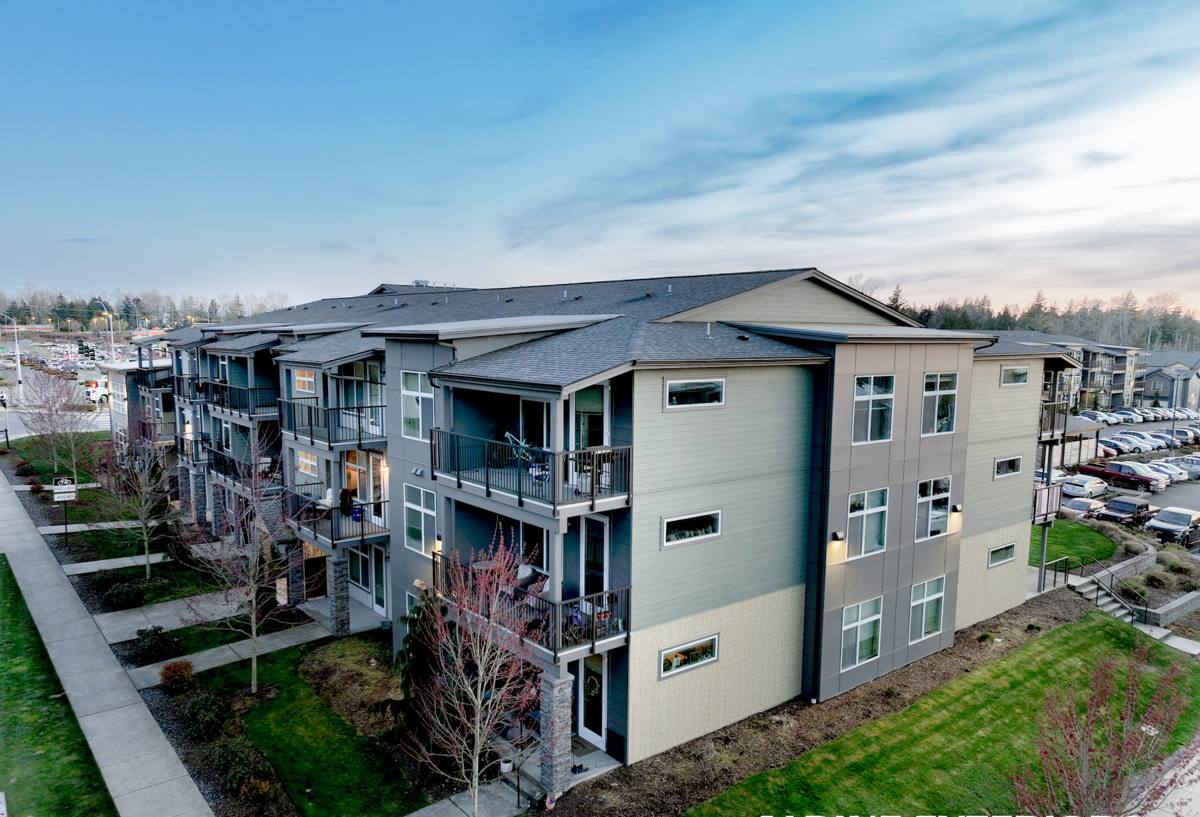
What Ship Harbor's Climate Demands From Board & Batten Siding
Every coastal Skagit County property deals with some combination of salt exposure, wind-driven rain, and moss growth. Ship Harbor's proximity to the water and its mix of open and tree-shaded lots means a siding system here has to handle all three at once, not just one.
Salt Air and Fastener Corrosion
Salt-laden air carries moisture and chloride further inland than most homeowners expect, and it settles into anything metal on the exterior of a house — fasteners, flashing, trim edges. Standard fasteners can start corroding at the head within a few years in a spot like this, and once a fastener corrodes it can telegraph a rust streak straight through the siding face or lose its grip entirely. Board and batten has more exposed fastener runs than lap siding because of the batten strips, so getting fastener spec right matters more here, not less.
Driving Rain and Water Management
Wind off the water pushes rain sideways into a wall rather than letting it fall straight down and shed off. Vertical board and batten channels water down the face of the panel, which is good, but every seam, corner, and penetration is a place water can get pushed backward under wind pressure if it isn't flashed correctly. A board and batten wall that looks fine from the driveway can still be taking on water behind the panel if the underlying moisture barrier and flashing details were rushed.
Moss Season and Shaded Walls
Anacortes gets a long stretch of the year where north- and east-facing walls under tree cover barely dry out between rain events. Moss and algae take hold on any siding surface that stays damp and shaded, and on some materials that growth also holds moisture against the substrate underneath — which is a slower, quieter problem than a leak, but a real one over time. The siding surface itself, not just the caulking and flashing, has to be able to handle sitting damp for days at a stretch without breaking down.
Board & Batten Done Right: What a Correct Installation Involves
Board and batten looks simple from the street — flat panels, vertical battens — but the installation has more failure points than lap siding if it's rushed. Here's what we consider non-negotiable on every Ship Harbor board and batten job.
Panel and Batten Layout
Panel width, batten spacing, and starter strip placement all get planned against the actual wall dimensions before the first piece goes up, so you don't end up with an awkward sliver panel at a corner or a batten that lands off-rhythm at a window. This is a design step as much as a technical one — it's what makes the finished wall look intentional instead of pieced together.
Moisture Barrier and Rainscreen
Behind every panel is a weather-resistive barrier, properly lapped shingle-style so water sheds outward and down, never up and in. On most Ship Harbor jobs we install a rainscreen gap behind the siding — a thin drainage space that lets any moisture that does get behind the panel drain and dry out instead of sitting against the wall sheathing. Given how much wind-driven rain this location sees, that drainage gap is one of the cheapest insurance policies available on the whole project.
Fasteners and Flashing
We fasten with corrosion-resistant nails or screws rated for coastal exposure, sized and spaced to the manufacturer's specification rather than "whatever's on the truck." Every window, door, and roof-to-wall intersection gets proper metal flashing integrated with the barrier — not caulk used as a substitute for flashing, which is a shortcut that fails quietly and expensively.
Why We Only Install James Hardie for Board & Batten
We install James Hardie fiber cement exclusively — we don't offer vinyl board and batten, LP SmartSide, primed spruce, cedar, or other fiber cement brands. That's a deliberate standard, not a sales pitch, and it's worth explaining honestly rather than just asserting.
Vinyl board and batten is inexpensive and low-maintenance in mild climates, but it's a thin plastic product that expands and contracts significantly with temperature swings, and wind-driven rain can find its way behind loosely fastened panels over time. In a location that sees real wind off the water, that's a real trade-off, not a hypothetical one.
Primed wood and cedar board and batten can look beautiful, but wood is organic material in a climate that stays damp for months at a stretch — it needs a maintenance commitment (recoating, caulk renewal, moisture monitoring) that most homeowners underestimate when they price the project. Cedar in particular is prone to cupping and checking when it cycles between wet and dry repeatedly, which this climate does constantly.
James Hardie fiber cement is non-combustible, dimensionally stable across temperature and moisture swings, and comes with a factory-applied ColorPlus finish that's baked on rather than field-sprayed, so the color holds up to UV and salt exposure far longer than a site-applied paint job typically does. Hardie's HZ product lines are engineered for specific climate zones, which matters in a place that combines marine humidity, wind, and moss pressure in one package. It's the product we're willing to put our name behind on every Ship Harbor home we touch.
Comparing Board & Batten Material Options
| Material | How It Handles Salt Air & Wind-Driven Rain | Maintenance Over Time | Typical Lifespan Here |
|---|---|---|---|
| Vinyl board and batten | Can flex and gap under wind pressure; panels can crack in cold snaps | Low upkeep, but panels aren't repairable — full sections get replaced | 15-25 years, shorter with direct salt exposure |
| Primed wood / cedar | Absorbs moisture at end grain and seams; needs a tight paint film to stay protected | Recoating and caulk renewal every few years; moss and mildew control | Highly dependent on maintenance follow-through |
| James Hardie fiber cement | Dimensionally stable; factory finish resists salt and UV breakdown | Occasional wash-down; ColorPlus finish reduces repainting needs | Decades when installed and flashed to spec |
Our Process for Ship Harbor Board & Batten Projects
Every project starts with a walk-around of the home, not a form estimate over the phone. We look at wall orientation relative to the water and prevailing wind, tree cover and shade patterns that drive moss growth, existing moisture damage around windows and trim, and how the current siding has held up. That tells us where extra flashing attention or rainscreen priority is needed before we ever talk numbers.
From there we handle removal of the old siding, inspection and repair of the sheathing underneath (a step that gets skipped by crews trying to move fast — we don't skip it), installation of the weather barrier and rainscreen, and then the Hardie board and batten panels themselves with corrosion-resistant fastening and full flashing at every penetration. We clean up daily and walk the finished job with the homeowner before calling it done.
Signs Your Current Siding Is Struggling
- Dark streaking or green growth concentrated on shaded or north-facing walls
- Soft spots, bubbling, or visible warping around window and door trim
- Rust stains bleeding from fastener heads or metal flashing
- Caulk lines that have shrunk, cracked, or pulled away from seams
- Peeling or chalking paint that keeps returning within a year or two of repainting
- Visible gaps or movement in panels during windy weather
Any one of these is worth a look. Several at once usually means moisture has been getting behind the siding for a while, which is worth catching before it reaches the sheathing.
Why Local Experience in Ship Harbor Matters
A crew that's worked this specific stretch of Anacortes knows which walls take the worst of the wind off the water, which lots hold shade and moisture longest into the afternoon, and how the moss season here actually behaves compared to a drier inland Skagit County property. That's not something you get from a general contractor pricing a job off a satellite photo. It shows up in small decisions — where we add extra flashing, how we detail a corner, which side of the house gets prioritized for rainscreen — that don't show up on an estimate sheet but do show up in how the siding performs ten years from now.
If you're weighing a board and batten update for a Ship Harbor home, we're happy to walk the property with you and give you a straight, no-pressure estimate — what we'd recommend, what it would cost, and why. There's a form below to get that conversation started.