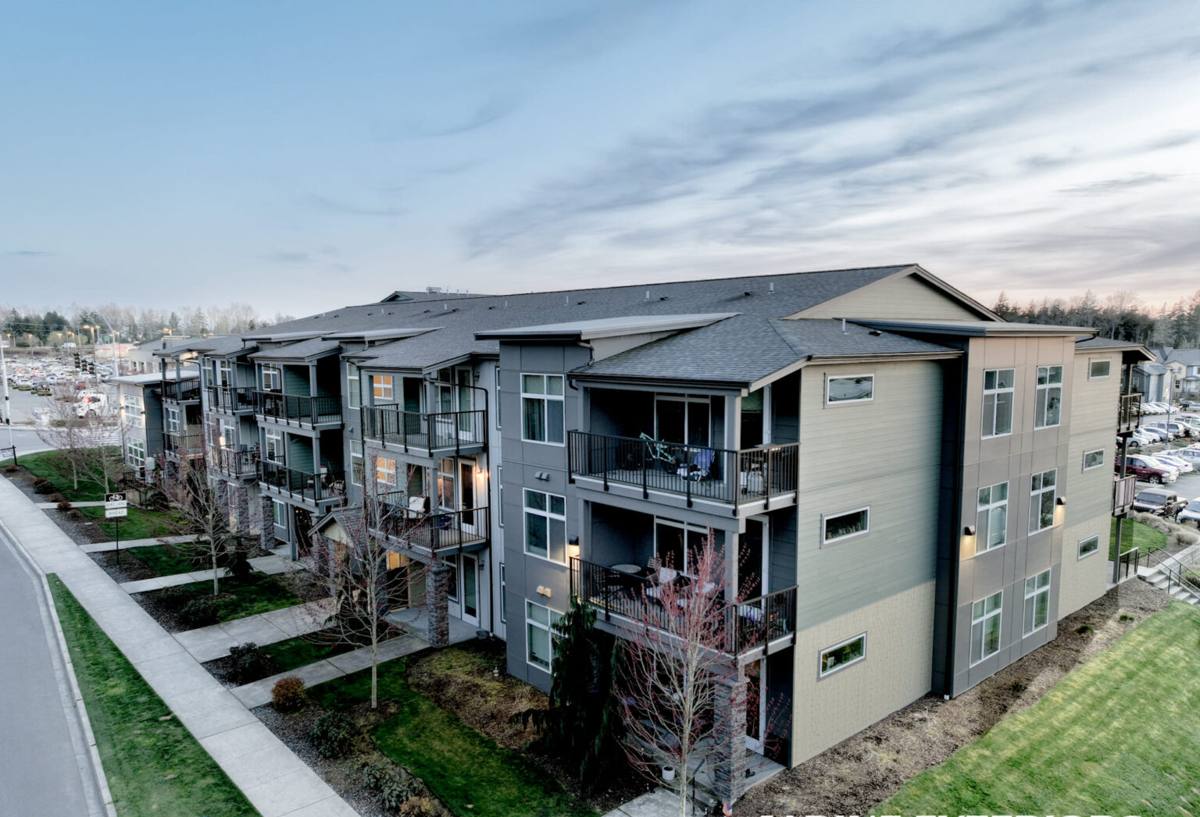
 Anacortes Exterior
 Sedro-Woolley sits where the flat farmland of the Skagit Valley starts climbing into the foothills of the North Cascades. That position gives the town a specific mix of weather that's harder on windows than it looks on a calm day: driving rain that gets funneled and intensified as storm systems push up the valley, a long stretch of the year damp enough to keep moss and mildew going on shaded siding and trim, and enough proximity to the foothills to bring more freeze-thaw cycling through the winter than towns closer to Puget Sound. Windows sit at the exact spot where all three of those forces concentrate — they're cut into the wall, they carry seams and hardware, and they're the first thing to show a draft, a fogged pane, or a soft sill when the installation underneath wasn't done right.
This page is about window installation specifically for Sedro-Woolley homes — what the local climate asks of a window job, what a correct installation actually involves, and how our process handles it. If you're comparing us to a company that treats every town in Skagit County the same way, that's exactly the gap we're trying to close.
What Sedro-Woolley's Climate Actually Does to Windows
Driving Rain and Valley Moisture
Weather moving in off Puget Sound often gets pushed and compressed as it travels up the Skagit Valley, and Sedro-Woolley catches a real share of that intensified, wind-driven rain. Rain that's being forced sideways doesn't just run off a window the way it would in calmer weather — it gets pressed into the gap between the window unit and the rough opening, into trim joints, and into any spot where flashing was skipped or sealant was asked to do a job it was never designed for. Add in the valley's tendency to hold humidity longer after a storm than more open, breezier parts of the county, and window openings here rarely get a long, dry stretch to fully shed whatever moisture worked its way in.
A Long Moss and Mildew Season
Mild temperatures, filtered shade from surrounding trees, and near-constant dampness add up to a moss and mildew season that runs most of the year in this part of Skagit County. Window sills, trim, and the bottom corners of frames on shaded or north-facing walls are common places we see growth take hold first. Moss and mildew don't just look bad — they hold moisture directly against wood trim and painted surfaces, which accelerates rot in exactly the spots a window depends on for support and drainage.
Freeze-Thaw From the Foothills
Sedro-Woolley's proximity to the foothills means slightly cooler overnight temperatures and more freeze-thaw cycling in winter than towns sitting right on the Sound. Water that's worked its way into a wood sill, a gap in flashing, or a compromised sealant joint expands when it freezes and contracts when it thaws, and repeated cycles turn a small hidden leak into a structural problem — cracked trim, swollen sills, or a frame that's no longer square — faster than a steady, mild climate would.
Salt Air, at a Lower but Real Level
Sedro-Woolley isn't a coastal town, and it doesn't take the direct salt exposure that Anacortes and other water-facing parts of Skagit County deal with. But salt-laden air off Puget Sound still reaches inland on windier weather patterns, adding a low, steady corrosion load to window hardware, screws, and exposed metal flashing over years of exposure. It's a smaller factor here than on a waterfront property, but it's still part of why we don't treat window installation as identical from one end of the county to the other.
What Sedro-Woolley's Housing Stock Means for Window Work
Sedro-Woolley has a mix of older farmhouses and rural homes built well before modern window standards, alongside newer construction closer to town. That mix matters for window projects in a few practical ways:
- Older homes often have original wood or early aluminum-frame windows with single-pane glass, minimal weatherstripping, and rough openings that don't match any current standard size
- Additions and outbuildings converted to living space frequently have openings that were never properly flashed or insulated in the first place
- Rural and tree-shaded lots common around Sedro-Woolley tend to hold moisture and shade longer than open, in-town properties, which changes how urgently a given window's condition should be taken
- Newer construction is more likely to need matched sightlines for additions or straightforward full-unit replacement rather than structural rework
None of that is unusual for us — it's routine work in this part of Skagit County. But it does mean the right approach for a given house depends on what's actually behind the trim, not just the window's age.
Retrofit vs. Full-Frame Replacement
One of the first decisions on almost every Sedro-Woolley window project is whether the existing frame stays or goes. Both approaches have a real place, and the right call depends on what we find once we look closely at the opening.
| Factor | Retrofit (Pocket) Replacement | Full-Frame Replacement |
|---|---|---|
| What it involves | New window installed inside the existing frame, which stays in place | Old frame removed down to the rough opening; new unit installed from scratch |
| Best fit | Existing frame is sound, square, and free of rot or water damage | Frame shows rot, water staining, or the opening needs to change size or shape |
| Access to sheathing | Limited — hidden moisture damage behind the old frame can't be checked | Full access to check and repair sheathing, framing, and flashing underneath |
| Disruption and cost | Lower — faster install, less exterior trim disturbance | Higher — more labor, but the only real option when the opening itself is compromised |
| Long-term risk in this climate | Fine when the frame is genuinely sound; risky if moisture is already hidden behind it | Lowest risk — starts clean with new flashing and a verified dry opening |
Given Sedro-Woolley's rain load and moss exposure, we don't take a retrofit shortcut on a window that shows any sign of past water intrusion — soft trim, staining, or a musty smell at the sill. We'd rather open it up and confirm what's actually there than install a new window over a problem that's just going to keep working.
What a Correct Window Installation Involves
Inspection and Measurement First
Before we quote anything, we look at the existing window, the trim around it, and — where possible — get a sense of what's happening at the sill and header. On Sedro-Woolley homes we pay particular attention to shaded, tree-adjacent walls and any window that's been showing condensation or drafts, since those are usually the earliest signals of a bigger moisture problem.
Checking the Rough Opening
Once the old window is out, we check the sheathing, framing, and any existing flashing before anything new goes in. Rotted wood or water-damaged framing gets repaired, not covered over — that's the single most important step in the whole job, and it's the one that gets skipped most often on rushed or low-bid installs.
Sill Pan Flashing and Water Management
A correctly installed window directs any water that gets past the exterior cladding back out, not down into the wall. That starts with a sill pan at the bottom of the opening, proper lapping of flashing tape with the house wrap above and below the window, and a drainage path that doesn't rely on caulk as the only line of defense. This is the detail that matters most in a driving-rain climate like Sedro-Woolley's, and it's where we spend the most careful attention on every install.
Level, Plumb, and Properly Shimmed
A window that isn't level and plumb will bind, won't seal evenly, and puts uneven stress on hardware and glass seals over time — a problem that shows up faster once freeze-thaw cycling starts working on it each winter. Correct shimming at the right load points keeps the frame square without distorting it.
Insulation Without Overfilling
The gap between a new window and the rough opening needs insulation, but overfilling with expanding foam can bow the frame inward and cause the window to bind or seal poorly. We use low-expansion foam or backer rod and sealant sized to the actual gap, not a shortcut that trades one problem for another.
Interior and Exterior Finish
Once the unit is set and insulated, trim goes back on, exterior caulking gets applied at the right joints — not as a substitute for flashing — and interior casing is finished to match the rest of the room.
Frame Materials and What They Mean for This Climate
We'll walk through the honest trade-offs for your specific project rather than pushing one frame material for every job. In general, here's how the common options hold up in a valley climate with sustained moisture and real freeze-thaw cycling:
| Frame Material | Moisture Behavior | Maintenance | Notes for Sedro-Woolley |
|---|---|---|---|
| Vinyl | Doesn't absorb moisture or rot; can flex slightly with temperature swings | Low — no painting or sealing required | A practical, low-upkeep default for most replacement projects here |
| Fiberglass | Dimensionally stable across temperature swings; strong moisture resistance | Low | Handles freeze-thaw cycling with less expansion and contraction than vinyl |
| Wood-clad (exterior-clad, wood interior) | Exterior cladding protects the wood core; interior wood needs a dry, controlled environment | Moderate — cladding is low-maintenance, but the interior wood finish still needs periodic attention | Works well when the interior look matters and the exterior is properly detailed and flashed |
| Bare wood | Absorbs and holds moisture directly; most vulnerable in sustained damp conditions | High — regular repainting and sealing needed | Requires real maintenance discipline to hold up through this valley's wet season |
Glass Packages: What the Numbers Mean
Modern windows are rated by U-factor (how much heat escapes — lower is better) and often include low-E coatings and argon gas fill between panes to improve insulation. In a climate with real winter cold snaps and freeze-thaw cycling, a good glass package also helps reduce interior condensation, which is worth asking about directly if you've had fogging or moisture buildup on the inside of your current windows during cold, damp stretches.
Our Window Installation Process in Sedro-Woolley
- Walk the exterior and interior, checking existing windows, trim condition, and any signs of past water intrusion
- Measure each opening and discuss retrofit vs. full-frame replacement based on what we find
- Review frame material and glass package options honestly, based on your home and budget — not a one-size answer
- Remove old units and inspect the rough opening, repairing any rotted sheathing or framing before continuing
- Install sill pan flashing and integrate it correctly with the house wrap and siding above and below the opening
- Set the new window level, plumb, and properly shimmed; insulate the gap without overfilling
- Finish exterior sealant and trim, then interior casing to match the room
- Walk the completed job with you, and go over basic care — mainly how to spot early signs of moss regrowth or sealant wear
Signs Your Current Windows Are Losing the Battle
- Fogging or moisture trapped between panes on double or triple-glazed units — a sign the seal has failed
- Soft or spongy wood at the sill or lower corners of the frame
- Windows that are hard to open, close, or lock, or that no longer sit flush
- Visible gaps, peeling paint, or cracked caulk around the frame
- Noticeable drafts near the window even when it's fully closed
- Condensation building up on interior glass during cold, damp weather
- Rising heating bills that track with a specific drafty room
Cost Factors for a Sedro-Woolley Window Project
We don't post fixed prices because every home and opening is different, but the variables that consistently move the number are:
- Retrofit vs. full-frame replacement, and whether rot repair is needed once the old unit comes out
- Number of windows and whether they're being done in one project or phased over time
- Frame material and glass package selected
- Non-standard sizes or shapes, which are common in Sedro-Woolley's older farmhouses
- Site access, including tree cover, driveway space, and staging room, which varies on the more rural lots common around town
- Whether siding, trim, or flashing repair around the opening is bundled into the same project
Windows Are Part of a Connected Exterior
Window flashing and its integration with the siding plane is one of the most common places we find hidden moisture intrusion during inspections. A window installed correctly on its own can still fail if the siding, trim, or roof drainage around it isn't managed the same way. We handle roofing, siding, windows, and decks so a Sedro-Woolley home's exterior gets treated as one connected system rather than a series of unrelated repairs.
Why Local Experience Matters for This Kind of Work
Manufacturer installation instructions are written for average, standard conditions — they don't know your window is on a shaded, north-facing wall in a valley that holds moisture longer than most of Skagit County, or that it'll see more freeze-thaw cycles than a home closer to the Sound. A crew that installs windows in Sedro-Woolley regularly knows which walls dry out slowest, where moss and rot tend to start first, and which manufacturer details are worth extra time here even when they'd be optional somewhere drier and calmer.
That local pattern recognition shows up in decisions that don't make it into a sales pitch — how much lap a flashing course needs given this valley's rain intensity, when a sill needs extra attention versus a standard install, which openings are worth opening up fully rather than retrofitting. Those calls are what decide whether a window installation is still performing cleanly in twenty years or showing drafts and soft trim in five.
It also means accountability. A local company is easy to find if a question comes up after the job is finished, and has a reputation in this community worth protecting.
Get a Free, No-Pressure Estimate
If your Sedro-Woolley home has windows that are drafty, fogged, hard to operate, or just old enough that you're planning ahead, it's worth having someone look at the actual openings before you start pricing units. We offer free, no-pressure estimates for window installation and replacement in Sedro-Woolley and the surrounding Skagit County area — use the form below to get a time on the schedule.