 Anacortes Exterior
 Fidalgo Island's Roofs Take a Different Kind of Beating
Fidalgo Island sits with saltwater close on nearly every side, and that changes what a roof deals with year to year compared to homes further inland in Skagit County. Salt-laden air corrodes exposed metal faster than fresh-air environments do — nails, flashing, vent boots, and gutter hardware all age quicker here. Add in driving, wind-pushed rain that comes at roofs sideways instead of straight down, and you get water intrusion at points a roof in a calmer climate would never test: the uphill side of chimneys, the edges of skylights, the seams where two roof planes meet.
Then there's moss. Anacortes and the surrounding island get a long, mild, wet season that's close to ideal for moss growth on north-facing and shaded roof slopes. Moss isn't just cosmetic — it holds moisture against shingles, lifts edges as it grows, and works its way under tabs and flashing over time. A roof here can look intact from the ground and still have a handful of small, developing problems that only show up as a stain on a ceiling months later.
None of this means Fidalgo Island roofs fail faster than average. It means repairs have to account for the specific way this climate attacks a roof, not just patch the symptom that's visible today.
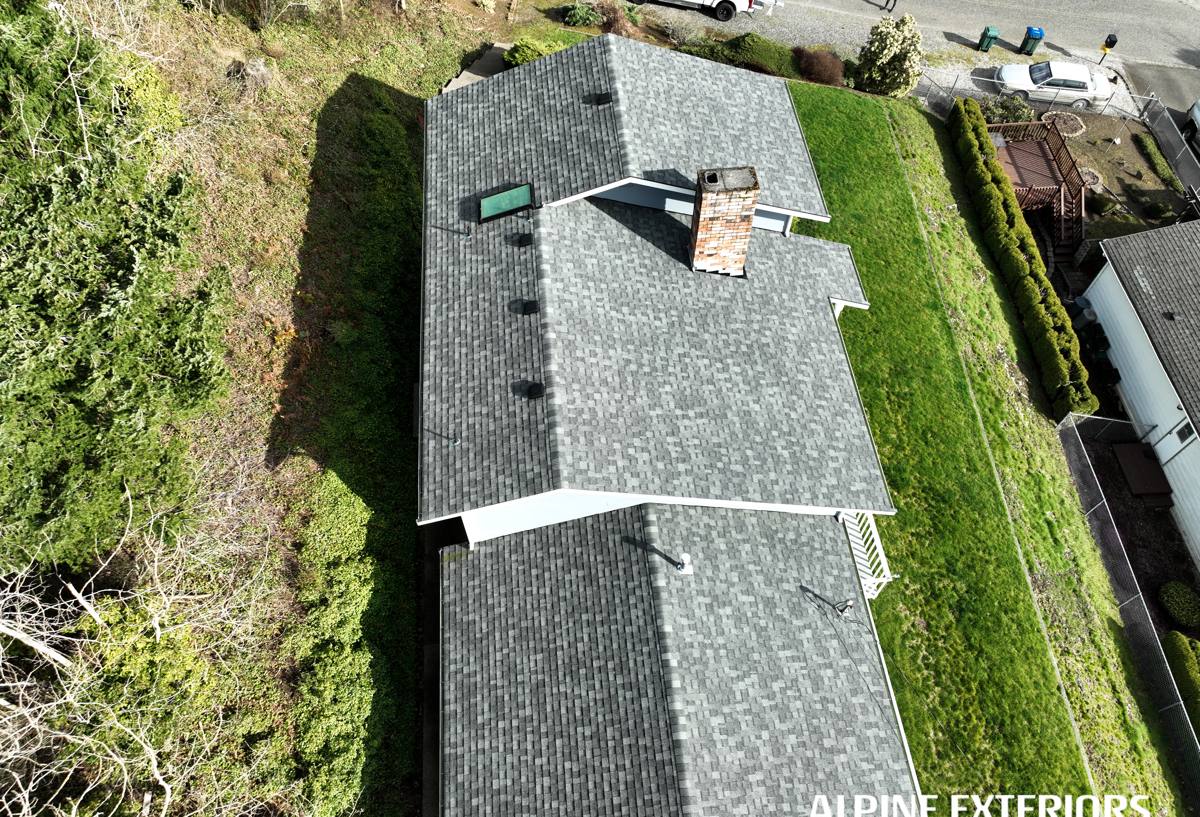
Signs a Fidalgo Island Roof Needs Repair
Most roof problems give warning signs well before a leak shows up inside the house. Homeowners who catch these early usually end up with a smaller, cheaper repair.
- Granules collecting in gutters or at the base of downspouts, which signals shingle wear
- Curling, cracked, or lifted shingle edges, especially on the side of the roof that faces prevailing wind and rain
- Rusted or lifted flashing around chimneys, skylights, and vent pipes
- Dark streaking or moss growth concentrated on shaded, north-facing slopes
- Sagging sections along the roofline or at valleys where two slopes meet
- Daylight visible through the roof deck from inside an attic
- Water stains on interior ceilings or upper walls, particularly after a windy storm
- Loose or missing fasteners on ridge caps and roof edges
Any one of these on its own might be minor. Several showing up together usually means the roof has been dealing with moisture longer than it looks.
What Goes Into a Correct Repair
Diagnosing the Real Problem First
The most common mistake in roof repair isn't bad workmanship — it's fixing the wrong spot. Water travels. A stain on a bedroom ceiling can trace back to a flashing failure ten feet away, following a rafter or the underside of the decking before it drips down. A correct repair starts with tracing the water back to its actual entry point, not just patching where the damage is visible.
Flashing Is the Most Common Failure Point
On Fidalgo Island roofs, flashing failures cause more leaks than worn-out shingle fields do. Flashing is the metal that seals transitions — where a roof meets a chimney, a wall, a skylight curb, or a valley. It's a small percentage of the total roof area but responsible for a disproportionate share of leaks, because it's the part most exposed to wind-driven rain and the most likely to corrode in a salt-air environment. A repair that replaces a shingle but ignores failing flashing underneath it will leak again.
Matching Materials, Not Just Covering the Hole
A patch that doesn't match the surrounding roof in material, profile, and fastening method creates a new weak point instead of fixing the old one. Shingles need to match in type and, where possible, color and age so they weather together. Underlayment needs to tie into the existing layer correctly, not just get stapled over it. Fasteners should be corrosion-resistant, not whatever was on hand, given how much faster standard steel corrodes this close to saltwater.
Common Repairs on Fidalgo Island Homes
Every roof and every leak is a little different, but most repair calls on the island fall into a handful of categories.
| Repair Type | Typical Cause | What's Involved |
|---|---|---|
| Flashing repair or replacement | Corrosion, poor original installation, storm impact | Remove and reset flashing with proper step and counter-flashing technique |
| Shingle replacement | Wind lift, age, granule loss, storm debris | Remove damaged shingles, inspect underlayment, install matching replacement |
| Valley repair | High water volume concentration, worn valley liner | Replace valley material, confirm proper water shedding path |
| Skylight and vent boot resealing | Cracked rubber boots, failed sealant, age | Replace boot or reseal flashing collar, check surrounding shingles |
| Moss-related deck and shingle repair | Sustained moisture from moss growth | Remove moss, assess and repair or replace affected shingles and decking |
| Ridge and edge repair | Wind uplift, loose fasteners | Re-fasten or replace ridge cap and roof edge metal |
Repair or Replace? How to Think It Through
Not every problem roof needs a full replacement, and not every leak is worth chasing with another patch. The honest answer depends on a few factors we walk through with homeowners during an inspection.
| Factor | Leans Toward Repair | Leans Toward Replacement |
|---|---|---|
| Roof age | Under two-thirds of expected material lifespan | Near or past expected lifespan |
| Extent of damage | Isolated to one area (flashing, one slope, a valley) | Widespread wear across multiple slopes |
| Deck condition | Solid, no rot or soft spots | Soft decking or repeated rot found in multiple areas |
| Repair history | First or second repair on this roof | Repeated repairs to the same or nearby areas |
| Material availability | Matching material still findable | Original material discontinued or badly mismatched |
We'll always tell you plainly which side of that line your roof falls on, including when a repair is genuinely the right call and a full replacement would be spending more than the situation calls for.
Moss and Debris: Managing a Long Wet Season
Moss control isn't a one-time fix in this climate — it's ongoing maintenance. During a repair visit, we look at whether moss growth has already caused damage (lifted shingles, trapped moisture, early granule loss) and whether the roof's exposure to shade and moisture makes regrowth likely. Removing moss without addressing why it's growing there — usually overhanging branches, persistent shade, or a north-facing slope that stays damp longer than the rest of the roof — just delays the next visit. Where it makes sense, we'll point out simple steps like trimming back overhanging limbs or clearing debris from valleys and gutters more often, since a roof that drains and dries out between storms holds up far better than one that stays damp.
Materials That Actually Hold Up in a Marine Environment
Standard hardware ages faster within a few miles of saltwater, and that's a real factor in how we approach repairs here, not a sales pitch for premium products. Corrosion-resistant fasteners cost more than basic steel ones, but a nail or screw that rusts and loosens within a few years turns a clean repair into a repeat service call. The same logic applies to flashing metal and sealants — we choose materials suited to sustained moisture and salt exposure because that's what actually holds up on this island, not because it's the fanciest option available. When a repair calls for a material trade-off — cost versus longevity, appearance versus maintenance — we'll explain the trade-off honestly rather than just picking for you.
Our Roof Repair Process
- Inspection: We get on or above the roof, not just look from the ground, and trace visible damage back to its actual source.
- Diagnosis and explanation: We walk you through what we found, in plain terms, including photos where useful, before any work starts.
- Written scope and estimate: You know what's being repaired, with what materials, and what it costs before we begin.
- Repair work: We complete the fix, matching materials and using fasteners and flashing suited to the local climate.
- Cleanup and check: Debris and old materials are removed, and the repair area is checked for proper water shedding before we leave.
We don't upsell a full re-roof during a repair call unless the roof genuinely needs one, and we'll say so directly if it doesn't.
Why Local Experience on Fidalgo Island Matters
A roofing crew that regularly works Fidalgo Island homes already knows which slopes tend to hold moss, which flashing details fail first in salt air, and how storms coming off the water tend to hit a roof compared to inland wind patterns. That familiarity shortens the diagnostic part of a repair call and reduces the odds of missing a related issue nearby. It also means we're not guessing at what materials and fastening methods actually hold up here — we're basing it on what we see wear out, and what doesn't, on roofs like yours across Anacortes and the surrounding Skagit County area.
If you're noticing a leak, missing shingles, or moss creeping across a slope of your roof, it's worth getting a second set of eyes on it before it turns into a bigger repair. We offer free, no-pressure estimates for Fidalgo Island homeowners — use the form below to get a time on the calendar.