 Anacortes Exterior
 Roofing in Old Town Anacortes: A Different Set of Conditions
Old Town Anacortes sits close to the water, which means its roofs live a harder life than roofs a few miles inland in Skagit County. Salt-laden air off the sound accelerates corrosion on exposed metal fasteners and flashing. Driving rain, pushed sideways by wind off the water, finds its way into laps and seams that would stay dry in a calmer location. And the long, damp moss season here — often running from late fall through spring — keeps shaded, north-facing roof slopes wet for weeks at a time. None of this is unusual for the area, but it does mean a roof replacement in Old Town needs to be planned around these specific stresses rather than treated like a generic reroof.
Many homes in this part of Anacortes are also older, meaning original framing, older ventilation setups, and decking that has seen decades of moisture cycling. A correct roof replacement here isn't just stripping old shingles and nailing down new ones — it's an opportunity to fix the underlying issues that caused the last roof to fail early.
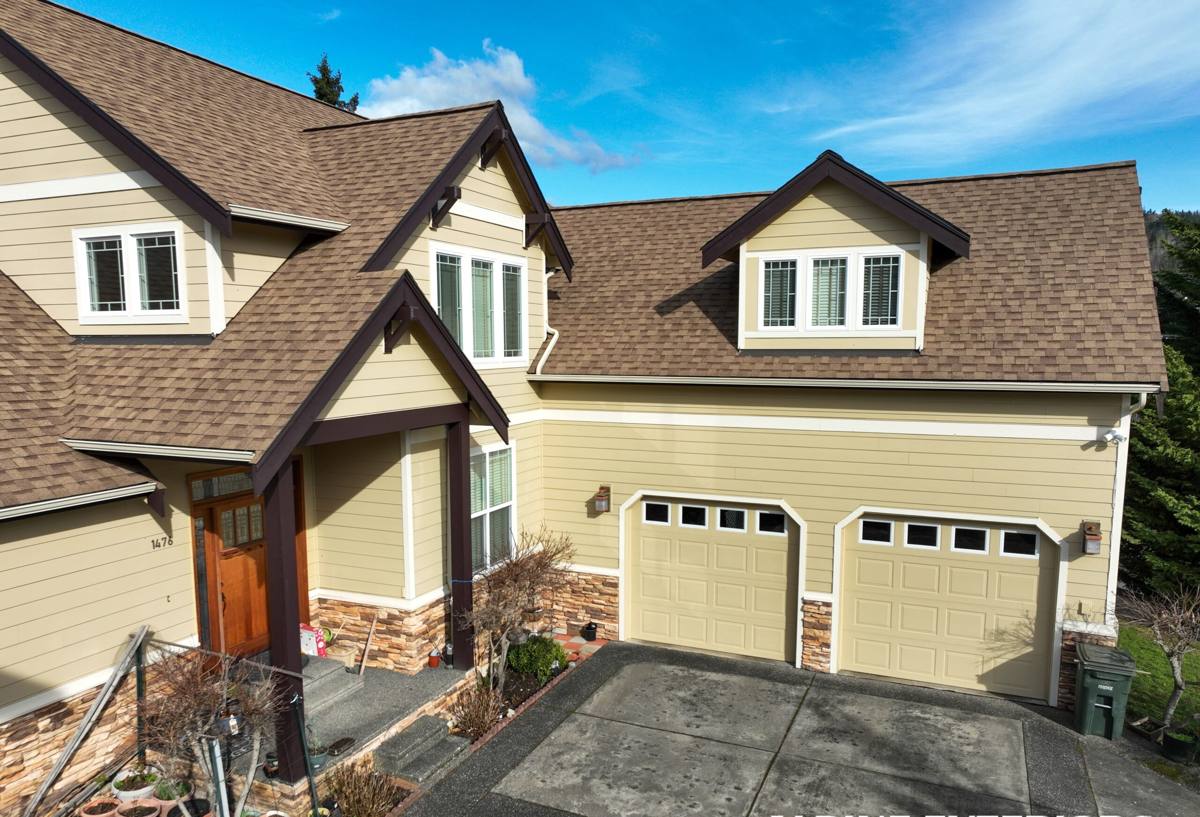
Signs an Old Town Roof Has Reached Replacement, Not Repair
Repair makes sense for isolated damage. Replacement becomes the right call once the roofing system as a whole is compromised. Common signs we look for on Old Town homes include:
- Granule loss heavy enough that shingles look patchy or bald in high-wear areas
- Persistent moss growth that keeps returning within a season or two of cleaning
- Soft or spongy decking felt underfoot during an inspection, a sign moisture has reached the plywood or sheathing
- Curling, cracking, or cupped shingles, especially on the west and south-facing slopes that take the brunt of weather
- Rusted or failing flashing around chimneys, vent stacks, and valleys
- Daylight or water staining visible in the attic along the roof deck
- A roof age at or beyond the manufacturer's expected service life for the original material
Any one of these on its own might still be repairable. Two or three together, especially on a roof already past 20 years old, usually means the smarter long-term move is a full replacement rather than chasing leaks year after year.
What a Correct Roof Replacement Actually Involves
Full Tear-Off, Not Overlay
We tear off down to the decking rather than layering new shingles over old ones. An overlay hides problems instead of fixing them, and it traps moisture against the deck — a real liability given how much moisture this area sees over the course of a year. Tear-off also lets us actually inspect the wood underneath, which is the only way to know what condition the roof structure is really in.
Decking Inspection and Repair
Once the old material is off, we check every section of decking for soft spots, delamination, or rot, particularly around valleys, chimneys, and eaves where water tends to concentrate over time. Damaged sections get replaced before anything new goes down. Skipping this step is one of the most common ways a roof replacement fails early — new shingles over bad decking just buys a few years before problems resurface.
Underlayment and Water Protection
Given the amount of driving rain Old Town roofs take, underlayment selection matters more here than in drier parts of the state. We install synthetic or self-adhered underlayment as the base layer, with ice-and-water membrane at eaves, valleys, and around penetrations — the spots most likely to see wind-driven water working its way under the shingle line.
Flashing
Flashing is where most roof leaks actually originate, not the shingle field. Salt air speeds up corrosion on lower-grade metal flashing, so we use flashing rated for the exposure and make sure step flashing, counter-flashing, and valley metal are properly integrated rather than just caulked over old material.
Ventilation
Attic ventilation controls how much moisture builds up under the deck from the inside, which matters just as much as what's happening on top of the roof. Balanced intake and exhaust ventilation helps the deck dry out between wet stretches and reduces the conditions moss and algae need to take hold on the shingle surface.
Material Options for Old Town Homes
There's no single "best" roofing material — the right choice depends on the home's age, roof pitch, budget, and how much long-term maintenance the owner wants to take on. Here's how the common options compare for a coastal Skagit County home:
| Material | Typical Lifespan | Moss/Moisture Behavior | Maintenance |
|---|---|---|---|
| Architectural asphalt shingle | 25–30 years | Good with proper ventilation and periodic cleaning | Low to moderate |
| Standing seam metal | 40–50+ years | Sheds moisture fast; minimal moss growth on smooth panels | Low |
| Cedar shake | 20–30 years with upkeep | More moisture-sensitive; needs regular treatment near the water | Higher |
| Synthetic/composite shingle | 30–50 years | Resists moisture absorption well | Low |
We don't push cedar shake for homes right in Old Town's salt-air zone as our default recommendation. It can look great and hold up fine with diligent maintenance, but the upkeep burden near the water — regular treatment, closer moisture monitoring, more frequent moss removal — is significant, and we'd rather be upfront about that trade-off than sell a homeowner a roof that becomes a maintenance project. Architectural asphalt and metal both handle this specific coastal environment with less ongoing attention, which is why they're what we recommend most often here.
Moss, Algae, and the Long Wet Season
Moss doesn't just look bad — it holds moisture against the shingle surface, works its way under tabs, and can lift the roofing material enough to let water in underneath. In Old Town's shaded, tree-lined lots, north-facing slopes are especially prone to it. A few things reduce moss pressure on a new roof: proper attic ventilation so the deck isn't warmer and wetter than it should be, keeping overhanging branches trimmed back so the roof gets more light and airflow, and, on some installs, zinc or copper strips near the ridge that release trace metal ions as it rains, which suppress regrowth over time. None of these eliminate moss entirely in a climate this wet, but together they buy years between cleanings.
Our Replacement Process
- On-site inspection and estimate — we look at the whole roof system, not just the shingles, and walk the homeowner through what we find
- Material selection — matched to the home's age, roof pitch, and the owner's maintenance preferences
- Site protection — landscaping, gutters, and siding covered before tear-off begins
- Full tear-off and decking inspection — old material removed, deck checked and repaired as needed
- Underlayment, flashing, and ventilation installed — the parts of the job that determine how the roof performs over the next 20-plus years
- New roofing installed to manufacturer specification — correct nailing pattern, exposure, and fastening for wind and rain exposure
- Full site cleanup — including a magnetic sweep for stray nails
- Final walkthrough — so the homeowner can see the finished work and ask questions before we consider the job done
What to Check Before You Hire
A roof replacement is a significant investment, and the difference between a job that lasts and one that doesn't often comes down to details a homeowner can't see once the roof is closed up. Before signing a contract, it's worth confirming:
- The contractor is licensed and insured to work in Washington State
- The estimate specifies full tear-off, not an overlay
- Decking repair is addressed as an allowance or line item, not left as a surprise change order
- Underlayment type, ice-and-water shield locations, and flashing material are spelled out, not just "shingles included"
- Ventilation is part of the scope, not assumed to be fine as-is
- Manufacturer warranty terms are explained, including what voids them
- Cleanup and nail sweep are included in the price
If an estimate skips most of these details, it's usually a sign the bid was built around price rather than around what the roof actually needs.
Why Local Experience in Old Town Matters
A crew that regularly works in Old Town Anacortes has already seen how this neighborhood's roofs age — which slopes hold moss longest, where wind-driven rain tends to find weak flashing, and how older framing in this area typically holds up once the decking is exposed. That's not something a crew coming from outside Skagit County picks up on the first visit. It also means faster, more accurate estimates, because we're not guessing at how this microclimate treats a roof — we're working from what we've already seen on homes nearby.
If your roof is showing its age, or you just want an honest read on how much life it has left, we're happy to take a look. The estimate is free, there's no pressure to commit on the spot, and you'll get a straight answer about whether you're looking at a repair or a full replacement — use the form below to get started.