 Anacortes Exterior
 Why Old Town Anacortes Is Hard on Siding
Old Town sits close to the water on Fidalgo Island, and that proximity cuts both ways. It's part of what makes the neighborhood beautiful, and it's also why siding here fails faster than it does twenty miles inland. Salt-laden air off Fidalgo Bay and Guemes Channel works its way into seams, fastener heads, and unprotected end cuts. Driving rain off Rosario Strait doesn't just wet the surface of a wall — over enough years it finds every gap in flashing and caulk that wasn't detailed correctly the first time. And Skagit County's long, wet moss season means anything shaded by trees or facing north holds moisture for months at a stretch rather than days.
None of that is unique to Old Town by itself. What's unique is the combination, sustained year-round, on a stretch of coastline that gets more weather exposure than most of the rest of Anacortes. A siding product and installation that would hold up fine in a drier part of Skagit County can start showing problems here in half the time.
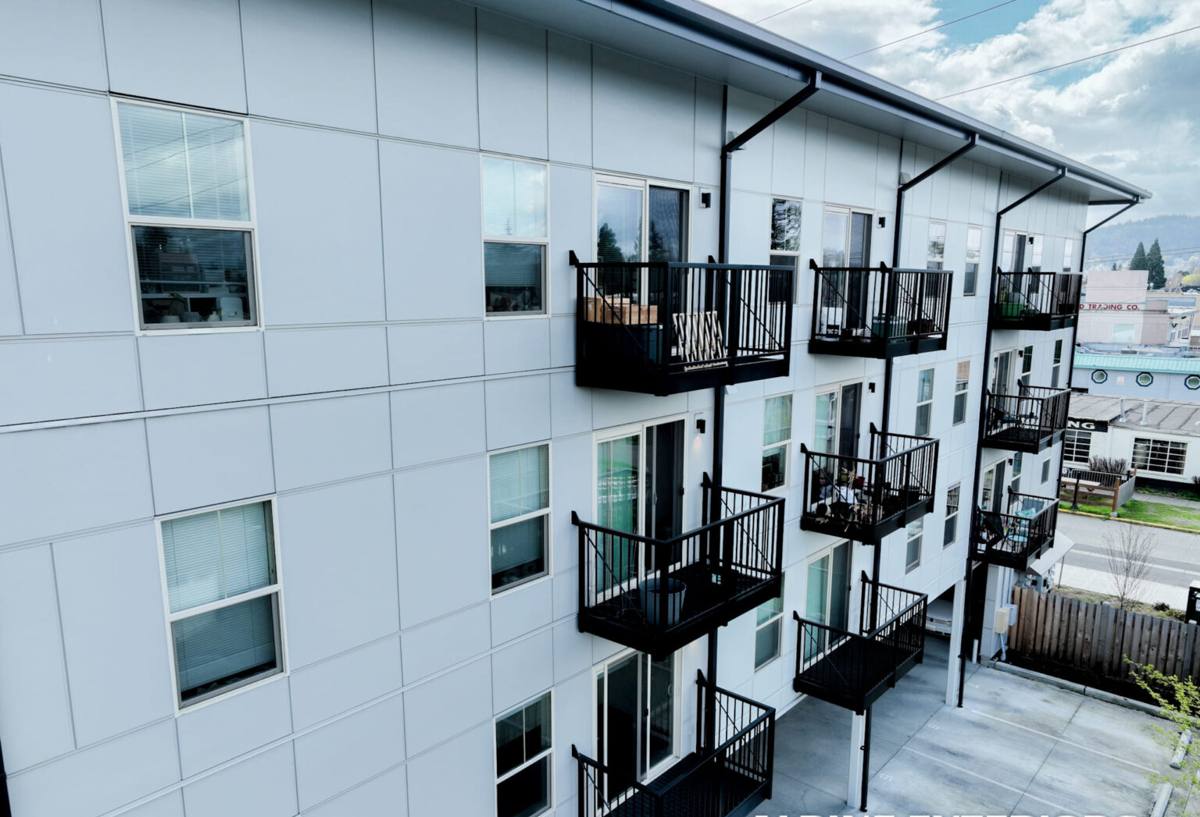
What the Local Housing Stock Adds to the Equation
Old Town is one of Anacortes' older residential pockets, and that brings its own set of considerations that don't show up on a newer-build siding job. Homes of this vintage were often built in stages, added onto, or re-sided at least once already. That means:
- Sheathing and framing underneath the existing siding can vary in condition from wall to wall, even on the same house.
- Older trim details, window setbacks, and roof-to-wall transitions don't always match modern flashing assumptions — they need to be assessed, not assumed.
- Previous repairs or additions sometimes used different materials or methods, which can hide moisture damage until the old siding comes off.
- Some homes may have layers of old paint or even old siding materials that require careful, code-compliant removal.
This is exactly why we don't quote a full Hardie installation from a photo or a drive-by. A short on-site walkaround tells us what's really underneath, so the bid and the plan match the actual house instead of a generic assumption.
Why We Install James Hardie and Nothing Else
We made a decision as a company to install James Hardie fiber cement siding exclusively — no vinyl, no LP SmartSide, no Cemplank, no Allura, no primed spruce or cedar. That's not a marketing line; it changes how we bid jobs, train installers, and warranty our work.
Vinyl is inexpensive and low-maintenance, but it's a thin, flexible material that can crack in a hard freeze, fade unevenly in UV exposure, and it isn't fire-resistant. Engineered wood products like LP SmartSide perform reasonably in dry climates but are more sensitive to sustained moisture exposure at cut edges and seams — a real concern in a place that sees as much driving rain as Old Town does. Other fiber cement brands compete on price but don't carry the same factory-finish system, engineered climate variants, or track record we've come to trust. Primed spruce and cedar look great on day one but demand an ongoing repainting and caulking commitment that most homeowners underestimate until they're three years in.
James Hardie is a fiber cement product: sand, cement, and cellulose fiber, non-combustible, engineered to hold paint and resist moisture-driven rot far longer than wood-based sidings. The ColorPlus factory finish is baked on under controlled conditions rather than field-painted, which matters a lot in a climate where field painting has a short weather window. And Hardie makes climate-specific product lines — including HZ5 engineering built for wetter, more humid regions like ours — rather than a one-size-fits-all board. Backed by a strong transferable warranty when installed to Hardie's specifications, it's the product we're willing to put our name behind on every job, including the ones facing straight into Old Town's weather.
Fair Trade-Offs, Not Sales Talk
Hardie isn't the cheapest option up front, and it's heavier and more labor-intensive to install correctly than vinyl. It requires proper cutting tools (for dust control), correct fastener patterns, and installers who understand clearance and flashing details. Those are real trade-offs. We think they're worth it for a house that's going to sit within a few blocks of saltwater for the next several decades.
What a Correct Installation Actually Involves
The material is only half of what makes siding last in Old Town. The other half is installation detail — and this is where most premature siding failures actually start, regardless of brand.
Clearance and Flashing
Hardie siding needs proper clearance from grade, roof lines, decks, and other horizontal surfaces to avoid wicking moisture. Every window, door, and penetration needs correctly lapped flashing and a functioning drainage path behind the siding — not just caulk covering a gap.
Fastening and Joints
Fasteners need to be the right type, driven to the right depth, and set at the manufacturer's spacing. Butt joints get flashed or sealed per spec, not just butted and caulked, so seasonal movement and rain don't open them up over time.
Moisture Management Behind the Board
A weather-resistive barrier goes on before the siding, and on a house facing this much wind-driven rain, a drainage gap (rainscreen) behind the siding gives any moisture that does get past the cladding somewhere to go besides your sheathing. Skipping this step is invisible on installation day and expensive five years later.
Comparing Siding Materials for a Salt-Air, High-Moss Climate
| Material | Typical Lifespan Here | Maintenance Burden | Fire Resistance | Repaint / Recoat Interval |
|---|---|---|---|---|
| James Hardie (ColorPlus) | Decades, with correct install | Occasional rinse; minimal upkeep | Non-combustible | Typically 15+ years for finish |
| Vinyl | Moderate; UV and cold sensitive | Low, but prone to cracking/fading | Combustible | Not repaintable in most cases |
| LP SmartSide | Shorter in sustained wet climates | Moderate; edge sealing critical | Combustible | Every 7–10 years typical |
| Cedar / Primed Wood | Shorter without diligent upkeep | High; ongoing paint and caulk | Combustible | Every 3–7 years typical |
These are general climate-driven tendencies, not guarantees for any individual product or installation — but they're consistent with why we standardized on one material instead of offering all of them.
Our Process, Start to Finish
- On-site assessment: We walk the exterior, check for moisture damage, note trim and flashing conditions, and measure.
- Written estimate: A clear scope covering tear-off, repair allowances, product line and color, and timeline — no vague line items.
- Prep and repair: Any damaged sheathing or framing found once old siding comes off gets addressed before new material goes up, not covered over.
- Weather barrier and drainage plane installation: The unglamorous layer that does most of the long-term work.
- Hardie installation: Cut, fastened, and flashed to manufacturer spec, with attention to every window, corner, and penetration.
- Cleanup and walkthrough: Site cleared of debris, and we walk the finished job with you before calling it done.
What to Ask Before Hiring Anyone to Side Your Home
- Are they a certified or approved installer for the product they're proposing?
- Will they put the product line, color, and installation scope in writing — not just a total price?
- Do they carry current liability insurance and any required licensing?
- Will they explain what's included in the manufacturer's warranty versus their own workmanship warranty?
- Have they worked on homes in Old Town or similarly exposed parts of Anacortes before?
- Do they inspect sheathing condition before quoting, or only after tear-off (which can lead to surprise change orders)?
Living With Hardie Siding in This Climate
Correctly installed Hardie siding is genuinely low-maintenance, but "low" isn't "none," especially this close to the water. A periodic rinse-down helps clear salt residue before it accumulates in seams and behind trim. Keeping gutters and downspouts clear matters more here than in drier parts of the county, since overflowing water finds its way onto wall surfaces during the wetter months. Shaded, north-facing walls and areas near overhanging trees are the most likely spots for moss and mildew to take hold — a soft wash on those areas periodically keeps growth from getting a foothold and staining the ColorPlus finish. None of this is heavy work, but it's worth building into a seasonal routine rather than ignoring until something looks visibly wrong.
Why a Crew That Already Works Old Town Matters
Siding crews that mostly work drier, more sheltered parts of Skagit County sometimes underbuild for what a waterfront-adjacent neighborhood actually needs — lighter flashing details, assumptions about drying time between rain events, or drainage planes treated as optional. A crew that regularly works Old Town and similar Anacortes neighborhoods has already seen what this specific exposure does to a wall over ten or twenty years, and builds accordingly from the first estimate rather than learning it the hard way on your house. It also means fewer surprises around scheduling, since we already know how the local weather windows tend to run through the wetter months.
If Old Town Anacortes has design guidelines or review requirements that apply to exterior work on your particular property, it's worth a quick check with the city before work begins — we're glad to help you figure out what, if anything, applies to your address as part of the estimate process.
If your Old Town home is due for new siding, we'd like to take a look and give you a straight, no-pressure estimate — what your walls actually need, what it costs, and why we'd install James Hardie and nothing else. Reach out using the form below to get started.