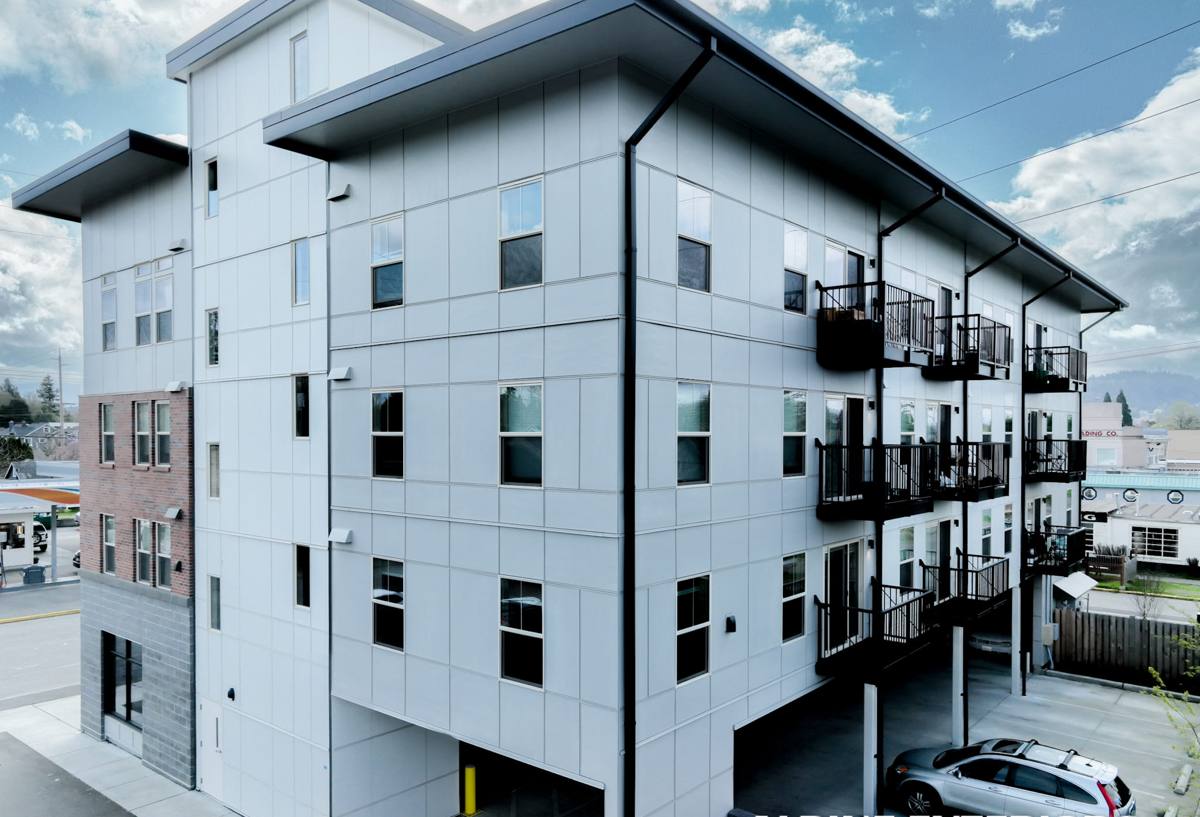
 Anacortes Exterior
 Old Town Anacortes: A Tough Environment for Old Windows
Old Town Anacortes sits close to the water, and that proximity shapes everything about how windows age here. Salt-laden air off the surrounding waterways works into hardware, weep systems, and seals faster than it does even a few miles inland. Add driving rain that comes in sideways during winter storms, plus a moss season that stretches for months under the region's tree cover and cloud, and you get a climate that is genuinely rough on window assemblies — not just the glass, but the frames, the flashing, and everything holding them together.
A lot of the housing stock in this part of Anacortes predates modern window technology entirely. Original single-pane wood windows, or early-generation aluminum replacements from decades ago, were never built to handle the combination of coastal humidity and constant moisture cycling that Skagit County winters bring. When we talk about energy-efficient windows for this neighborhood, we're not just talking about lower heating bills — we're talking about stopping rot, corrosion, and drafts before they turn into bigger structural problems.
Signs Your Windows Are Losing the Fight
Most homeowners don't wake up one day and decide they need new windows. It's usually a slow accumulation of small annoyances that eventually adds up. Here's what we look for, and what you can check yourself:
- Visible condensation or fogging between panes (a sign the seal has failed on double-pane glass)
- Cold drafts near the window frame even when it's fully latched
- Wood sashes that feel soft, spongy, or show dark staining at the corners
- Difficulty opening, closing, or locking a window that used to work fine
- Visible moss, algae, or black mildew streaks building up on or around the frame
- Paint that's peeling or bubbling specifically around the window perimeter, not the whole wall
- A noticeable jump in heating costs without any other explanation
Any one of these on its own might not mean much. Two or three together, especially on the side of the house that takes the most weather, usually means the window system has started to fail.
What "Energy-Efficient" Actually Means in This Climate
Energy efficiency in a window comes down to how well it resists heat transfer and how well it seals out air and moisture — and in a marine climate like Fidalgo Island's, those two things are more connected than people expect. A window with a great U-factor on paper but a poorly sealed installation will still leak air and let moisture track into the wall cavity.
Glass and Glazing
Double-pane glass with a low-E coating and argon gas fill is the standard baseline for this climate — it cuts heat loss significantly compared to older single-pane or early dual-pane units. Triple-pane glass offers a further step up in insulation value and sound dampening, which some homeowners want given how close many Old Town properties sit to road and marine traffic noise, but it comes at added cost and weight that isn't always necessary for every wall.
Frame Performance
The frame matters as much as the glass. A well-insulated frame with multi-chamber construction resists both heat transfer and moisture intrusion far better than a thin, single-chamber profile. In a salt-air environment, frame material choice also affects how well the window holds up mechanically over the next 15-20 years, not just how it performs on day one.
Choosing the Right Frame Material
There's no single "best" window material for every home — it depends on your home's age, exposure, and how much upkeep you want to take on. Here's how the common options stack up for a home in this specific environment:
| Material | Moisture & Salt-Air Resistance | Maintenance | Typical Lifespan |
|---|---|---|---|
| Vinyl | Good — won't corrode or rot, handles humidity well | Low — no painting, occasional cleaning | 20-30 years |
| Fiberglass | Excellent — very stable in temperature and moisture swings | Low — durable finish, rarely needs attention | 30-40 years |
| Wood-clad | Fair — exterior cladding protects the wood, but any breach in the cladding invites rot | Higher — interior wood may need refinishing over time | 20-30 years with upkeep |
| Aluminum | Poor in salt air — prone to pitting and corrosion near water | Moderate | 15-20 years in this environment |
For most homes in Old Town Anacortes, we steer people toward vinyl or fiberglass specifically because of the salt-air exposure. Aluminum frames, while common in older regional construction, tend to show corrosion and pitting well before their glass units fail — it's a maintenance burden we'd rather steer clients away from than sell them a product we know will give them trouble in this specific setting. Wood-clad is a fine choice for homeowners set on a traditional wood interior look, as long as they understand the cladding has to stay intact to keep water out of the wood underneath.
What a Correct Installation Actually Involves Here
The window itself is only part of the job. In a climate that gets this much driving rain, the installation details determine whether that window performs for two decades or starts leaking within a few winters.
Flashing and Moisture Barrier
Every opening gets properly flashed — meaning water that does reach the window assembly is directed back out and away from the wall framing, not down into it. This is the single most common corner cut in low-quality window jobs, and it's the one that causes the most expensive damage down the road: hidden rot inside the wall that doesn't show up until years later.
Sealing Without Trapping Moisture
Sealant and backer rod go around the exterior perimeter to block air and bulk water, but the assembly still needs to let any incidental moisture drain and dry out rather than getting sealed in. Over-sealing a window so it can't breathe is almost as bad as under-sealing it.
Fit and Insulation
The gap between the window unit and the rough opening gets insulated properly — not stuffed with excess spray foam, which can bow the frame and affect how the window operates, but filled in a way that closes air gaps without distorting the unit.
Here's a general run-down of what we check on every window we install:
- Rough opening is square, solid, and free of hidden rot before the new unit goes in
- Flashing tape and drainage plane are integrated correctly with the existing wall assembly
- Window is shimmed, leveled, and plumb — not just wedged into place
- Insulation fills the gap without over-packing or bowing the frame
- Exterior sealant is applied at the correct joints, leaving drainage paths open where needed
- Interior and exterior trim is reinstalled or replaced cleanly
- Window operates smoothly and locks fully before we consider the job done
Older and Character Homes: Working With What You Have
A good number of homes in this part of Anacortes have real architectural character — older wood siding, original trim profiles, window proportions that were part of the design, not an afterthought. When we replace windows on a home like this, we pay attention to matching sightlines, sash proportions, and trim details so the new windows look like they belong, rather than looking like an obvious modern swap.
If your property falls within any local historic guidelines or design review requirements, that's worth checking with the City of Anacortes before work begins — requirements vary by property and we'd rather confirm than assume. Where those guidelines apply, there are window products designed to meet efficiency standards while keeping traditional profiles and dimensions, and we can talk through those options specifically for your house.
Our Process
We keep the process straightforward because window replacement doesn't need to be complicated when it's done right:
- On-site assessment — we look at your current windows, note problem areas, and measure exact openings.
- Honest recommendation — we walk through material and glass options that fit your home and your budget, without pushing an upsell you don't need.
- Scheduling around your home — we plan installation to minimize how long any opening is exposed to weather, which matters more here than in drier climates.
- Removal and prep — old units come out carefully, and we inspect the rough opening for hidden moisture damage before anything new goes in.
- Installation — flashing, sealing, and insulation done to the standard described above, not shortcuts to save an hour.
- Final check and cleanup — every window is tested for smooth operation and a tight seal before we call it finished.
Why a Crew That Already Works Old Town Anacortes Matters
Window installation isn't a one-size-fits-all trade. A crew that regularly works this specific stretch of Skagit County already knows what this housing stock tends to look like underneath the siding, how salt air affects hardware choices, and how long the wet season really runs when you're scheduling exterior work. That familiarity shows up in fewer surprises once an opening is exposed — and in fewer callbacks once winter storms test the new seals.
It also means we're not guessing at permit requirements or design considerations that come up in this part of the city. We've done this work in this neighborhood, on homes with this era of construction, in this exact climate.
Maintenance After Installation
Even a well-installed, efficient window benefits from a little seasonal attention here. A quick rinse to clear salt residue after storms, keeping weep holes clear of debris and moss buildup, and an annual check of exterior caulking will keep a good window performing for its full expected lifespan rather than needing early attention.
If your windows are drafty, fogged, sticking, or just old enough that you're wondering whether it's time, we're happy to take a look and give you a straightforward, no-pressure estimate — use the form below to get started.