 Anacortes Exterior
 Why Mount Vernon Roofs Wear Out Differently
A roof in Mount Vernon doesn't fail the same way a roof in Eastern Washington or Arizona does. Out here in Skagit County, the damage is slow and cumulative: salt-laden air drifting in off Puget Sound and the surrounding waterways, months of low-intensity but relentless rain, and a moss season that can stretch from fall through spring. None of these alone destroys a roof overnight. Together, over 15-20 years, they wear down materials, fasteners, and flashing in ways a homeowner often doesn't notice until there's a stain on a bedroom ceiling.
Salt air accelerates corrosion on exposed metal — nail heads, flashing, gutter fasteners, and vent stacks all take the hit over time. Driving rain, especially when paired with wind off the water, finds its way into any gap in flashing or underlayment that a drier climate would never expose. And moss doesn't just look bad; its root structure lifts shingle edges and holds moisture against the roof deck long after the rain has stopped, which is exactly the condition wood rot needs to get started.
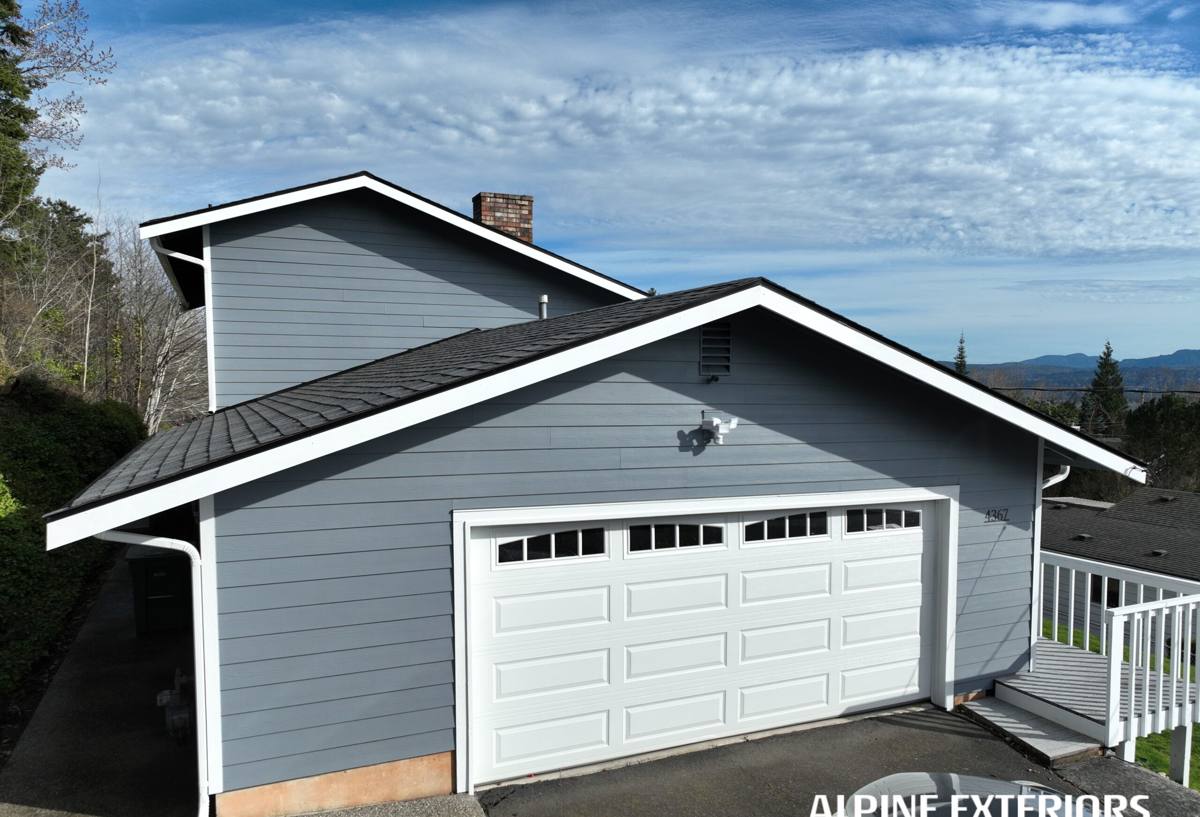
Signs a Mount Vernon Home Needs a New Roof, Not Another Patch
We get a lot of calls for a "small leak," and sometimes that's exactly what it is — a single failed pipe boot or a cracked piece of flashing that a repair fixes in an afternoon. But there's a point where patching stops making financial sense and a full replacement is the honest recommendation. Signs we look for include:
- Granule loss heavy enough that you can see bare, shiny asphalt on multiple slopes
- Shingles that are cupping, curling at the edges, or cracking when touched
- Moss or algae streaking across large sections rather than isolated shady spots
- Soft or spongy decking felt underfoot when we walk the roof
- Daylight visible through the attic sheathing, or musty attic odor pointing to trapped moisture
- Multiple past repairs in different areas — a pattern that usually means the underlayment and decking are past their useful life, not just the shingles
If a roof is only showing one or two of these signs in a limited area, repair is often still the right call, and we'll say so. A new roof installation makes sense when the underlying materials — decking, underlayment, and flashing system — are compromised broadly enough that patching one spot just shifts the problem to the next.
What a Correct New Roof Installation Actually Involves
Full Tear-Off, Not a Layover
We remove the existing roofing down to the deck rather than installing new shingles over old ones. A layover traps moisture between layers, hides deck damage, and voids most manufacturer warranties. It also adds weight the structure wasn't necessarily designed to carry long-term. A tear-off costs more up front but gives us and you an honest look at what's underneath.
Deck Inspection and Repair
Once the old roofing is off, we inspect every section of the decking. Given how much rain this area sees, soft or delaminated plywood/OSB is common on older roofs, particularly around valleys, chimneys, and eaves. Any compromised sections get replaced before anything new goes down — installing new roofing over a weak deck just guarantees a shorter lifespan for the new materials.
Underlayment and Ice-and-Water Protection
This is where a lot of the real weatherproofing happens, and it's the layer homeowners never see once the job is done. In a climate with as much sustained rain as Skagit County gets, we pay particular attention to:
- Self-adhering ice-and-water shield membrane at eaves, valleys, and around all penetrations — the areas most prone to wind-driven rain intrusion
- A quality synthetic underlayment across the full deck, which holds up better to prolonged moisture exposure than older felt products
- Proper lapping and sealing at every seam, since a single reversed lap can undo the benefit of the whole underlayment system
Flashing
Flashing around chimneys, skylights, sidewalls, and roof-to-wall transitions is where most leaks actually originate — not in the field of the roof itself. We replace flashing as part of a new roof rather than reusing old pieces, and we select corrosion-resistant metal given how salt air in this region shortens the life of lower-grade flashing.
Ventilation
A roof needs to breathe. Balanced intake and exhaust ventilation pulls moist, warm attic air out before it condenses against the underside of the deck. In our climate, poor ventilation is one of the most common reasons a roof shows premature rot or excessive moss growth — the deck stays damp longer than it should because there's nowhere for that moisture to go.
Material Options for Mount Vernon Homes
There's no single "best" roofing material — the right choice depends on your home's style, your budget, and how much long-term maintenance you're willing to take on. Here's how the common options compare for a marine, high-moss climate like ours:
| Material | Typical Lifespan | Moss/Moisture Behavior | Maintenance |
|---|---|---|---|
| Architectural asphalt shingle | 25-30 years | Good with algae-resistant granules; still needs periodic moss removal | Low to moderate |
| Standing seam metal | 40-50+ years | Sheds moisture fast; moss struggles to gain a foothold | Low |
| Cedar shake | 20-30 years with upkeep | Attractive but holds moisture; needs active moss and rot management | High |
| Synthetic/composite shingle | 30-50 years | Resists moisture absorption well; consistent performance | Low |
For most Mount Vernon homes, algae-resistant architectural shingles remain the practical middle ground on cost and performance. Homeowners planning to stay long-term or who want to minimize moss maintenance often lean toward metal or synthetic products despite the higher upfront cost. We'll walk through the real trade-offs for your specific roof rather than pushing one product line.
Cost Factors Worth Understanding Before You Get Quotes
| Factor | Why It Matters Here |
|---|---|
| Roof pitch and access | Steeper or harder-to-access roofs take longer and require more safety equipment |
| Deck condition | Rot repair found during tear-off is common in older Skagit County homes and adds material and labor cost |
| Number of penetrations | Chimneys, skylights, and vents each need individual flashing work |
| Material choice | Metal and composite materials cost more upfront but reduce moss-related maintenance over time |
| Ventilation upgrades | Older homes often need additional intake or exhaust vents added, not just replaced |
We don't give ballpark numbers over the phone without seeing the roof — too many of these factors only show up once we're actually up there. A free on-site estimate is the only honest way to price the job.
How Our Installation Process Works
- On-site inspection. We walk the roof, check the attic for ventilation and moisture issues, and photograph problem areas.
- Written estimate. A clear scope of work and material options, with pricing that reflects what we actually found — not a generic per-square rate.
- Scheduling around weather. Given how much of the year sees active rain here, we plan installs for dry windows and tarp exposed sections if conditions shift mid-job.
- Tear-off and deck inspection. Old materials removed, decking inspected and repaired as needed.
- Underlayment, flashing, and ventilation installed. The weatherproofing layer goes in correctly before a single shingle or panel is placed.
- New roofing installed to manufacturer specification. Proper nailing patterns, exposure, and fastening — details that directly affect wind and warranty performance.
- Final walkthrough and cleanup. Magnetic sweep for stray fasteners, debris removal, and a review of the completed work with you.
Why It Matters That We Already Work in Mount Vernon
Roofing crews unfamiliar with Skagit County sometimes underestimate how much rain protection a roof here actually needs, or install products better suited to drier climates. Working this area regularly means we know which flashing details fail first in local storms, how much ventilation older Mount Vernon homes typically need, and which materials hold up against sustained moss pressure rather than just looking good on install day. It also means we're a known, reachable local business if a warranty question comes up five or ten years down the road — not a crew that worked the area for one season and moved on.
After Your New Roof: Keeping It Performing
A correctly installed roof still benefits from basic upkeep in this climate. A short annual routine goes a long way:
- Clear gutters and downspouts each fall before the heavy rains set in
- Have moss growth treated or removed early, before it spreads or lifts shingle edges
- Trim back overhanging branches that keep sections of the roof shaded and damp
- Schedule a periodic visual inspection, especially after major windstorms
- Watch for granule buildup in gutters, which can signal accelerated shingle wear
None of this requires climbing on the roof yourself — most of it is just paying attention and calling before a small issue becomes a deck-level repair.
If your Mount Vernon roof is showing its age or you're planning ahead rather than reacting to a leak, we're happy to take a look. Estimates are free, there's no pressure, and you'll get a straight answer about whether you need a full replacement or just a targeted repair. Use the form below to get started.