 Anacortes Exterior
 Composite Decking Built for Mount Vernon's Climate
Mount Vernon sits in the Skagit Valley, close enough to the water and low-lying farmland that homes here deal with a specific mix of weather: salt-tinged air drifting in off the Sound, long stretches of driving rain from fall through spring, and a moss season that can run six months or longer in shaded yards. A deck built for a drier inland climate doesn't hold up the same way out here. Composite decking has become the go-to choice for a lot of Mount Vernon homeowners precisely because it's engineered to shrug off moisture better than wood, but "composite" isn't a single product — the board, the substructure, and the installation all have to be right for this climate, or you're just trading one set of problems for another.
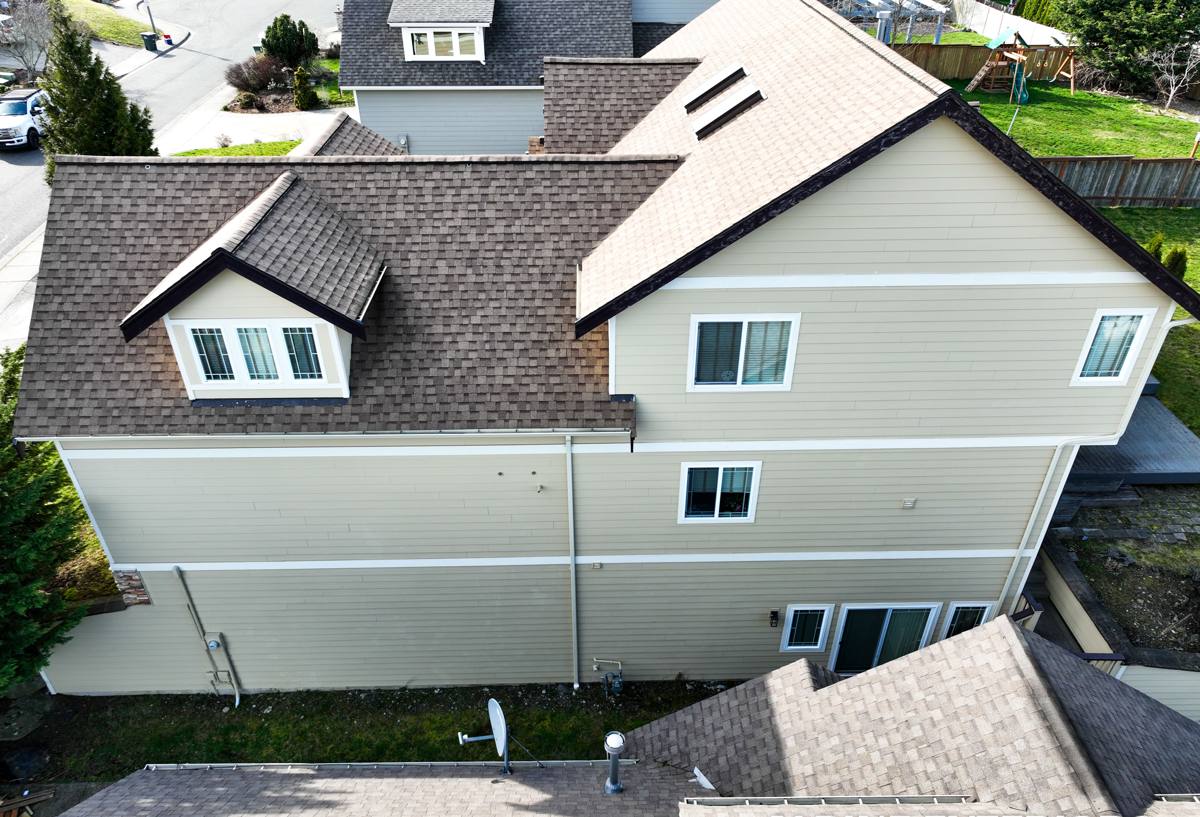
What Skagit County Weather Does to a Deck Over Time
Before talking about materials, it helps to understand what's actually working against a deck in this area:
- Constant low-level moisture: Even without heavy storms, Skagit County's marine air keeps humidity high for much of the year, which means wood fibers rarely fully dry out between rains.
- Moss and algae growth: Shaded decks, north-facing yards, and anything under tree cover collect moss quickly. Moss holds moisture against a surface, which accelerates rot in wood and can leave organic staining on composite if it's not cleaned off.
- Salt-influenced air: Proximity to the water means fasteners, brackets, and any exposed metal hardware are more prone to corrosion than they'd be further inland.
- Freeze-thaw cycling: It's not the hardest winters in the state, but Mount Vernon does get cold snaps that freeze trapped moisture in wood grain or gaps, which expands and speeds up cracking and splintering.
Composite decking addresses most of this by being largely non-porous — it doesn't absorb water and swell the way wood does, and it doesn't provide the same food source for rot fungi. But it's not maintenance-free, and the parts of a deck you don't see (framing, fasteners, ledger connection) matter just as much as the boards on top.
Composite vs. Wood vs. PVC: What Actually Fits This Climate
We get asked to compare these three regularly. Here's how they stack up for a wet, marine-influenced climate like Skagit County's:
| Material | Moisture Behavior | Maintenance | Typical Lifespan |
|---|---|---|---|
| Pressure-treated wood | Absorbs water, prone to swelling, splintering, and rot at fastener points | Annual sealing/staining recommended | 10–15 years before major repair or replacement |
| Capped composite | Non-porous outer shell resists moisture absorption and staining | Periodic washing; no sealing or staining | 25+ years, backed by manufacturer warranty |
| PVC/cellular decking | Fully synthetic, essentially waterproof | Low; can show scratches more than composite | 25+ years |
We install and stand behind capped composite for most Mount Vernon projects because it hits the balance homeowners here actually want: it handles the wet climate well, looks close enough to wood grain to satisfy most aesthetic preferences, and doesn't carry the ongoing sealing/staining burden that a pressure-treated deck does in a climate that barely gives wood a chance to dry out. PVC has its place — it's worth discussing if you want the lowest possible moisture exposure — but it comes at a higher price point and a different look that not everyone prefers.
What a Correct Composite Installation Actually Involves
The board itself is only part of the job. A composite deck that's installed wrong will still fail early, regardless of how good the decking material is. The things we pay close attention to on every Mount Vernon project:
Substructure and Drainage
Composite boards are heavier than wood, so joist spacing and beam sizing need to match the manufacturer's engineering specs — not just whatever the old deck used. We also grade and flash the substructure so water sheds away from the house rather than pooling under the deck, which matters a lot in a region that gets sustained rain rather than short, heavy bursts.
Ledger Board Connection
Where the deck attaches to the house is the single most common failure point on any deck, wood or composite. Proper flashing and waterproofing at that connection keeps moisture from working its way into the rim joist and, eventually, the house structure itself. This is worth getting right the first time — it's expensive to fix after the fact.
Fasteners and Hardware
Given the salt-influenced air, we use corrosion-resistant, coated fasteners and hidden fastening systems rated for coastal or marine environments, not standard interior-grade hardware. Cutting corners here is one of the more common shortcuts that shows up as rust streaking and loosening boards a few years down the road.
Ventilation Underneath
Airflow beneath the deck helps everything — framing included — dry out between rain events. We build in appropriate clearance and skirting that allows ventilation rather than sealing the underside completely.
Choosing the Right Board for a Mount Vernon Property
Color and finish matter more here than in a drier climate, mostly because of moss and algae. A few things worth thinking through:
- Lighter colors show dirt and organic staining faster but make it easier to spot moss growth early, before it gets established.
- Darker, streaked, or multi-tonal boards hide general wear better but can mask early moss growth in shaded corners if you're not checking regularly.
- Grooved/hidden-fastener boards leave a cleaner surface with no exposed screw heads, which also means fewer spots for standing water and debris to collect.
- Full sun vs. shaded yards change the equation — a deck under tree cover in Mount Vernon will need more frequent cleaning regardless of board color, so factor that into upkeep expectations before deciding purely on looks.
We'll walk through samples on-site so you can see how a given color actually reads in your yard's light and shade conditions, rather than guessing from a small swatch.
How We Approach a Composite Deck Project
Our process on Mount Vernon jobs stays consistent because it's built around what this climate demands, not a generic checklist:
- Site visit and assessment — we look at drainage patterns, sun/shade exposure, existing structure (if replacing a deck), and how the deck connects to the house.
- Design and material selection — sizing, board selection, railing and fastening system, and layout that accounts for your yard's specific moisture and shade conditions.
- Permitting — permit requirements depend on the deck's height, size, and attachment to the structure; we handle the paperwork with the local jurisdiction so you don't have to track it down yourself.
- Demo and substructure work — if replacing an existing deck, we inspect the ledger and framing underneath for hidden rot before building over it. This step catches problems a lot of homeowners don't know are there until the old decking comes up.
- Installation — framing, flashing, fastening, and board installation to manufacturer spec, so warranty coverage stays intact.
- Walkthrough and cleanup — final inspection with you, care guidance specific to your board choice, and full site cleanup.
Maintaining a Composite Deck in a Wet Climate
Composite is low-maintenance, not no-maintenance — especially in a region with a long moss season. A simple seasonal routine keeps a deck looking right and prevents the kind of buildup that leads to slippery surfaces or staining:
- Sweep debris (leaves, needles, seed pods) off the deck regularly, especially in fall — trapped organic matter is what feeds moss and algae growth.
- Wash the deck surface with a soft-bristle brush and mild soap and water a couple of times a year; avoid pressure washers on high settings, which can damage the board's cap layer.
- Check shaded and low-airflow corners more often — these spots develop moss first and are easy to miss during a quick glance from the door.
- Keep gutters and downspouts near the deck clear so runoff isn't dumping extra water directly onto or under the decking.
- Inspect railing posts and stair connections annually for any movement, which can signal a fastener or framing issue worth catching early.
Why Hiring a Crew That Already Works in Mount Vernon Matters
A lot of deck problems we get called out to fix aren't material failures — they're installation shortcuts that didn't account for this specific climate. A crew that mostly works drier inland regions may not think twice about standard fasteners, minimal ventilation gaps, or skipping proper ledger flashing, because in their climate those shortcuts take longer to show up. In Skagit County's marine air and near-constant moisture, they show up fast.
Working regularly in and around Mount Vernon and Anacortes means we're already familiar with how local drainage patterns, shade cover, and salt-influenced air affect a deck build, and we build accordingly from the first day of framing rather than learning the hard way. We're also on hand locally if something needs a warranty check or a follow-up visit down the road, rather than being a crew that disappears once the final payment clears.
Get a Straightforward Estimate
If you're weighing a new composite deck or replacing an aging wood one, we're happy to come take a look, talk through board options that fit your yard's sun and shade conditions, and give you a clear, no-pressure estimate. Use the form below to get started.