 Anacortes Exterior
 Why Burlington Roofs Need to Be Built for This Climate
Burlington sits close enough to Puget Sound and the Skagit River delta that homes here deal with a specific combination of stresses most inland roofing never sees: salt-laden air moving in off the water, long stretches of driving rain that comes in sideways during winter storms, and a moss season that can run most of the year under tree cover. None of these things alone will destroy a roof quickly. Together, over years, they find every weak point in a roofing system that wasn't detailed correctly the first time.
Metal roofing holds up well against this combination when it's installed correctly, but "metal roofing" isn't a single product with one fixed performance level. The panel material, the coating, the fastener choice, and the underlayment all matter as much as the metal itself. A metal roof installed with shortcuts can corrode at the fasteners, trap moisture under panels, or fail at flashing points well before its expected lifespan. This page covers what a correct metal roof installation looks like for a Burlington home specifically, not metal roofing in general.
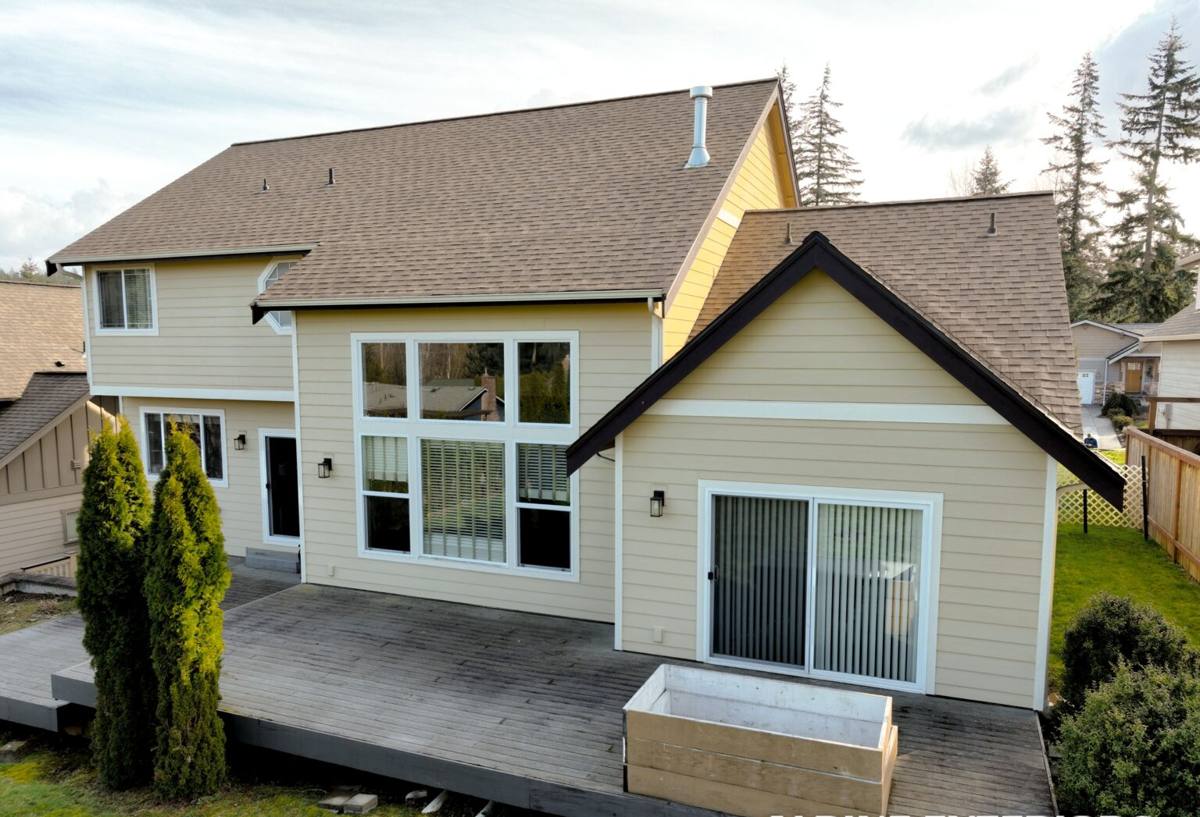
What a Correct Metal Roof Installation Involves
A metal roof is a system, not just a layer of panels. Every component below has to be right for the roof to perform the way metal roofing is supposed to.
Panel Style and Material
Two panel styles cover most residential metal roofing: standing seam, where panels are joined with raised, interlocking seams and no exposed fasteners, and exposed-fastener panels, which are screwed directly through the panel face into the roof deck or purlins. Standing seam costs more up front but has no fastener penetrations for water or salt air to work at over time, which matters in a coastal-influenced climate like ours. Exposed-fastener panels are a reasonable, lower-cost option, but the screws and their rubber washers are wear items that need periodic inspection and eventual replacement, and they're the first thing that can loosen or corrode with repeated wet-dry cycling.
Underlayment, Fasteners, and Flashing
Under the panels, we use a synthetic or self-adhered underlayment rated for the exposure, not a bargain-grade wrap that degrades under UV or trapped moisture. Fasteners and clips need to be a metal type compatible with the panel material, mismatched metals in contact with each other can set up galvanic corrosion, which is a real risk with salt air in the mix. Flashing at valleys, chimneys, skylights, and wall transitions is where the majority of roof leaks originate on any roof type, and it's the area where rushed installs cut the most corners. We detail these penetrations so water is shed, not just sealed with caulk that will eventually fail.
Metal Roofing Compared to Other Materials for This Area
Homeowners weighing metal against other roofing options in Burlington usually care about the same three things: how it handles our rain and moss, how long it lasts, and what it costs over time, not just up front.
| Factor | Metal Roofing | Asphalt Shingle |
|---|---|---|
| Typical lifespan | 40-60+ years depending on material and coating | 20-30 years |
| Moss and moisture resistance | Sheds water fast, hard surface resists moss rooting | Granule surface holds moisture, moss roots more easily |
| Performance in driving rain | Interlocking seams (standing seam) shed wind-driven rain well | Can allow wind-driven rain under tabs in severe storms |
| Salt air exposure | Coating and metal type matter; done right, handles it well | Granules and asphalt degrade steadily with UV and moisture cycling |
| Upfront cost | Higher | Lower |
| Maintenance pattern | Infrequent, mostly inspection and debris clearing | More frequent, granule loss and moss removal over time |
Neither option is wrong for every home. Metal roofing makes the most sense for homeowners planning to stay long-term, who want to minimize moss and moisture headaches, and who are comfortable with a higher upfront investment in exchange for a much longer service life and lower maintenance over that life.
Moss, Debris, and Roof Slope Around Burlington
Skagit County's tree cover and damp winters make moss a near-constant presence on shaded roof sections, and low-slope or north-facing roof planes are where it takes hold fastest because they stay wet longer between rain events. Metal's smooth, hard surface gives moss spores far less to grip than a shingle's granule texture, which is one of the biggest practical advantages homeowners notice after switching. It doesn't make a roof moss-proof, organic debris that collects in valleys or against fascia can still hold moisture against metal panels, so keeping gutters and valleys clear still matters.
Roof slope also affects panel choice. Standing seam performs well down to fairly low slopes because its sealed seams don't rely on overlap alone to shed water, while exposed-fastener panels generally need a steeper slope to perform reliably. If your roof has a mix of slopes or dormers with lower pitches, that's something we account for in the design, not something we discover after the fact.
Our Process, Start to Finish
We keep the process straightforward and give you real information at each step rather than surprises.
- On-site assessment — we look at the existing roof, deck condition, slopes, penetrations, and any moss or moisture damage before recommending anything.
- Written estimate — panel style, material, coating, and underlayment options are laid out with honest cost and lifespan trade-offs, not just a bottom-line number.
- Tear-off and deck check — old roofing comes off and the deck is inspected for rot or soft spots, common where moss has held moisture against a roof for years, before anything new goes down.
- Underlayment and flashing install — the parts of the job that don't show but determine whether the roof stays leak-free.
- Panel installation — set to correct spacing, fastening, and expansion allowance so panels perform through temperature swings without buckling or loosening.
- Final walkthrough — we go over the finished roof with you, including what maintenance to expect and what to watch for.
What Ongoing Maintenance Actually Looks Like
One of metal roofing's real advantages is how little it asks of a homeowner year to year, but "little" isn't "none." A short, honest maintenance routine keeps a well-installed metal roof performing for decades:
- Clear gutters and valleys of needles, leaves, and moss debris at least once or twice a year
- Do a visual check after major windstorms for lifted panels, loose trim, or debris impact
- Watch for streaking or moss growth in shaded, low-slope sections and clean it before it spreads
- Check exposed fasteners (if that panel style was used) every couple of years for backing out or washer wear
- Keep overhanging branches trimmed back to reduce debris load and shading that prolongs damp conditions
- Have penetrations and flashing points looked at periodically, since that's where most roof leaks start regardless of roofing material
Why Hiring a Crew That Already Works in Burlington Matters
Metal roofing installed to spec in a dry inland climate and metal roofing installed correctly for a coastal-influenced, high-rainfall area like Skagit County aren't the same job, even if the materials look identical on a shelf. A crew that regularly works in and around Burlington already knows which roof orientations collect moss fastest, how local wind-driven rain behaves at valleys and eaves, and which coating and fastener choices actually hold up against salt air over years rather than months. That local pattern recognition is hard to substitute with a generic installation checklist.
It also matters for accountability. A contractor working the same area regularly has a reputation to maintain with neighbors and repeat clients, not just a one-time job to close out. That's a meaningful difference when you're trusting someone with the system that protects your entire home from Skagit County's weather.
Signs It May Be Time to Consider a Metal Roof
Not every home needs a new roof today, but a few signs are worth a professional look rather than waiting:
- Granule loss, curling, or bald patches showing on an aging asphalt shingle roof
- Moss that keeps returning to the same sections no matter how often it's cleaned off
- Visible sagging, soft decking, or interior stains that suggest moisture has already gotten in
- A roof approaching or past its expected lifespan with storm season ahead
- Frequent minor leak repairs that keep recurring in the same general area
If any of that sounds familiar, it's worth getting a straight assessment before another wet Skagit County winter puts more stress on a roof that's already struggling.
If you're weighing metal roofing for a home in Burlington, we're happy to take a look and talk through honest options for your specific roof, slope, and budget. Reach out for a free, no-pressure estimate using the form below.