 Anacortes Exterior
 March Point Sits in a Tougher Weather Zone Than People Expect
March Point is a peninsula, and that changes what your siding deals with every single day. Homes out here catch wind and moisture straight off Fidalgo Bay and Padilla Bay, with very little tree cover or terrain to break it up before it hits your walls. That's a different exposure profile than a house tucked into a wooded lot closer to downtown Anacortes, even though both are technically in the same city and county.
Three things define siding performance on March Point: salt-laden air that accelerates corrosion on fasteners and trim, wind-driven rain that gets pushed sideways into seams and laps instead of just running downward, and a long, damp moss season that keeps north- and west-facing walls wet for weeks at a stretch. None of these are dramatic events — no single storm causes the damage. It's the accumulation, year after year, that separates siding that holds up for decades from siding that starts failing at year twelve or fifteen.
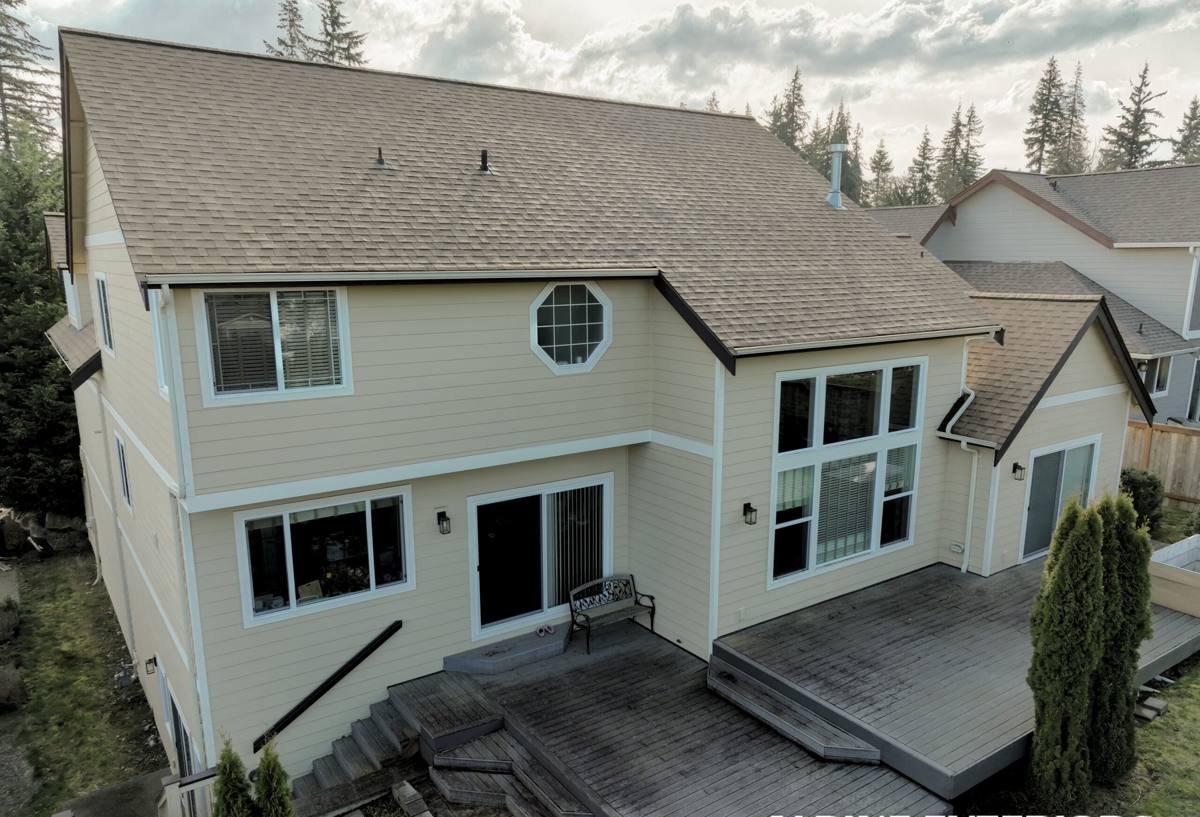
What "Correct" Siding Replacement Actually Means Out Here
A lot of siding jobs are sold as a cosmetic swap: old material off, new material on, done in a few days. On a peninsula lot exposed to constant marine moisture, that approach skips the part of the job that actually matters most — what's happening behind the siding.
Tear-Off Is a Diagnostic Step, Not Just Demo
When we strip old siding off a March Point home, we're looking at the sheathing, the house wrap or building paper, and the framing underneath before we decide what goes back up. Wind-driven rain finds its way past even decent siding over time, and if the water-resistive barrier underneath has failed, new siding installed over it just hides the same problem for another decade. We flag and repair damaged sheathing before anything new goes on — that's non-negotiable, not an upsell.
Flashing and Water Management Matter More Here
Windows, doors, and any horizontal trim need flashing detail that assumes rain will be pushed sideways, not just fall straight down. On exposed waterfront-adjacent lots, we pay particular attention to butt joints, inside corners, and the transition points where siding meets trim — those are the spots that fail first when installation is rushed.
Why We Install Only James Hardie Fiber Cement
We don't install vinyl siding, LP SmartSide, Cemplank, Allura, primed spruce, or cedar. That's not a marketing line — it's a standard we hold because of what we've seen in this climate specifically. Vinyl expands, contracts, and can warp or crack in sustained wind exposure, and it doesn't hold paint if a homeowner ever wants to change the color. Engineered wood products depend entirely on an intact factory coating; once that's compromised at a cut edge or fastener point, moisture gets into the wood substrate and the clock starts. Cedar and primed wood siding require a maintenance schedule that most homeowners underestimate, especially with the moss and mildew pressure a site like March Point sees.
James Hardie fiber cement is non-combustible, dimensionally stable in swings between soaked and dry, and doesn't feed mold or moss the way wood-based products can. The ColorPlus factory finish is baked on and warrantied against fading and peeling — it isn't field-painted, which matters when you're relying on a coating to hold up against salt air for thirty years, not three. For homes in marine-exposed zones like this one, Hardie's HZ5 product line is engineered specifically for wet, high-moisture climates, which is exactly the profile March Point fits.
We're not going to tell you those other products are junk — they have real use cases, and for some homeowners, budget or aesthetic preference makes sense with those trade-offs. We just won't put our name on a job where we think the material is a poor match for what this specific site will throw at it over the next twenty years. Fiber cement is what we've settled on, and it's what goes on every home we side.
How the Job Actually Runs, Start to Finish
- Walk the exterior with the homeowner, note problem areas, and pull measurements for an accurate material take-off.
- Tear off existing siding and trim, inspect sheathing and the water-resistive barrier, and repair or replace anything compromised.
- Install or upgrade the weather barrier and flashing at every penetration — windows, doors, hose bibs, vents, and electrical.
- Install James Hardie panels or lap siding to manufacturer spec, including proper fastener type, spacing, and clearance from grade and roof lines.
- Finish trim, caulking, and touch-up paint at cut edges per Hardie's installation requirements.
- Final walk-through and cleanup, including magnetic sweep for stray fasteners and debris haul-off.
Depending on the size of the home and how much sheathing repair is needed underneath, a full replacement typically runs anywhere from a few days to a couple of weeks. We'll give you a realistic timeline once we've actually looked at the house — not a generic estimate pulled from square footage alone.
Signs a March Point Home Needs Attention Now, Not Later
Because damage here builds slowly, it's easy to miss until it's expensive. Watch for these on your own walls, particularly the sides facing the water or prevailing wind:
- Persistent green or black moss growth that comes back within weeks of cleaning, especially on north-facing walls
- Paint that's bubbling, peeling, or chalking well before it should, a sign moisture is moving through the material
- Soft spots, visible warping, or boards that have separated at seams and corners
- Rust streaking from fasteners or trim, common where salt air accelerates corrosion
- Musty smell or visible staining on interior walls that back up to exterior siding
- Caulking that's cracked, shrunk, or pulled away from trim and window edges
Any one of these on its own isn't necessarily an emergency, but a house showing several of them at once is usually further along than it looks from the curb.
What Affects the Cost of a Siding Replacement Here
Every home is different, but the same handful of factors drive most of the variation in price on jobs out this way. We won't quote a number without seeing the house, but this is what typically moves the estimate up or down:
| Factor | Why It Matters on March Point |
|---|---|
| Sheathing condition underneath old siding | Marine exposure and past wind-driven rain increase the odds of hidden rot that needs repair before new siding goes on |
| Home size and wall complexity | More corners, dormers, and trim details mean more labor and material waste |
| Siding profile chosen | Lap, panel, and shingle-style Hardie products differ in material and install labor cost |
| Trim and accessory scope | Fascia, soffit, and window trim replacement alongside siding adds cost but avoids mismatched materials later |
| Site access and staging | Waterfront and peninsula lots sometimes have tighter access or exposed working conditions that affect scheduling |
Why It's Worth Hiring a Crew That Already Knows This Peninsula
Siding installation isn't identical everywhere in Skagit County, and a crew that mostly works inland jobs won't automatically account for the extra wind and moisture load a March Point property deals with. When we quote and install here, we're already factoring in fastener corrosion resistance, flashing details tuned for sideways rain, and the moss pressure that comes with sustained shade and dampness on certain elevations.
When you're vetting any contractor for exterior work in this area, ask directly how they handle moisture management behind the siding, whether they're a factory-trained or certified installer for the specific product they're proposing, and whether they'll put warranty terms in writing before work starts. A contractor who can't answer those clearly hasn't thought through what this climate actually requires.
Keeping Your New Siding Performing for the Long Run
Fiber cement siding is low-maintenance compared to wood or vinyl, but "low-maintenance" doesn't mean "no maintenance," especially in a marine environment. A little routine attention keeps you well ahead of the moss and moisture pressure that's constant out here:
- Rinse siding down once or twice a year to clear salt residue, pollen, and early moss growth before it takes hold
- Trim back vegetation and tree branches that keep any wall shaded and damp longer than necessary
- Inspect and refresh caulking at trim, window, and door edges every few years
- Check fastener heads and touch up any exposed cut edges with matching paint as needed
- Keep gutters and downspouts clear so roof runoff isn't dumping extra water down exterior walls
None of this is heavy work, but staying on top of it is what lets a correctly installed Hardie system hit its full lifespan instead of needing early intervention.
Get a Straight Answer on What Your Home Needs
If you're seeing early wear on your March Point home, or you're just planning ahead before the next wet season sets in, we're glad to come take a look. There's no pressure and no sales script — just an honest read on the condition of your siding and what a proper replacement would involve. Reach out any time for a free estimate.